
A burst outdoor faucet in January is one of those plumbing disasters that creeps up on you, then ruins a weekend. Frost free hydrants solve the core problem by relocating the actual shut-off valve deep enough into the ground that it sits below your local frost line, so water never lingers where it can freeze and split the pipe. That single design choice is the difference between a yard that works through February and one that floods the basement on the first hard night.
The lineup below mixes full bury-depth yard hydrants with wall-mounted sillcocks, vacuum breakers, and an insulating cover that adds a second layer of defense. Whether you live in a cold four-season climate, run a small farm, or just want the hose bib on the back porch to survive one more winter, the right pick is somewhere on this list.
The Lineup, Simplified

GBQA Frost Free Sillcock 10 Inch Crimp PEX

GBQA Self-Draining Vacuum Breaker 3/4″ GHT
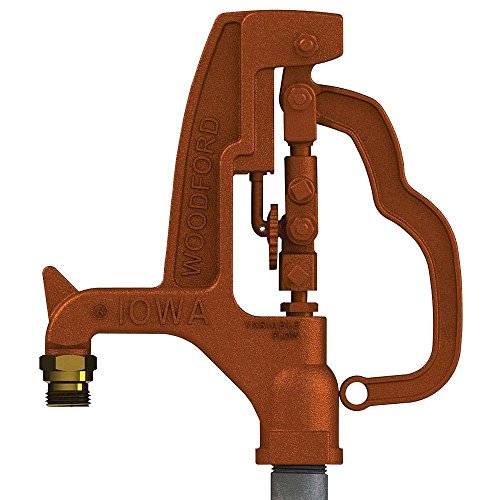
Woodford Y34-4 Yard Hydrant 4 ft Bury

Woodford Y34-3 Yard Hydrant 3 ft Bury

GBQA 3/4″ Brass Vacuum Breaker for Hoses

GBQA Atmospheric Vacuum Breaker 1/2″ NPT

GBQA 3/4″ Brass Vacuum Breaker Hose Pack

GBQA Self-Draining Vacuum Breaker Chrome
GBQA Atmospheric Vacuum Breaker 3/4″ NPT

DEMEDO Extended Outdoor Faucet Cover 35″
A Closer Look At Each Pick
A wall-mounted sillcock (a faucet that penetrates an exterior wall and shuts off inside the heated envelope of the house) is the answer for most homes where a full yard hydrant would be overkill. The 10-inch stem on this GBQA model reaches far enough inside the wall to keep the actual valve seat out of the cold zone, which is the whole point of a frost-free design. For a new PEX (cross-linked polyethylene, the flexible plastic tubing used in modern plumbing) repipe, it slots in cleanly with crimp-ring fittings on 3/8″ or 1/2″ tubing.
The cast brass body holds up to years of outdoor exposure, and the integrated vacuum breaker stops a pressure drop from siphoning dirty hose water back into your potable supply. Most homeowners can tackle a swap in an afternoon, provided they know how to crimp PEX properly. Compared with the older threaded hose bib this likely replaces, the difference shows up the first time the temperature drops below 20°F.
Reasons It Performs
- Stem reaches inside the heated wall cavity, so the valve stays above the frost line.
- Anti-siphon vacuum breaker keeps hose-borne contaminants out of your drinking water.
- Lead-free brass body resists corrosion through repeated freeze-thaw cycles.
- Crimp PEX connection suits new builds and renovations using modern plastic supply lines.
Things To Consider
- Requires a working PEX crimp tool and rings; beginners may need to budget for the tool.
- Stem length needs to match your wall thickness, so measure the cavity before ordering.
Quick Facts
Right Fit For
Homeowners running new PEX plumbing who want one outdoor faucet that survives deep winter without surprise leaks.
Consider Something Else When
The Woodford Y34-4 makes more sense if you need a free-standing yard hydrant out in a pasture or garden bed with no wall nearby.
This is the upgrade you screw onto an existing outdoor faucet to add the protection the original builder skipped. The self-draining design bleeds residual water out of the faucet body the moment you shut it off, which means there is nothing left inside to expand and crack when a hard frost arrives. For older homes with conventional hose bibs, it turns a known weak point into a much tougher one.
The lead-free brass construction is the same alloy used in modern indoor potable plumbing, so it satisfies code in jurisdictions that have cracked down on outdoor faucets. The 3/4″ garden hose thread (GHT) is the standard size for North American outdoor hoses and accessories. For most retrofit situations, installation is a matter of unscrewing the old hose and threading this on in its place.
The Value In It
- Automatic draining removes the standing water that causes burst pipes in winter.
- Anti-siphon design keeps contaminated hose water out of your household supply.
- Standard 3/4″ GHT threads onto almost any existing outdoor faucet without adapters.
- Lead-free brass is approved for use on potable water lines.
Honest Caveats
- Does not protect a faucet whose stem already sits inside a frozen wall, so check the underlying sillcock too.
- Owners commonly report needing fresh thread tape at install to get a drip-free seal.
Made For
Homeowners retrofitting an older house where the existing hose bib is fine but missing frost protection.
Skip It When
The GBQA Frost Free Sillcock is a better call if the underlying faucet itself is old or short-stemmed and needs a full replacement.
For serious cold zones, the Woodford Y34-4 is the kind of hydrant you bury once and forget about. The 4-foot bury depth drops the working valve well below the frost line (the deepest depth at which groundwater in your region is expected to freeze), so the water shut-off happens in soil that never freezes. Above ground, a simple lever handle gives you year-round running water wherever you need it, even in sub-zero weather.
Woodford has been making these in Iowa since the 1920s, and the design has barely changed because it works. The 84.5-inch overall length leaves plenty of headroom above the spigot, and the adjustable linkage lets you tune the lever tension so it locks exactly where you want. The 3/4″ pipe connection is the workhorse size for residential water lines, so tying it into an existing supply is straightforward.
Notable Gains
- 4-foot bury depth reaches below frost lines in most of the northern U.S. and Canada.
- Flow finder and lock keep the same flow rate every time and prevent accidental opening.
- Adjustable linkage tunes lever lock tension to your preference.
- Galvanized steel standpipe shrugs off decades of soil contact.
Points To Keep In Mind
- Requires digging a 4-foot-deep hole and a drainage bed of gravel at the base, which is real labor or a hired machine.
- Yard hydrants need occasional rod-and-plunger service every few years, which is normal wear rather than a defect.
- Made for rural-style buried supply lines, not for tying into a city water meter without a permit check.
Perfect Match For
Owners of small farms, barns, or rural properties who need reliable year-round water at a pasture or garden far from the house.
Look Elsewhere When
The Woodford Y34-3 is the better match in regions where the frost line tops out around 3 feet and you would rather not dig deeper than necessary.
Same trusted Woodford design as the deeper model, just trimmed to a 3-foot bury depth that suits milder climates and shorter frost lines. The 72.5-inch overall length still leaves plenty of clearance for a hose to swing underneath without scraping the ground. For most of the mid-Atlantic, lower Midwest, and Pacific Northwest, a 3-foot bury is enough to clear the typical frost depth.
You give up a foot of frost-line margin compared to the Y34-4, which is the core trade-off. The handle linkage, lock mechanism, and head are identical, so operation and maintenance feel the same once it is in the ground. Installation is also slightly less work since you are not digging as deep.
Standout Benefits
- 3-foot bury suits frost lines common in temperate U.S. zones.
- Same heavy-duty head and rod design as the deeper Y34-4.
- Variable-flow lockable handle for predictable operation.
- Shorter install depth cuts labor time and tool rental.
Trade-Offs To Consider
- A foot less margin than the Y34-4, so it may not be deep enough for the coldest northern regions.
- Still requires digging, a gravel drainage base, and a potable water tie-in.
Feature Snapshot
Whose Shelf It Belongs On
Property owners in moderate climates who want a Woodford-grade yard hydrant without paying for extra depth they don’t need.
Reach For A Different Pick When
Step up to the Woodford Y34-4 if your frost line runs deeper than 3 feet or you want maximum cold-zone margin.
If you only need a backflow preventer (a one-way valve that stops water in a hose from being sucked back into your plumbing if pressure drops) at the end of a garden hose, this little brass accessory is one of the simplest ways to add that layer of safety. It threads onto any standard 3/4″ hose bib and stops fertilizer-laden sprayer water, pool water, or stagnant hose water from being pulled back into your drinking supply when pressure fluctuates.
The break-off screw is a small but thoughtful touch: it lets you lock the breaker in place permanently if your local code requires it. Rated for up to 180°F and 125 psi, it handles everything a residential garden hose will throw at it. For most people, installation is a 30-second hand-tightening job.
A Strong Showing
- Solid brass body resists corrosion from fertilizers and outdoor exposure.
- Universal 3/4″ hose thread fits standard outdoor faucets and RV hookups.
- Handles 180°F and 125 psi for residential irrigation use.
- Includes a break-off screw for tamper-resistant permanent install.
Worth Bearing In Mind
- Provides backflow protection but no freeze protection on its own, so it pairs with a frost-free faucet.
- Should be installed above ground in a vertical orientation to function correctly.
Who Should Grab It
Anyone who runs a hose-end fertilizer sprayer, soaks livestock water, or wants an extra layer of potable-water safety at the spigot.
Where Another Pick Suits Better
Choose the GBQA Self-Draining Vacuum Breaker instead if you also need automatic draining to fight freeze damage.
Where the simple hose-end breaker is more of an accessory, this atmospheric vacuum breaker is a hard-plumbed device that ties directly into your irrigation or outdoor supply line. The 1/2″ female NPT threads into a tee on the main line, typically just downstream of a shut-off valve, and the chrome-plated brass stands up to years of weather.
An atmospheric vacuum breaker works by admitting air into the line whenever pressure drops, breaking any siphon effect before contaminated water can travel backward. They are required by plumbing code on many irrigation systems for exactly that reason. If you are building a new sprinkler manifold, this is a routine add-on that inspectors look for.
Strengths Worth Knowing
- Female NPT threads tie directly into irrigation supply lines.
- Chrome plating adds a layer of corrosion resistance beyond bare brass.
- Supports up to 125 psi working pressure for typical residential main lines.
- Backflow protection meets common code requirements for irrigation systems.
Smaller Caveats
- Must be installed at least 6 inches above the highest sprinkler head to function properly, which dictates where you mount it.
- Not a frost-protection device; you will still need a frost-free hydrant upstream for winter.
Who Will Love This
DIY irrigation installers who need to bring a sprinkler manifold up to code with a hard-plumbed backflow preventer.
Swap It Out When
Pick the GBQA Atmospheric Vacuum Breaker in 3/4″ NPT if your main irrigation line is 3/4″ rather than 1/2″.
This is essentially the same 3/4″ brass vacuum breaker reviewed above, but in a two-pack form for households with multiple hose bibs. For most properties with a front yard spigot, a back yard spigot, and maybe a garage hookup, a multi-pack lets you cover all of them in one order rather than piecing together singles.
The brass body, 180°F temperature rating, and 125 psi pressure handling carry over identically. Having a spare on hand also pays off when one wears out, since these small fittings do get bumped and dropped over the years. The honest read is that the per-unit math gets friendlier with the two-pack, but the single serves most casual users fine.
Positive Takeaways
- Two-pack layout suits properties with several outdoor faucets.
- Heavy-duty brass for long service life in outdoor conditions.
- 180°F and 125 psi ratings handle any residential garden hose situation.
- Break-off screw enables tamper-resistant permanent mounting.
A Few Limitations
- You pay for two when you might only need one.
- Provides backflow protection only, no built-in freeze defense.
Best Suited To
Homeowners with two or more outdoor faucets who want to standardize their backflow protection in one purchase.
Not Your Match When
Pick the single breaker instead if your home has just one outdoor spigot and you don’t need the second unit.
The chrome-finished sibling of the earlier self-draining breaker trades the bare nickel-plated brass for a polished chrome exterior that looks cleaner on a visible front-yard faucet. Functionally it does the same job: drains water out of the faucet body when you close the handle, blocks backflow, and screws onto any standard 3/4″ GHT hose bib.
The lead-free alloy satisfies the same drinking-water standards, and the chrome plating helps the unit resist fingerprints and water spotting on a high-visibility exterior wall. For most installations, the visible finish is a small detail, but it is the kind of detail that matters on a stone or brick facade where the faucet is right at eye level.
The Practical Payoff
- Chrome plating upgrades the look on visible front-of-house faucets.
- Auto-draining design prevents freeze damage without manual effort.
- Lead-free brass body keeps the unit code-compliant for potable lines.
- Standard 3/4″ GHT threads onto most residential hose bibs.
Practical Considerations
- Chrome finish can show water spots in hard-water areas, so plan on occasional wiping.
- Self-draining function depends on the faucet being installed level; check orientation.
Built With In Mind
Homeowners who care about curb appeal and want a polished exterior finish that matches modern outdoor fixtures.
A Better Fit Elsewhere
The Woodford Y34-3 is the smarter call if you need a full free-standing yard hydrant rather than a wall faucet upgrade.
The 3/4″ version of the atmospheric vacuum breaker is aimed at properties where the irrigation main line is the larger 3/4″ size rather than 1/2″. It carries the same chrome-plated brass construction, the same backflow prevention logic, and the same 125 psi working pressure rating as its smaller sibling. For most suburban lots that tapped a 3/4″ stub out from the basement for the irrigation system, this is the right thread size.
Installation is identical in approach: tee it into the line downstream of the shut-off valve and mount it high enough above the highest sprinkler head to satisfy code. The bigger opening also handles slightly higher flow with less pressure loss, which matters on runs that feed six or more sprinkler zones.
Noteworthy Benefits
- 3/4″ female NPT fits standard residential irrigation main lines.
- Chrome plating adds weather resistance over bare brass.
- 125 psi rating handles typical household supply pressure with margin.
- Backflow protection satisfies common plumbing code requirements.
Where It May Fall Short
- Must be installed at the proper height above sprinkler heads to function correctly.
- Provides backflow safety only, no freeze protection by itself.
Right Fit For
Homeowners wiring a 3/4″ irrigation main who need a code-compliant backflow preventer at the right thread size.
Where Another Pick Suits Better
Step down to the 1/2″ atmospheric vacuum breaker if your irrigation main is 1/2″, since the 3/4″ version will not seat properly.
Not every freeze fix has to involve replacing plumbing. The DEMEDO cover is an insulated sock that slides over a yard hydrant or tall outdoor faucet to add a second layer of defense against cold snaps. The 35-inch height is the standout spec: it reaches all the way down to the ground on a free-standing yard hydrant, which the shorter 25-inch covers cannot do.
The 3M Thinsulate fill is a synthetic insulation used in winter jackets, so it holds up to repeated compressions and wet weather without collapsing into a useless mat. For RV park water pedestals, which are taller than residential hydrants, this extended size is often the only cover that actually fits. For most homeowners in moderate climates, it is an inexpensive supplement that buys extra margin against an unusually cold night.
The Case For It
- 35-inch height reaches the ground on tall yard hydrants and RV pedestals.
- 3M Thinsulate insulation holds loft through wet and cold conditions.
- Slip-on design installs in seconds without tools.
- Reusable across many winter seasons for the cost of a single plumbing repair.
Things To Weigh Up
- Extra height is wasted on a short hose bib; consider a 25-inch cover for standard residential faucets.
- Insulation only delays freezing, it doesn’t prevent it indefinitely during a hard, prolonged cold snap with no water flow.
Quick Technical Notes
The Right Fit
Owners of tall yard hydrants or RV park water pedestals who need an insulating cover that actually reaches the ground.
Skip It When
Your outdoor faucet is a low-mounted residential sillcock; a standard 25-inch cover or the GBQA Frost Free Sillcock itself is a better fit.
What To Weigh Before Picking a Frost Free Hydrant
The category splits into three very different jobs. A wall sillcock replaces the standard outdoor faucet on the back of a house and pushes the valve seat inside the heated wall. A buried yard hydrant is a free-standing post out in a pasture, garden, or driveway with the valve located several feet underground. A vacuum breaker is an add-on device that handles backflow and, in some models, self-draining. Picking the wrong type is the most common reason for a bad purchase.
Bury Depth and Frost Line
Your local frost line (the maximum depth at which soil moisture freezes in a typical winter) drives bury depth for yard hydrants. Most of the continental U.S. falls between 2 and 4 feet, with the coldest northern plains going deeper. A Woodford Y34-3 at 3 feet handles the southern half of the country, while the Y34-4 at 4 feet covers northern climates. Sillcocks, by contrast, depend on the wall thickness of your house; a 10-inch stem is the typical minimum for a 2×6 exterior wall.
Connection Type and Plumbing Compatibility
Before buying a sillcock, identify the supply line behind the wall. Older copper or galvanized lines need a threaded or sweat-solder connection, while modern plastic plumbing uses either crimp PEX, expansion PEX-A, push-fit, or MIP (male iron pipe) thread fittings. Pick the variant that matches what you already have so you do not introduce an adapter that becomes its own weak point.
Backflow and Code Requirements
Many municipalities require a backflow preventer on any outdoor hose connection, especially when the hose runs to a fertilizer sprayer, livestock waterer, or sprinkler system. Atmospheric vacuum breakers satisfy this for hard-plumbed irrigation lines, while hose-thread vacuum breakers handle spigot-end use. Check your local code if in doubt; inspectors look for these devices on new irrigation installs.
Material and Long-Term Durability
Lead-free brass is the default for any faucet that touches potable water. Chrome plating adds an extra corrosion layer on visible exterior models. Galvanized steel is the standard for yard hydrant standpipes because it survives decades of soil contact. Cheap zinc or plastic fittings rarely last more than a couple of winters outdoors.
What These Picks Teach You About the Category
Mistakes Worth Dodging
The single biggest error is buying a sillcock without measuring wall thickness first. A 6-inch stem on a 6-inch wall barely puts the valve seat at the interior sheathing, and on a really cold night the seat still freezes. Measure the wall cavity from the exterior sheathing inward and pick a stem length that puts the valve at least a few inches inside the heated zone. The other common slip-up is treating a vacuum breaker as freeze protection; it is not, and pairing it with a sillcock is the only way both problems get solved at once.
When Paying More Pays Off
The price gap between a basic outdoor faucet and a real frost-free hydrant is real, but the math changes fast the moment you factor in a single burst pipe repair. Higher-tier picks like the Woodford yard hydrants use heavier galvanized pipe, adjustable linkages, and field-serviceable internals that a homeowner can rebuild with a $20 kit every few years. Cheap hydrants tend to use thin tubing and pot metal that cannot be repaired, only replaced. For any year-round outdoor water source, the upgrade almost always pays for itself the first time a deep freeze lands on an unprotected spigot.
Frequently Asked Questions
What Is a Frost Free Hydrant and How Does It Differ from a Regular Outdoor Faucet?
A frost free hydrant relocates the actual shut-off valve to a point behind the wall or below the ground, away from freezing air temperatures. A regular outdoor faucet shuts the water off at the spout, leaving the supply pipe full of water that can freeze and burst.
How Deep Should a Frost Free Yard Hydrant Be Buried?
The bury depth should reach at least 6 inches below your local frost line, which varies by region. Most residential installations run 3 or 4 feet deep; northern climates with deeper frost lines may require more.
Do I Still Need a Vacuum Breaker If I Have a Frost Free Faucet?
The two devices solve different problems. A frost free faucet keeps water from freezing in the pipe, while a vacuum breaker stops backflow contamination. For full protection on a hose bib, you typically want both.
Can I Install a Yard Hydrant Myself?
A wall sillcock is a realistic DIY project if you have basic plumbing skills and the right PEX tools. A buried yard hydrant requires digging several feet down, a gravel drainage base, and a supply-line tie-in, which most homeowners leave to a plumber or well contractor.
What Insulation Cover Actually Works on an Outdoor Faucet?
Look for a cover that reaches down to the ground or top of the wall and uses synthetic insulation like 3M Thinsulate rather than basic foam. A too-short cover leaves the supply line exposed and does almost nothing in a hard freeze.
Wrap Up
The right frost free hydrant depends less on brand loyalty than on your climate, your plumbing, and where the faucet actually lives. Sillcocks make sense on a house wall, yard hydrants own the pasture and garden, and vacuum breakers are the safety net wherever a hose attaches. Match the product to the install, dig where you need to dig, and the winter burst-pipe panic stops being part of your routine.