

A cracked outdoor faucet is the kind of repair nobody wants in February. When the mercury dips below freezing, water sitting in a standard hose bib expands and splits the body, leaving you with soaked siding and a plumber’s bill. Frost free hose bibs solve that by pushing the actual shutoff valve deeper into the wall, where the supply line stays warm.
The list below mixes true frost-proof sillcocks with insulating cover socks and the brass vacuum breakers that complete the system. Each entry suits a slightly different situation, from a one-winter rental to a full re-pipe of a vacation home.
A Snapshot Of The Selections

GBQA Frost Free Sillcock 10 Inch with Vacuum Breaker (Crimp PEX)
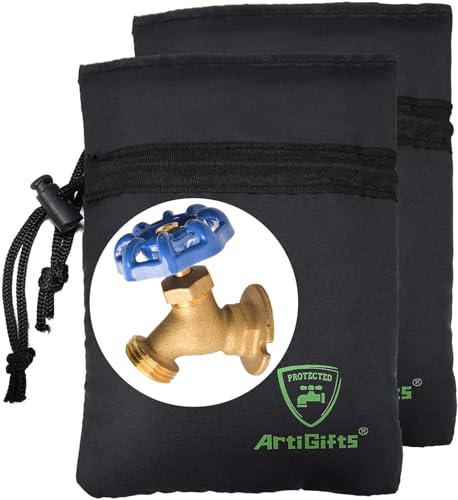
ArtiGifts Pro Outdoor Faucet Cover Socks for Winter, 2-Pack

GBQA Self-Draining Vacuum Breaker, 3/4″ GHT, Lead-Free Brass

Hometopia 4-Pack Outdoor Faucet Covers for Winter, 6.7″ x 8.3″

DEMEDO Outdoor Faucet Cover with 3M Thinsulate, 18″ x 14″

GBQA 3/4″ Brass Vacuum Breaker for Garden Hoses, Faucets, RVs

GBQA Atmospheric Vacuum Breaker, Chrome Brass, 1/2″ Female NPT

GBQA 3/4″ Brass Vacuum Breaker (2-Pack) for Hoses, Faucets, RVs

GBQA Self-Draining Vacuum Breaker, 3/4″ GHT, Chrome Plated Brass
GBQA Atmospheric Vacuum Breaker, Chrome Brass, 3/4″ Female NPT
A Closer Look At Each Pick
GBQA’s frost-proof sillcock moves the actual shutoff valve ten inches back into the wall, which is the whole point of a freeze-proof outdoor faucet. Water stays trapped in the supply line beyond the valve, so nothing sits in the cold section to freeze. The stem is lead-free brass, and the body is built around a PEX crimp inlet, so it drops into modern re-pipes without adapters.
An anti-siphon vacuum breaker (a small device that stops hose water from siphoning back into your drinking supply) is already built in, so you do not need a separate add-on like the breakers covered below. The stem comes in 4-inch to 12-inch lengths, which matters for thicker masonry walls where a stubby bib cannot reach the warm interior.
Noteworthy Benefits
- Long 10-inch stem clears standard rim joist and exterior sheathing, keeping the valve seat inside conditioned space
- Integrated vacuum breaker cuts the install list by one fitting and protects potable water from hose-side contamination
- Lead-free brass body handles long-term outdoor exposure without corroding like potted-steel alternatives
- Multiple inlet styles available (crimp PEX, expansion PEX, MIP, push fit) so the same faucet suits different plumbing runs
Things To Consider
- Crimp PEX requires the matching copper crimp tool and rings, which adds gear first-timers may not own
- Installation means opening the exterior wall, so it is best paired with a planned siding repair or re-pipe
Key Specs
Who It Suits Best
Homeowners mid-renovation who already run PEX and want a single, code-friendly sillcock that handles both frost protection and backflow safety in one body.
Where Another Pick Suits Better
For a quick retrofit without opening the wall, the GBQA Self-Draining Vacuum Breaker is the easier add-on to thread onto a hose bib you already have.
ArtiGifts’ cover socks are the low-effort half of a winter strategy. You slip the polyester shell over the spigot, cinch it down, and the inner insulation adds a thermal buffer that helps a standard hose bib survive a cold snap. The 5.9-inch width and 7.7-inch height fit most wall-mounted residential taps without swallowing the handle.
The covers come as a two-pack, which keeps things simple for a front-and-back setup. They are not a substitute for a true frost-proof sillcock, and a hard North wind will still find gaps. Treat them as insurance for a mild climate or as a backup layer over a properly installed frost-free bib.
Everyday Advantages
- No tools needed; the elastic cuff and drawcord lock the cover in place in seconds
- Reusable shell folds flat for off-season storage in a garage shelf
- Lightweight enough to leave on through shoulder seasons without overheating the tap in mild weather
Worth Noting
- Insulation only slows freezing, it does not prevent a burst pipe in sub-zero stretches
- Soft fabric can degrade with several seasons of UV exposure; owners commonly report needing a replacement every few years
- Does not seal around irregular handle shapes, so a chunky frost-free sillcock may leave a small cold-air gap
Right Fit For
Renters and homeowners in mild climates who want a five-minute winter prep without any plumbing work.
Skip It When
You want actual freeze protection rather than a thermal buffer, in which case the GBQA Frost Free Sillcock 10 Inch with Vacuum Breaker is the structural upgrade.
GBQA’s self-draining vacuum breaker threads onto the end of a standard 3/4″ garden hose thread outlet and quietly does two jobs at once. It stops backflow, and it drains itself when the faucet shuts off so residual water does not sit in the body and freeze. That drain step is the part that matters in a cold climate, because a standard vacuum breaker will crack the first time water expands inside it.
The body is nickel-plated lead-free brass, which means it can live outside year-round without the green patina you get from cheap zinc. It is a smarter upgrade than a foam cover if you already have a hose bib without built-in backflow protection.
Everyday Wins
- Automatic draining removes the manual “tip it over” step that plain vacuum breakers require
- Lead-free brass complies with U.S. drinking water safety standards for outdoor hose use
- Retrofit install takes under a minute with no plumber, just thread it onto a standard hose bib
Trade Offs
- Adds a few inches of length beyond the spout, so a tight hose reel may need extra clearance
- Does not protect a faucet whose valve is already frozen solid, since the damage happens upstream of where the breaker sits
Made For
Homeowners with a working but unprotected hose bib who want a code-friendly anti-siphon upgrade without tearing open the wall.
Not Your Match When
You would rather solve the freeze problem at the valve itself, in which case the GBQA Frost Free Sillcock 10 Inch with Vacuum Breaker replaces the entire spigot.
Hometopia’s four-pack covers the typical whole-house outdoor water setup. Front spigot, back spigot, garage hose bib, and a yard hydrant all get a cover without making four separate purchases. The 6.7-inch by 8.3-inch footprint fits chunkier frost-free handles where slimmer socks leave a gap at the top.
You fasten the cover with a hook-and-loop strap and a cinch cord rather than wrestling with foam plugs. Owners commonly mention the easier install compared to rigid foam covers that need a screwdriver and a thumbscrew. Reuse over multiple seasons is the practical upside.
What Earns Its Place
- Four covers in a single order cover every tap on a typical property without separate runs to the store
- Universal sizing handles standard hose bibs, frost-free sillcocks, and small backflow preventers
- Hook-and-loop strap and cord hold the cover in place during wind better than basic slip-on shells
Minor Gripes
- Bulkier than tap-specific covers, so the front of the house can look a little puffy with all four installed
- Polyester outer shell eventually fades in direct sun, which matters if your spigot faces a highly visible wall
Best Suited To
Families with multiple outdoor taps who want one purchase to handle every entry point on the property.
A Better Fit Elsewhere
For a single tall yard hydrant, the DEMEDO Outdoor Faucet Cover with 3M Thinsulate stretches taller and adds more insulation per square inch.
DEMEDO goes oversized. The 18-inch height and 14-inch width wraps a yard hydrant or a tall anti-siphon assembly that a regular cover cannot swallow. The insulation is 3M Thinsulate, the same material that goes into serious winter gloves, sandwiched between two layers of 420D Oxford cloth with a waterproof coating.
The trade is bulk. This is not the cover to install on a front-porch tap where curb appeal matters, and you will not want to wrestle it on every week. Set it and forget it from first frost to last.
A Few Strong Suits
- Thinsulate fill delivers a stronger R-value per inch than generic poly-fill covers
- Oversize dimensions wrap full-height yard hydrants and frost-free hydrant assemblies that smaller covers miss
- 420D Oxford outer shell resists abrasion from brick, stucco, and metal siding
Points To Note
- Too bulky for a small front spigot; the cover hangs loose and lets cold air pool inside
- Premium fill materials add weight, so a quick slip-on install becomes a two-handed job
Feature Snapshot
Perfect Match For
Properties with a yard hydrant or an outdoor kitchen sink where standard sock-style covers simply do not reach high enough.
Look Elsewhere When
You only need to cover a small front spigot, since the Hometopia 4-Pack Outdoor Faucet Covers will fit better and waste less material.
This GBQA vacuum breaker is the no-frills option. It threads onto any standard 3/4″ hose bib outlet and stops hose-side water from siphoning back into the household supply, which matters when a hose is left sitting in a pool of soapy water or fertilizer. The body is heavy-duty brass, so the same fitting can move between the house, the garage, and the camper without corroding.
Rated for water up to 180°F and pressure up to 125 psi, it handles the full range of residential outdoor use. The break-off screw gives you a permanent install if you never want to remove it for winter storage.
Points In Its Favor
- Solid brass build shrugs off UV, salt air, and repeated temperature swings
- Universal 3/4″ garden hose thread fits the same tap that a regular hose screws onto
- Break-off screw option turns a removable fitting into a permanent anti-siphon install
Softer Spots
- Does not drain itself when the faucet shuts off, so residual water can freeze inside the body in cold snaps
- Without certification paperwork in the box, some local inspectors may push back on a code-required install
Quick Facts
Who Will Love This
RVers and homeowners with multiple properties who need one reliable backflow fitting that can travel between sites.
Another Choice May Suit
For a freeze-prone climate where residual water is a real risk, the GBQA Self-Draining Vacuum Breaker adds an auto-drain that this unit lacks.
An atmospheric vacuum breaker, or AVB, lets air in when the downstream pressure drops, which is the simplest way to break a siphon. GBQA’s chrome-plated brass version threads onto a 1/2″ female NPT line, the standard for residential irrigation valves and smaller outdoor faucets. The chrome finish keeps it from looking like a rough industrial part if the install is visible.
AVBs need to be installed at least six inches above the highest downstream outlet, and they cannot be under continuous pressure for more than twelve hours. That makes them best for hose bibs and irrigation zones that get cycled on and off rather than a constantly pressurized supply line.
Key Advantages
- Chrome-plated brass finish blends in on visible exterior walls better than dull raw brass
- 1/2″ female NPT matches common residential irrigation manifold outlets without reducers
- Simple one-piece design has no moving service parts to maintain over time
Room For Improvement
- Cannot remain under pressure for long stretches, so it is not a fit for constant-pressure systems like an always-on feed to a livestock trough
- Needs a vertical install with clearance above the highest sprinkler head, which constrains placement
Built With In Mind
Irrigation setups with zone valves that cycle on and off, where a simple code-friendly anti-siphon device is all you need.
Reach For A Different Pick When
You need a higher-flow 3/4″ connection for a hose bib, in which case the GBQA Atmospheric Vacuum Breaker in 3/4″ Female NPT is the same design at a larger size.
This is the same GBQA 3/4″ brass vacuum breaker covered above, just packaged as a two-pack for homes with more than one hose tap. The brass body, 180°F temperature rating, and 125 psi pressure rating carry over, so the build is identical. You are paying mostly for the convenience of a matched pair.
A two-pack is the right call when you have one spigot on the front of the house and another out back, or when you want a spare in the garage for the RV or boat. Owners commonly find the redundant install handy when one fitting needs a clean-and-descale session.
Features That Help
- Two matched fittings cover the typical front-and-back yard setup in a single order
- Keeps a spare on hand so a stuck or damaged breaker is not a same-day hardware run
- Same break-off screw option as the single-pack version for permanent installs
Points To Keep In Mind
- Costs more up front than the single-pack, so it is wasted money for a one-tap home
- Like its single sibling, it does not self-drain, so the same freeze-prep rules apply before deep cold
Whose Shelf It Belongs On
Homeowners outfitting two outdoor spigots in one trip, especially when one of them is a secondary tap in a workshop or garden area.
Swap It Out When
You only have a single hose bib and a colder climate, in which case a single GBQA Self-Draining Vacuum Breaker is a smarter single-unit investment.
Functionally identical to the other self-draining GBQA breaker, this version adds a chrome-plated finish for visible front-yard taps. Same lead-free brass core, same auto-drain that empties residual water when the faucet closes, same 3/4″ GHT thread. The difference is the polished look against painted trim or stone veneer.
It costs a small premium for the plating, so it is worth it mainly when the breaker sits where guests and neighbors can see it. For a hidden spigot behind the garbage cans, the nickel-plated version above gives the same performance for less.
Practical Pluses
- Chrome plating stays cleaner through pollen season and washes off with a quick hose-down
- Self-draining design removes the manual winter routine of tipping the breaker to empty it
- Lead-free brass core meets U.S. drinking water safety standards for outdoor hose use
Factors To Consider
- Plating can show water-spotting on a wall that gets splash-back from a downspout
- Premium finish adds cost you do not need for a tucked-away backyard tap
Feature Overview
Right Fit For
Homeowners who want a polished front-of-house spigot where the breaker stays visible year-round.
Where A Sibling Pick Shines
For an out-of-sight install behind a hedge or fence, the nickel-plated GBQA Self-Draining Vacuum Breaker costs less for the same internal design.
Step up from the 1/2″ AVB and you land here, the 3/4″ female NPT version of the same chrome-plated GBQA atmospheric vacuum breaker. The larger port lets more water through, which matters on sprinkler manifolds feeding six or eight rotors. The 125 psi working pressure rating covers standard residential irrigation systems without restriction.
The same install rules apply as for the 1/2″ version: mount it at least six inches above the highest downstream outlet, and avoid continuous-pressure applications. The chrome finish is the real differentiator for above-grade manifold boxes where the part is visible.
The Case For It
- 3/4″ port matches standard residential irrigation manifold outlets without reducer bushings
- Chrome-plated finish resists corrosion and stays presentable on above-grade manifold installs
- Solid brass core gives a long service life in buried and exposed valve boxes alike
Possible Compromises
- Same AVB pressure-time limit applies, so it is not a fit for lines that stay open for days
- Needs clearance above the highest sprinkler head, which can complicate retrofits on low-slope lots
Made For
Larger sprinkler and drip irrigation systems that need the higher flow a 3/4″ AVB delivers over the 1/2″ sibling.
Consider Something Else When
You only need anti-siphon protection on a single hose bib, since the GBQA 3/4″ Brass Vacuum Breaker is a simpler fit for hose-thread outlets.
What Matters Most Before Choosing Frost Free Hose Bibs
Measure The Wall, Not The Spigot
The stem length on a frost free sillcock needs to reach past the exterior sheathing and into the heated wall cavity. Measure the wall thickness from the outside brick or siding to the inside drywall, and add at least two inches for safe clearance. A 10-inch stem is a safe pick for most modern 2×4 walls with exterior foam board.
Match The Inlet To The Plumbing
A frost free sillcock with a Crimp PEX inlet only drops cleanly onto a Crimp PEX supply line. If the home uses copper, look for a sweat or MIP thread inlet. Push-fit inlets work for PEX-A and copper without a torch, but the connection depth and tooling matter for long-term reliability. Picking the wrong inlet means buying extra couplings you did not plan for.
Anti-Siphon Matters More Than Aesthetics
A vacuum breaker on a hose bib is not optional in most jurisdictions. It stops contaminated hose water from siphoning back into the drinking supply when a pressure drop happens. Built-in versions on frost-proof sillcocks are tidier, but a threaded-on breaker on a standard bib gives the same protection for less wall surgery.
Decide If A Cover Is Enough
For mild climates where the temperature rarely stays below 20°F, an insulating cover on a standard hose bib is a reasonable compromise. For real winters, the cover is a supplement, not a solution, because the water still sits in the cold section of the wall. Pair a true frost-proof sillcock with a cover for the toughest climates.
Key Considerations Across These Picks
Pitfalls Shoppers Hit
Buying a frost free sillcock on stem length alone is a common miss, because a 4-inch stem is fine for a thin garage wall but a 12-inch stem is required for a brick-veneer home with exterior insulation. Another frequent slip is treating a vacuum breaker as a frost fix, when in reality the breaker stops backflow but does nothing for water trapped upstream in the supply pipe.
Where The Extra Money Goes
A higher-tier frost free sillcock tends to be solid brass rather than a brass-over-zinc body, with a longer stem, integrated vacuum breaker, and a stem that can be replaced without removing the whole valve from the wall. The self-draining breakers cost more because the internal poppet and drain port are precision parts, and the chrome finish is a thin layer that adds material and labor. The premium pays back through longer service life, fewer winter surprises, and easier code sign-off.




