

A home gym only feels like a real gym once the floor is sorted. Drop a treadmill or a rack straight onto carpet or hardwood and you’ll chase vibrations, dust, and scuff marks for months. The right flooring quiets your gear, protects what’s underneath, and gives your feet, knees, and back something predictable to land on. The picks below cover three common setups: a single machine zone, a full body-workout room, and a yoga or stretching corner where grip matters more than thickness.
A Closer Look At The Lineup
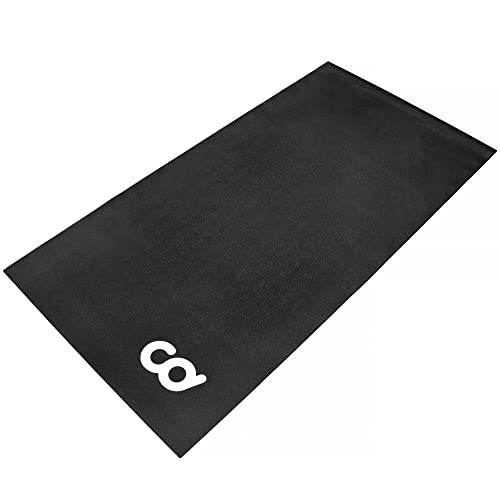
CyclingDeal Bike Trainer Floor Mat (30″ x 60″)

ProsourceFit Tri-Fold Folding Exercise Mat (6’x2′)

GXMMAT Extra Large Exercise Mat (up to 16’x6′)

GXMMAT Large Yoga Mat (up to 12’x6′)

Baselayer Performance Series Interlocking Tiles (½” TPE)

Baselayer CORE Series Interlocking Tiles (½” TPE)
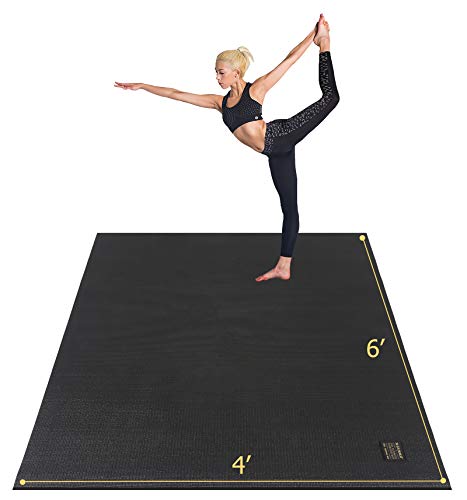
GXMMAT Large Yoga Mat (up to 7’x5′)
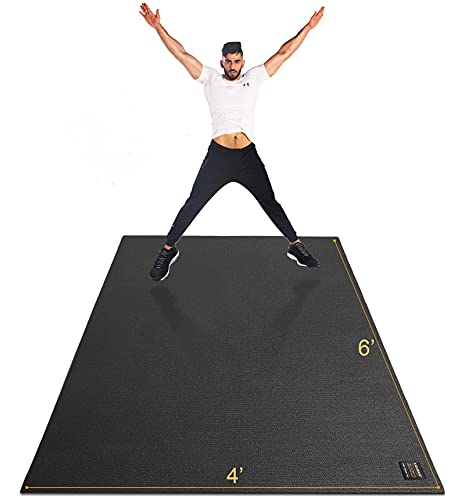
GXMMAT Large Exercise Mat (up to 6’x6′)

Baselayer Balance Series Interlocking Tiles (½” TPE)
Meet The Standout Selections
A single treadmill or spin bike throws a lot at a floor: sweat, vibration, and the slow creep of dust. The CyclingDeal trainer mat is sized for exactly that scenario, giving your gear a defined footprint while catching the sweat spray that would otherwise work its way into carpet fibers.
It measures 30″ by 60″, which lines up well with most cardio machines and gives you a small buffer on either side. Where carpet tends to pill under a treadmill belt, this mat provides a stable, easy-to-wipe surface. For anyone setting up a single-station training corner, this is a tidy, low-profile starting point.
Benefits That Matter
- The 7mm soft PVC feels kinder to dropped accessories than a hard tile, so a stray dumbbell is less likely to crack anything.
- The material is advertised as no-odor, which matters in a small spare room that doubles as your office.
- The PVC surface wipes clean with a damp cloth, making post-ride sweat a 30-second job instead of a carpet shampoo.
- It slides under a heavy spin bike without bunching, so the trainer stays anchored during hard out-of-saddle sprints.
Things To Consider
- The 30″ by 60″ footprint is built for one machine, so it can look undersized in a multi-station room.
- Owners commonly note that softer PVC can hold slight indentations from stationary feet over time.
- On plush carpet the mat may need a flatter base layer to stop the treadmill from rocking.
Quick Facts
Best Suited To
Anyone outfitting a single cardio machine in a spare room or converted corner where sweat and vibration are the main concerns.
Where Another Pick Suits Better
If your training area needs full-room coverage for yoga and strength work, the GXMMAT Extra Large Exercise Mat is the more natural fit.
Mats are bulky, and most people don’t have a spare wall for a permanent roll. The ProsourceFit tri-fold design collapses into a carry-ready rectangle, which makes floor work and stretching practical for renters and shared spaces.
The 6-foot length covers most adults in a reclined stretch, and two mats side by side create a workable training area for partner drills. Compared to the CyclingDeal mat above, this is a body-weight tool rather than a machine pad: you lay it down when it’s time to train, then fold it away when the room needs to do something else.
Features That Help
- The tri-fold shape stores flat against a wall or under a bed, freeing up floor space when you’re not training.
- Two integrated carrying handles make the folded mat easy to haul to a park or a friend’s garage.
- Thickness gives your knees and elbows a more forgiving landing during planks, mountain climbers, and stretching.
- Sets of two expand your usable area without forcing you to commit to one permanent footprint.
Points To Keep In Mind
- Two mats laid together will have a fold seam down the middle that some users find annoying for sprawled-out moves.
- It’s not designed to anchor a treadmill or bike, so it pairs with a hard floor rather than replacing machine-rated flooring.
- The surface texture prioritizes cushioning over aggressive grip, so it may shift on polished concrete.
Right Fit For
Apartment dwellers and renters who want real floor-work cushion without dedicating wall space to a rolled mat.
Not Your Match When
You mainly lift weights or anchor a treadmill; in that case the Baselayer Performance Series tiles are built for heavier abuse.
A standard yoga mat is roughly 6 feet long, which sounds generous until you’re mid-burpee and your feet slide off the back. GXMMAT’s extra-large format flips that script, giving you full-room coverage that behaves more like a portable studio floor than a personal mat.
At 7mm thick, the foam softens hand and knee landings without feeling spongy. The textured surface is made for barefoot work, which suits anyone whose training centers on calisthenics, mobility flows, or short HIIT circuits. Compared to the CyclingDeal trainer mat above, this is a different job: the mat itself is the workout space, not just a vibration pad.
Where It Excels
- Sizes run up to 16 feet long, so a full sun-salutation sequence fits without any mid-pose repositioning.
- The sticky texture is designed for barefoot grip, reducing slips during quick lateral movements.
- The 7mm cushion protects wrists and knees during long planks and kneeling stretches.
- Laying one continuous mat down removes the seam problem you get with the ProsourceFit tri-fold setup.
Trade Offs
- Larger sizes are heavy and bulky, so first-time owners in walk-up apartments may want help moving them.
- It’s not designed for shoes or heavy drops, so leave deadlifts and heavy dumbbells to a tiled floor.
- Foam can hold indentations from stored equipment, so the surface ages with the gear you stack on it.
Key Specs
Perfect Match For
Home studio setups where calisthenics, mobility work, and short cardio bursts share the same floor.
Reach For A Different Pick When
Your training is built around a stationary bike or treadmill; the Baselayer Balance Series tiles handle that scenario with less material waste.
Yoga practice looks calm from the outside, but it demands a lot from the floor: grip during downward dog, cushion under the spine in a long savasana, and enough surface that your hands don’t fly off the edge during a wild pose. GXMMAT’s large yoga mat is engineered around that grip problem.
The double-sided non-slip design pairs a soft top layer with a textured, grooved underside. That combination keeps the mat planted on hardwood, tile, or low-pile carpet while your hands and feet stay locked in. Compared to the ProsourceFit tri-fold above, this mat is built for stillness and balance rather than a tumbling warm-up.
Everyday Advantages
- The double-sided texture is a real upgrade over single-sided mats, which tend to slide when your palms get sweaty.
- A 7mm profile gives joint-friendly cushion for kneeling poses without ruining your balance in standing work.
- The roomy dimensions let you flow through long sequences without constantly stepping off to reposition.
- It rolls and stores like a standard mat once your session is done.
Honest Caveats
- The barefoot-only design means it’s not the right surface if you also want to drop weights or hop on a treadmill in the same spot.
- Larger sizes need space to unroll and a clean surface to grip onto; a dusty base layer can break the seal.
- As with most large foam mats, the heavier formats can feel unwieldy to move solo.
Who Will Love This
Yoga practitioners and pilates regulars who want a stable, grippy surface without the cramped feel of a standard mat.
Skip It When
Your space doubles as a lifting area; in that case the Baselayer CORE Series tiles give you a softer landing for floor work plus more versatility.
Drop a loaded barbell onto foam and the foam loses, every time. The Baselayer Performance Series uses TPE (thermoplastic elastomer, a rubber-like material that’s denser and more resilient than EVA foam) to give you a firmer landing surface tuned for serious iron work.
Each tile is ½ inch thick and 19 inches square, and six tiles cover roughly 15 square feet. The interlocking edges let you build out a lifting platform zone without committing to a full-room install on day one. Made in the USA, the tiles ship odor-free, which is rare for rubber-style gym flooring. Compared to the GXMMAT exercise mat above, this is a permanent installation rather than a roll-out surface.
What Stands Out
- The firm TPE density stands up to deadlifts, kettlebell drops, and sled work without compressing.
- Modular sizing means you can start with a 15-square-foot platform and add tiles as your home gym grows.
- The no-odor construction lets you install in a finished basement without days of off-gassing.
- TPE outlasts EVA foam in raw durability, so the tiles hold their shape through years of repeated impact.
Practical Considerations
- Edges and corners are sold separately, so finishing a clean perimeter adds another step to the planning.
- Firm density is great for weights but feels hard under bare feet during long stretching sessions.
- The ½ inch thickness raises the floor level, so door clearance at the room entrance is worth measuring first.
Feature Snapshot
Built With In Mind
Lifters running a barbell, rack, or selectorized strength setup in a basement, garage, or dedicated room.
Consider Something Else When
Your workouts lean more toward stretching and yoga than loaded movement; the Baselayer CORE Series is softer underfoot for that profile.
Not every home gym revolves around a barbell. For stretching, yoga, pilates, and core work, you want a softer landing and a forgiving surface under your knees. The Baselayer CORE Series drops into the same modular format as the Performance tiles but with a softer feel.
It’s still TPE, still ½ inch thick, still made in the USA, and still ships without that rubber-smell standoff. The difference shows up when you’re holding a low lunge or a kneeling plank; the floor gives a little instead of fighting you. For someone whose training mix is light dumbbells, bands, and lots of floor work, this is a versatile middle ground.
What Pays Off
- The softer TPE density cushions your knees during long stretching routines without the squishiness of foam.
- The same interlocking format as the Performance tiles means you can mix densities in different zones of the same room.
- The non-toxic TPE construction is a meaningful step up from the EVA foam tiles common in this category.
- Modular layout lets you reconfigure or expand the floor as your routine changes.
Worth Bearing In Mind
- Soft density still won’t survive a true barbell drop, so dedicated lifters should pair it with the Performance Series in the rack zone.
- Edges and corners are sold separately, which adds a planning step for clean borders.
- At ½ inch thick, the floor height change can interfere with low-clearance doors.
Spec Overview
Made For
Home exercisers whose routines blend stretching, pilates, and bodyweight work, plus light accessory training.
A Better Fit Elsewhere
If your priority is a quiet, grippy yoga mat rather than a permanent tiled floor, the GXMMAT Large Yoga Mat serves the same purpose more simply.
Not everyone has a spare bedroom to dedicate to yoga. This GXMMAT mat keeps the extra-room concept but at a more compact footprint, with the option of a thicker 9mm build for users who want extra padding under their joints.
The 6×4 and 6×6 sizes slide nicely into a corner of a bedroom or living room without dominating it. Compared to the larger GXMMAT yoga mat above, this is a better match for tighter floor plans where you want a dedicated practice spot but not a permanent floor covering.
Everyday Wins
- The 9mm option is genuinely kind to aging knees, which matters if kneeling poses are part of your routine.
- Smaller sizes are easier to roll, carry, and store than the full-room format.
- Same sticky barefoot surface as the larger GXMMAT yoga line, so grip is consistent across the family.
- It’s a sensible bridge pick if you’re moving from a personal mat into a wider format but aren’t ready for 12-foot coverage.
Less Ideal Details
- Even at 6×6, ambitious flows with arm extensions can run off the edge.
- The 9mm version adds weight, which makes daily unrolling a small workout of its own.
- Not built for shoes or weights, so it pairs with a separate area for any other training.
Whose Shelf It Belongs On
Yoga practitioners with limited floor space who still want more room than a standard 6-foot mat offers.
Where A Sibling Pick Shines
If you have the room and want continuous coverage for the whole session, the GXMMAT Large Yoga Mat (up to 12’x6′) gives you the unbroken floor.
The 16-foot monster mat is overkill for most spare rooms. This mid-size GXMMAT option sits in the practical middle, big enough to sprawl through a workout without taking over the room.
The 6×6 size is a sensible square format for bodyweight circuits where you rotate between standing and floor work. It’s the same 7mm construction as the larger GXMMAT exercise mat, just sized for tighter layouts. For a garage gym corner or a converted den, this format is often the right scale.
Real-World Strengths
- The 6×6 square is genuinely room-friendly and easier to position than the long-format mats.
- The barefoot-tuned surface grips well during push-ups, planks, and yoga poses.
- Light enough for a single person to unroll and reposition as the workout shifts.
- The same cushion profile as the larger GXMMAT mats, so the feel is familiar across the line.
A Few Limitations
- Still a foam surface, so it’s not the right home for a treadmill or any shoe-on cardio.
- Smaller than the full-room format, so wide-arm flows still need awareness of the edges.
- Can develop compression marks where heavy equipment sits on it long-term.
Right Fit For
Garage gyms and spare rooms where a compact, no-fuss mat covers most of the floor-work needs.
Swap It Out When
Your training includes a stationary bike or treadmill; the CyclingDeal trainer mat gives that gear a dedicated landing spot.
The third member of Baselayer’s tile family slots in between the soft CORE and the firm Performance options. The Balance Series is built around lighter cardio gear: stationary bikes, ellipticals, treadmills, and rowing machines.
It uses the same ½ inch TPE construction and 19-inch-square tile format as the other Baselayer lines, which means you can blend densities inside one room. Drop Balance tiles under the cardio machine and Performance tiles in the rack zone without buying two different systems. It’s a smart design choice for mixed-use home gyms.
Useful Touches
- Medium density is tuned for the vibration profile of cardio machines, quieting treadmill thump in particular.
- Compatible with the rest of the Baselayer tile family, so you can mix densities across one floor.
- TPE construction avoids the chemical smell common in foam-based alternatives.
- Modular layout lets you start under one machine and grow outward.
Some Limits To Know
- Edges and corners are still sold separately, which adds a step to the install.
- Not firm enough for heavy barbell drops, so weight zones need the Performance Series instead.
- ½ inch of build-up may interfere with low-clearance doorways.
Who Should Grab It
Anyone building out a cardio-focused home gym and wanting a tile that handles sweat, vibration, and equipment footprint.
Look Elsewhere When
Your floor is dominated by floor work rather than machines; the ProsourceFit tri-fold gives you portable cushion without the install.
Choosing Floorings For A Home Gym That Actually Fits
Match The Floor To The Workout, Not The Other Way Around
A yoga practitioner and a powerlifter need almost opposite surfaces. Stretching routines benefit from a grippy, cushioned mat that moves with the body. Heavy barbell work calls for a firm, dense tile that absorbs impact without compressing. Before buying, list the three or four activities you’ll do most often in that room and weight the flooring decision toward them.
Size Matters More Than Thickness
A 7mm mat the size of a postage stamp protects nothing. Coverage has to extend beyond your equipment footprint or your floor work area, so measure your largest machine plus a foot of buffer on every side. For mat-style floors, lay out your intended zone with painter’s tape before ordering, so you don’t buy short and end up with a seam mid-plank.
Material Choice Drives Daily Feel
PVC, TPE, and EVA foam each behave differently underfoot and under your gear. PVC (polyvinyl chloride) is a soft, no-odor plastic that’s easy to wipe clean. TPE is denser and more durable, with a rubber-like feel that survives drops. EVA foam is light and inexpensive, but tends to compress and hold odors. The right pick depends on how hard your gear hits the floor and how much ventilation your room has.
Build In Room To Grow
Most home gyms evolve: a treadmill today, a squat rack next year, maybe a yoga corner on the side. Modular tiles accommodate that growth far better than a single fixed mat. Tile systems from the same brand let you blend densities in different zones, which matters once your training mix stops being one-dimensional.
What To Watch Before You Click Buy
Common Shopping Slip Ups
The most common mistake is matching flooring to a single piece of equipment you currently own, then realizing six months later that the room has changed. Buying a mat sized exactly to your treadmill means it can’t grow into a small platform if you add a rack. The other frequent miss is ignoring door clearance, since adding ½ inch of tile can scrape a bedroom door that’s never been re-hung.
Where The Extra Money Goes
Premium flooring earns its keep through material density, dimensional accuracy, and the absence of off-gassing. A higher-tier tile uses TPE that doesn’t compress underfoot for years, while budget foam alternatives flatten within months. The upgrade is most worth it when your training is daily and your gear is heavy; for casual users in small spaces, a mid-range mat often delivers most of the value.
Frequently Asked Questions
What thickness of gym flooring do I actually need?
Most home setups land between 7mm and ½ inch. Thinner mats suit yoga and stretching, while heavier weights and machines need closer to ½ inch for impact absorption and vibration control.
Can I install interlocking tiles over carpet?
A low-pile carpet usually works as a base, but plush carpet can cause tiles to flex and seams to separate. A flat hard floor or plywood underlayment is the safer long-term choice for full-room installs.
How do I clean rubber or TPE gym flooring?
A damp mop with mild soap handles most sweat and dust. Avoid harsh solvents on TPE, since they can break down the surface over time. Regular dry sweeping keeps grit from grinding into the texture during barefoot use.
Will one mat cover my whole home gym?
That depends on the room and the equipment. A treadmill alone may need only a 5×7 foot zone, while a full studio with bodyweight work can call for a 10-foot-plus mat. Measure the largest active zone first, then size outward.
Are interlocking gym tiles worth the extra effort?
For permanent or semi-permanent rooms, yes. Tiles give you repairable sections, blended densities, and clean edges if you buy the finishing pieces. Roll-out mats are faster to install but harder to repair or reconfigure later.
Closing Remarks
The best flooring for a home gym is the one that fits how you actually train, the gear you actually own, and the room you actually have. Match the format to your dominant activity, give yourself coverage to spare, and pick a material you can live with on a daily basis. Any of these nine will serve you well; the real choice is which trade-off fits your routine best.




