

A float valve does a small job, but the wrong one makes a big mess. Whether you top off a backyard pond, silence a noisy toilet cistern, or restore a Manitowoc ice machine to its old rhythm, the right valve keeps water exactly where it should be. This lineup covers genuine OEM replacements, large-flow trough valves, RO system kits, and simple adjustable fillers, so you can match the hardware to the job instead of guessing.
The Main Contenders

Manitowoc Ice 8369049 Float Valve With Instructions

Cornat Universal Cistern Filling Valve 50mm Flat Float
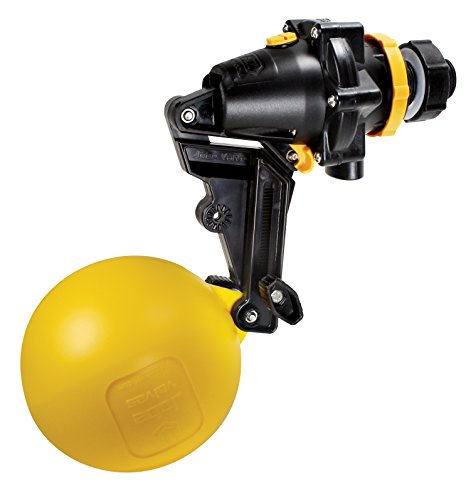
Jobe Valves J-TPV0100DLT Topaz Trough Valve 4.9″ Float

1/4″ Tube Float Valve Kit for RO Systems (15ft Pipe)
Blulu 3 Pack 1/2″ Automatic Fill Float Valve (Gray)
Blulu 3 Pack 1/2″ Automatic Fill Float Valve (Dark Gray)

Blulu 3 Pack 1/2″ Automatic Fill Float Valve (Black)

Stens 056-154 Float Valve Kit, Tecumseh 631021B

Kerick Valve SR12 Stainless Steel Rod for Float Valve 12″
The Details Behind The Selections
The Manitowoc 8369049 exists for one very specific reason: a commercial ice machine that suddenly fills, overflows, or starves itself because its old float valve has finally given up. As an OEM-approved part, it slots straight into compatible Manitowoc units without the fitment gamble that aftermarket alternatives can introduce. The included instructions matter more than they look, since small commercial ice heads live in tight, sometimes awkwardly plumbed spaces.
Compared to the universal fillers lower in this list, this one is not a general-purpose tool. It’s a targeted replacement for a specific machine family, which is exactly the point. If you service cafés, bars, or back-of-house kitchens, keeping one on the shelf can shave hours off a service call.
Notable Gains
- Approved by the original manufacturer, so fit and tolerances match the host unit
- Printed instructions simplify the swap for technicians and owners doing the work themselves
- Restores proper fill levels in commercial ice heads, preventing both under-ice production and reservoir overflow
- A real time-saver for anyone maintaining multiple Manitowoc units across a venue or facility
Worth Noting
- Only useful if you own a compatible Manitowoc model, so it is not a general repair option
- Intended for original use only, meaning retrofitting it into non-Manitowoc equipment is not the goal
Quick Facts
Whose Shelf It Belongs On
Service technicians, restaurant operators, and facility managers who maintain Manitowoc commercial ice equipment.
Where Another Pick Suits Better
For general home water-level tasks like a pond or stock tank, the Blulu 1/2-inch automatic fill valve is a better everyday fit.
The Cornat universal filling valve is built for the kinds of cisterns you find behind European walls, the deep, high-hung type where a standard compact ballcock simply does not reach. The flat 50 mm float body slides into narrow spaces where a taller float would bind, and the float travel adjusts to dial in the flush volume. It is the kind of part that solves a problem most American plumbing aisles ignore entirely.
Think of it as the bathroom counterpart to the larger trough valves below. Where the Jobe Topaz is built for a horse tank, the Cornat is built for a tiled wall cavity. The trade-off is geography: this is an international-market part, and the local plumbing norms where you live may differ from its design intent.
The Upside
- Engineered for deep and high-hanging cisterns that reject shorter valves
- Flat 50 mm float body fits confined installations where taller floats collide with the lid
- Adjustable float lets you tune the fill volume to match the cistern and household preference
Trade Offs
- Sold through an international storefront, so labeling and included instructions may not be in English
- Manufacturer warranty coverage does not always extend across borders, leaving some shoppers on their own for support
Right Fit For
Homeowners and plumbers working on European-style high-level or in-wall cisterns who need a slim, adjustable filler.
Skip It When
You service standard North American low-profile tanks, where a generic Fluidmaster-style valve is easier to source and support.
The Jobe Topaz is the workhorse of this list. It is a pilot-operated diaphragm valve with a 4.9-inch float and a rated flow of 200 liters per minute at up to 100 PSI, so it keeps up with the kind of demand a livestock trough or large cistern puts on a supply line. The detach long-tail fitting and 1-inch NPT inlet make it friendly to standard farm and rural plumbing setups, while the non-corrosive body shrugs off mineral-heavy well water.
Mounting flexibility is the underrated story here. It can sit above or below the waterline, horizontal or vertical, with no tools required to adjust the float setpoint, which matters when you are leveling a stock tank at the back of a paddock with a half-roll of teflon in your pocket. The Frostpro port and shutoff switch are the kind of details that earn their place the first time the temperature drops below freezing.
What Helps Most
- Pilot-operated diaphragm design handles high flow and pressure that simpler float valves cannot match
- Non-corrosive construction suits outdoor troughs, mineral-rich well water, and long service life
- Tool-free adjustable float and four-way mounting cover almost any field installation
- Anti-freeze port and lock-off switch add real cold-weather and maintenance flexibility
Points To Keep In Mind
- Oversized for a small backyard pond or modest trough, where a 1/2-inch Blulu is a simpler match
- Larger flow capacity also means it fills a leak very quickly, so the shutoff switch earns its keep
Spec Overview
Made For
Smallholders, ranchers, and rural property owners running high-demand troughs, cisterns, and large storage tanks.
Look Elsewhere When
You only need a quiet autofill for a residential pool or decorative pond, where the Blulu 1/2-inch pack is a friendlier size and price.
Most of the valves on this list think in inches and gallons. This 1/4-inch tube kit thinks in milliliters and John Guest fittings, the language of reverse osmosis and beverage equipment. It bundles a push-in ball valve, an L-fitting, and 15 feet of tubing, so a home brewer or coffee bar owner can stage a reservoir autofill without buying a drawer of adapters. The BPA-free claim is meaningful here, since the water is destined to be consumed.
Compared to the Blulu units, the operating scale is much smaller, but that is the design goal. The reusable push-in connectors let you reposition the float as your setup evolves, and the long included pipe means the reservoir can sit away from the supply line. The honest read is that this is a specialty kit: overkill for a garden, undersized for a stock tank, and right on target for a small RO loop.
Useful Highlights
- Push-in connectors mean no clamps, no thread tape, and quick reconfiguration
- BPA-free tubing keeps the path safe for drinking water and beverage service
- 15 feet of included pipe gives layout freedom between supply and reservoir
- Reusable fittings tolerate teardown for cleaning or seasonal storage
Some Limits To Know
- 1/4-inch scale is too small for whole-house, pond, or trough duty
- Push-in fittings rely on clean, square-cut tubing ends, so sloppy cuts can cause slow seepage over time
Best Suited To
Home RO owners, espresso enthusiasts, and small commercial beverage setups that need a tidy reservoir autofill.
Another Choice May Suit
For anything larger than a few gallons, the Jobe Topaz handles real flow without choking on demand.
The Blulu 1/2-inch automatic fill valve is the everyday workhorse most people actually need. It runs on the simple principle of a pivoting float arm: rise with the water, close the inlet, hold the line, then drop and refill on demand. Sold in a three-pack, it lets you wire up a pool autofill, a stock trough, and a backup unit at the same time, which is rare at this tier.
The 180-degree adjustable arm is the practical headline, since it lets you set the shutoff height without swapping parts. For most backyard setups, that single feature is what makes the difference between fiddling with shims and walking away from a working install. Compared to the Jobe Topaz above, the flow ceiling is lower, but the package is friendlier to a homeowner with a single adjustable wrench.
Benefits That Matter
- Three-pack pricing makes whole-property coverage affordable, including a spare for the shelf
- Adjustable arm swings more than 180 degrees, so the same valve fits shallow and deeper tanks
- Automatic shutoff eliminates overflows on unattended pools, ponds, and troughs
- 1/2-inch inlet matches common garden and residential supply lines
A Few Limitations
- Plastic body tolerates normal use but can crack if overtightened during installation
- Not a match for high-pressure or high-flow systems like the Jobe Topaz handles
Key Attributes
Perfect Match For
Homeowners running pool autofills, decorative ponds, and small livestock waterers on standard residential plumbing.
Reach For A Different Pick When
You need a true OEM part for a specific appliance, where the Manitowoc 8369049 is the only correct answer.
This dark gray Blulu pack carries the same working internals as its lighter sibling, but the deeper color does more than change aesthetics. In a backyard setting where sunlight hits plastic parts all afternoon, a darker body tends to blend in and hide the kind of algae staining that makes a light gray valve look tired by midsummer. Functionally, it behaves identically: pivoting float, automatic shutoff, and the same wide arm swing.
The honest read is that you are choosing this for visual reasons as much as anything, and that is a perfectly valid reason. The mechanical heart is the same proven arm-and-inlet design that makes the whole Blulu 1/2-inch family reliable. Where you might prefer the lighter gray is in a basement utility area where you want a glance to confirm the float position easily.
The Practical Payoff
- Darker finish disguises outdoor weathering and mineral staining over time
- Same three-pack value, so multiple water features can be automated at once
- Wide arm adjustment fits shallow ponds and deeper troughs with the same hardware
- Drop-in replacement friendly if you already know the 1/2-inch Blulu form factor
Honest Caveats
- Color difference is cosmetic, so you are not gaining any mechanical upgrade over the gray version
- Same plastic-body cautions apply, especially around over-tightening on threaded connections
Who Should Grab It
Homeowners who want the same Blulu 1/2-inch performance but prefer a darker finish that hides outdoor wear.
Not Your Match When
You actually need more corrosion resistance, where the black stainless-reinforced Blulu pack is the smarter outdoor choice.
This is the rugged member of the Blulu 1/2-inch trio. The body combines stainless steel and PE/PVC components, which addresses the single biggest complaint about all-plastic float valves: a UV-baked housing that gets brittle after a couple of seasons. For a permanent outdoor install, like a koi pond autofill or a year-round stock waterer, that material upgrade is the difference between a valve you replace and one you forget about.
Same automatic-fill principle, same wide arm swing, same three-pack value. Where the gray and dark gray versions are color twins, this one is the durability play. In our view, it is the version worth buying first if the valve will live outside and stay there.
Positive Points
- Stainless steel reinforcement adds real outdoor durability over all-plastic equivalents
- PE and PVC contact parts are designed for potable and livestock water use
- Three-pack format leaves a working spare for a quick swap if a unit wears out
- Adjustable arm supports both shallow and deeper reservoir installations
Where It May Fall Short
- Heavier body means it benefits from a sturdier mounting surface than a thin tank rim
- Slightly higher cost than the all-plastic Blulu packs, which matters if the valve is going somewhere disposable anyway
Feature Card
Who It Suits Best
Homeowners and smallholders installing permanent outdoor autofills for ponds, fountains, and livestock waterers.
Swap It Out When
The job is an indoor cistern or a tight-bathroom European install, where the Cornat universal filling valve fits the space better.
The Stens 056-154 is the odd duck in this roundup, and that is the point. It is a float valve kit for small engine carburetors, specifically replacing the Tecumseh 631021, 631021A, and 631021B series used on a long list of Tecumseh engines. If your snowblower, chipper, or pressure washer runs rich, stalls under load, or leaks fuel from the bowl, the float valve is a prime suspect, and this kit is the targeted fix.
Where the rest of this list manages water, this one manages gasoline, so the operating environment is completely different. The fact that it covers three part numbers at once is the practical win, because it lets one kit sit on a workshop shelf and serve multiple machines across a fleet. It is not a household item, and that is exactly why it earns its spot.
A Few Highlights
- Replaces three Tecumseh float valve part numbers in a single SKU, simplifying parts inventory
- Broad engine coverage across the H, HMSK, HSSK, OHV, LV, and VM series Tecumseh families
- Targets a known failure mode, fuel-level instability, without replacing the entire carburetor
Practical Considerations
- Not compatible with gasoline containing more than 10 percent ethanol, which limits use with modern pump fuel in some regions
- Requires carburetor disassembly, so it is not a beginner repair on its own
Built With In Mind
Small engine technicians and DIY mechanics maintaining Tecumseh-powered equipment from lawn tractors to snowblowers.
Consider Something Else When
The project is water management, not fuel management, where any of the Blulu or Jobe options above are the right tool.
The Kerick SR12 is not a complete float valve, it is the linkage component that makes one work. This 1/4-inch-diameter stainless steel rod, 12 inches long, threads into a female 1/4-20 connection and runs between a float and a valve body. In other words, it is the part you reach for when the original rod corroded, snapped, or simply is not long enough for the tank you actually own.
It is the most niche pick in this roundup, useful mainly to anyone assembling a custom float valve setup or repairing an existing stainless-bodied valve. The Kerick SS1200 valve bodies are the intended companions, so matching the model family is the first move. For most shoppers, this is a part they only buy when they already know they need it.
Useful Touches
- Stainless steel construction resists rust in wet, humid, or outdoor tank environments
- Standard 1/4-20 threaded connection fits common float valve hardware
- 12-inch length suits deeper tanks where shorter stock rods come up short
- Made in the United States, which is a small but real plus for sourcing visibility
Small Caveats
- This is a component, not a complete valve, so beginners may want a full assembly instead
- 1/4-inch diameter limits it to light-duty float applications, not heavy commercial use
Feature Snapshot
Who Will Love This
Workshop tinkerers and technicians building or repairing custom stainless float valve assemblies for deeper tanks.
A Better Fit Elsewhere
For an out-of-the-box residential autofill, the Blulu 1/2-inch pack delivers a complete ready-to-install valve.
What Matters Most Before Choosing Float Valves
Match the Valve to the Fluid and the Pressure
Float valves are not one-size-fits-all, and the first decision is what is actually flowing through them. A residential pool autofill deals with low-pressure municipal water, while a livestock trough may see higher-pressure well supply, and a Tecumseh carburetor is handling gasoline, not water at all. Pick a valve rated for the fluid type and the pressure range of the system, otherwise the shutoff seal and the float mechanism will not behave the way you expect.
Consider Flow Rate, Connection Size, and Mounting Geometry
Flow rate decides how fast a tank refills, and undersizing it leaves you with a slow trickle. Connection size, typically 1/4 inch, 1/2 inch, or 1 inch NPT, has to match your supply plumbing without a stack of adapters. Mounting geometry matters more than people think: a deep cistern wants a tall float arm, a shallow trough wants a compact one, and a European in-wall cistern may need a flat 50 mm float body just to clear the lid.
Materials, Adjustability, and Outdoor Exposure
Materials determine lifespan. All-plastic valves are affordable and fine for covered or seasonal installs, but UV and temperature swings punish them. Stainless and reinforced bodies hold up longer outdoors. Adjustability, especially a wide-swinging float arm, is what lets a single valve serve tanks of different depths without custom shimming. For cold climates, look for anti-freeze ports or lock-off switches that simplify winter service.
Key Considerations Across These Picks
Pitfalls Shoppers Hit
The most common mistake is choosing a valve by price alone, then discovering the inlet size or pressure rating does not match the supply line. Another is grabbing a generic 1/2-inch filler for a high-flow trough and wondering why the water level never quite catches up. The third is using a non-OEM part where the appliance manufacturer specifies OEM, which can complicate any future service or warranty conversation.
Where The Extra Money Goes
Spending up usually buys three things: higher flow capacity, better corrosion resistance, and a more adjustable float mechanism. A premium valve like the Jobe Topaz delivers flow and pressure that a budget plastic arm cannot match, while a stainless-reinforced Blulu trades a few extra dollars for a body that survives multiple seasons outdoors. The upgrade pays off when the valve lives outside, runs often, or sits in a system where failure means water damage rather than just a dry trough.
Frequently Asked Questions
What is a float valve used for?
A float valve automatically controls water level by rising and falling with the liquid, opening the inlet when levels drop and closing it when the setpoint is reached. It is common in tanks, troughs, cisterns, pools, and some appliance reservoirs.
How do I know which float valve size I need?
Check the supply line connection first, since 1/2-inch, 3/4-inch, and 1-inch NPT are the common sizes, and match it to your existing plumbing. Then confirm the valve’s flow and pressure ratings cover your system’s demands.
Can float valves be used for drinking water?
Many can, especially those with BPA-free plastic or stainless steel contact parts, but you should always confirm the manufacturer’s specifications before using one in a potable line. Specialty kits like the 1/4-inch RO valve are designed with drinking water in mind.
Why does my float valve keep running or leaking?
Common causes include a worn seal, a stuck float, debris on the valve seat, or an arm that has slipped out of adjustment. Cleaning the seat and re-leveling the float often resolves the issue, and replacement is straightforward with adjustable designs like the Blulu line.
Are OEM float valves worth the extra cost?
For specific appliances like commercial ice machines, OEM parts reduce fitment risk and keep the equipment in its intended configuration. For general-purpose water tanks, a quality aftermarket valve usually performs just as well at a friendlier price.
Final Verdict
The right float valve is the one that matches your fluid, your flow, and your environment. Reach for the Jobe Topaz when flow and durability matter most, the Blulu black pack when the install lives outside year-round, the Manitowoc part when an ice machine needs a known-good replacement, and the RO kit when the loop is small and the water is for drinking. Pick the valve that fits the job, install it once, and let the water manage itself.




