

A chair that fights you by hour three is a productivity tax you pay every single day. Remote workers, hybrid professionals, and self-employed creatives all run into the same wall: hours of focused work demand lumbar support that actually adapts, armrests that don’t shove your elbows into bad angles, and a mesh back that lets heat escape before you start shifting in your seat. The picks below span mesh task chairs, padded long-haul models, and reclining options with footrests, so you can match the chair to the way you actually work rather than the way a spec sheet says you should.
The Leading Options At A Glance
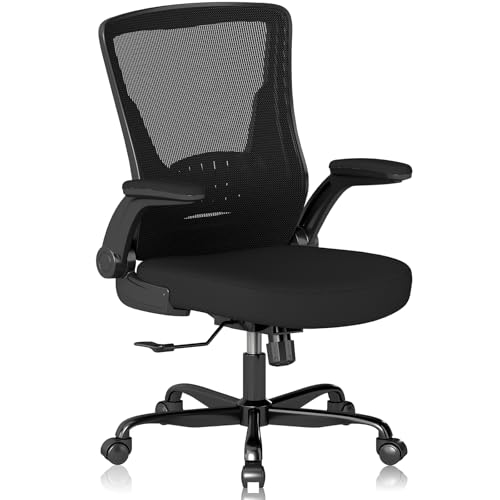
Vomena Ergonomic Mesh Desk Chair with Flip-up Armrests

Hbada E3 Pro 2026 Edition Ergonomic Office Chair (Black)
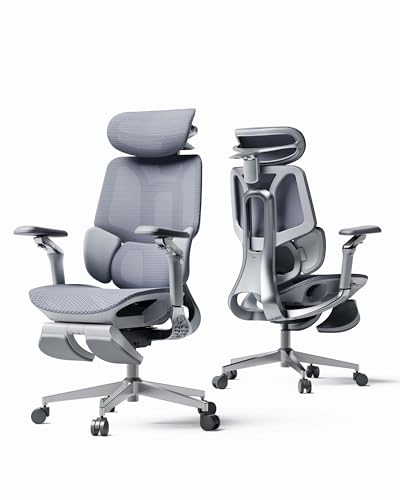
Hbada E3 Pro 2026 Edition Ergonomic Office Chair (Grey)
Hbada E3 Air 2026 Ergonomic Office Chair, Auto Recline

Zeonsit Ergonomic Office Chair for Long Hours, 330 lb Capacity

TRALT Ergonomic Desk Chair, Adjustable Lumbar, Mesh (Black)
TRALT Ergonomic Desk Chair, Adjustable Lumbar, Mesh (Cloud White)

TRALT Ergonomic Desk Chair, Adjustable Lumbar, Mesh (White)

Humergo Ergonomic Mesh Desk Chair with Footrest
A Breakdown Of The Leading Choices
The Vomena lands first because it solves a quietly common problem: not every home office has elbow room. Flip-up armrests swing out of the way so you can slide the chair close to a narrow desk, which matters more than spec sheets admit. The breathable mesh back handles long video calls without the sticky-back feeling, while the foam seat cushion stays forgiving through afternoon blocks.
Compared with the heavier-duty Hbada E3 Pro later in this list, the Vomena is friendlier to small setups and shared dining-table desks. You won’t get the deep lumbar articulation of premium picks, but you also won’t be wrestling a giant base through a doorway.
What Earns Its Place
- Flip-up armrests tuck the chair under low desks and free up the side profile in tight rooms.
- Mesh back panels promote airflow during multi-hour stretches, reducing the back-sweat cycle that foam chairs trap.
- Dense foam seat balances softness with enough structure to avoid the “bottoming out” feel after a year of daily sitting.
- Five-point ergonomic support distributes pressure across shoulders, hips, and hands during mixed sitting and standing workdays.
Honest Caveats
- Lumbar support is fixed rather than adaptive, so users with specific curvature needs may feel under-supported during long leaning-forward sessions.
- Mesh tension can loosen over time, and owners commonly mention needing to retighten the back tension knob after several months of daily use.
Right Fit For
Students and remote workers with compact desks who need a breathable, lower-fuss chair for daily mixed use.
Look Elsewhere When
Power users sitting eight-hour shifts benefit more from the adaptive lumbar of the Hbada E3 Pro 2026 Edition (Black).
The E3 Pro’s signature move is its 3-zone floating lumbar system, which uses gravity rather than motors to stay in contact with your spine as you shift. The lateral wings pivot across a wide range and the vertical track targets the L1-L5 vertebrae (the five segments that take the most punishment during seated work), so the support follows you whether you’re typing upright or leaning into a call. You also get an upgraded 4D dual-axis headrest for fine neck positioning and 720° armrests that move in nearly every direction.
Where the Vomena offers flip-up simplicity, the E3 Pro trades that for serious adjustability. The included footrest extends its usefulness beyond the desk itself, making it a thoughtful upgrade for anyone whose back has started voicing opinions during long sprints.
The Good Stuff
- 3-zone lumbar adapts dynamically, so the gap between chair and lower back stays closed whether you recline or lean forward.
- 4D dual-axis headrest enables fine tuning for users between roughly 5’2″ and 6’2″ without forcing a fixed neck angle.
- 720° armrests pivot enough to support phone calls, mouse work, and keyboard pauses in the same session.
- Footrest extends the chair’s role into short rest breaks without dragging a separate ottoman into the office.
Trade Offs
- The adjustment surface area is wider than on simpler chairs, so first-time setup takes longer and may require re-reading the manual.
- Mesh and plastic components need occasional dusting, and the multi-joint armrests collect grime in the pivot seams.
Best Suited To
Knowledge workers and developers who log six-plus hours a day and want their chair to absorb posture shifts without manual fiddling.
Consider Something Else When
Taller users needing extra legroom may prefer the Zeonsit Ergonomic Office Chair for Long Hours with its 330 lb capacity frame.
This is the same E3 Pro chassis you just read about, dressed in a softer grey mesh that photographs better against white desks and Scandinavian-style interiors. Mechanically it behaves identically, with the gravity-driven 3-zone lumbar, the dual-axis headrest, and the 720° armrests carrying over without compromise.
The grey finish is a small detail that matters if the chair lives in a visible corner of a living-room office. Where the black sibling fades into a dim corner, this one reads as part of the room rather than office equipment on loan.
A Few Strong Suits
- Identical 3-zone floating lumbar support as the black version, so you don’t trade ergonomics for aesthetics.
- Grey mesh tones blend with warm wood desks and pastel accent walls better than stark black frames.
- Retractable footrest still extends comfort into post-call breaks, making it a true all-day perch.
Points To Note
- Lighter mesh shows dust and lint more readily, so weekly wipe-downs become part of the routine.
- The colour is purely cosmetic, so anyone choosing this over the black version is paying for the look rather than extra function.
Made For
Style-conscious remote workers who want the E3 Pro’s adjustment depth without a heavy black frame dominating the room.
Skip It When
The TRALT Office Chair in Cloud White suits a similar aesthetic at a friendlier entry point for lighter daily use.
The E3 Air leans into recovery. Its 3-zone elastic lumbar system actively fills the lower-back gap that flat cushions leave behind, while an auto recline function takes over the tilt work between work mode and rest mode. The 140° tilt range gives your spine room to decompress between Pomodoro blocks.
Compared with the E3 Pro, the Air trims some manual fine-tuning in favour of automated recline that responds to body weight. If you’ve ever caught yourself reaching for the tilt lever mid-task, you’ll appreciate that it handles the angle changes quietly in the background.
Benefits That Matter
- Auto recline adjusts to body weight, so transitions between upright typing and reclined reading happen without manual lever work.
- 3-zone elastic lumbar closes the gap that budget chairs leave in the lower spine during long programming or writing sessions.
- 4D headrest and armrests keep the chair’s adjustment language consistent with the wider Hbada line.
Worth Bearing In Mind
- The auto recline adds weight to the mechanism, so moving the chair between rooms is slightly harder than the Vomena or TRALT picks.
- Recline tension is preset, and users under 130 lb may find the auto-return slower than expected without manual override.
Who Will Love This
Writers, designers, and engineers who break up deep work with short rest cycles and want the chair to handle the transitions.
A Better Fit Elsewhere
The Humergo Reclining Mesh Desk Chair with Footrest is a more direct recline-and-elevate option for users wanting a built-in footrest.
The Zeonsit earns its slot because it takes the long-haul brief seriously. A 330 lb weight capacity signals a sturdier base, gas cylinder, and frame than many mesh task chairs offer, and the padded lumbar support targets lower-back fatigue without forcing you to learn a complex adjustment scheme.
Where the Hbada chairs push adjustability to the limit, the Zeonsit focuses on straightforward, repeatable comfort. That makes it a smart pick for shared workspaces where multiple users hop into the same chair without wanting to recalibrate everything.
What Stands Out
- Padded lumbar delivers cushioned relief rather than the firmer “push-back” feel of mesh-only lumbar systems.
- 330 lb capacity accommodates a wide range of users, including taller folks who stress lighter frames over time.
- Breathable mesh back pairs with a foam seat to balance airflow and pressure distribution for study sessions.
Some Limits To Know
- Padded lumbar is less adjustable than the Hbada E3 Pro’s 3-zone system, so users with specific curvature may want more targeting.
- The chair’s footprint and frame are noticeably larger than the Vomena, which can crowd compact rooms.
Quick Facts
Perfect Match For
Taller users, shared workspaces, and anyone needing a robust chair that handles longer shifts without manual fine-tuning.
Reach For A Different Pick When
Users wanting advanced lumbar articulation should look at the Hbada E3 Pro 2026 Edition (Black) instead.
The TRALT black mesh chair is the sensible anchor of the roundup. Its high-resilience molded foam seat holds shape far longer than the budget foam that flattens inside a year, and the adjustable lumbar panel moves to match your spine rather than locking into a fixed curve. The mesh back keeps heat moving during back-to-back meetings.
It’s the chair to pick when you need ergonomic basics done right without chasing premium adjustment features. The Hbada E3 Pro offers more lumbar articulation, but it also asks more from your setup time and your wallet.
Features That Help
- Molded foam seat maintains its cushion and bounce over daily use, avoiding the sag that cheap foam develops.
- Adjustable lumbar panel moves up and down, fitting shorter and taller torsos without leaving a gap in the lower back.
- Mesh back supports long sitting sessions without trapping body heat against the spine.
Where It Is Less Suited
- Lumbar adjustment is positional rather than dynamic, so active users may miss the moving support the Hbada E3 Air offers.
- Armrest padding is thinner than premium picks, and heavy typists may want a softer elbow rest over time.
Feature Snapshot
Who Should Grab It
First-time chair shoppers and remote workers who want reliable ergonomic fundamentals without paying for advanced adjustments.
Where Another Pick Suits Better
Users wanting deeper lumbar targeting throughout the workday will benefit more from the Hbada E3 Pro 2026 Edition (Black).
This Cloud White variant keeps the same molded foam and adjustable lumbar panel as the black TRALT, but the lighter palette makes it a natural fit for bright home offices. It disappears into Scandinavian or minimalist setups where a heavy black frame would dominate.
Beyond colour, it’s the same workhorse design. That makes it the right pick for shared family spaces where multiple people use the same chair but the room’s aesthetic dictates lighter tones.
Reasons It Performs
- Cloud White finish softens the chair’s visual weight in light-toned rooms and shared living spaces.
- Molded foam seat keeps its shape under mixed use, whether the chair hosts a workday or homework session.
- Adjustable lumbar covers a wide range of users without manual recalibration between sessions.
Possible Compromises
- White mesh shows stains and scuffs more readily than black mesh, so quick wipe-downs matter more over time.
- The aesthetic upgrade is largely cosmetic, so it’s worth confirming you actually need the lighter finish before paying extra over the black model.
Built With In Mind
Style-focused home offices and family rooms that double as work areas and benefit from a chair that blends into the décor.
Swap It Out When
Strict office setups may find the Hbada E3 Pro 2026 Edition (Grey) a closer match for both aesthetics and deeper ergonomics.
The White finish keeps the same chassis as the Cloud White sibling, with a slightly crisper tone that pairs well with bright, modern desks. Underneath the colour, the molded foam seat and adjustable lumbar panel deliver the same workday fundamentals that make the TRALT line a reliable budget pick.
Where the Hbada E3 Pro in Grey leans toward a warmer room, the TRALT White keeps the palette cooler and more contemporary.
Useful Highlights
- Crisp white mesh finish pairs with light wood and laminate desks common in modern home offices.
- Molded foam seat cushion supports extended sessions without flattening quickly under daily load.
- Adjustable lumbar system lifts and lowers to support different torso lengths in a shared family setup.
Soft Spots
- White mesh needs more frequent cleaning than darker options, especially in homes with pets or kids.
- The adjustment range is more limited than the Hbada E3 Pro, so very specific posture needs may go unmet.
Whose Shelf It Belongs On
Home offices with cool-toned décor and users who want dependable ergonomic basics in a brighter finish.
Another Choice May Suit
Users prioritising the recline-and-rest cycle should consider the Humergo Reclining Mesh Desk Chair with Footrest instead.
The Humergo earns its place by treating recline as a first-class feature rather than an afterthought. The recline range runs from an upright 90° to a deeply relaxed 145°, and a retractable footrest slides out so the chair becomes a recliner when you need a real break. The adjustable lumbar uses a movable crossbar with 2cm of depth travel, letting you dial in the curve against your spine.
Where the Hbada E3 Air handles transitions automatically, the Humergo invites you to lean back manually and stay there. The 45° rotating headrest rounds out the rest posture, supporting the neck during those longer pauses.
The Case For It
- Retractable footrest converts the chair into a recliner for short breaks, removing the need for a separate ottoman.
- 2cm lumbar depth adjustment lets you fine-tune how aggressively the chair pushes back on the lower spine.
- 90-145° recline range covers deep focus, casual reading, and full rest without leaving the chair.
Factors To Consider
- The footrest mechanism adds moving parts, and owners commonly mention giving the sliders a quick wipe-down weekly to keep them gliding smoothly.
- Reclined posture isn’t ideal for sustained typing, so you may shift between this chair and an upright task chair during the day.
At A Glance
Right Fit For
Remote workers and home-office parents who want the same chair to handle focused work and recovery breaks between tasks.
Not Your Match When
Users needing adaptive lumbar that follows active posture shifts should consider the Hbada E3 Air 2026 with auto recline instead.
What To Weigh Before Choosing Your Home Office Chair
Match The Lumbar To Your Lower Back
Lumbar support is the single feature that separates a chair you tolerate from one you forget you’re sitting in. The L1-L5 vertebrae carry most of the seated load, so support that targets this region reduces the slump that creeps in by hour two. Fixed lumbar panels work for many users, but dynamic systems that move with your torso suit anyone who shifts between upright typing and reclined reading. Try matching the chair’s adjustability to how restless you actually sit.
Think About The Day, Not Just The Chair
A chair that feels great in a showroom can fail a long Tuesday. Mesh backs handle heat better during extended sessions, while padded seats spread pressure more evenly for users who sit without shifting. Footrests and recline ranges matter more than people expect because they let your body change position without leaving the chair. Before choosing, picture your actual day: calls, deep work, breaks, and the way you transition between them.
Size The Chair To The Room And The User
Compact desks and small home offices need flip-up armrests or narrower frames that tuck under work surfaces. Taller or broader users need a longer seat pan, taller back, and a base that handles higher weight capacity without flex. The 330 lb capacity of the Zeonsit signals a sturdier frame, while the flip-up arms of the Vomena signal a smaller footprint. Match the chair’s physical envelope to the body using it, not just to the price.
Smart Considerations Across The Round
Pitfalls Shoppers Hit
The most common mistake is choosing a chair that looks ergonomic but offers only a fixed lumbar panel. Without adjustability, the chair supports an average body, not yours, and the gap between seat and lower back reappears by mid-afternoon. Another trap is ignoring seat foam quality: budget foam flattens within months, turning a comfortable chair into a hard plank. Mesh tension, armrest pivot range, and base stability are worth checking before you commit, since these details quietly shape how long the chair stays usable.
Where The Extra Money Goes
Higher-tier chairs in this category spend the premium on dynamic lumbar systems, multi-axis headrests, and recline mechanisms that handle transitions automatically. The Hbada E3 Pro and E3 Air invest in parts that follow your posture rather than waiting for you to adjust them, which pays off across long shifts. Footrests, wider armrest pivots, and denser foam add up to a chair that stays comfortable long after cheaper picks start to sag. For users logging serious hours, that upgrade is usually worth it.
Frequently Asked Questions
How Long Should An Ergonomic Office Chair Last?
A well-built mesh chair typically holds up for several years of daily use, though seat foam and lumbar tension are the first parts to wear. Rotating between users or shifts extends lifespan further.
Are Mesh Backs Better Than Padded Backs?
Mesh backs breathe better and resist heat buildup during long sessions, while padded backs often feel softer out of the box but can trap warmth. The right choice depends on your climate and how long you sit without breaks.
Do I Need A Footrest On My Office Chair?
A footrest helps if your feet don’t sit flat on the floor when the seat is at the correct height for your desk. It also encourages position changes during long sitting blocks.
Is A Higher Weight Capacity Always Better?
A higher capacity usually signals a sturdier frame, gas cylinder, and base, which benefits every user, not just heavier ones. It reduces wobble and extends the chair’s usable life.
Can One Chair Work For Multiple Users?
Yes, as long as it offers enough lumbar, armrest, and height adjustment to cover the tallest and shortest users. Chairs with movable lumbar panels and 4D armrests handle shared use most gracefully.
Closing Thoughts
The right ergonomic chair lines up with the way you actually work: the hours you log, the room you work in, and the posture shifts your body makes during the day. Mesh models suit warm rooms and long sessions, padded chairs favour users who want cushioned relief, and reclining picks with footrests turn breaks into a real reset. Trust the chair that matches your routine, and the rest of the workday tends to fall into place.




