

Drawing clean water from a private well shouldn’t feel like guesswork. Rural households, small farms, and off-grid cabins all share the same quiet problem: how do you move groundwater reliably, day after day, without babysitting the pump? A deep well jet pump sits at the heart of that system, pulling water up from significant depths and pushing it through your plumbing at steady pressure. Choosing the wrong one means low flow at the kitchen tap, a pump that loses prime in summer heat, or worse, a motor that burns out after a season.
The ten pumps below cover the full range of what you’d realistically install at a home or small property. Some are shallow well specialists (suction lifts to about 25 ft), others convert for deeper wells with the right jet package. The list mixes cast iron workhorses, fiberglass-reinforced housings, and convertible designs so you can match the pump to the well depth, the daily water demand, and the electrical service you already have. Every pick is evaluated on what it actually does in the field: priming behavior, pressure output, build materials, and the kind of maintenance it asks of you over time.
How The Shortlist Stacks Up

Orceed GT20 Self-Priming Centrifugal Pump 2 HP

STA-Rite SND-L Shallow Well Jet Pump 3/4HP

Pentair SNE-L 1 HP Shallow Well Jet Pump

Pentair Sta-Rite SLC-L 1/2 HP Convertible Jet Pump

RJS-75-PREM Premium Cast Iron Shallow Well Jet Pump

SWS75 Premium Cast Iron Shallow Jet Well Pump 3/4 HP
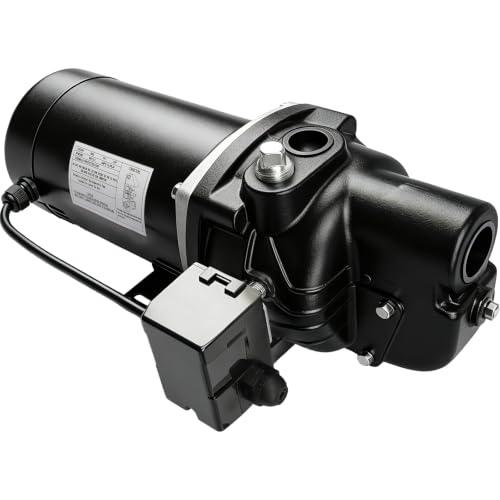
SWS100 1 HP Cast Iron Shallow Well Jet Pump

Flotec FP4022-10 Jet Pump 0.75 HP

RJS-50-PREM Premium Cast Iron Shallow Well Jet Pump 1/2 HP

Red Lion PW-CJ50 1/2 HP Convertible Jet Well Pump
A Closer Look At Each Pick
The GT20 is the muscle pick in this roundup, and it leans into that role without apology. A 2 HP motor paired with up to 86 GPM output means it can keep a sprinkler system, a garden header, and a household feed running at the same time without the pressure tank gasping for air. Cast iron construction gives it the kind of weight and durability you’d expect from a workhorse, and the self-priming design removes the awkward manual fill ritual that catches first-time installers off guard.
This pump makes the most sense for acreage owners, small farms, and rural properties where the irrigation load shifts with the season. The 1-1/2″ NPT suction and discharge ports are larger than most residential picks on this list, which is why it handles demanding flow scenarios with relative ease. Compared to the STA-Rite SND-L that follows, the GT20 trades compact household-friendly sizing for raw throughput.
Real Benefits
- 86 GPM output supports lawn sprinklers and irrigation simultaneously.
- 2 HP motor handles heavy daily demand without overheating.
- Self-priming design simplifies startup after seasonal dormancy.
- Cast iron body tolerates outdoor mounting and weather exposure.
- Large 1-1/2″ ports reduce friction loss across longer pipe runs.
Trade Offs
- Overkill for a small cabin with one bathroom and a kitchen tap.
- Requires 230V wiring, which not every shed or outbuilding already has.
- Heavier than most picks here, so the mounting base needs to be solid.
Built With In Mind
Owners of multi-acre properties who run irrigation alongside household plumbing will get the most out of this heavy-duty workhorse.
Reach For A Different Pick When
The RJS-50-PREM is the better match for small cabins or single-fixture homes that don’t need 86 GPM output.
The SND-L has earned its reputation the slow way: through years of service in shallow well systems across the country. The cast iron body resists corrosion and holds up to the kind of seasonal cycling you see when a pump runs hard in summer and sits idle all winter. A precision-molded polypropylene diffuser helps it prime faster than older designs, and the included drain port makes winterizing straightforward in colder climates.
For most suburban homes drawing from a well under 25 ft deep, the 3/4 HP motor is honestly the right size. It pushes enough pressure to run two fixtures at once without the tank dropping out, and it doesn’t waste electricity running oversized. You trade some raw flow compared to the GT20 above for a smaller footprint that fits inside a pump house or basement utility corner.
Features That Help
- Cast iron body holds up through years of seasonal cycling.
- Molded diffuser shortens priming time after maintenance.
- Drain port makes winterizing a simple gravity step.
- Compatible with both 115V and 230V wiring setups.
Points To Note
- Limited to shallow wells at 25 ft suction lift or less.
- Heavier than thermoplastic alternatives on this list.
Whose Shelf It Belongs On
Suburban households on a shallow well who want a time-tested pump brand with replacement parts readily available.
Look Elsewhere When
The Pentair SNE-L is worth stepping up to for larger homes that need 1 HP pressure headroom.
The SNE-L takes the same proven ProJet platform as the SND-L and adds the kind of power headroom that larger homes quietly need. With 1 HP under the hood, this pump is built for households running a dishwasher, washing machine, and two showers without complaint. Average priming time drops to roughly 1.3 minutes at 15 ft, which matters when a power blip leaves you standing at an empty tap.
The max liquid temperature rating of 140°F opens the door to integration with certain domestic hot water recirculation loops in warmer climates. Compared to the SND-L just above, the trade is dollars for capacity: you pay more, but you get noticeably better pressure recovery and faster priming after maintenance windows.
The Practical Payoff
- 1 HP motor supports multiple simultaneous fixtures.
- Primes in roughly 1.3 minutes at 15 ft suction lift.
- Handles liquid temperatures up to 140°F safely.
- Cast iron build matches the durability of smaller siblings.
Less-Strong Areas
- Costs more than 3/4 HP alternatives for marginal gains on small homes.
- Still capped at 25 ft suction lift, so deep wells need a different solution.
Best Suited To
Larger homes with three or four bathrooms where weak pressure under simultaneous demand has been a recurring complaint.
Not Your Match When
The STA-Rite SND-L fits smaller households better and saves money that won’t be missed on lighter daily loads.
The SLC-L earns its convertible label honestly. Run it as a shallow well pump with the injector mounted directly on the body, or pair it with a 4-inch double-pipe jet package, a 2-inch single-pipe setup, or a 3-inch single-pipe system depending on the well depth you’re actually dealing with. That flexibility is rare in this price band and it makes the SLC-L a smart pick for households whose well depth isn’t fully pinned down yet.
The 1/2 HP motor is modest, so this isn’t the pump for a four-bathroom house running back-to-back showers. For a cabin, small farm, or single-bath home where flow peaks at one or two fixtures, the brass wear ring and reinforced polypropylene diffuser deliver a long service life. If your well sits at the shallower end of the 25 ft range, the smaller motor handles it without wasted energy.
The Helpful Details
- Convertible design adapts to shallow or deeper jet packages.
- Cast iron body with brass wear ring extends service intervals.
- Compatible with 115V and 230V wiring at installation.
- Compact footprint fits tight utility rooms.
Honest Caveats
- 1/2 HP struggles when two showers and a washer run simultaneously.
- Requires buying a separate jet package for deep well conversion.
Right Fit For
DIYers and homeowners whose well depth is uncertain or whose property might transition from shallow to deeper well water over time.
Consider Something Else When
The Flotec FP4022-10 suits properties with aggressive or mineral-heavy water where corrosion resistance matters more than convertible depth.
The RJS-75-PREM is built for households that keep finding their old pump gasping during peak demand. A 3/4 HP motor combined with a 65 PSI max pressure ceiling gives you the headroom to push water through a two-story plumbing layout without losing shower pressure when the dishwasher kicks on. The cast iron volute and 150 ft max head rating suggest this is a pump designed to run hard for years.
Dual voltage capability (115V or 230V) means it can drop into either wiring situation, which simplifies retrofit work. Compared to the smaller RJS-50-PREM that appears later in this roundup, the difference shows up in higher pressure ceiling and faster recovery at the tank.
Real-World Strengths
- 65 PSI max pressure supports two-story plumbing layouts.
- 150 ft max head accommodates deeper installation depths.
- Dual voltage motor fits either 115V or 230V wiring.
- 1-1/4″ FNPT intake handles standard shallow well piping.
A Few Limitations
- Draws 14.4 amps at 115V, so older wiring may need an upgrade.
- Heavier than 1/2 HP alternatives, requiring a stable mounting base.
Quick Facts
Made For
Two-story homes and households with three or more fixtures that regularly compete for pressure.
A Better Fit Elsewhere
The Pentair SNE-L is the smarter step up for very large households needing 1 HP sustained output.
The SWS75 is the pump you recommend to a neighbor who has never touched well equipment before. The pressure switch arrives factory pre-calibrated to the standard 30 to 50 PSI range, the dual voltage motor comes pre-set to 115V for first-time wiring, and the square flange motor mounting is the kind of detail that makes a replacement install far less frustrating. Up to 510 GPH handles a typical suburban household without complaint.
Where this pump differs from the RJS-75-PREM just above is in its focus on homeowner-friendly setup rather than maximum pressure output. The 3/4 HP motor is the same class, but the SWS75 trades some peak PSI for easier installation. For most first-time installers, that’s a fair exchange.
A Favorable Mix
- Factory pre-set pressure switch cuts setup time significantly.
- 115V/230V motor pre-wired to 115V for simple first install.
- 510 GPH output supports typical suburban household demand.
- Cast iron volute holds up to weather and seasonal cycling.
Things To Consider
- Pressure ceiling is lower than the RJS-75-PREM, so larger homes may notice it.
- Pre-set switch requires adjustment if you want a non-standard range.
Perfect Match For
Homeowners installing their first shallow well pump who want as few calibration steps as possible between unboxing and running water.
Skip It When
The RJS-75-PREM is the better choice when higher pressure headroom matters more than pre-calibration.
The SWS100 takes the homeowner-friendly formula of the SWS75 and steps up to a full 1 HP motor for households that push the limits of what 3/4 HP can handle. The dedicated priming port on the cast iron volute is a small but meaningful detail, since it makes filling the pump during startup less of an awkward balancing act with a garden hose. For wells at the 25 ft ceiling of shallow well territory, this motor has the muscle to maintain pressure under load.
What separates this from the Pentair SNE-L is the focus on dedicated shallow well use rather than convertible depth. If you know your well is shallow and you want the strongest possible flow in that category, the SWS100 is built for exactly that scenario.
A Few Highlights
- Full 1 HP motor handles demanding multi-fixture households.
- Dedicated priming port simplifies initial startup.
- Cast iron volute withstands long service intervals.
- Suited to wells at the full 25 ft shallow limit.
Practical Considerations
- Higher amperage draw requires a dedicated electrical circuit.
- Limited to shallow well service, no deep well conversion option.
Who Should Grab It
Demanding residential water systems on shallow wells where pressure drop during simultaneous use has been a recurring problem.
Where Another Pick Suits Better
The Pentair SLC-L is the smarter call when well depth is uncertain and you want convertible flexibility.
The FP4022-10 takes a different materials approach than most of this list. Instead of cast iron, the housing uses fiberglass-reinforced thermoplastic, which holds up much better in areas with aggressive water chemistry, high mineral content, or mild acidity. The pressure switch comes preset to the standard 30 to 50 PSI range, and the heavy-duty 230V motor ships ready to install with 115V wiring available for those who need it.
For homeowners who have replaced pumps prematurely due to internal corrosion, this is the build to look at seriously. The 0.75 HP motor delivers up to 12 GPM at 40 PSI, which covers most residential demand. It’s the lightest pump in this roundup, which makes one-person installation realistic in tight utility spaces.
Where It Helps
- Thermoplastic housing resists corrosion in aggressive water.
- Preset pressure switch removes calibration guesswork.
- Up to 12 GPM at 40 PSI handles typical household flow.
- Lighter weight simplifies one-person installation.
Less Ideal Details
- Thermoplastic housing can crack under severe impact damage.
- 25 ft max head limits placement options at deeper sites.
Feature Snapshot
Who Will Love This
Homeowners with mineral-heavy or slightly acidic well water who have watched cast iron pumps deteriorate faster than expected.
Another Choice May Suit
The SWS75 is the better everyday pick for properties with neutral water chemistry where corrosion isn’t a worry.
The RJS-50-PREM is the right-sized answer for rural cabins, small homes, and cottages that don’t need firehose flow to keep the taps running. A 1/2 HP motor with up to 12 GPM output covers a kitchen, one bathroom, and a garden hose without complaint. The cast iron body matches the build quality of its bigger siblings in the RJS family, which means it’s not a stripped-down economy unit despite the modest power rating.
Dual voltage operation and a factory pre-set 30/50 pressure switch keep the install simple. The included pressure gauge is a thoughtful touch for a compact pump. Compared to the larger RJS-75-PREM, this version trades peak pressure output for lower electrical draw and easier fit in tight utility spaces.
The Case For It
- 1/2 HP motor keeps electrical draw modest for cabin wiring.
- Cast iron construction matches higher-tier RJS models.
- Pre-set pressure switch removes calibration steps.
- Suction lifts up to 25 ft for standard shallow wells.
A Few Limitations
- Struggles when two showers run simultaneously.
- Lower flow ceiling limits future household expansion.
Made For
Cabin owners, small homes, and modest cottages with one bathroom and modest peak demand.
Swap It Out When
The RJS-75-PREM makes more sense for growing households that anticipate adding fixtures or family members.
The PW-CJ50 closes the roundup because it covers the scenario the other nine pumps don’t: deeper wells. Run it as a shallow well unit with the injector mounted on the pump for lifts to 25 ft, or pair it with a separate injector package for wells reaching 90 ft. That dual capability puts genuine deep well water within reach of a 1/2 HP compact pump that doesn’t need industrial wiring.
At 7.9 GPM, the flow is modest, so this is built for cabins, small homes, and cottages rather than irrigation-heavy properties. The convertible design adds complexity at install time since the deep well configuration requires mounting the injector down in the well itself, but for properties where well depth rules out shallow-only options, that complexity is simply the cost of admission.
Advantages To Know
- Converts from 25 ft shallow to 90 ft deep well service.
- 1/2 HP motor runs on standard residential electrical service.
- Suits cabins, cottages, and small homes with modest demand.
- Compact footprint fits tight utility installations.
Where It Is Less Suited
- 7.9 GPM ceiling is too low for irrigation or large households.
- Deep well conversion requires purchasing and installing an additional injector package.
Feature Overview
The Right Fit
Properties on deeper wells between 25 and 90 ft that need a compact, residential-friendly pump without stepping up to a submersible system.
Not Your Match When
The Orceed GT20 is the better pick for shallow well properties that need much higher flow for irrigation.
Matching The Pump To Your Well And Home
A jet pump only performs as well as the match between its specs and your actual site. Three factors do the heavy lifting in the buying decision, and getting them right up front saves the frustration of returning a pump that simply can’t keep up.
Well depth and suction lift is the single most important number. Shallow well pumps, like most of this roundup, handle lifts up to about 25 ft before performance falls off noticeably. Convertible designs stretch into the 90 ft range, but only with a separate injector package mounted down in the well. For anything beyond that, you’re typically looking at a submersible pump rather than a jet pump, so measure your well depth before falling in love with a spec sheet.
Flow rate and household demand matter more than peak horsepower. A typical suburban home needs 6 to 12 GPM at usable pressure to run a shower and a dishwasher at the same time. Larger households pushing multiple bathrooms at peak hours lean toward the 12+ GPM pumps. Cabins and small cottages often run fine on 7 to 10 GPM, which is why compact 1/2 HP pumps like the Red Lion PW-CJ50 and RJS-50-PREM exist as a category.
Voltage, amperage, and wiring decide whether a pump can actually be installed in your utility space. Many of these pumps offer dual voltage (115V or 230V), but some ship pre-wired to one option and require reconfiguration for the other. A 230V pump on 115V wiring simply won’t reach full output, so check the breaker panel and the run length before you commit.
Materials and water chemistry are the quietest variable but a real one. Cast iron pumps are durable and traditional, but they corrode faster in acidic or mineral-heavy water. Fiberglass-reinforced thermoplastic, like the Flotec FP4022-10, sidesteps that issue at the cost of impact resistance. If your well water leaves heavy staining or your previous pump showed internal rust, the housing material matters more than you’d think.
Key Considerations Across These Picks
Pitfalls Shoppers Hit
The most common mistake is buying by horsepower alone. A 2 HP pump sounds impressive until you realize your well is shallow, your household is small, and you’re paying for flow you’ll never use while drawing extra amperage your wiring wasn’t sized for. The opposite error happens too: undersizing a 1/2 HP pump for a household that needs to run two showers and a washing machine on a Sunday morning. Match the pump to the demand, not the spec sheet wish list.
Another trap is ignoring the difference between a shallow well jet pump and a convertible jet pump. They look similar, install differently, and serve different well depths. Buying a shallow-only pump for a 60 ft well means the pump either won’t prime or will burn out the motor trying.
When Paying More Pays Off
Higher-tier pumps earn their cost through materials, motor windings, and priming behavior. A pump with a precision-molded diffuser, like the STA-Rite SND-L, primes faster and handles more air separation than a basic model. Better motor insulation extends service life in hot pump houses. Pre-calibrated pressure switches save installation time and reduce callback service.
For most homeowners, stepping up from a 1/2 HP to a 3/4 HP pump in the same brand family delivers noticeable pressure recovery at a modest price jump. Stepping from 3/4 HP to 1 HP is worth it only when the household demand genuinely requires it.
Frequently Asked Questions
What is the difference between a shallow well and deep well jet pump?
A shallow well jet pump pulls water through suction, working effectively to about 25 ft of lift. A deep well jet pump uses a separate injector package placed down in the well, allowing it to push water up from significantly greater depths, often 90 ft or more with the right configuration.
How do I know what horsepower jet pump I need?
Match the horsepower to your household’s peak flow demand and your well depth. Cabins and small homes typically run fine on 1/2 HP. Standard suburban households usually need 3/4 HP. Larger homes with multiple bathrooms or irrigation loads benefit from 1 HP or higher.
Can a jet pump run dry without damage?
Most jet pumps are not designed for dry running. Operating without water causes the motor to overheat and the seals to fail prematurely. A dry-run protection switch is a worthwhile add-on for any installation where the well occasionally runs low.
How often should a jet pump be serviced?
Annual inspection covers the basics: check the pressure switch settings, inspect seals, clean the strainer, and verify electrical connections. Pumps with cast iron volutes and quality diffusers typically run several years between major service intervals.
What is the average lifespan of a deep well jet pump?
With proper installation and routine maintenance, a quality cast iron jet pump commonly provides 10 to 15 years of service. Pumps running in mineral-heavy or acidic water may have shorter lifespans unless the housing material is chosen for those conditions.
Final Verdict
The right jet pump is the one matched to your well depth, your peak household demand, and your water chemistry, not the one with the biggest spec sheet. For shallow well homes wanting time-tested reliability, the STA-Rite SND-L and Pentair SNE-L remain go-to choices. For deeper wells or properties with corrosive water, the convertible Red Lion PW-CJ50 and corrosion-resistant Flotec FP4022-10 step into the spotlight. Take the time to match the pump to the site, and clean water at the tap stops being something you think about.




