

Counter space earns its keep fast. A good countertop setup pulls double duty as a work zone, a storage shelf, and the visual anchor of a room, so the pieces you park on it shape your daily routine more than you might expect. From pretend-play shops to serious cash-counting gear, the right countertop companion turns clutter into flow. Below is a curated shortlist of ten items that earn their place on a busy surface, whether you’re running a kitchen, a classroom, a small business, or a household where loose change and coffee pods multiply overnight.
How The Shortlist Stacks Up

Melissa & Doug Wooden Scoop & Serve Ice Cream Counter

K Cup Holder Coffee Pods Organizer Stand 40 Pods

CADVJXZ Sunflower Ceramic Butter Dish with Lid

LLIKED 150 Assorted Flat Coin Wrappers

Aneken Value Counting Top-Loading Bill Counter

LLIKED 128 Preformed Coin Wrapper Rolls

LLIKED 150 Coin Wrappers with 4 Sorter Tubes
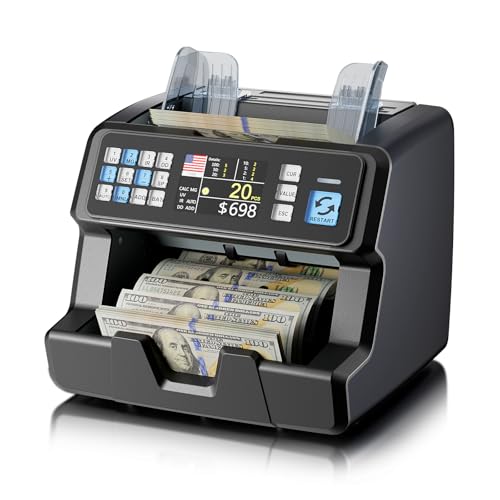
Aneken Top-Loading Counterfeit-Detection Bill Counter

Aneken Ultra 2-Pocket Mixed Money Counter with Printer

Aneken Mixed Denomination Money Counter Gray
Meet The Standout Selections
A wooden pretend-play counter earns its spot on the floor or a low table the moment a toddler wants to “ring you up.” The Scoop & Serve setup ships with 28 play food and accessory pieces, including wooden scoops, toppings, and a kid-friendly scooper that handles like a real shop tool. Built for ages 3 and up, it leans on tactile play to flex memory, hand-eye coordination, and counting through pretend orders.
Unlike the coffee pod carousel above, this counter doubles as a storage chest when playtime ends, with ports along the back that corral the pieces during cleanup. Smooth wooden finishes keep small hands comfortable, and the screen-free format makes it a natural fit for rainy afternoons. For parents building a pretend-play corner, it’s a sturdy anchor rather than a fragile toy.
Reasons It Performs
- All-in-one shop format keeps scoops, toppings, and accessories in a single footprint
- Storage lid turns the counter into a tidy bin when the day is done
- Wooden construction holds up to repeated scooping without cracking
- Counting and memory work happen naturally through role play
Things To Consider
- Takes up floor space roughly the size of a small play table
- Wooden pieces benefit from occasional wiping to avoid sticky residue
Made For
Preschoolers aged 3 and up who thrive on imaginative kitchen and shop play, especially siblings sharing a playroom.
Consider Something Else When
You need serious countertop storage for a real kitchen, in which case the CADVJXZ sunflower butter dish brings function and decor together.
Morning routines tend to fall apart when coffee pods pile up in a drawer. The BLACKSMITH FAMILY carousel fixes that with a slim 40-pod holder that rotates on a 360-degree base, so every flavor is one spin away. Slots are sized for standard single-serve pods, and the small footprint keeps the unit parked beside a brewer without crowding the prep zone.
Compared to the wooden play counter above, this is pure grown-up counter utility. The knob on top spins smoothly with a light touch, and the vertical orientation means a row of pods takes up roughly the same space as a tissue box. For households rotating between three or four regular blends, access speed is the real win.
What It Does Well
- Spinning base cuts grab time to about one second per pod
- Compact footprint suits tight counters beside single-serve machines
- Vertical stacking keeps 40 pods visible without spreading them across shelves
Worth Noting
- Holds a single style of pod, so mixed brands need sorting
- Plastic construction can scuff over time with heavy daily rotation
Feature Snapshot
Whose Shelf It Belongs On
Daily coffee drinkers with a single-serve brewer and a small kitchen footprint who want pods visible and accessible.
Look Elsewhere When
You brew mostly ground coffee and want a decorative piece instead, where the CADVJXZ sunflower butter dish adds visual warmth to the same counter.
Butter tends to live in a corner of the counter anyway, so the dish holding it deserves a little attention. The CADVJXZ ceramic keeper brings a sunflower-and-bee motif to the breakfast zone, sized at roughly 7.5 by 4.3 inches with enough room for a full American-style stick. The included lid keeps spreadable butter from picking up fridge odors when it warms on the counter.
Where the coffee carousel above optimizes for speed, this piece optimizes for charm. It suits country-style kitchens, cottage decor, or anyone who’d rather look at a sunlit yellow dish than a plain white one. Easy to clean with a quick wipe-down, it leans into being seen rather than hidden in a cabinet.
Key Advantages
- Holds a full standard stick plus a little spare room for soft spreads
- Lid shields butter from stray crumbs and odors during warm months
- Sunflower motif doubles as counter decor between breakfasts
Points To Note
- Ceramic can chip if knocked against heavy cookware on busy counters
- Decorative styling may clash with minimalist kitchens
Right Fit For
Home cooks who leave butter on the counter daily and want a decorative piece that earns its visual space.
Another Choice May Suit
Minimalist kitchens are better served by the LLIKED coin wrappers and sorter tubes, which keep counters tidy without adding visual noise.
Loose change turns into a wallet-filler fast when there’s a system for it. The LLIKED flat wrapper pack ships 150 kraft paper sleeves split across pennies, nickels, dimes, and quarters, color-coded to match ABA standards so a quick glance tells you which roll is which. Heavy-duty paper holds its shape during hand wrapping and the trip to the coin machine.
Unlike the sunflower butter dish, this set hides in a drawer until you need it. The flat format asks for a touch more folding than pre-crimped alternatives, which the LLIKED preformed rolls handle with less effort. For households rolling coins a few times a year, the paper quality and assortment ratio cover most routines without overbuying.
Notable Upsides
- Heavy-duty kraft paper resists tearing during transport to the bank
- ABA color coding speeds up sorting at a glance
- Mixed pack covers several months of accumulated change
Honest Caveats
- Flat ends take a steady hand to crimp compared to preformed rolls
- Paper can soften slightly if stored in a humid kitchen drawer
Best Suited To
Families who sort spare change a couple of times a year and don’t mind a quick manual wrap before heading to the bank.
Reach For A Different Pick When
You want the process to move faster, in which case the LLIKED preformed coin rolls save a step per tube.
Counting cash by hand is fine until your register pulls in a busy Saturday. The Aneken value-counting top-loader takes single-denomination stacks and totals them up after you tap in the bill value, with three speed settings running 900, 1200, and 1500 notes per minute. A 3.5-inch TFT display sits up top for clear reads, and ADD plus BATCH modes let you stack totals or split counts into preset groups.
Unlike the LLIKED paper wrappers below, this lives on the counter as a permanent fixture for any cash-heavy desk. It supports USD, EUR, and CAD, which helps anyone juggling a couple of currencies at a market stall or small shop. For most small operators, it lands in the sweet spot of capability and footprint.
Why It Works Well
- Three speed tiers let you match counting pace to bill condition
- ADD and BATCH modes cover both running totals and group splits
- TFT screen is easier to read in low light than older LCDs
Things To Weigh
- Value count requires manual denomination selection per stack
- Mixed-denomination piles need sorting before counting
- Tall enough to claim a dedicated corner of the counter
Built With In Mind
Small shop owners, market vendors, and church or club treasurers who count the same denominations in repeating stacks.
Skip It When
Mixed bills are your daily reality and you need automatic denomination recognition, where the Aneken gray mixed counter saves the manual step.
Wrapping coins by hand gets tedious when one end needs crimping. The LLIKED preformed rolls skip that step with 128 assorted sleeves split evenly across quarters, pennies, nickels, and dimes, all ABA color-coded on 60-pound kraft paper. The crimped ends hold coins securely from the moment you slide them in.
Compared to the flat wrappers earlier in the list, this set trades a touch of paper economy for a faster wrap-and-go routine. Both work with hand filling or automatic coin counters at the bank, so the choice comes down to whether you’d rather fold or just fill.
The Good Stuff
- Crimped ends seal without extra folding or tools
- Even split across four denominations fits most rolling routines
- Works with both hand filling and automatic counter machines
Small Caveats
- Crimped ends can crush if stored under weight in a drawer
- Fewer total rolls than the 150-pack flat alternative
Feature Snapshot
Who Will Love This
Anyone who rolls coins regularly and wants the process to wrap up without fiddling with paper ends.
Swap It Out When
You also need to sort the coins before wrapping, in which case the LLIKED wrappers and sorter tubes bundle both jobs in one box.
Sorting coins before wrapping is the slow part of any change routine. The LLIKED combo kit fixes that with four ABS plastic sorter tubes plus 150 paper wrappers, so the same box that sorts the change also stores the sleeves. The tubes use a square bowl that holds roughly 15 percent more coins per fill than traditional half-oval designs.
Versus the wrapper-only packs reviewed earlier, this bundle covers the full pipeline from jar to bank. ABS plastic is sturdier than PP plastic alternatives, which matters when tubes spend time stacked in a drawer or kitchen caddy. For families tackling a heavy coin jar, the combo shortens the routine noticeably.
Everyday Advantages
- Sorter tubes and wrappers ship together for a complete workflow
- Square bowl geometry speeds up each fill
- ABS tubes resist cracking better than PP alternatives
Where It Is Less Suited
- Tubes take up drawer or counter space when not in use
- Square bowls feel slightly heavier than round tubes in the hand
Perfect Match For
Households that sort loose change often enough to want a dedicated setup but not often enough to invest in an electric counter.
Where Another Pick Suits Better
If your routine is more about counting bills than coins, the Aneken value-counting top-loader addresses the cash side of the same desk.
Counterfeit bills (fake currency designed to look like real money) hurt a small business faster than almost anything else, so detection belongs in the count. The Aneken top-loader stacks UV (ultraviolet), MG (magnetic), IR (infrared), MT (magnetic thread), and DD (double detection) sensors into a single unit that flags suspect bills during the run. USD, EUR, and CAD are supported, and three speed settings keep worn bills moving without jamming.
Compared to the value counter earlier in the list, this unit trades denomination auto-recognition for added security checks. If your register tends to see a single denomination at a time and the worry is more about bad bills than mixed stacks, the detection layer is the more useful upgrade.
What Works In Its Favor
- Five counterfeit-detection modes cover the common threat types
- Three speed settings handle everything from crisp to worn bills
- Multi-currency support fits cross-border retail
Practical Considerations
- Single-denomination focus means mixed stacks still need sorting
- Sensors benefit from periodic cleaning in dusty shop environments
Feature Snapshot
Made For
Retail counters and market stalls that handle high bill volume and need counterfeit checks baked into the count.
A Better Fit Elsewhere
Counters that see a wide mix of denominations benefit more from the Aneken Ultra 2-pocket machine with CIS imaging.
Bank-grade is not a phrase to throw around lightly, but the Aneken Ultra earns it with dual CIS sensors that scan both sides of every bill at once. CIS (contact image sensor) is the same imaging tech used in office scanners, adapted here to recognize denominations and flag counterfeits without stopping the count. The 2-pocket layout separates clean bills from rejects, and continuous-feed (refilling new stacks while the previous batch still runs) keeps the rhythm steady during a long shift.
Where the entry-level Aneken counter asked you to set a denomination, this one figures it out. The built-in printer and touchscreen make end-of-shift totals easier to log, which suits high-volume retail, casinos, and busy cashier desks where audit clarity is part of the job.
Notable Gains
- Dual-CIS imaging recognizes denominations and counterfeits automatically
- Continuous-feed hopper removes reload pauses during long runs
- Built-in printer captures totals for shift-end records
Trade-Offs To Consider
- Larger footprint demands a dedicated counter bay
- Higher-tier pricing reflects professional-grade specs
- Takes a short learning curve to master touchscreen menus
Who Should Grab It
Cash-heavy retail floors, casino cages, and church or club counting rooms that need automated totals with a paper trail.
Not Your Match When
Low-volume home use where the LLIKED wrapper bundles handle coin routines without a machine footprint.
Some cash drawers see a little of everything, and that’s where mixed-denomination recognition earns its keep. The Aneken gray counter layers 2CIS imaging with UV, MG, IR, double, half, and chain detection (DBL, HLF, CHN) so a jumbled stack comes out totaled and vetted in a single pass. A touchscreen streamlines mode changes, and the unit supports software upgrades to recognize up to 120 currencies through customer support.
Versus the Ultra above, this model skips the built-in printer and 2-pocket reject tray for a tighter footprint that still handles the heavy lifting. For retail desks and small business back offices, the upgrade path matters: you can grow into new currencies without buying a second machine.
What Stands Out
- Mixed-denomination counting saves manual sorting before each run
- Multi-layered counterfeit detection flags suspect notes mid-count
- Software upgrades extend currency support up to 120 worldwide
Things That May Matter
- Upgrades rely on customer support rather than automatic downloads
- Touchscreen may need occasional recalibration in dry climates
The Right Fit
Small business owners who handle varied bill stacks daily and want future-proof currency flexibility.
Where A Sibling Pick Shines
For operations that need printed audit trails, the Aneken Ultra 2-pocket with built-in printer is the stronger match.
What To Weigh Before Picking Countertop Companions
Match the Tool to the Volume
The biggest mistake shoppers hit is buying a countertop item for a workload it wasn’t built for. A 40-pod carousel works beautifully for one household’s morning routine and falls apart for a family of five rotating through dozens of flavors. Before you commit, estimate your daily volume honestly: how many cups, how many bills, how many play sessions per week. A small overbuild usually saves money over time, but a massive overbuild just eats counter real estate.
Footprint Matters More Than Specs
Every countertop item competes for the same square inches. Measure the spot where the piece will live, including vertical clearance above and airflow around any machine. The Aneken Ultra needs a dedicated bay, while a sunflower butter dish fits on a corner shelf. Choosing by specs alone often means a beautiful piece that gets returned because it crowds the prep zone.
Read the Detection or Sorting Layers
For money-handling gear, the difference between basic and serious comes down to detection layers and sensor count. UV catches fluorescent security threads, MG catches magnetic ink, and CIS scans both sides of every note for a fuller read. A single detection mode may catch obvious fakes, but multi-layer detection gives you a real audit defense. Pick the layer count that matches your risk.
Style and Function Are Not Trade-Offs
A counter piece earns its visual weight when form follows function. The CADVJXZ sunflower dish is decorative and useful, while a plain white holder does the same job with less warmth. In shared spaces like kitchens and playrooms, the look of an item affects how often it gets used, so favor pieces that you actually enjoy seeing every day.
Smart Choices That Pay You Back
Pitfalls Shoppers Hit
Most impulse buys on countertop gear come down to ignoring the workflow. A coin sorter without matching wrappers means two trips to the store, and a counterfeit detector without fast counting means staff work around the machine instead of with it. Match the supporting accessories before you check out.
What The Higher Tier Buys
The jump from a value counter to a mixed-denomination CIS machine is real, not cosmetic. Dual-CIS imaging reads both sides of every bill, catching counterfeit attempts that single-sided sensors miss, and software upgrades extend currency support as your business grows. For most households the value tier is plenty, but high-volume shops quickly feel the limits of single-denomination machines. Paying up front usually costs less than replacing a starter unit six months later.
Frequently Asked Questions
How do I pick the right size for my counter?
Measure the empty space first, then add two inches of clearance on every side for cleaning and ventilation. A piece that fits exactly today tends to feel cramped once you start using it.
Are mixed-denomination counters worth it over basic models?
If you handle varied bills daily, the time savings add up fast. For once-a-week deposits of a single denomination, a value counter covers the routine without the higher price.
What is the difference between flat and preformed coin wrappers?
Flat wrappers require hand-folding both ends, while preformed wrappers arrive crimped and only need filling. Preformed rolls cost a little more but speed up every wrap.
Can counterfeit-detection sensors catch every fake bill?
No sensor catches every counterfeit, since fake currency evolves constantly. Multi-layer detection (UV plus MG plus IR) raises the catch rate dramatically over single-mode units.
Is a 2-pocket counter better than a single-pocket unit?
For busy operations, yes. The 2-pocket layout separates clean bills from rejects automatically, which keeps a long count from stalling each time a suspect note appears.
Wrap Up
The right countertop piece fits your space, your routine, and your eye. Spend a minute measuring the spot, a minute estimating your volume, and let those two answers guide the rest. Whether you’re counting quarters, brewing a second cup, or hosting a tiny ice cream shop on the living room floor, the shortlist above gives you a starting point worth trusting.
