

Carbon monoxide earns its silent reputation for a reason: it has no color, no smell, and no warning beyond the alarm you install before something goes wrong. If your home runs on gas heat, a fireplace, an attached garage, or even a frequently used generator, a reliable detector isn’t optional gear. The eight options below cover everyday plug-in protection, portable battery-powered units for renters or travel, and multi-gas monitors for people who want a wider safety net. Each pick matches a different room layout, installation comfort level, and household profile.
A Fast Comparison Of The Options
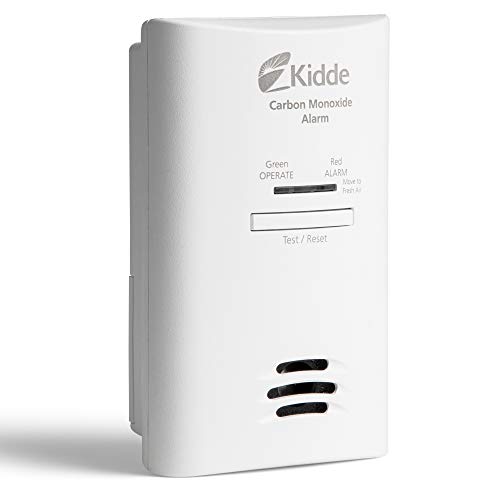
Kidde Plug-In CO Detector with AA Backup
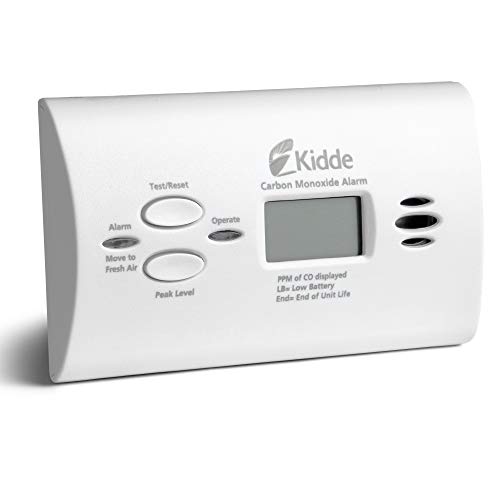
Kidde Portable AA Battery CO Alarm

Kidde Plug-In CO Detector with Digital Display
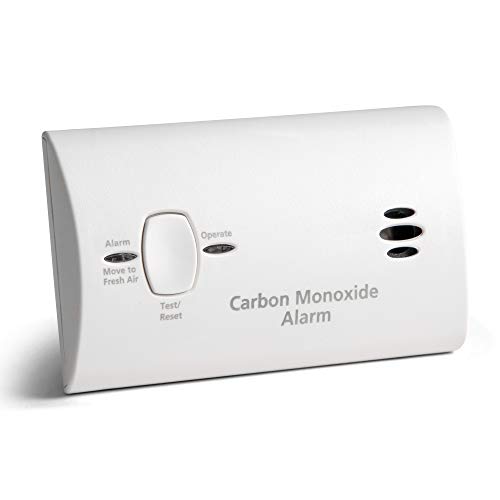
Kidde Battery Powered Portable CO Alarm
Kidde 3rd Edition Plug-In CO Detector
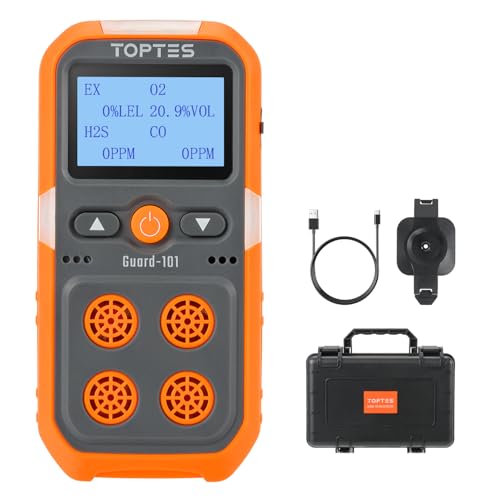
TopTes Guard-101 4-Gas Monitor

TopTes Guard-156 4-Gas Detector

TopTes Guard-863Pro 4-Gas Monitor
The Strengths Of Each Pick
Plug-in carbon monoxide detectors earn their place in homes that already have an outlet near each sleeping area, and this Kidde unit keeps the setup simple. It draws primary power from any standard 120V receptacle, then quietly runs on two AA batteries whenever the grid goes down. For most households that means an alarm that still works through a winter storm outage, which is exactly when CO risk from alternative heating sources tends to climb.
The electrochemical sensor, the same detection style used in many medical and industrial gas monitors, samples the air continuously and triggers an 85-decibel alarm when CO crosses unsafe thresholds. The test-hush button on the front face silences nuisance chirps after a false scare, a common annoyance in homes near attached garages where a brief puff of exhaust can trigger a brief alarm during startup.
Practical Pluses
- Plug-in design means no drilling, no mounting hardware, and no tools for a renter-friendly install.
- Dual AA backup keeps the alarm active through power failures without replacing specialty batteries.
- Front-facing test-hush button resets quickly after cooking or garage-related false alarms.
- Status LED gives a quick visual check that the unit is powered and functioning at a glance.
Things To Consider
- Requires an available wall outlet, so placement is limited to wherever a receptacle already exists.
- No digital display, meaning you won’t see live CO readings, only the alarm trigger threshold.
Who It Suits Best
Homeowners in single-family properties with outlets near bedrooms who want a low-fuss install that survives winter outages.
Where Another Pick Suits Better
For rooms without a nearby outlet, the Kidde Portable AA Battery CO Alarm offers true placement freedom with no cord required.
Battery-powered CO detectors shine in places where a plug-in unit simply cannot reach, and this Kidde model leans into that flexibility. Two AA batteries power an electrochemical sensor and an 85-decibel alarm, with a green LED confirming operation and a red LED flashing when CO enters dangerous territory. For renters, dorm rooms, RV trips, and older homes with limited outlets, it solves a real placement problem in seconds.
The portable form factor means you can also toss it in a suitcase for hotel stays or a cabin weekend, locations where you have no idea whether the existing detector has been tested recently. Compared with the wall-plug Kidde above, this unit trades permanent outlet location for total placement freedom, at the cost of remembering to swap batteries twice a year.
Standout Benefits
- Runs entirely on AA batteries, so it works during blackouts and in locations without an outlet.
- Compact shell fits easily on a tabletop, shelf, or wall-mounted bracket for travel and guest rooms.
- Low-battery indicator chirps well before the unit goes silent, giving time to swap cells.
- Test-reset button on the front face confirms sensor function with a single press.
Points To Note
- Battery-only design means you’ll replace cells roughly every year depending on use.
- Portable size can be knocked off a shelf by pets or curious toddlers without wall mounting.
Made For
Renters, frequent travelers, and anyone outfitting a guest room or detached space where wiring a plug-in isn’t practical.
Swap It Out When
For a permanently installed home detector that never needs battery swaps, the Kidde Plug-In CO Detector with AA Backup sits in an outlet full-time.
A digital display changes how a carbon monoxide detector feels in daily use, and this third-edition Kidde leans into that visibility. The LED readout shows current CO levels in parts per million, which means you can watch a number climb during a kitchen incident or after running a generator in the garage. The peak level memory recalls the highest recorded concentration since the last reset, useful for diagnosing intermittent issues a basic alarm would have just sounded and forgotten.
It plugs into any standard 120V outlet and keeps a 9V backup cell ready for power outages. For homeowners who want diagnostic feedback rather than just a binary alarm, this is the more informative cousin of the simpler plug-in model above. The tradeoff is a slightly busier front face and a 9V battery to swap every couple of years.
What Makes Sense
- Digital display shows live CO concentration in parts per million, not just an alarm trigger.
- Peak level memory records the highest reading since reset for later inspection.
- Plug-in form factor with 9V battery backup keeps the alarm active during grid outages.
- LED status indicators differentiate between normal operation, fault, and alarm states.
Worth Noting
- 9V backup battery needs replacement on a longer cycle than AA cells, but it’s easy to forget.
- Display brightness may be distracting in a dark bedroom unless the unit is mounted lower.
Right Fit For
Homeowners who want diagnostic detail rather than a binary alarm, especially in homes with gas appliances, fireplaces, or attached garages.
Reach For A Different Pick When
For a no-frills outlet alarm without a screen, the Kidde 3rd Edition Plug-In CO Detector keeps the same plug-in build with simpler indicator lights.
This Kidde battery-powered alarm mirrors the spec sheet of the portable AA model, with the same electrochemical sensor, the same 85-decibel alarm, and the same green-and-red LED pairing for status checks. What shifts is the price tier and the everyday positioning: a no-frills entry point for adding CO coverage to a room that doesn’t yet have any. For a finished basement, a converted attic, or a dorm room where the landlord installed smoke alarms but skipped CO, this fills the gap without complication.
Event memory records the highest CO concentration detected since the last reset, a small feature that punches above its weight when you’re trying to figure out whether a brief headache was just fatigue or something more. Like the other Kidde portable in this roundup, it depends entirely on AA batteries, so a six-month battery test habit is part of ownership.
Where It Excels
- Battery-only operation makes installation a matter of placing the unit and pressing the test button.
- Event memory function stores the highest recorded CO concentration for later review.
- Test-reset button confirms sensor function and silences nuisance alarms without removing the unit.
- Lightweight housing can move between rooms as household needs change.
Honest Caveats
- AA batteries require scheduled replacement, with low-battery chirps the only reminder.
- No digital readout means you only know CO levels when the alarm threshold is crossed.
Best Suited To
Shoppers outfitting a basement, attic conversion, or dorm room on a tight budget where any working CO alarm beats no alarm at all.
A Better Fit Elsewhere
For households that prefer a permanent plug-in solution, the Kidde Plug-In CO Detector with AA Backup gives continuous outlet power with battery backup.
The third-edition Kidde plug-in unit refines the formula that’s made the brand a household name in home safety. It still plugs into a standard 120V outlet, still runs an electrochemical sensor through an 85-decibel alarm, and still relies on AA backup batteries for outage protection. What the 3rd edition brings is refined LED status indicators that communicate normal operation, fault, and alarm states more clearly at a glance, useful in a hallway where you pass by the unit daily but rarely stop to study it.
Compared with the simpler plug-in model earlier in this roundup, this version shares the same core detection hardware but tightens the visual feedback loop. For a primary living area or hallway outside bedrooms, it sits in the outlet and does its job quietly, exactly the kind of set-and-forget behavior most homeowners actually want from a CO alarm.
What Helps Most
- Refined LED indicators make it easy to confirm power and sensor status without reading a manual.
- AA battery backup uses widely available cells rather than a specialty replacement.
- Plug-in installation needs no drilling, mounting screws, or electrical work.
- Compact outlet footprint leaves the second receptacle on a duplex outlet available for use.
Small Caveats
- No digital display, so live CO readings remain invisible until the alarm threshold is hit.
- Placement is tied to outlet location, which may not align with the ideal wall spot.
Perfect Match For
Homeowners who want a refined plug-in alarm in a hallway or living area where simple status lights beat a busy display.
Not Your Match When
For a plug-in alarm that surfaces live CO numbers on a screen, the Kidde Plug-In CO Detector with Digital Display is the better fit.
Multi-gas monitors occupy a different category than residential CO alarms, and the TopTes Guard-101 makes that distinction clear. It samples four gases at once: hydrogen sulfide, carbon monoxide, combustible gases measured as LEL (lower explosive limit, basically the lowest concentration that can ignite), and oxygen concentration. That wider scope suits homeowners who also run workshops, home breweries, or live near wells and septic systems where H2S is a real concern.
The ABS engineering plastic shell carries waterproof, dustproof, and explosion-proof ratings, with a back clip for tool belts and pockets. The 14-hour battery covers a full workday of monitoring, and the triple alarm system (audible tone, visual strobe, and vibration) makes sure the alert gets through in noisy environments. Compared with a wall-plug Kidde, this unit trades permanent home placement for a portable, multi-gas safety tool that follows you where the work happens.
Noteworthy Benefits
- Four-gas detection covers CO alongside H2S, LEL combustible gases, and oxygen level drops.
- Triple alarm modes (sound, light, vibration) work in loud workshops and outdoor settings.
- 14-hour battery supports a full workday of continuous monitoring on a single charge.
- Back clip and rugged ABS housing suit jobsite and garage use.
Trade Offs
- Multi-gas sensors are overkill for households that only need carbon monoxide detection.
- Requires periodic calibration to maintain reading accuracy over years of service.
Built With In Mind
Homeowners with workshops, attached garages, or hobby setups where multiple gas types might be present and a portable monitor is more useful than a wall unit.
Consider Something Else When
For a home where CO is the only real concern, the Kidde Plug-In CO Detector with AA Backup delivers focused residential protection without the multi-gas complexity.
The Guard-156 steps up the response time to half a second, a meaningful jump when working around gas leaks where every fraction of a second matters. It carries the same four-gas sensor array as the Guard-101, covering H2S, CO, LEL, and O2, but adds an alarm history storage feature for later review. For someone documenting gas readings for an insurance claim, a contractor walkthrough, or just personal peace of mind, that stored history proves its worth.
Quick charging and a portable form factor keep it ready for short jobs and long shifts alike. The dust-proof and explosion-proof design mirrors the Guard-101’s jobsite-grade build. Compared with its sibling, the trade-off is essentially speed and history versus a slightly longer battery life in the older model.
What It Does Well
- Half-second response time catches gas level changes faster than most consumer detectors.
- Alarm history storage logs past events for later review and documentation.
- Triple alarm modes ensure alerts land even with hearing protection or background noise.
- Compact shell with back clip moves easily between shop, garage, and job site.
Points To Keep In Mind
- Faster response is most valuable in industrial settings, less critical in a quiet bedroom.
- Battery life may run shorter than the Guard-101 under continuous alarm conditions.
Who Should Grab It
Prosumers and serious DIYers who want faster gas detection and a stored alarm log for occasional industrial or contractor work.
Skip It When
For pure residential CO detection without the workshop angle, the Kidde 3rd Edition Plug-In CO Detector is the simpler and more home-appropriate choice.
The Guard-863Pro sits at the top of the TopTes portable line, and the upgrades show up where they count. A TFT color screen replaces the basic LCD of the cheaper models, making readings legible in low light and from awkward angles. The upgraded oxygen sensor carries a five-year lifespan, a meaningful step up from the typical two- to three-year replacement cycle of consumer-grade O2 sensors. For professionals tracking gas exposure over time, USB data export removes the manual logging step entirely.
The 18-hour battery life extends past a full shift plus commute, and the same half-second response time carries over from the Guard-156. Continuous triple-mode alarms (sound, light, vibration) keep firing until gas levels return to safe thresholds. Compared with the residential Kidde models earlier in this roundup, the 863Pro trades wall-outlet simplicity for genuine field-grade instrumentation, a smart pick for inspectors, HVAC technicians, or homeowners who want professional-level data at home.
A Few Highlights
- TFT color screen improves readability in dim workshops and outdoor conditions.
- Upgraded O2 sensor with a five-year lifespan reduces long-term replacement costs.
- USB data export streams readings to a computer for documentation and analysis.
- 18-hour battery covers a long shift plus travel on a single charge.
Where It May Fall Short
- Premium pricing reflects professional features most households won’t fully use.
- Sensor calibration and replacement still require periodic service to maintain accuracy.
Whose Shelf It Belongs On
Inspectors, HVAC technicians, and prosumer homeowners who want field-grade gas monitoring with data logging capability.
Look Elsewhere When
For a home that needs straightforward residential CO protection without multi-gas complexity, the Kidde Plug-In CO Detector with Digital Display covers the basics with a familiar household brand.
What To Weigh Before Choosing Co Detectors For Home
Power Source And Placement Flexibility
The first real fork in the road is how each detector draws power. Plug-in units like the Kidde wall models stay installed in an outlet full-time, with battery backup that kicks in during outages. They’re ideal for hallways, bedrooms, and living rooms where outlets already exist near the ideal alarm spot. Battery-only models free you from outlet placement entirely, which matters in older homes, finished basements, and rooms where the nearest receptacle is across the room.
Power source also dictates how much maintenance the unit needs. AA or 9V backup cells should be replaced on schedule, with most alarms chirping when voltage drops. For households that would rather not track battery swaps, a plug-in primary with sealed lithium backup may be worth the slight step up in cost.
Sensor Type And Detection Scope
Nearly every modern CO alarm uses electrochemical sensor technology, a cell that generates a small current when carbon monoxide touches its surface, which the alarm then translates into a reading. This technology has largely replaced older biomimetic (gel-based) sensors because it’s more stable, longer-lived, and less prone to false alarms from common household chemicals.
For most homes, CO is the only gas worth monitoring. But homeowners with attached garages, workshops, or combustion appliances may benefit from a multi-gas monitor that also reads H2S, LEL combustible gases, and O2. The trade-off is cost and complexity: a four-gas monitor costs more and requires periodic calibration, while a residential CO alarm is essentially a set-and-forget device.
Display, Alerts, And Smart Features
Basic alarms just sound when CO crosses a threshold. Digital display models surface live parts-per-million readings, useful for diagnosing whether a brief alarm was a real spike or a passing event. Peak level memory stores the highest reading since the last reset, handy for homeowners who only notice the alarm after the fact. Multi-gas monitors add visual strobes, vibration motors, and audible tones to make sure alerts land in noisy environments.
Installation And Ongoing Maintenance
CO alarms are among the easier home safety devices to install. Plug-in models need nothing more than an outlet, while battery units need either a wall mount with two screws or a tabletop placement. The maintenance side is where most owners drop the ball: alarms should be tested monthly with the test button, and batteries should be replaced on schedule or whenever the low-battery chirp starts. Detectors themselves have a finite service life, commonly five to seven years for the sensor cell, after which the whole unit should be replaced.
Key Considerations Across These Picks
Pitfalls Shoppers Hit
A common mistake is treating CO detection as a one-and-done purchase, then forgetting the unit exists for years. CO alarms have a finite sensor lifespan, and a 10-year-old detector may not respond correctly even if it still chirps during the monthly test. Another frequent slip is relying on a smoke detector to catch CO, since the two sensors detect entirely different things and the alarms are not interchangeable.
Placement errors cost real protection. CO alarms should be installed on every level of the home, near sleeping areas, and away from fuel-burning appliances that might cause nuisance alarms during normal operation. Putting a single detector in a basement utility room and calling it done leaves the bedrooms unprotected.
What The Higher Tier Buys
Stepping up from a basic Kidde plug-in to a multi-gas monitor adds three meaningful capabilities: detection of gases beyond CO, faster response times measured in fractions of a second, and data export for professional documentation. The TopTes Guard-863Pro even adds a TFT display and an upgraded oxygen sensor with a five-year lifespan. For inspectors, HVAC technicians, and homeowners with workshops, those features earn their cost. For a household whose only gas concern is the furnace and water heater, a residential plug-in alarm covers the actual risk without the premium.
Frequently Asked Questions
How Many Co Detectors Does A Home Need?
Current safety guidance calls for at least one CO alarm on every level of the home, with additional units near each sleeping area for the fastest nighttime warning. A two-story house typically needs three: one near the basement furnace, one in the hallway outside bedrooms, and one near an attached garage if one exists.
Where Should Co Detectors Be Installed?
Place CO alarms on the wall or ceiling in central locations outside bedrooms, at least five feet from fuel-burning appliances to avoid nuisance alarms, and away from direct sunlight or humidity sources like bathrooms. For multi-level homes, install a unit on each floor including the basement.
How Often Should Co Detector Batteries Be Replaced?
AA and 9V backup batteries should be replaced annually, or whenever the low-battery chirp starts, whichever comes first. A good rule of thumb is to swap backup batteries when you adjust the clocks for daylight saving time, the same habit that keeps smoke alarm batteries fresh.
What Is The Lifespan Of A Co Detector?
Most residential CO alarms have a service life of five to seven years, after which the electrochemical sensor degrades and the unit should be replaced. The manufacture date is usually printed on the back of the detector, and many newer units chirp or display an end-of-life warning when replacement is due.
Can A Co Detector Also Detect Natural Gas Leaks?
Standard residential CO alarms detect carbon monoxide only, not natural gas or propane. Multi-gas monitors like the TopTes Guard series detect CO alongside combustible gases measured as LEL, but they are portable instruments rather than permanent home alarms and serve a different purpose.
The Takeaway
The right CO detector for your home depends less on finding a single perfect model and more on matching placement, power source, and detection scope to the way your household actually lives. A plug-in Kidde covers most homes with a furnace and a water heater. Battery-powered Kidde units fill the gaps where outlets don’t reach. Multi-gas monitors earn their cost in workshops and garages where CO is only one of several gases worth watching. Pick the form factor that fits the room, test it monthly, and replace it on schedule. That’s the whole job.




