

Weak trickle from the upstairs shower, a washing machine that takes forever to fill, faucets that groan when two fixtures run at once. Most homes built before the 1990s, or those on shared municipal lines, will hit this wall at some point. A booster pump pushes incoming pressure back into a comfortable range, and the right model quietly does its job in a basement, utility closet, or even under a sink. The nine options below cover whole-house systems, point-of-use boosters, tanks, transformers, and accessories, so you can match hardware to the actual symptom rather than overspending on capacity you don’t need.
A Fast Comparison Of The Options

czobloik 80 PSI Whole House Booster Pump

MixBubole 1.35HP Variable Speed Booster Pump
GWANZI 1.2HP Variable Speed Booster Pump

Truper 1/6 HP Pressurizing Pump

WaterWorker 44Gal Vertical Well Tank

Aquatec 120v Transformer CDP 8800

AquaPak PRES-FIX10E-P10 Pressurizer 1HP
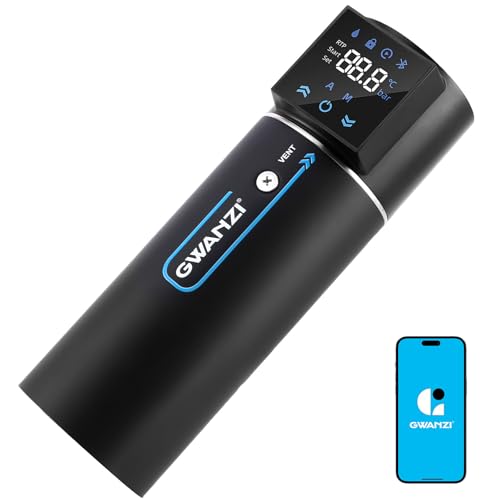
GWANZI 1HP Variable Speed Booster Pump

GWANZI 1.5HP Variable Speed Booster Pump
More Details On Our Top Picks
A straightforward whole-house booster aimed at homes that need a steady push rather than a fire hose. The 80 PSI ceiling suits most two-bath layouts where municipal pressure drops during peak demand, and the self-priming design (a pump that can pull water into its housing on its own without manual filling) helps it recover quickly after a shutoff event. For homeowners who want a familiar-looking control panel rather than a smartphone app, this czobloik model feels like the kind of pump you wire in, set once, and forget.
Compared with the GWANZI variable-speed units higher in the category, this one runs more like a traditional on/off pump, which is fine for predictable households. You may notice slightly more cycling in homes with multiple showers running back-to-back.
Where It Helps
- Onboard pressure control panel for tuning output to your home’s specific demand
- Self-priming structure simplifies installation where suction lift is involved
- 80 PSI ceiling covers typical two-bath residential needs without strain
- Wired, analog-style interface means no app updates or firmware to manage
Things To Consider
- Single-speed operation may cycle more often than variable-speed rivals during back-to-back showers
- Lacks the stainless internals found on the MixBubole and AquaPak options, so water taste and long-term corrosion resistance depend on local water chemistry
- No wireless monitoring, so diagnosing faults requires listening at the unit
Feature Snapshot
Made For
Homeowners in single-family properties with predictable daytime water demand who prefer a no-fuss analog interface over app-driven controls.
Consider Something Else When
Runners-up who want smartphone monitoring and constant-pressure operation should look at the GWANZI 1.2HP Variable Speed Booster Pump instead.
The MixBubole is the model to consider when noise is a deal-breaker. Water-cooling technology circulates flow through the motor housing to dissipate heat, replacing the fan-cooled designs that hum audibly in utility rooms. The result is a claimed 30 dB operating volume, which lands closer to a quiet refrigerator than to a traditional jet pump. In a home office or basement apartment, that matters.
The 304 stainless steel pump body (a food-grade stainless alloy commonly used in plumbing for its corrosion resistance) and the permanent magnet motor (a brushless motor design that runs cooler and uses less electricity than standard induction motors) target homeowners who care about both water quality and long-term running cost. App control rounds out the package for tech-forward shoppers, though firmware updates via OTA (over-the-air updates delivered directly through the app) require occasional attention.
What It Does Well
- Water-cooled motor housing reduces operating noise to roughly 30 dB
- 304 stainless internals limit corrosion and metallic taste in drinking-water lines
- Permanent magnet motor reportedly improves energy efficiency over traditional induction designs
- Smartphone app allows remote pressure adjustment and fault monitoring
Worth Noting
- Water-cooling requires a continuous flow path, so installation planning takes longer than a fan-cooled swap
- Firmware updates through the SmartFarintl app may be required for fault-code resolution
- Premium build and motor place it above basic analog options on cost
Right Fit For
Households in attached housing, duplexes, or finished basements where pump noise would otherwise bleed into living space.
Look Elsewhere When
Those who prefer raw horsepower over quiet operation may get more headroom from the GWANZI 1.5HP Variable Speed Booster Pump.
The GWANZI 1.2HP is the sweet spot for homeowners who want constant-pressure behavior without paying for the top horsepower tier. Variable-speed control adjusts motor output to demand rather than cycling on and off, so shower temperature stays stable even when someone runs the dishwasher. The companion app delivers pressure readouts and fault notifications, which is genuinely useful when the pump lives in a crawlspace you rarely visit.
This model steps down in motor size from the MixBubole 1.35HP unit above, trading a touch of headroom for a more approachable price. For typical two-bath homes with one or two fixtures running at a time, the difference in daily operation tends to be invisible.
Good Reasons To Consider
- Variable-speed motor maintains consistent pressure across simultaneous fixtures
- 1500 GPH rated flow (gallons per hour, a measure of how much water the pump can move) supports multi-bath households without strain
- App-based monitoring removes guesswork during fault events
- Compact footprint fits tighter mechanical rooms than older cast-iron boosters
Trade Offs
- Smart features only pay off if your router reliably reaches the mechanical space
- Like other app-driven pumps, OTA firmware updates are part of long-term ownership
- Some users on shared municipal lines may push the 90 PSI ceiling during heavy multi-fixture demand
Feature Rundown
Who It Suits Best
Tech-forward homeowners in two- to three-bath properties who want pressure data on their phone and are comfortable with occasional firmware maintenance.
Reach For A Different Pick When
Homeowners without reliable Wi-Fi in the mechanical space should look at the simpler czobloik 80 PSI Whole House Booster Pump.
The Truper is the smallest unit in this roundup and the one that earns its keep on a single troublesome fixture rather than the whole house. Think of a basement utility sink that trickles when the irrigation kicks on, or a workshop shower that barely clears a shampoo rinse. The 1/6 HP motor and 25 L/min (liters per minute, a flow rate measure) ceiling make it ideal for point-of-use duty, and the plastic housing keeps weight and cost down.
Compared with the GWANZI whole-house variable-speed units, this is a different animal entirely: no app, no constant-pressure logic, just a small pump doing one job well. In many homes, that’s exactly the right scope.
What Earns Its Place
- Lightweight plastic build mounts easily under sinks or in tight utility closets
- Simple 1/2″ NPT connections (a standard North American pipe thread size) drop into existing supply lines
- Low current draw suits older electrical panels with limited spare capacity
- Compact base footprint fits where whole-house boosters simply will not
Points To Note
- Single-fixture scope means it cannot serve a whole-house shower-plus-laundry load
- Duty cycle (the manufacturer’s recommended ratio of running time to rest time) of 50 minutes on, 20 minutes off caps long continuous sessions
- Plastic construction may not match the longevity of the stainless AquaPak and MixBubole options
Built With In Mind
Apartment renters, workshop owners, and homeowners who need to boost one remote fixture rather than the entire supply.
A Better Fit Elsewhere
Anyone needing to pressurize more than one fixture at once will get more from the GWANZI 1HP Variable Speed Booster Pump.
Strictly speaking, the WaterWorker 44-gallon tank is not a pump, but it is the partner most booster systems need to behave well. A pressure tank stores a reserve of pressurized water so the pump does not have to spin up every time you open a faucet. The result is less cycling noise, longer motor life, and more stable pressure during brief bursts of demand. The vertical 44-gallon format suits homes with modest mechanical-room floor space.
For well owners pairing this with a submersible pump, or city-water households adding it ahead of a booster like the czobloik 80 PSI Whole House Booster Pump, the butyl diaphragm (a flexible internal bladder that separates pressurized air from stored water) and polypropylene liner construction point to long service life.
Bright Spots
- 44-gallon capacity cuts pump cycling by holding reserve for short bursts
- Vertical orientation fits floor plans where horizontal tanks would crowd equipment
- Butyl diaphragm flexes without creasing, supporting longer service intervals
- Polypropylene reservoir liner avoids flaking or taste transfer into stored water
Practical Considerations
- Requires a pre-charge adjustment (a one-time air-pressure check inside the tank before installation) to match your pump’s cut-in setting
- Standing 44 gallons of stored water adds weight that some basement floors may need to accommodate
- Tank alone does not boost pressure; it must pair with a pump to do useful work
Key Product Details
Best Suited To
Well owners and city-water households adding storage capacity to extend the life and quietness of an existing or new booster pump.
Skip It When
Apartment dwellers with no mechanical room for a 44-gallon tank should focus on a self-contained booster like the Truper 1/6 HP Pressurizing Pump.
Most entries in this roundup are full pump systems, but the Aquatec 120V transformer solves a specific and surprisingly common problem. The CDP 8800 booster pump requires a dedicated power supply, and replacing the entire pump because of a failed transformer is wasteful. This OEM (original equipment manufacturer) replacement part plugs into a standard two-prong North American outlet and steps power down to what the pump expects.
If you already own a CDP 8800 and your pump has gone silent after a power event, this is the kind of part that pays for itself in a single avoided service call. For anyone else, it is essentially irrelevant.
Where It Excels
- OEM replacement part avoids the cost of swapping a fully functional pump
- Standard two-prong outlet compatibility means no rewiring
- Compact size fits inside most pump enclosures and wiring closets
Less Ideal Details
- Useful only to owners of the matching Aquatec CDP 8800 pump
- Not a standalone booster, so it cannot help households with no existing pump
- 110V variants only; 220V installations need a different transformer not covered here
Whose Shelf It Belongs On
Existing owners of the Aquatec CDP 8800 booster pump who need a power-supply repair rather than a full replacement.
Swap It Out When
Anyone shopping for a complete booster system should look at the czobloik 80 PSI Whole House Booster Pump or the GWANZI 1.2HP Variable Speed Booster Pump instead.
The AquaPak PRES-FIX10E-P10 sits in the middle of this list by horsepower but at the top by build quality. The shaft, body, suction, and discharge are all stainless steel, and the Noryl impeller (a glass-reinforced thermoplastic known for resisting wear in pumped fluids) keeps the wet end corrosion-resistant over years of cycling. At 43 LPM rated flow, it comfortably serves two-to-three-bath households plus a laundry or irrigation feed without strain.
The 9-meter self-aspiration ceiling is a useful detail for homes drawing from a cistern or shallow well. Compared with the GWANZI app-driven units, this pressurizer trades smart features for a more traditional, mechanically straightforward installation that some plumbers prefer.
What Makes Sense
- Stainless steel wet-end components resist corrosion in hard or mineral-heavy water
- 43 LPM rated flow handles two-to-three-bath demand without pressure sag
- Self-aspiration to 9 meters supports cistern and shallow-well supply setups
- Enclosed motor with aluminum housing aids heat dissipation under heavy use
A Few Limitations
- No wireless monitoring means fault detection relies on pressure gauge checks
- 1HP draw assumes a dedicated circuit, which older panels may need to accommodate
- Heavier than plastic-cased rivals, so mounting location planning matters
Who Should Grab It
Owners of larger two-to-three-bath homes, small in-law suites, or properties with mild commercial-style demand who value build quality over app convenience.
Where Another Pick Suits Better
Smart-home enthusiasts who want pressure readouts on their phone will prefer the GWANZI 1HP Variable Speed Booster Pump.
Stepping down from the GWANZI 1.2HP, this 1HP variant covers the average two-to-three-bath home at a more accessible price point. The variable-speed permanent magnet motor still delivers constant-pressure behavior, so shower temperature holds steady through flushing toilets and appliance cycles. The 90 PSI ceiling matches what most household fixtures are rated for, which keeps things safe for older plumbing.
For households that want app control and stainless-leaning build without paying for the largest motor in the family, this model lands in a useful middle zone. You give up some peak capacity compared with the 1.5HP unit, but for daily residential use, that trade is rarely felt.
Positive Points
- Compact 1HP design fits mechanical rooms with limited floor space
- Variable-speed operation reduces cycling noise compared with single-speed pumps
- App-driven monitoring surfaces fault codes before they become service calls
- 90 PSI output suits typical two-to-three-bath households
Minor Gripes
- App dependency means router placement near the pump matters for setup
- OTA firmware updates are part of long-term ownership, similar to other GWANZI models
Perfect Match For
Two-to-three-bath households that want constant-pressure performance and smart monitoring without oversizing the motor for their actual demand.
Where A Sibling Pick Shines
Large homes with simultaneous multi-fixture demand should look at the GWANZI 1.5HP Variable Speed Booster Pump for more headroom.
The 1.5HP GWANZI is the largest motor in this lineup and the model to consider when ordinary whole-house boosters fall short. Larger families running two showers, a dishwasher, and a washing machine at once will appreciate the extra headroom. The variable-speed permanent magnet motor still prioritizes efficiency, so the additional horsepower does not translate into a punishing electric bill.
This is also the most future-proof option in the family for households planning to add a bathroom, a basement wet bar, or an outdoor shower. The same app ecosystem used by the 1HP and 1.2HP siblings means there is no learning curve for those moving up.
The Upside
- 1.5HP motor delivers meaningful headroom for multi-fixture simultaneous demand
- Constant-pressure operation keeps shower temperature stable through appliance cycles
- Shares the GWANZI app with smaller siblings for a familiar control experience
- Stainless-leaning wet-end supports long service life in hard-water regions
Where It May Fall Short
- Larger motor draws more starting current, so older electrical panels may need verification
- Overkill for one- or two-bath households where a smaller GWANZI unit would suffice
- Premium positioning may not pencil out for modest budgets
Who Will Love This
Larger families, multi-generational households, and homeowners planning fixture additions who want headroom for future demand growth.
Not Your Match When
Smaller homes with modest demand will get equal everyday performance from the GWANZI 1.2HP Variable Speed Booster Pump at a friendlier cost.
What To Weigh Before Choosing A Booster Pump For Your Home
Match Pump Scope To The Symptom
The biggest decision is whole-house versus point-of-use. If only one fixture suffers, a compact unit like the Truper 1/6 HP Pressurizing Pump solves the problem without inflating the electrical or plumbing scope. Whole-house pressure complaints across multiple fixtures point toward a 1HP-or-larger booster such as the GWANZI 1HP Variable Speed Booster Pump or the MixBubole 1.35HP Variable Speed Booster Pump. Matching scope to symptom keeps both upfront and operating costs proportional.
Prioritize Build Materials Where Water Quality Demands It
Stainless steel wet ends cost more than cast iron or plastic, but they pay off in regions with hard water, high mineral content, or mildly acidic well water. The AquaPak PRES-FIX10E-P10 Pressurizer and the MixBubole 1.35HP are the clearest examples in this list, with stainless shafts, bodies, and impellers that resist internal corrosion. In areas with soft municipal water, less expensive builds like the czobloik 80 PSI Whole House Booster Pump remain a sensible choice.
Decide How Much Smart You Actually Want
App-driven pumps add convenience and fault visibility, but they require reliable Wi-Fi at the pump location, occasional firmware updates, and a small learning curve. If the mechanical room has no router coverage or you simply prefer set-and-forget hardware, an analog pump like the czobloik 80 PSI model removes that whole layer of attention. Tech-forward households tend to find real value in the GWANZI line’s app control, while traditional plumbers often specify the AquaPak or czobloik units.
Key Considerations Across These Picks
Pitfalls Shoppers Hit
Underestimating simultaneous demand is the most common mistake, where shoppers size a pump for one running shower but forget about the washing machine, dishwasher, and irrigation feed. The result is a pump that technically works but visibly struggles during peak household activity. Mapping your actual worst-case fixture count before choosing a horsepower tier prevents that disappointment. Another trap is ignoring electrical capacity, since larger motors like the 1.5HP GWANZI need a dedicated circuit and may require an electrical panel check before installation.
When Paying More Pays Off
Higher-tier models earn their premium through quieter operation, longer service intervals, and richer monitoring. The MixBubole’s water-cooled motor and the GWANZI family’s stainless-leaning builds and app fault codes are the clearest examples, and both tend to reduce ownership friction over years rather than months. Spending up makes the most sense for households that run water heavily, for properties with water-quality concerns that punish cheaper materials, and for any installation where noise travels into living space. For light, occasional use, a more modest pick delivers equal everyday satisfaction.




