The lights flicker, the fridge hums off, and your evening plans stall out. That’s the moment most people start shopping for backup power, and the same question keeps coming up: which generator actually delivers without the noise, fumes, and hassle of older models? This roundup focuses on inverter-style units that handle sensitive electronics, fit a range of budgets, and work just as well at a campsite as they do beside the garage.
How The Shortlist Stacks Up

Evernexta 4000W Portable Inverter Generator

Evernexta 4000W Portable Inverter Generator (Gas)

Westinghouse WGen11500TFc Tri-Fuel Generator

Westinghouse WGen10500TFc Tri-Fuel Generator

Honda EU2200i Companion Inverter Generator

Honda EB2200i Industrial Inverter Generator

Honda EB5000 Quiet Industrial Generator

Evernexta 4800W Open Frame Inverter Generator

Evernexta 4800W RV Open Frame Inverter
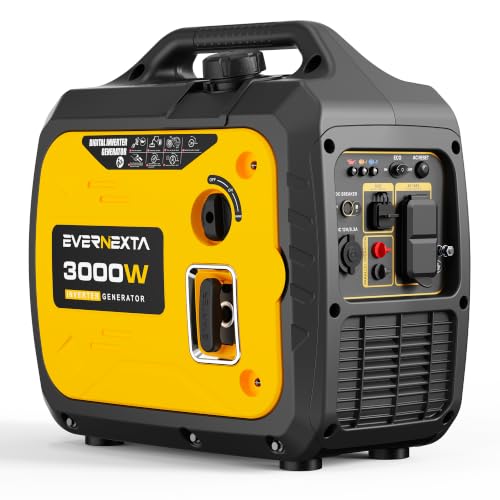
Evernexta 3000W Ultra Quiet Inverter Generator
What Each Pick Brings To The Table
For shoppers who want backup power without the racket of a traditional open-frame unit, this Evernexta model leans into quiet inverter tech. Its 4000W output handles a refrigerator, lights, and a router at the same time, which covers the basics during most outages.
You’ll notice it most in suburban settings where 56 dBA matters. Compare that to louder construction generators, and the evening-storm scenario gets noticeably calmer.
Well-Handled Touches
- Low 56 dBA output keeps it neighbor-friendly on porches and driveways.
- Inverter output (around 3% THD) is safe for laptops, phones, and routers.
- Portable form factor rolls out from storage when storms approach.
- 4000W ceiling runs a fridge and small kitchen appliances in tandem.
Trade Offs To Consider
- Gas-powered, so storage and fuel rotation become a regular chore.
- Output sits in the mid-range, leaving central AC out of reach.
Whose Garage It Belongs In
Suburban homeowners who need quiet backup for fridges, modems, and lights during short storms.
Swap It Out When
The Evernexta 4000W Portable Inverter Generator (Gas) is a better fit if you want a similar wattage tier with different operating characteristics.
Sitting in the same Evernexta family as the first pick, this gas-driven version prioritizes runtime and standard outlet layouts. The 4000 peak and 3200 running watts comfortably support a fridge, fan, and a few lamps through the night.
It’s the kind of unit you wheel out once a season and forget about. Most owners end up running it a few times a year rather than weekly.
Good Reasons To Consider
- Solid 3200 running watts cover typical outage essentials.
- Quieter operation at 59 dB from 23 ft suits driveway placement.
- ECO Mode stretches fuel when loads stay light.
Points To Keep In Mind
- Gas-only fueling limits placement indoors or near open flames.
- You’ll want to plan periodic oil changes, a commonly reported maintenance step.
- Not suited for whole-home circuits or large AC units.
Right Fit For
First-time generator shoppers who want a low-fuss gas unit that handles fridge-and-lights duty during common outages.
Look Elsewhere When
The Westinghouse WGen11500TFc Tri-Fuel Generator suits you better if your region faces multi-day outages and you need whole-home capacity.
This is where the shortlist jumps from mid-size inverter to serious backup territory. The WGen11500TFc produces 14,500 peak watts and 11,500 running watts, running on gasoline, propane, or natural gas.
That tri-fuel flexibility matters during long outages when one fuel type runs short. The 550cc OHV engine and 9.5-gallon tank push runtime up to around 19 hours, keeping the lights on through overnight storms.
A Few Highlights
- Tri-fuel design adapts to whatever fuel is on hand.
- Remote electric start simplifies cold-start mornings.
- Transfer-switch-ready outlets tie into home panels cleanly.
- Cast iron engine sleeve extends service life under heavy loads.
Room For Improvement
- Size and weight make it a two-person lift.
- Fuel costs climb when powering whole-home circuits for days.
Made For
Homeowners in storm-prone regions who want whole-home coverage and the option to switch between fuel sources.
Reach For A Different Pick When
The Honda EU2200i Companion Inverter Generator is a better fit for campers and RV travelers who want whisper-quiet portability.
A step down in wattage from its sibling above, the WGen10500TFc still brings serious tri-fuel muscle. It delivers 13,500 peak watts and 10,500 running watts, enough for most household circuits minus the central HVAC system.
The 500cc OHV engine is built around a cast iron sleeve, which is widely appreciated for resisting wear over years of seasonal use.
Bright Spots
- Tri-fuel flexibility across gas, propane, and natural gas.
- Around 19 hours of runtime on a 9.5-gallon tank.
- Transfer-switch compatibility streamlines home integration.
- Remote electric start eliminates pull-cord fumbling.
Less-Strong Areas
- Bulkier footprint requires planning a permanent pad.
- Larger units like this often demand professional installation for transfer switches.
Key Specs
Who It Suits Best
Suburban households wanting transfer-switch-ready backup with durable engine construction.
Consider Something Else When
The Westinghouse WGen11500TFc Tri-Fuel Generator suits you better if you need extra headroom for central air or heavier shop equipment.
Honda’s EU2200i Companion is the quietest unit on this list, operating between 48 and 57 dBA depending on load. The “Companion” trim adds a 30A outlet for RV hookups, which most inverter models skip.
It’s a favorite for tailgating, tent camping, and overlanding where conversation matters more than raw wattage.
What Makes Sense
- 48-57 dBA noise floor is conversation-friendly.
- Built-in 30A outlet supports RV and trailer use.
- Parallel-ready design lets you link two units for more output.
- Inverter power is safe for laptops, cameras, and CPAP machines.
Where It May Fall Short
- 2200W ceiling won’t cover a microwave and AC at the same time.
- Premium pricing compared to similar-wattage competitors.
Best Suited To
RV owners, campers, and tailgaters who value quiet operation over sheer output.
A Better Fit Elsewhere
The Evernexta 4000W Portable Inverter Generator is a stronger choice if you need higher wattage for small home backup.
Where the EU2200i leans recreational, the EB2200i leans industrial. Same 2200W output and 48-57 dBA noise range, but the housing and outlets are tuned for jobsite use rather than campground convenience.
Contractors running string lights, small saws, and battery chargers tend to gravitate here.
The Helpful Details
- Same whisper-quiet Honda inverter tech as the EU line.
- Clean power output protects sensitive diagnostic tools.
- Compact 120V frame fits truck beds and crowded site layouts.
Softer Spots
- Lacks the 30A RV outlet found on the EU Companion trim.
- Higher cost than recreational counterparts at similar wattage.
Who Should Grab It
Tradespeople and contractors who need quiet, reliable power for tools on site.
Skip It When
The Honda EU2200i Companion Inverter Generator is a better match for RV owners who want the 30A outlet built in.
Honda’s EB5000 jumps into 5000W territory with both 120V and 240V outlets. It runs at 63-65 dBA, which is quiet for a 5000W industrial unit, and iAVR (Intelligent Automatic Voltage Regulation) keeps power steady for tools that don’t like dips.
The unit briefly boosts to 7000W for 10 seconds to start larger motors up to 3 horsepower, which is the kind of headroom that matters on real job sites.
A Few Strong Suits
- 120/240V output covers heavier shop equipment.
- iAVR technology stabilizes voltage for sensitive tools.
- Brief 7000W surge handles 3HP motor startups.
- Quieter than typical open-frame 5000W units.
Worth Bearing In Mind
- Heavier than inverter-class models at similar wattage.
- Not EPA-optimized for low-emission recreational use.
Feature Snapshot
Who Will Love This
Workshop owners and contractors running heavier tools who want 240V capability without deafening noise.
Not Your Match When
The Honda EU2200i Companion Inverter Generator makes more sense if portability and silent operation matter more than wattage.
This Evernexta 4800W open-frame unit fills the middle of the pack with a sensible outlet spread. It includes two 120V AC outlets, a 12V DC port, and a 30A RV outlet, which covers most emergency hookups without extra adapters.
The inverter output keeps THD under 3%, so a router, phone charger, and fridge can share the load safely.
Noteworthy Benefits
- 30A RV outlet supports trailer hookups directly.
- 12V DC port charges batteries without an inverter.
- Clean inverter output protects sensitive electronics.
Practical Considerations
- Open-frame design runs louder than fully enclosed inverters.
- Heavier than 3000W tier units when lifting into trucks.
Perfect Match For
Storm-prone households and RV owners who want a versatile outlet layout for emergency backup.
Where Another Pick Suits Better
The Evernexta 3000W Ultra Quiet Inverter Generator is a smarter pick for shoppers prioritizing low noise over wattage.
The sibling to the previous pick, this 4800W Evernexta leans into the same 223cc OHV engine and EPA compliance. It’s tuned for camping and tailgating, where its 30A RV outlet does most of the heavy lifting.
For outdoor weekends, it lands in a useful middle ground between tiny 2000W inverter units and the bigger Westinghouse tri-fuel models.
Key Advantages
- 223cc EPA-compliant engine meets emissions rules for campgrounds.
- Multi-outlet layout supports RV, household, and DC loads together.
- Inverter tech keeps THD under 3% for sensitive gear.
Some Limits To Know
- Open-frame form factor runs louder than enclosed inverter models.
- Higher fuel use compared to ECO Mode-equipped 3000W units.
Feature Rundown
Best Suited To
Campers and tailgaters who want an EPA-compliant mid-size unit for RV and outdoor use.
Consider Something Else When
The Evernexta 4800W Open Frame Inverter Generator is a stronger choice if the RV outlet configuration matters most.
Rounding out the list, this 3000W Evernexta is the lightest, quietest unit in the 97.7cc engine class. At 53-56 dB from 23 feet, it’s barely louder than a normal conversation, which makes it ideal for tent camping and quiet neighborhoods.
ECO Mode drops engine speed under light loads, stretching fuel and keeping noise low. The 3000 starting watts handle most small appliance surges without strain.
What It Does Well
- 97.7cc engine keeps weight low for solo transport.
- ECO Mode reduces both fuel use and noise.
- Sub-3% THD output suits phones, laptops, and CPAP gear.
A Few Limitations
- 2350 running watts won’t power larger fridges or AC units.
- Smaller fuel tank means more frequent refills on long runs.
Made For
Solo campers, apartment dwellers, and anyone needing a grab-and-go unit for small electronics.
Another Choice May Suit
The Honda EU2200i Companion Inverter Generator is worth considering if brand reputation and parallel capability top your list.
Factors To Consider When Choosing Battery Powered Generators For Home
Matching Wattage To Your Household
The first question is how much power you actually need. Running watts matter more than peak numbers, since peak only covers brief motor startups. A typical fridge plus lights, fans, and a router draws around 1500-2500 running watts, so a 3000W mid-size unit often covers the basics. Central AC and electric dryers push you toward the Westinghouse tri-fuel tier.
Noise, Runtime, And Placement
Inverter generators (a generator that produces clean, stable AC power safe for electronics through internal circuitry) typically run quieter than open-frame units. Anything in the 50-60 dBA range is comfortable for residential driveways. Larger tanks and ECO Mode stretch runtime, which matters during multi-day outages. Plan for outdoor placement on a stable surface with exhaust directed away from windows.
Fuel Type And Storage
Gas models need fuel rotation and stabilized gasoline, which adds a recurring chore. Tri-fuel options like the Westinghouse WGen11500TFc give you propane or natural gas as backups. Either way, store fuel in approved containers away from living spaces.
Portability And Outlets
Wheel kits, handles, and outlet layouts shape daily use. A 30A RV outlet expands where you can deploy the unit. Parallel capability, found in some Honda inverter models, lets you link two smaller units for higher output when needed.
Key Considerations Across These Picks
Pitfalls Shoppers Hit
Undersizing is the most common mistake, since peak wattage can look generous while running watts fall short. Measure the actual draw of your fridge, sump pump, and any medical devices before committing. Skipping transfer-switch installation also catches people off guard when they expect to power hardwired circuits through extension cords. Ventilation matters too, since carbon monoxide risks build fast when units run near doors or windows.
What The Higher Tier Buys
The jump from a 3000W inverter to a tri-fuel Westinghouse model brings roughly triple the running wattage, multi-fuel flexibility, and transfer-switch-ready outlets. That upgrade earns its keep during multi-day outages or in homes with central AC. For storm-prone regions, the extra capacity and runtime often justify the larger footprint. Shoppers in mild climates with shorter outages tend to find mid-size inverter units deliver all the value they need.
Frequently Asked Questions
What Size Battery Powered Generator Do I Need For Home Backup?
Add up the running watts of the essentials you want to power, then add 20% headroom for motor startups. Most households covering a fridge, lights, and a router land in the 3000-4000W range.
Are Inverter Generators Safe For Sensitive Electronics?
Yes, inverter models output clean power with THD (Total Harmonic Distortion, a measure of electrical “noise” that can confuse delicate circuits) under 3-5%, which protects laptops, phones, and CPAP machines. Older conventional generators can produce voltage fluctuations that stress sensitive components.
How Long Can A Portable Generator Run Continuously?
Runtime depends on tank size and load. Mid-size inverter units typically run 8-12 hours at 25% load. Larger tri-fuel models like the Westinghouse WGen series stretch to around 19 hours on a full gas tank.
Can I Run A Generator In The Rain?
Most manuals recommend protecting the unit from direct rain and standing water. A purpose-built generator tent or covered outdoor placement keeps airflow going while shielding electrical components.
Do Battery Powered Generators Need Maintenance?
Yes. Oil changes, spark plug checks, and fuel stabilizer use are commonly recommended every few months during storage. Running the unit briefly every 60-90 days helps keep the carburetor clean and the battery charged on electric-start models.
The Takeaway
A reliable home generator turns a stressful outage into a minor inconvenience, and the right pick depends on your climate, household size, and noise tolerance. Match the wattage to your real load, prioritize inverter output for electronics, and think about fuel flexibility if storms in your area run long. Any of the units above will serve you well once sized to the job.