

Vinyl plank flooring looks great once it is down, but the messy perimeter ruins the whole effect. Expansion gaps along walls, transitions between rooms, and the awkward height step into a hallway or kitchen all demand trim that matches the floor and holds up to daily life. The right baseboard or molding quietly finishes the job, hiding those gaps while protecting the plank edges from chips, kicks, and moisture creep.
This list pulls together nine solid options for vinyl plank flooring trims and baseboards, from flexible peel-and-stick PVC that speeds up weekend projects to rigid coordinated moldings that blend with specific flooring collections. You will find honest trade-offs, real installation scenarios, and the picks that suit renters, DIYers, and pros.
An Overview Of The Picks

Ackland Brices Cove Luxury Vinyl Flooring Trim Quarter Round

Kikerike Peel and Stick Vinyl Baseboard Trim 3 Inch White
Kikerike Peel and Stick Vinyl Baseboard Trim 4 Inch White
Kikerike Peel and Stick Vinyl Baseboard Trim 4 Inch 40ft White
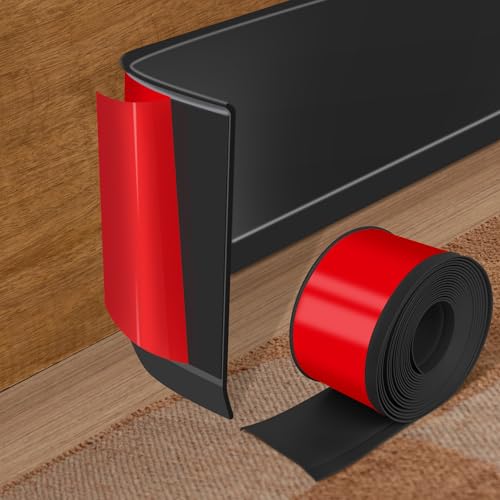
Kikerike Peel and Stick Vinyl Baseboard Trim 4 Inch Black
Kikerike Peel and Stick Vinyl Baseboard Trim 4 Inch 40ft Black

Kikerike Peel and Stick Vinyl Baseboard Trim 4 Inch Gray

MSI Parkland Bailey LVT Surface Reducer Molding Trim

Ackland Mylo Luxury Vinyl Flooring Trim T Molding
A Closer Look At Each Pick
Quarter round is the small curved molding that sits where the floor meets an existing baseboard, hiding the expansion gap that vinyl plank needs around every wall. The Ackland Brices Cove profile runs 94 inches long at roughly 0.75 inches tall and 0.63 inches wide, a slim shape that tucks into tight toe-kicks without crowding the room.
This trim is designed to coordinate with a specific luxury vinyl collection, which makes it a natural fit when the rest of the picks on this list feel too generic. Homeowners finishing a full LVP install benefit most, since the color match keeps the perimeter from looking like an afterthought.
Real Benefits
- Coordinated finish with matching LVP collections avoids the mismatched look of off-the-shelf trim
- Slim 0.63-inch width fits tight toe-kicks under cabinets where taller baseboards look bulky
- Waterproof vinyl construction handles mop water and bathroom humidity without swelling
- 94-inch length covers most room runs with a single piece, reducing seams on short walls
Things To Consider
- Color is locked to one flooring line, so it may not blend with a different brand of plank already on site
- Glue or nail installation is required, which adds a few extra tools compared to peel-and-stick options
Who It Suits Best
Homeowners finishing a coordinated luxury vinyl plank installation who want a clean color match at the baseboard line.
Where Another Pick Suits Better
DIYers avoiding adhesive and nail guns should reach for the Kikerike peel-and-stick 4-inch white trim instead.
The Kikerike 3-inch baseboard is the lowest-profile option in this group, and that is exactly why it earns its spot. At 20 feet of flexible PVC with a self-adhesive backing, it skips the nail gun, the caulk gun, and most of the frustration that comes with traditional wood trim. Renters refreshing a tired apartment corner benefit most, since the install is fully reversible with a little heat from a hair dryer.
Compared to the Ackland quarter round above, this is a full baseboard replacement rather than a gap-hider, which makes it the right call when walls have no trim at all.
Positive Takeaways
- Peel-and-stick install removes the need for nails, brad guns, or wet adhesive
- Flexible PVC bends gently around curved walls and outside corners without kerf cuts
- Waterproof surface wipes clean in kitchens, bathrooms, and mudrooms
- 3-inch height keeps the visual line low, a good match for low ceilings and modern rooms
Worth Noting
- 20-foot roll may fall short for larger rooms, requiring a second purchase or a visible seam
- Adhesive can struggle on dusty or textured walls without a wiped-down primer coat first
Made For
Renters and first-time DIYers who want a reversible, tool-free baseboard upgrade over existing walls.
Skip It When
Anyone needing full-wall coverage across a large room should pick the Kikerike 40-foot 4-inch white roll instead.
The 4-inch version of the Kikerike baseboard steps up the wall coverage while keeping the same peel-and-stick install. The extra inch of height hides wider expansion gaps and gives the room a more traditional baseboard presence. Apartment dwellers covering older painted walls that show scuffs benefit most, since the taller face hides dings down at floor level.
Versus the 3-inch model above, this one trades low-profile minimalism for a more conventional silhouette that pairs well with taller doors and crown molding.
What Stands Out
- 4-inch height reads as a real baseboard rather than a low modern strip
- Self-adhesive backing still avoids nails and the dust that comes with drilling
- Flexible PVC cove profile softens the corner where wall meets floor
- Waterproof surface holds up to mopping without edge peel on sealed walls
Trade Offs
- 20-foot roll leaves long rooms short, which can create a noticeable joint mid-wall
- Adhesive can soften in high-heat spots like above-baseboard radiators in some homes
Right Fit For
Apartment owners and remodelers who want a taller baseboard line without committing to mitered wood trim.
Consider Something Else When
Homeowners covering an entire large room should choose the Kikerike 4-inch 40-foot white roll for fewer seams.
Doubling the length to 40 feet changes the math for whole-room projects. Where the 20-foot rolls force a mid-wall seam, this one carries most bedrooms and small living rooms on a single strip. Whole-home renovators benefit most, since fewer seams mean fewer weak spots where the adhesive might lift later.
It shares the same 4-inch profile and PVC construction as the 20-foot white roll above, so the visual result is identical. The trade-off shows up in storage and handling, since 40 feet of coiled trim is awkward to maneuver through doorways during install.
Features That Help
- 40-foot length covers a typical bedroom or living room with no seam at all
- Peel-and-stick backing keeps the install tool-free for most DIY skill levels
- 4-inch face hides paint drips and old caulk lines behind a fresh new edge
- Waterproof PVC wipes down after muddy paw prints or kitchen splatter
Points To Note
- 40-foot roll is heavy and springy, making it tougher to align on solo installs
- Wider wall coverage means more careful surface prep for the adhesive to bond well
Quick Facts
Best Suited To
DIYers tackling a full-room vinyl plank install who want one roll that covers the entire perimeter.
A Better Fit Elsewhere
Shoppers focused on color variety should look at the Kikerike black or gray peel-and-stick rolls for bolder rooms.
Black baseboard is one of those choices that quietly changes the whole mood of a room, turning a standard vinyl plank install into something that reads as intentional and modern. The Kikerike 4-inch black roll keeps the same peel-and-stick format as the white versions, so the bold color does not come with a harder install. Owners of darker plank floors benefit most, since the matching low-saturation tone keeps the perimeter from looking tacked on.
Same height and profile as the white 4-inch pick above, with the only real difference being the pigment. The trade-off is that scuffs and dust show more readily on a dark finish in a busy household.
Everyday Advantages
- Bold black finish frames dark plank floors with a continuous color band
- Peel-and-stick backing keeps the install reversible for temporary design experiments
- Flexible PVC navigates curved walls and tight inside corners cleanly
- 4-inch face gives the color enough surface area to actually register visually
Room For Improvement
- Dark finish shows dust, pet hair, and touch-up scuffs more than the white rolls do
- 20-foot length still creates a mid-wall seam in larger rooms
Who Should Grab It
Design-minded renovators pairing dark vinyl plank floors with a modern matte or industrial interior.
Look Elsewhere When
Anyone wanting a softer contrast should consider the Kikerike gray peel-and-stick roll instead.
This is the long-run, dark-finish version of the Kikerike peel-and-stick family, and it pulls double duty for larger projects. Forty feet of continuous black trim lets a homeowner wrap an entire open-plan living and dining area without splicing. Designers laying out large media rooms or basement conversions benefit most, since the uninterrupted dark line keeps the perimeter consistent across longer sight lines.
Functionally identical to the 20-foot black pick above, just doubled in length. The handling challenge returns: a 40-foot springy coil is harder to position solo than the shorter roll, so a second set of hands speeds the install considerably.
Everyday Perks
- 40-foot coverage carries most living areas without a single seam
- Black finish delivers strong contrast against light walls and pale plank floors
- Peel-and-stick backing eliminates nail holes in rental properties
- Waterproof surface cleans with a damp cloth without raising edges
Honest Caveats
- Long coil is harder to align on a single-person install in most rooms
- Black surface highlights fingerprints during install before the wall is dust-free
Quick Facts
Built With In Mind
Owners of larger open-plan spaces who want a continuous dark trim line without mid-wall seams.
Another Choice May Suit
Shoppers with smaller rooms and softer palettes should pick the Kikerike 20-foot white peel-and-stick trim.
Gray sits in a useful middle ground between the bright white and bold black Kikerike rolls, and it tends to disappear nicely against concrete-look or weathered vinyl plank floors. The 4-inch profile and self-adhesive install stay consistent with the rest of this line. Renovators finishing a loft-style or industrial room benefit most, since gray reads as a deliberate neutral rather than a forgotten default.
It carries the same flexibility and waterproof PVC construction as the other Kikerike rolls, with a pigment that hides minor scuffs better than the white version in busy spaces.
A Strong Showing
- Neutral gray finish hides minor scuffs better than bright white in busy rooms
- Peel-and-stick backing keeps the install fast for first-time DIYers
- Flexible PVC navigates curved walls without scoring or heat-bending
- 4-inch profile balances modern and traditional design vocabularies
Small Caveats
- Gray tone varies under different lighting, so a sample check matters before committing
- 20-foot length still requires a seam in rooms over roughly 12 by 12 feet
Whose Shelf It Belongs On
Designers working with industrial, loft, or weathered-wood plank floors who want a deliberate neutral baseboard.
Reach For A Different Pick When
Anyone needing the longest possible continuous run should pick the Kikerike 40-foot white trim instead.
A surface reducer solves a problem most baseboards cannot, the awkward height step where vinyl plank meets carpet, tile, or a lower hardwood floor. The MSI Parkland Bailey profile is 94 inches long and 0.35 inches thick, designed to taper the plank edge down to whatever surface sits beside it. Homeowners finishing a kitchen-to-living-room transition benefit most, since that lip is the classic trip hazard if left uncovered.
Unlike the peel-and-stick rolls above, this is a rigid coordinated trim meant to glue or track into place. The trade-off is a more polished, color-matched finish, but the install takes more patience than a stick-on strip.
Where It Helps
- Tapered profile bridges height differences between plank and adjacent flooring
- Coordinated color match for the MSI Parkland flooring line keeps transitions seamless
- Waterproof rigid vinyl holds up to daily traffic at threshold zones
- 94-inch length covers most doorways with a single piece and no mid-span seam
Areas To Watch
- Color is tied to the MSI Parkland line, so it may clash with non-MSI planks already installed
- Glue-down or track install takes more prep than the peel-and-stick rolls earlier on this list
Perfect Match For
Homeowners transitioning between MSI Parkland vinyl plank and a lower adjacent floor in a doorway.
Swap It Out When
DIYers needing a simpler transition strip should look at the Ackland Mylo T-molding reviewed next instead.
A T-molding handles the seam where two floors meet at the same height, the classic bedroom-to-hallway or kitchen-to-laundry situation. The Ackland Mylo profile is roughly 0.27 inches tall and 1.77 inches wide across the visible face, sized to drop into a small gap between planks and bridge the two sides cleanly. Owners running continuous plank between rooms benefit most, since a T-molding hides the necessary expansion break without an awkward floor-height step.
Compared to the MSI reducer reviewed above, this strip assumes both sides are flush, which is the typical case when plank runs through a doorway. The trade-off is that it cannot taper down to carpet or tile like a reducer can.
Where It Delivers
- Covers equal-height expansion seams between adjoining rooms in the same flooring run
- Coordinated finish with the Ackland Mylo collection keeps the threshold visually continuous
- Waterproof vinyl construction tolerates wet mop traffic at the seam
- 94-inch length spans standard interior doorways in a single piece
Factors To Consider
- Will not work where one side sits noticeably lower than the other, where a reducer like the MSI Parkland strip is the better call
- Glue or track installation requires more careful alignment than peel-and-stick baseboards
Who Will Love This
Homeowners running luxury vinyl plank across multiple rooms who need a clean seam cover at doorways.
Where A Sibling Pick Shines
Anyone needing to step down to a lower surface like carpet should choose the MSI Parkland Bailey reducer instead.
Picking The Right Trim For Your Vinyl Plank Project
Choosing baseboards for vinyl plank flooring really comes down to three questions: what is already on the wall, how the floor meets the next surface, and how permanent you want the install to feel. Each answer points to a different category of trim from this list, and matching them up front avoids a costly re-do.
Match First, Measure Second
Coordinated moldings from the same flooring brand deliver the cleanest color and texture match, which matters most when the plank has a distinctive grain pattern. Generic peel-and-stick PVC baseboards win on speed and reversibility, especially in rentals, but the color match has to carry the visual load on its own. Measure total wall length before buying, and add at least 10 percent for inside-corner waste.
Expansion Gaps Are Not Optional
Vinyl plank flooring floats over the subfloor, which means it needs a small gap around the perimeter and at doorways to handle seasonal expansion. Quarter round hides that gap against an existing baseboard, while T-molding and surface reducers handle transitions. Skipping this step invites buckling when temperatures swing, and no baseboard choice can fix a floor that has nowhere to move.
Material And Moisture Matter
Bathrooms, laundry rooms, and below-grade basements all push moisture levels higher than living areas. PVC and vinyl trims shrug off that exposure, while MDF or painted wood versions tend to swell at the bottom edge. For damp zones, the flexible PVC rolls in this list are a safer call than wood alternatives.
Think About Removal Before You Stick
Peel-and-stick trims are a gift for renters, but the adhesive can lift paint on the way out. A quick test patch in a closet corner tells you whether the wall paint is sealed enough to survive a future removal. For owned homes, glue-down coordinated trims offer a more permanent bond and cleaner final look.
Common Slip Ups And Upgrade Choices
Mistakes Worth Dodging
The single most common error in this category is buying a baseboard before checking the exact flooring profile, since plank thickness changes which trim sits flush. Another trap is choosing white trim for everything, even rooms with darker plank floors, which can leave the perimeter looking tacked on. Always confirm the trim height covers both the expansion gap and any uneven paint line before clicking order.
What The Higher Tier Buys
Premium coordinated moldings from brands like MSI and Ackland cost more for a real reason: the color and texture are tuned to a specific plank line, so the seam disappears. Cheaper rolls save money and time, but the trade-off is a visible color shift where the floor meets the wall. For whole-home projects where every doorway is on display, that upgrade usually pays for itself in a more cohesive final result.
Frequently Asked Questions
Do vinyl plank floors really need baseboards?
Yes. Vinyl plank expands and contracts with temperature changes, and it needs a small gap around the perimeter to absorb that movement. Baseboards or quarter round cover that gap while protecting the plank edge from chips and vacuum bumps.
Can I install peel and stick baseboards on textured walls?
The adhesive struggles on heavy orange-peel or knockdown textures. A light sanding and a wiped-clean surface help, but for very rough walls a glue-down or nail-on trim is the safer bet.
What is the difference between quarter round and baseboard?
Quarter round is a small curved molding that sits against an existing baseboard to hide the floor gap. Baseboard is the taller main trim that runs along the wall. They solve different problems and are often used together.
How do I transition between vinyl plank and carpet?
A surface reducer, like the MSI Parkland strip reviewed above, tapers the plank edge down to the carpet height. A T-molding only works when both floors sit at exactly the same level.
Will PVC baseboards yellow over time?
Quality PVC trims resist yellowing, but direct sunlight through south-facing windows can still cause subtle fading over years. For sun-drenched rooms, lighter colors tend to show the change less than bright whites.
The Takeaway
A clean perimeter is what separates a vinyl plank install that reads as professional from one that looks like a weekend experiment. The trims and baseboards on this list cover the three big jobs: hiding the wall gap, transitioning between rooms, and stepping down to lower floors. Match the trim profile to your specific situation, prep the surface well, and the rest is just patient measuring.




