

A generator used to mean a deafening metal box that lived in the garage and smelled like gas. The category has changed. Modern inverter models hum along below conversation volume, and battery stations now rival small gas units for everyday outage duty. If you live somewhere with storm season, rolling blackouts, or just a finicky grid, picking the right backup generator turns a multi-day headache into a minor inconvenience. This guide walks through ten strong picks across gas, propane, and battery power so you can match wattage, noise, and fuel type to your situation.
The Leading Options At A Glance

Evernexta 4000W Portable Inverter Generator

Evernexta 4000W Gas Inverter Generator

Westinghouse 14500W Tri-Fuel Generator

Westinghouse 13500W Tri-Fuel Generator

Anker SOLIX C1000 Gen 2 Power Station

Anker SOLIX S2000 Power Station

Honda EU2200i Companion Generator

Evernexta 4800W Inverter Generator
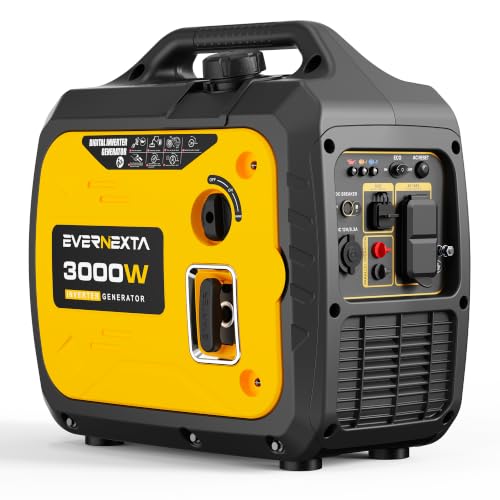
Evernexta 3000W Quiet Gas Generator

Anker SOLIX F3000 Power Station
Why These Options Stand Out
The Evernexta 4000W portable inverter generator is built for people who want a gas unit that does not announce itself to the entire block. At 56 dB measured from 23 feet, it runs quieter than a window air conditioner, which matters a lot during overnight outages in close-set neighborhoods.
Inverter technology (a system that smooths raw engine output into clean, electronics-friendly power) keeps total harmonic distortion under 3%, so phones, laptops, and routers charge safely alongside heavier loads. Compared to the open-frame Evernexta 4800W coming later in this list, this model trades raw wattage for a fully enclosed, more neighborhood-friendly shell.
Everyday Perks
- Low 56 dB output keeps noise complaints off your plate
- Clean inverter power protects sensitive electronics like CPAP machines and routers
- Portable enough to move from garage to tailgate without a dolly
- Flexible enough for camping, RV weekends, and home outage duty
Things To Consider
- 4000W is plenty for essentials but will not run central AC or an electric dryer
- Gasoline models require fuel stabilizer during long storage months
Who It Suits Best
Suburban homeowners and frequent campers who want a quiet gas unit for fridge, lights, and device charging without the open-frame roar.
Where Another Pick Suits Better
Households that need to run central air or power tools during long outages should reach for the Westinghouse 14500W Tri-Fuel Generator instead.
The Evernexta 4000W gas inverter leans toward practical home-backup duty rather than camping flair. It pushes 4000 peak watts and 3200 running watts, which translates to a fridge, a box fan, several lamps, and a Wi-Fi router all running at the same time.
ECO mode (a throttle-back feature that lowers engine speed under light loads) trims fuel use during quiet stretches, and at 59 dB it stays polite for overnight operation. Think of this one as the calmer sibling of the loud open-frame workhorses.
Well-Handled Touches
- 3200 running watts covers the actual essentials in most homes
- ECO mode extends runtime and quiets the engine at partial load
- Clean inverter output safe for laptops and modern TVs
- Compact frame fits on a small back porch or garage corner
Honest Caveats
- 59 dB is fine, but a touch louder than the fully enclosed inverter above
- Gas-only fuel source limits indoor placement and refueling options
Right Fit For
Owners who want straightforward gas backup for fridge, freezer, and lights during seasonal outages without overbuilding capacity.
Consider Something Else When
Apartment dwellers who cannot run gas equipment on balconies or indoors should swap in the Anker SOLIX C1000 Gen 2 Power Station.
The Westinghouse 14500W tri-fuel is a serious machine for serious outages. A 550cc overhead-valve engine drives 14,500 peak watts and 11,500 running watts, with a built-in carbon monoxide sensor and remote electric start that fires the engine from inside the house.
Tri-fuel capability means gasoline, propane, and natural gas all work in the same unit. Owners in storm-prone regions commonly appreciate being able to swap fuels when supply chains tighten.
Useful Touches
- Transfer-switch-ready wiring for direct home integration
- Three fuel options reduce panic during long fuel shortages
- Remote start saves cold trips outside during winter storms
- Cast-iron engine sleeve built for heavy use cycles
Trade-Offs To Consider
- Open-frame design runs louder than compact inverter models
- Large footprint needs a permanent outdoor placement plan
- Natural gas hookup may require professional installation
Key Specs
Whose Shelf It Belongs On
Large rural properties and homes in storm country where multi-day outages mean running HVAC, well pumps, and kitchen appliances together.
Skip It When
You only need to back up a fridge and a few lamps, where the Evernexta 4000W Gas Inverter Generator is plenty.
The Westinghouse 13500W tri-fuel trims 1000 peak watts from its bigger sibling in exchange for a slightly smaller 500cc engine. You still get gasoline, propane, and natural gas flexibility along with remote electric start and a carbon monoxide sensor.
That makes it a friendlier choice for households that want whole-house capability without the heaviest frame on the block.
Everyday Advantages
- 10,500 running watts handles most mid-size homes at full tilt
- Tri-fuel flexibility shines during regional fuel shortages
- Cast-iron sleeve supports a long working life under regular use
- Remote start keeps you inside during rough weather
Points To Note
- Still a heavy open-frame unit that needs a firm outdoor pad
- Running noise levels are higher than any enclosed inverter
Best Suited To
Homeowners in regions with hurricane or wildfire outages who want dependable tri-fuel flexibility without stepping up to the biggest engine size.
Look Elsewhere When
Apartment or HOA settings should look at the Anker SOLIX S2000 Power Station for silent, fume-free indoor backup.
The Anker SOLIX C1000 Gen 2 portable power station is the first battery station in this roundup, and it changes the backup-power conversation entirely. With 1,024Wh of LiFePO4 capacity (lithium iron phosphate, a longer-lasting battery chemistry known for safety and thousands of cycles) and 2,000W output, it powers routers, laptops, and even full-size refrigerators without fumes, noise, or fuel.
You can recharge it to 100% in roughly 49 minutes through the wall, which makes it feel closer to a kitchen appliance than a piece of emergency gear.
Noteworthy Benefits
- Safe for apartments, bedrooms, and indoor placement
- Zero operating noise keeps bedrooms quiet at night
- Ten ports handle phones, laptops, and small appliances at once
- App-based monitoring for runtime and battery health
Worth Bearing In Mind
- 1,024Wh capacity is limited for central AC or extended multi-day use
- Solar charging requires compatible panels you may need to buy separately
Made For
Condo and apartment residents who need silent, fume-free backup for electronics, internet, and fridge during short outages.
Not Your Match When
Homeowners powering well pumps, electric ranges, or central air should grab the Westinghouse 13500W Tri-Fuel Generator instead.
The Anker SOLIX S2000 doubles down on the C1000 formula with 2,010Wh of capacity and roughly 3,000W peak output. Real-world numbers suggest around 35 hours of fridge runtime, which covers most multi-day outages without a recharge.
The LiFePO4 cells are rated for around 10,000 charge cycles, giving this unit a lifespan closer to a major appliance than a typical power station.
What Pays Off
- Low idle draw keeps standby power loss near zero
- 15-year cell lifespan suits long-term ownership
- Compact and light for a 2kWh-capacity station
- UPS mode (uninterruptible power supply, which switches to battery automatically when grid power drops) protects computers and sensitive gear
Some Limits To Know
- Higher price than comparable gas models at this capacity
- Solar charging speed depends on panel wattage you may already own
Feature Snapshot
Perfect Match For
Homeowners seeking silent, indoor-safe backup that handles fridge, internet, and electronics through extended grid events.
Reach For A Different Pick When
You also need to run high-draw appliances like electric dryers, where the Westinghouse 14500W Tri-Fuel Generator is the stronger fit.
The Honda EU2200i Companion is the small-footprint veteran of this roundup. Rated between 48 and 57 dBA depending on load, it is genuinely conversation-friendly, and the 30A outlet built into the Companion trim makes RV hookups simple.
Honda’s inverter technology has a long track record among contractors and RV owners, and parallel capability lets you chain two units for nearly double the output.
Advantages To Know
- Whisper-quiet operation well below any open-frame gas model
- Honda reliability is a strong ownership signal for many shoppers
- Parallel-ready for users who want expandable output
- 30A RV outlet simplifies campsite hookups
Practical Considerations
- 2,200W covers essentials only, not central air or electric ranges
- Premium pricing for the Honda name compared to newer Evernexta models
Who Will Love This
RVers, tailgaters, and homeowners who prize quiet operation and brand reputation over peak wattage.
Swap It Out When
Budget-focused shoppers should consider the Evernexta 3000W Quiet Gas Generator, which delivers more watts for less.
The Evernexta 4800W open-frame inverter targets the RV crowd squarely. A 223cc four-stroke engine delivers 4800 peak watts with low THD (total harmonic distortion, which measures how “dirty” the power waveform is) for clean electronics support, and the integrated 30A RV outlet means no adapter gymnastics.
Compared to the smaller Evernexta 4000W inverters earlier in this list, you trade some portability for roughly 800 more peak watts and easier RV hookups.
Why It Works Well
- Dedicated 30A outlet streamlines RV and food-truck setups
- Inverter-grade power protects sensitive gear on job sites
- Open-frame layout simplifies maintenance access
- Mid-range wattage covers most household essentials
Trade-Offs To Consider
- Open-frame design is louder than fully enclosed inverter units
- Heavier frame needs a dolly or two hands for transport
The Right Fit
RVers, tailgaters, and contractors who want RV-ready outlets and enough wattage to run tools without buying a dedicated work generator.
A Better Fit Elsewhere
Homeowners focused only on quiet home backup should consider the Evernexta 4000W Portable Inverter Generator reviewed earlier.
The Evernexta 3000W ultra-quiet inverter is the most portable gas option in this roundup. A compact 97.7cc engine produces 3000 peak watts and 2350 running watts, which is enough for a fridge, some lights, and a phone or laptop.
At 53 to 56 dB from 23 feet, it stays polite around campsites and quiet suburban driveways.
Features That Help
- Lightweight build suits campers and apartment backup alike
- Eco Mode trims fuel use and noise at light loads
- Clean inverter output safe for modern electronics
- EPA-compliant for use in regulated regions
Some Limits To Know
- 3000W is enough for essentials but not central AC
- Gas fuel still requires outdoor placement and fuel care
Who Should Grab It
Campers, small-home owners, and anyone who wants the lightest quiet inverter in this roundup without stepping up to a 4000W model.
Another Choice May Suit
For silent indoor operation, the Anker SOLIX C1000 Gen 2 Power Station removes fuel concerns entirely.
The Anker SOLIX F3000 closes out this list as the largest battery station, packing 3,072Wh of LiFePO4 capacity and a 6,000W output rating. The standout feature is 3,600W pass-through charging, which lets you recharge from a gas generator or solar panels while simultaneously powering household loads.
That combination of massive capacity and pass-through makes it the closest battery competitor to a whole-home gas generator.
Everyday Wins
- Massive 3,072Wh capacity covers extended outages
- Pass-through charging keeps appliances running during recharge
- Up to 2,400W solar input for off-grid recharging
- Around 125 hours of AC idle standby for low-draw devices
Trade-Offs To Consider
- Premium price compared to gas generators in this wattage range
- Heavy unit, though wheeled handles help with placement
Quick Technical Notes
Built With In Mind
Homeowners who want battery backup with the wattage of a large gas generator and the comfort of indoor, fume-free operation.
Not Your Match When
Shoppers on tighter budgets may find the Evernexta 4800W Inverter Generator a more practical watt-per-dollar choice.
What To Weigh Before Picking Backup Generators For Home
Match Wattage To Your Real Load
Start by listing the appliances you cannot live without during an outage: refrigerator, freezer, well pump, microwave, modem, phone chargers, and any medical gear. Add their running watts, then tack on a 20% buffer for motor startup surges. Most households fall between 3,000 and 8,000 running watts for a comfortable essentials experience, while whole-home coverage usually starts around 10,000 running watts.
Decide Between Gas And Battery
Gas generators offer longer runtime per refill and higher peak wattage for the dollar, but require outdoor placement, fuel storage, and routine maintenance like oil changes and fuel stabilizer. Battery power stations trade higher upfront cost for indoor-safe operation, zero fumes, near-silent runtime, and zero fuel trips to the station. Choose gas if you run heavy loads for days. Choose battery if you want a hands-off indoor experience and only need to cover essentials.
Consider Noise And Placement
Open-frame gas generators typically run between 70 and 80 dB, which is loud enough to bother close neighbors and violate many local noise ordinances. Enclosed inverter gas units drop to the mid-50s, and battery stations are essentially silent. If you live in a dense suburb, an HOA, or an apartment, the noise and placement story often decides the category for you.
Plan For Fuel Or Charging
Tri-fuel gas units add flexibility when one fuel runs out, but they need proper hose and regulator hookups. Battery stations need either wall charging, solar panels, or a generator for extended outages. Factor in the accessories you may already own, since adding solar panels to a power station can raise the total cost considerably.
Key Considerations Across These Picks
Common Shopping Slip Ups
Underestimating startup wattage is the most common misstep. Motors in refrigerators, well pumps, and window AC units draw two to three times their rated wattage when spinning up, so a generator that handles running watts comfortably can still trip when a fridge compressor kicks on. The other frequent mistake is buying a gas unit without a plan for outdoor placement, fuel storage, and exhaust clearance, all of which matter for safety and code compliance.
When Paying More Pays Off
The premium tier in this category buys inverter-grade clean power, lower noise, longer battery lifespan, and features like remote start and tri-fuel flexibility. For households with sensitive electronics, close neighbors, or frequent outage exposure, those upgrades pay back in convenience and peace of mind. For occasional backup in a region where the lights flicker once a year, a simpler gas unit covers the job without stretching the budget.
Frequently Asked Questions
How Many Watts Do You Need To Back Up A House?
A typical essentials setup (fridge, freezer, lights, internet, phone chargers, and a fan) needs roughly 3,000 to 5,000 running watts. Adding central AC, an electric range, or a well pump usually pushes the requirement above 8,000 running watts. Whole-home coverage with central air typically lands between 10,000 and 15,000 running watts.
Are Battery Power Stations Good For Home Backup?
Yes, for essentials and electronics. Battery stations like the Anker SOLIX series cover fridges, lighting, internet, and charging without noise or fumes. They cannot match the sustained high-wattage output of large gas generators for central AC, electric ranges, or well pumps during multi-day outages, so heavier loads still favor gas.
How Long Can A Portable Generator Run Continuously?
Most portable gas generators run 8 to 19 hours on a full tank, depending on engine size, load, and ECO mode usage. Battery stations run until their capacity is depleted, anywhere from several hours to multiple days for low-draw essentials, then need wall or solar recharging.
Can You Run A Generator In The Rain?
Gas generators should never run in rain or wet conditions without proper covering, since water damage and electrocution risks are real. Battery stations have no such restrictions and can operate indoors. For outdoor gas use, a ventilated generator tent or pop-up cover is the standard approach.
Do Inverter Generators Need Maintenance?
Yes, though less than open-frame models. Routine care includes oil changes every 50 to 100 hours, air filter checks, spark plug replacement, and fuel stabilizer during storage. Battery stations skip most of this, requiring only firmware updates and keeping the cells charged if stored long term.
Wrap Up
The right backup generator comes down to what you actually need to keep running, where you live, and how much noise you can tolerate. Quiet inverter gas models like the Evernexta 4000W and Honda EU2200i handle essentials with politeness, while the Westinghouse tri-fuel units cover whole-home loads. For indoor-safe, fume-free operation, the Anker SOLIX lineup scales from a fridge-saving 1kWh all the way to a near-whole-home 3kWh system. Match the unit to your situation, and the next outage becomes a minor inconvenience rather than a multi-day scramble.




