

Setting up a personal weather station at home changes how you plan your day. You stop guessing what to wear, when to water the garden, or whether that afternoon thunderstorm is going to drift your way. This lineup covers eight options ranging from full digital sensor suites to old-school analog wall pieces, so you can match the format to your space and your tolerance for tinkering.
A Quick View Of The Lineup

Sainlogic Wireless Home Weather Station with Rain Gauge

Ambient Weather BA212 Wall Mounted Weather Station

Lily’s Home Analog Weather Station with Galileo Thermometer

BALDR 3-Pack Solar Indoor Thermometer Humidity Meter

InfiSync 12-in-1 Wireless Weather Station with Rain Gauge
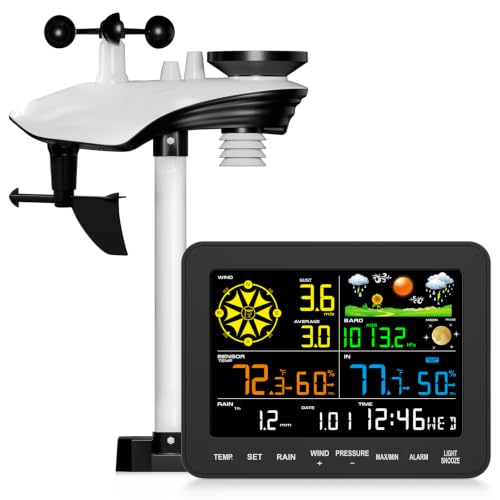
InfiSync 12-in-1 Wireless Weather Station with 6.5″ HD Display
InfiSync Wireless 12-in-1 Color Display Weather Station

InfiSync Dual Display 12-in-1 Wireless Weather Station
More On The Choices That Made The List
The Sainlogic wireless station aims at households that want a single console reading indoor and outdoor conditions without leaning on a smartphone app. Its HD color LCD keeps the layout simple enough for a glance from across the kitchen, and the included rain gauge adds genuine utility for anyone tracking downspout flow or garden hydration. Compared with the analog wall pieces below, this is a step into live data rather than decorative display.
For most homeowners, this is the comfortable middle of the road. You get barometric pressure, indoor and outdoor temperature, humidity, a forecast icon, and a moon phase readout, all on one screen. The wireless sensor pairs with the display console without WiFi, which keeps the setup contained to your own property.
The Case For It
- Tracks indoor and outdoor temperature, humidity, and barometric pressure on a single console
- Color LCD with bold fonts reads clearly from a distance in normal room lighting
- Wireless outdoor sensor avoids running cables through walls or windows
- Moon phase and alarm clock functions add useful everyday reference points
- No WiFi dependency keeps data private and the setup simple
Things To Consider
- Backlight brightness in direct sun may require manual adjustment through the day
- Outdoor sensor placement affects rain catch accuracy, so roof or fence mounting needs a clear sky overhead
- Forecast icons are general guidance, not the granular timing you would get from a wired professional unit
Key Product Details
Who It Suits Best
Households that want one screen covering indoor and outdoor readings without a phone app or subscription, particularly suburban homeowners with a small yard.
Skip It When
The InfiSync 12-in-1 units below make more sense if you also want wind speed and direction in the same setup.
The BA212 leans hard into the traditional side of the category. Rather than digital readouts, it uses a liquid barometer inside a wood-framed case meant to anchor a study wall or a library reading nook. It pairs the visual weight of furniture with the satisfaction of a real instrument, and it looks at home next to bookshelves and framed prints.
Where the Sainlogic above prioritizes data density, this one prioritizes presence on the wall. It reads barometric pressure through the movement of liquid in a sealed tube, which gives you trend information at a glance rather than precise numeric readings. For interiors where the unit is part of the décor, that trade feels fair.
Bright Spots
- Wood-framed case functions as wall art in traditional interiors
- Liquid barometer gives a visual trend reading without electronics
- No batteries or power supply required for the core instrument
Worth Noting
- Provides barometric pressure only, not humidity or temperature
- Trend reading requires understanding barometric behavior to interpret
Right Fit For
Offices, studies, libraries, or living rooms where the station doubles as a statement piece and the user enjoys interpreting the reading manually.
Look Elsewhere When
The Lily’s Home analog set below is the better call if you want both barometric pressure and a temperature reading from the same wall display.
Lily’s Home borrows from Renaissance science with a Galileo thermometer that reads ambient temperature through the rise and fall of weighted glass spheres, paired with a glass barometer and an analog hygrometer (a humidity-measuring instrument) on a wood base. The 10.5 by 12-inch footprint makes it a deliberate shelf or mantle display rather than something tucked into a corner.
Unlike the Ambient Weather BA212 above, this set covers temperature and humidity along with pressure, so it offers a fuller analog picture in one piece. The trade is that the Galileo thermometer operates in a relatively narrow indoor temperature range, so it works best inside climate-controlled rooms.
Real Benefits
- Combines barometer, Galileo thermometer, and hygrometer in one display
- Glass-and-wood construction suits gift-worthy home décor settings
- No power or batteries required for any of the three instruments
Honest Caveats
- Galileo thermometer is most accurate in a narrow indoor range, so extreme rooms will read less reliably
- Fragile glass components require careful placement away from traffic
Made For
Anyone decorating a shelf, mantle, or office nook who wants conversation-piece instruments that also provide real readings.
Where Another Pick Suits Better
The BALDR solar humidity meters below make more sense for someone tracking multiple rooms without wall mounting.
BALDR’s three-pack takes a different angle: small solar-powered hygrometer-thermometer combos that scatter across the house without mounting or wiring. Each unit runs on available light with a battery backup for dim corners, and the backlight lets you check readings at a glance in the evening. The three-unit format covers bedrooms, basements, and greenhouses in one purchase.
This is the opposite approach from the analog wall pieces above. You get a digital readout on a compact stand rather than a decorative focal point, which is exactly the point: small, functional, and easy to move.
The Good Stuff
- Solar power with battery backup reduces ongoing battery swaps
- Three units let you compare humidity between rooms at the same moment
- Compact footprint fits nightstands, shelves, and greenhouse benches
- Backlight helps quick checks without turning on room lights
Points To Keep In Mind
- No outdoor weather data, so this complements rather than replaces a full station
- Solar charging depends on ambient light, so dim storage rooms may rely on the backup battery more often
Quick Facts
Best Suited To
Homeowners who want to monitor humidity in several rooms, such as a nursery, basement, and wine cellar, without buying a full console station.
Consider Something Else When
The Sainlogic station above is the better fit if you also need outdoor temperature and a rain gauge in one console.
InfiSync’s 12-in-1 setup pulls together the readings gardeners and small-property owners tend to want: rainfall totals, wind speed and direction, barometric pressure, humidity, dew point, and a “feels like” temperature (an adjusted reading that accounts for wind chill or humidity). The outdoor array mounts on a fence post, roof edge, or pier and beams data back to the indoor console, with no WiFi or app required for the link.
Versus the Sainlogic unit at the top of this list, this one adds wind measurement and a fuller sensor suite. The honest read is that you only need that extra data if your decisions actually hinge on it, like deciding whether to spray crops or whether to take the canoe out.
Reasons It Performs
- Wind speed and direction sensors let you track gusts and prevailing breeze in real time
- Rainfall measurements feed gardeners, farmers, and rainwater harvesters with usable totals
- Dew point and feels-like readings help plan sensitive outdoor tasks
- Wireless transmission range covers orchards, small farms, and large yards
- HD color LCD displays all metrics without an app or subscription
Trade Offs
- Outdoor sensor mounting requires a stable post or bracket and a clear exposure to wind and sky
- More sensors means a more involved initial setup than simpler indoor units
Feature Snapshot
Who Will Love This
Backyard gardeners, small-farm owners, and rural households that need wind and rainfall alongside temperature readings.
Not Your Match When
The InfiSync dual-display unit further down is the better fit if you want a second screen for another room.
This InfiSync sibling leans on a large 6.5-inch HD color screen with oversized fonts, which is the main reason it shows up as a strong fit for seniors and anyone who wants to glance at the console from across the room. The 3-level backlight tuning helps in both daytime glare and dim bedrooms. Underneath, it carries the same 12-in-1 sensor suite as the previous entry, so you get wind, rain, pressure, and humidity without an app dependency.
For most living rooms, the bigger fonts and gentler interface lower the friction of actually using the data, which matters more than people expect.
Notable Upsides
- High-contrast color screen with oversized fonts aids quick reading from a distance
- Adjustable backlight suits daylight rooms and dim bedrooms
- 12-in-1 sensor coverage matches the larger InfiSync lineup
Some Limits To Know
- Single console means only one room sees the data unless you walk over to it
- Same mounting considerations as any multi-sensor outdoor array
Whose Shelf It Belongs On
Households with older family members who need a large, clear display, or anyone whose eyes appreciate bigger numbers over dense readouts.
A Better Fit Elsewhere
The InfiSync dual-display station below is the better choice if you want a second screen in the bedroom or kitchen.
This InfiSync model rounds out the brand’s 12-in-1 family with the same color LCD approach and full sensor coverage aimed at home, garden, and light farm use. The HD color screen with adjustable backlight handles daytime and nighttime viewing, and the data suite includes rainfall, wind speed, barometric pressure, forecast, and an alarm clock.
Compared with the InfiSync unit above, this one shares most specs but presents as a slightly different configuration that some shoppers will prefer for placement on a kitchen counter or office shelf. The honest read is that all three InfiSync 12-in-1 entries deliver very similar data, so the choice often comes down to which listing matches your preferred console layout.
What Works In Its Favor
- Full 12-in-1 coverage in a single console for comprehensive tracking
- Color display with adjustable backlight handles varied lighting
- Alarm clock adds a daily-use function beyond weather data
A Few Limitations
- Spec overlap with the other InfiSync 12-in-1 listings means careful comparison is worth the time
- Outdoor sensor installation is a small project for anyone new to mounting brackets
Who Should Grab It
Households that want a complete sensor suite and a single color console for daily reference in a living area.
Reach For A Different Pick When
The InfiSync dual-display entry below serves better for multi-room households where one console isn’t enough.
Where most of this lineup ships one console, this InfiSync model ships two. Each 6.5-inch HD color screen has its own 3-level backlight, so you can drop one in the living room and one in the bedroom without anyone trekking down the hall. Both displays pull from the same 12-in-1 outdoor sensor array, so the data stays consistent room to room.
For most multi-room households, that second screen is the upgrade that turns a weather station from a curiosity into a daily habit. The trade is a slightly larger footprint on your shelf and the small chore of syncing two consoles during setup.
The Upside
- Two displays let family members check readings from different rooms
- Independent backlight tuning on each screen suits daylight versus dim bedroom placement
- Full 12-in-1 sensor coverage including wind, rain, pressure, and humidity
Details To Watch
- Two consoles mean two power outlets and two placements to manage
- Same outdoor mounting considerations as the other InfiSync 12-in-1 entries
Feature Rundown
Built With In Mind
Families and shared households that want weather data visible from more than one room without checking a phone.
Swap It Out When
The Sainlogic unit at the top is the leaner choice for single-room setups where one console is enough.
What To Weigh Before Picking At Home Weather Station
Sensor Coverage And Use Case Fit
The biggest decision is which measurements actually drive your day-to-day choices. A console with indoor and outdoor temperature plus humidity covers most household needs, while a 12-in-1 suite adds wind, rainfall, and pressure for gardeners and rural properties. If your decisions hinge on weather (irrigation timing, outdoor work scheduling, livestock comfort), the broader sensor coverage pays off. If you mainly want to know whether to grab a jacket, a simpler station does the job.
Display Style And Readability
Color LCD consoles make data scannable from a distance, which suits kitchen counters and bedside tables. Analog wall instruments look like furniture and reward closer inspection. Think about where the station will live and how often you want to engage with it: a glance-friendly digital display encourages routine use, while an analog piece becomes part of the room’s character.
Power, Mounting, And Maintenance
Wireless outdoor sensors rely on batteries and need a stable mount with clear sky exposure for accurate rain and wind readings. Solar-powered indoor units reduce battery swaps but depend on ambient light. For most homeowners, planning one calm afternoon for the outdoor mounting step avoids the frustration of a half-installed array.
Key Considerations Across These Picks
Pitfalls Shoppers Hit
A common slip is buying a full 12-in-1 station when a simpler indoor-outdoor pair would cover your needs, leaving the wind sensor underused on a fence post. Another trap is mounting the outdoor array too close to a wall or roofline, which skews wind readings and blocks rainfall. Measure your intended mount spot against the sensor’s clearance requirements before the bracket goes up.
Where The Extra Money Goes
Higher-tier 12-in-1 consoles pay for the extra sensors, the wireless transmission range across larger properties, and a color screen with stronger backlight tuning. If your property is a quarter acre or smaller and you mainly want temperature and humidity, the simpler end of this lineup handles that comfortably. Larger lots, exposed gardens, and small farms are where the extra sensor coverage starts to justify itself.
Frequently Asked Questions
Do I need WiFi for an at home weather station to work?
No. The stations in this lineup use dedicated wireless signals between the outdoor sensor array and the indoor console, so they work without a home network. WiFi only becomes relevant if you want app-based monitoring or remote access away from home.
How accurate are consumer weather stations?
For typical household use, readings from name-brand wireless stations track closely with nearby official observations when the outdoor sensor is mounted correctly. Analog instruments give trend information rather than precise numeric data, so the use case differs.
Where should I mount the outdoor sensor?
Mount the outdoor array in an open spot away from walls, roof overhangs, and large obstacles. A fence post, pole, or roof-edge mount with clear sky above gives the most accurate wind and rainfall readings.
Can I use a weather station indoors only?
Yes. The BALDR solar humidity set and the analog Lily’s Home and Ambient Weather pieces work entirely indoors. They will not give you outdoor conditions, but they handle indoor comfort monitoring and decorative display.
How often do the outdoor sensors need new batteries?
Battery life varies with sensor count and transmission frequency, but most wireless outdoor arrays run for many months on a fresh set under normal conditions. Owners commonly check batteries seasonally rather than monthly.
The Takeaway
Pick the station that matches the decisions you actually make with the data. A glance-friendly color console covers daily household comfort, while a 12-in-1 sensor suite earns its keep on properties where wind, rain, and pressure shape outdoor plans. The analog options stay in the running when the unit is part of the room’s design. Any of the eight here will give you a much clearer picture of the weather on your own doorstep than a phone app ever will.




