

A slippery deck turns into a hazard the moment the first rain hits, and replacing an entire surface isn’t always in the budget. Anti-slip deck tiles solve the problem without a full tear-out, whether you want screw-down treads for stairs or interlocking modular mats for a balcony. This roundup covers both styles, from budget-friendly PVC drainage tiles to solid acacia wood that doubles as décor.
A Side-By-Side Look
A Side-By-Side Look

GripStrips Anti-Slip Treads 8 Pack, Beige 32″x2″

GripStrips Anti-Slip Treads 8 Pack, Gray 32″x2″

9 Pack Modular Interlocking Tiles Double Non-Slip 12″x12″

GripStrips Anti-Slip Treads 8 Pack, Hi Viz Yellow 32″x2″

ToLanbbt Modular Interlocking Cushion 12P 11.8″x11.8″ Black

9-Piece Acacia Wood Interlocking Deck Tiles Golden Teak Crossed

Acacia Interlocking Deck Tiles Outdoor Waterproof Gray Crossed

Acacia Interlocking Deck Tiles Outdoor Waterproof Golden Teak Striped
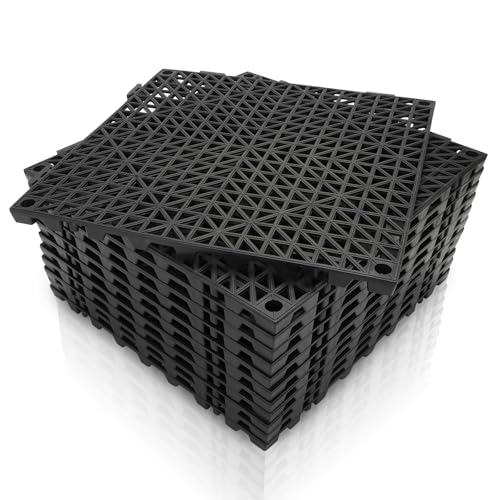
Modular Interlocking Cushion 12 Pc 11.6″x11.6″ Drainage PVC
More Details On Our Top Picks
Screw-down traction strips like the GripStrips 8-pack work where adhesive treads tend to fail: outdoor wooden stairs, dock ladders, and ramps that face pressure-washing and winter salt. Each strip is 32 inches long and 2 inches wide, molded from a textured plastic built around more than 1,800 cleats per set, so the grip holds even when the surface is slick.
The included screws bite cleanly into hardwood, composite, and metal, while concrete and stone call for separate anchors that you’ll want to source ahead of time. Homeowners dealing with one slippery flight of back-porch steps get the most from this approach, since you can finish a small job in an afternoon and the strips can be unscrewed and moved later if your layout changes.
A Strong Showing
- Weatherproof plastic body handles pressure-washing, shoveling, and road salt without flaking
- Long 32-inch length covers a full stair nosing in one piece for fewer seams
- Reusable design lets you unscrew and relocate strips when redecorating or selling
- Beige tone blends with light-stained wood decks and concrete steps
- Screw-in mounting outlasts peel-and-stick tape in damp or freezing conditions
Worth Noting
- Concrete and stone need separate anchors, which add a trip to the hardware store
- Strip-only coverage means you’ll measure carefully so cleats don’t leave gaps on wide stairs
- Visible screws can look industrial on refined interior treads
Quick Facts
Who It Suits Best
Homeowners with one or two slippery outdoor staircases who want a permanent fix that survives winter weather.
Skip It When
You’re covering a large flat surface, where the modular GripStrips isn’t a match, and a tile like the wiiiw interlocking mat will lay down faster.
The gray GripStrips 8-pack swaps the warm beige tone for a cooler, neutral finish that pairs well with modern concrete steps, weathered cedar, and galvanized metal. Functionally it mirrors pick 1, with the same weatherproof friction+ plastic body, screw-down mounting, and high cleat density, so the choice between the two is mostly visual.
For homeowners staining their deck gray or working with stone patios, this color hides dust and scuffs better than lighter shades. It also disappears nicely on aluminum boat ladders and RV steps where a bright strip would clash.
Key Advantages
- Neutral gray finish blends into concrete, weathered wood, and metal stairs
- Same heavy-duty plastic build as the beige version for winter durability
- Screw-in installation holds firm against pressure-washing and shovel abuse
- Strips can be removed and reinstalled if your deck layout changes
Trade Offs
- Concrete or stone still needs separate anchors for a secure fit
- Color match can look slightly cool against warm-toned hardwoods
- Strips alone won’t cover broad walking surfaces
Made For
Owners of modern concrete or composite decks who want traction that visually disappears against gray surfaces.
Another Choice May Suit
Anyone covering a broad patio or shower pan should reach for the wiiiw interlocking drainage tile, which lays flat instead of running along edges.
Where the GripStrips earlier in this list attack a single edge, the wiiiw 9-pack lays down like puzzle pieces across an entire zone. Each tile is 12 inches square with a textured surface and built-in channeling that lets water run off instead of pooling underfoot, so the surface stays grippy after a rainstorm.
The interlocking tabs snap together without tools, and the dark gray color masks mildew streaks between cleanings. For pool surrounds, outdoor shower pads, or the area in front of a work sink, this format covers more ground per minute than screwing down individual strips.
Positive Takeaways
- Tool-free interlocking edges let you reshape or expand the layout later
- Surface drainage grooves move water off the walking plane quickly
- Dark gray tone hides stains from leaves and pool chemistry residue
- Modular design makes replacing a single damaged tile straightforward
A Few Limitations
- Modular tiles can shift on uneven soil if not edged with a border
- Plastic feel under bare feet differs noticeably from real wood options
- Total coverage depends on accurate square-foot math before ordering
Feature Snapshot
Right Fit For
Pool owners and outdoor-shower users who need a pad that drains itself rather than holding a puddle.
A Better Fit Elsewhere
For a balcony or patio where wood-grain aesthetics matter, the DECKIFY 9-piece acacia tile brings warmth that this dark plastic can’t match.
The hi-viz yellow GripStrips take the same 32-inch screw-down format as the beige and gray versions and lean into a bold safety-yellow finish. That makes them a strong pick where visibility matters more than visual blending: factory floors, loading docks, restaurant back stairs, and dark basement steps where a dim light can hide a nosing.
The strips are also marketed as a barefoot and pet-friendly variant, with a smoother profile that won’t dig into paws or tender feet. In most homes the color is louder than necessary, but for property managers marking hazard zones it’s hard to beat.
Strong Points
- High-visibility yellow marks step edges clearly in low light
- Smoother barefoot-friendly surface is gentler than industrial cleat patterns
- Screw-in mounting stays put through pressure-washing and salt exposure
- Eight-pack covers a full staircase in one purchase
Points To Keep In Mind
- Bright yellow clashes with residential deck aesthetics in many neighborhoods
- Same anchor requirement on concrete as the other GripStrips options
Best Suited To
Small business owners and property managers marking compliance steps where OSHA-style visibility trumps décor.
Consider Something Else When
Your goal is to blend into a backyard deck, where the gray GripStrips or a DECKIFY acacia tile reads as more residential.
The ToLanbbt 12-piece set steps away from hard plastic with a softer PVC mix that cushions feet during long periods of standing. Each 11.8-inch tile interlocks with the next, and a grid of drain holes lets water pass through rather than pooling on top.
Workshop benches, sauna entryways, and boat decks are where this format pays off, since the material absorbs shock and stays cooler than metal under summer sun. The single-row dot pattern offers a subtler look than aggressively textured industrial mats, which helps in residential kitchens where you don’t want a garage feel.
Strengths Worth Knowing
- Cushioned PVC reduces leg fatigue during long standing sessions
- Drain holes keep water from collecting on the surface
- Interlocking edges let you expand the mat section by section
- Black color disguises oil splashes and kitchen spills between cleanings
Honest Caveats
- Soft PVC can hold impressions from heavy furniture left in place
- Mat may shift on smooth tile without a non-slip underlay
- Coverage math needs care because the 11.8-inch size doesn’t divide cleanly into standard layouts
Who Should Grab It
Home workshop users and sauna or steam-room owners who want a softer standing surface than hard plastic or wood.
Look Elsewhere When
You want a wood-grain patio look, where a DECKIFY acacia tile serves both the safety and the style brief.
The DECKIFY golden teak tiles mark a clear shift from plastic to solid acacia hardwood finished with linseed oil. Each 12-by-12-inch square is just under an inch thick, and the four-slat crossed pattern adds a parquet-style look that plain ribbed PVC can’t touch.
Deep grooves on top channel water off the walking plane, while a PPC base keeps the wood elevated so it dries after rain. Balcony dwellers and renters who can’t (or won’t) resurface a tired patio will appreciate the floating-install format: no screws, no glue, just interlocking edges that hold the field together.
Benefits That Matter
- Real acacia hardwood with linseed-oil finish ages gracefully outdoors
- Cross-slat pattern offers visual texture that complements modern balconies
- Raised PPC base promotes airflow and quick drying underneath
- Snap-together install avoids drilling into rental balcony surfaces
Practical Considerations
- Wood will need occasional re-oiling to keep its golden tone
- Not barefoot-prick-proof; socks or shoes help during peak heat
- Heavier than plastic tiles, so plan for transport and lifting
Technical Highlights
Whose Shelf It Belongs On
Renters and style-conscious homeowners who want a wood-floor look on a balcony without permanent installation.
Reach For A Different Pick When
Your project is a wet-zone shower pad where a cushioned PVC tile like the ToLanbbt set stays safer under bare feet.
DECKIFY’s gray-tone acacia tile uses the same 12-by-12-inch format and PPC raised base as the golden teak version, but ships in a washed-wood gray that mimics sun-bleached driftwood. The cross-slat layout stays consistent, and the linseed-oil finish helps the wood shed coastal humidity without sealing the surface completely.
This one’s a natural fit for beach-house patios, lake docks, and balconies where the existing palette already leans cool. Compared with the warmer golden teak above, it recedes visually against concrete or stone rather than competing with it.
Practical Pluses
- Driftwood-gray finish complements coastal and contemporary settings
- Rated to support everyday loads without flexing under foot traffic
- Deep grooves move water off the surface in heavy rain
- Snap-together layout avoids permanent modification of the floor below
Where It Is Less Suited
- Coastal air may shorten the re-oiling interval compared to inland installs
- Gray tone shows dust and pollen more visibly than darker finishes
Perfect Match For
Coastal homeowners who want the traction of a wood deck tile in a color that pairs with weathered furnishings.
Swap It Out When
You’re covering a workshop where the cushion of the ToLanbbt PVC tiles protects dropped tools and tired feet.
The striped DECKIFY tile keeps the golden teak warmth but lays the four slats in parallel rather than crossed, which gives the surface a longer, deck-plank rhythm. From a few feet away it looks closer to traditional lumber decking than the parquet-style crossed version earlier in this list.
Same 12-by-12-inch tile size, same PPC base, same linseed-oil finish, so the install steps and care routine are familiar. It’s a subtle choice that matters most on long, narrow patios where the directional slat lines help the eye travel the length of the space.
Useful Touches
- Striped slat pattern reads like traditional lumber decking at a glance
- Warm golden tone pairs with rattan, teak furniture, and earth-tone cushions
- Same drainage base and groove system as the rest of the DECKIFY line
- Floating install is reversible when it’s time to move or refresh the space
Small Caveats
- Same oil-refresh cadence as other acacia tiles in this category
- Directional pattern needs thoughtful planning at field edges
Built With In Mind
Patio owners who want a wood-deck look with the easier install of a snap-together tile.
A Better Fit Elsewhere
For an industrial workspace where visibility matters most, the hi-viz yellow GripStrips is the more deliberate pick.
The DLYYPLUS 12-pack rounds out the roundup with a soft PVC tile aimed at smaller spaces: bathroom floors, compact patios, and balcony corners where a 12-piece starter set is enough to test the waters. Each 11.6-inch tile snaps together and sits on small support pins that lift the surface for drainage.
It’s the lightest format in this lineup, both in weight and in visual presence, which makes it easy to pull up and rearrange as your needs shift. For anyone testing the concept of a tiled outdoor floor for the first time, this is a forgiving entry point.
Real-World Strengths
- Twelve-piece set offers broad coverage for a starter bathroom or balcony
- Soft PVC adds a slight cushion compared to hard plastic or wood
- Support pins lift the tile for drainage on flat surfaces
- Lightweight format makes seasonal removal realistic
Things To Weigh
- Smaller tile size means more seams visible across a wide area
- Lightweight construction may shift in heavy wind if used on an open balcony
Core Details
The Right Fit
First-time DIYers testing a small bathroom or balcony who want to learn the format before investing in a larger set.
Not Your Match When
You need broad patio coverage in one go, where the DECKIFY 9-piece acacia tile gives a more premium end result.
Matching Tiles To The Way You Actually Use Them
Material Matters More Than It Looks
The first big decision is the surface material, because it drives both safety and longevity. Plastic strips and PVC modular tiles handle wet weather with minimal maintenance but read as utilitarian. Hardwood tiles, especially acacia with a linseed-oil finish, bring warmth that suits a living space but ask for the occasional re-oil and a watchful eye after heavy rain.
The trade-off shows up in care time. PVC needs only a hose-down, while wood rewards a seasonal rub of oil to keep the finish from going gray. For covered patios and balconies, wood tends to age more gracefully; for pool decks and shower pads, PVC wins on pure drainage and grip.
Format: Edge Strips Versus Full-Coverage Tiles
Screw-down strips like the GripStrips family solve a narrow problem: a single slippery nosing, ladder rung, or dock edge. They install fast and stay put through pressure-washing, which is why they’re popular for stairs. They can’t cover broad walking surfaces, though, which is where modular tiles take over.
Interlocking tiles form a continuous field that grips every footfall, not just the edge you screw down. If your problem is a wide patio or a shower floor, tiles deliver the traction; if your problem is one staircase, strips get the job done in less time.
Drainage, Surface Texture, And Barefoot Comfort
A non-slip surface only helps if water can escape, so any outdoor tile needs drainage holes or grooves. The wiiiw and DECKIFY options both push water off the walking plane, while the PVC cushion sets rely on perforated drain holes. In bare feet, smooth PVC feels gentler than aggressive plastic cleats, which is why the barefoot-rated GripStrips variant and cushioned PVC tiles are worth considering for pool surrounds and family spaces.
Key Considerations Across These Picks
Common Buying Slip Ups
The most frequent mistake is under-measuring. Tiles come in fixed 11.6- or 12-inch squares, and partial pieces at the edges eat into your count quickly, so order 10 to 15 percent extra to cover cuts and future replacements. Another trap is ignoring the substrate: tiles laid on uneven soil or a sloped base can develop puddles or trip points, so a quick leveling pass before install saves headaches later.
Where The Extra Money Goes
Premium picks like the DECKIFY acacia series charge more for real hardwood, a raised drainage base, and a finish that ages into a richer tone rather than just wearing out. The upgrade pays off when the tile is part of a visible living space, a balcony or patio where guests actually spend time. For utility zones, workshops, or temporary fixes, the PVC options deliver the safety without the style premium, and the dollars are better spent on coverage area instead.
Frequently Asked Questions
How Do Anti-Slip Deck Tiles Stay In Place Without Adhesive?
Most interlocking tiles rely on snapping edges and their own weight, while edge strips like the GripStrips family use screws driven into the substrate. Neither approach requires glue, which makes both formats reversible when you want to change the layout or take the tiles with you.
Can These Tiles Handle Real Winter Weather?
Plastic and PVC options tolerate freeze-thaw cycles and road salt without issue, since water drains through the holes rather than sitting on the surface. Hardwood tiles handle winter too, but expect some graying and plan a light sanding and re-oil in spring to refresh the finish.
Are Anti-Slip Deck Tiles Safe For Bare Feet And Pets?
Tiles marketed as barefoot or pet friendly use smoother profiles that grip without the sharp cleats of industrial strips. Wood tiles are gentle too, though they can get hot in direct sun, so test the surface before letting pets walk across in summer.
Do I Need To Seal Or Treat Wood Deck Tiles?
Most pre-finished acacia tiles ship with a linseed-oil coating that handles the first season. A light re-oil once a year preserves the tone and adds water resistance, especially in coastal or rainy climates where the finish wears faster.
How Do I Cut Tiles To Fit Around Corners Or Posts?
A fine-tooth saw or a jigsaw handles plastic and PVC tiles cleanly, while wood tiles respond well to a circular saw with a fine-finish blade. Measure twice, cut once, and remember that small gaps can be hidden with a border strip or a planter for a tidy final look.
Closing Remarks
The right anti-slip deck tile comes down to where it goes and how you want it to look. Screw-down strips solve a single edge fast, interlocking PVC handles wide wet zones, and acacia hardwood brings the warmth of a real deck with a simpler install. Measure your space, choose the format that fits, and you’ll step onto a steadier surface in an afternoon.




