

Hard water does a quiet kind of damage. Scale builds up inside pipes, dishwashers lose their shine, and soap stops lathering the way it should. The right softener fixes that without forcing you to overhaul your home’s plumbing. This roundup rounds up ten genuinely affordable options worth considering, from dishwasher salt that helps a single appliance to whole-house systems built for serious capacity. You’ll find picks for renters, RV owners, and full-time homeowners alike.
A Snapshot Of The Selections

Sea Salt Superstore Dishwasher Salt 30 oz Bag

Aquasana SimplySoft 60K Grain Water Softener

OTG4-DBLSOFT Portable 16,000 Grain RV Water Softener

On The Go OTG3NTP3M Portable Water Softener

Aquasure Harmony Series 48,000 Grains Whole House Water Softener
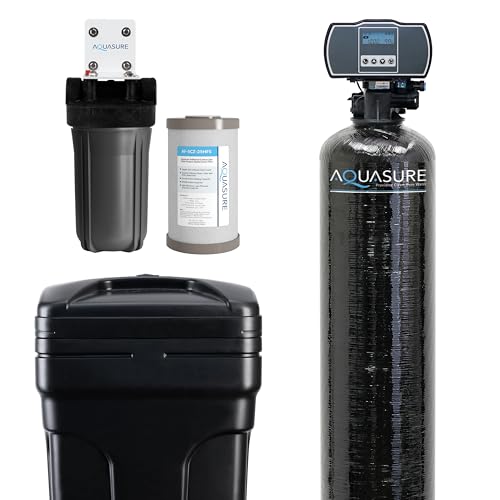
Aquasure Harmony Series 50,000 Grains Water Softener with Pre-Filter

Aquasure 32,000 Grains Water Softener with RO Drinking System

EcoPure EPCL Universal Water Softener Cleaner

Aquasana SimplySoft 40K Grain Water Softener

Aquasana Whole House Well Water Filter with UV
The Picks, Examined More Closely
If you own a dishwasher in a hard-water region, this coarse salt is the simplest fix you can buy. It’s designed to replenish the built-in water softener inside Bosch and Miele machines, keeping mineral buildup off heating elements and spray arms. The 30 oz bag is enough to last months, depending on how often you run cycles.
Unlike whole-house units like the Aquasana SimplySoft reviewed further down, this one targets a single appliance. Renters benefit most, since there’s no plumbing required.
What Pays Off
- Coarse food-grade texture dissolves evenly in the salt reservoir
- Free of anti-caking additives that can clog dispenser valves
- Compact bag fits in a cabinet under the sink with room to spare
- Directly extends the working life of your dishwasher’s internal softener
- Affordable enough to keep on hand as a routine maintenance item
Worth Noting
- Only treats dishwasher water, not your showers or faucets
- Not compatible with dishwashers that lack a salt compartment
Whose Kitchen It Belongs In
Renters and homeowners in hard-water areas who run a Bosch or Miele dishwasher regularly and want a no-installation fix.
Reach For A Different Pick When
The On The Go OTG3NTP3M Portable Water Softener makes more sense if you want soft water at every tap, not just inside the dishwasher.
Big households with five or more residents put serious demand on a softener, and the Aquasana SimplySoft 60K Grain is built for that workload. The base tank and cabinet system is sized for homes with four or more bathrooms, where smaller-capacity units would regenerate too often.
Unlike portable options meant for RVs, this is a permanent install with full-house coverage. You may find the size requires planning a dedicated spot in a utility area, but the capacity tradeoff pays off in fewer refills.
Notable Upsides
- 60,000 grain capacity handles high daily water usage
- Designed for households with four-plus bathrooms and five-plus occupants
- Whole-house coverage means every shower and faucet gets softened water
- Backed by a 5- to 10-year limited warranty for long-term confidence
Trade Offs
- Oversized for small households, where the 40K model fits better
- Requires floor space and a drain line for installation
- Salt refills happen less often but use larger bags
Feature Snapshot
Made For
Large families in hard-water regions who want whole-house coverage and don’t want to think about salt refills every other week.
A Better Fit Elsewhere
The Aquasana SimplySoft 40K Grain Water Softener is a smarter match for smaller households who don’t need the extra capacity.
RV and marine owners know that park water can wreck a rig’s plumbing fast. The On The Go Double Standard softener tackles that with a compact 16,000 grain capacity that’s generous for mobile use. It regenerates with common table salt and stores neatly in tight bays.
Unlike the whole-house Aquasure Harmony Series covered later, this unit is built for portability above all. For full-time RVers logging long trips, the extra capacity over the smaller OTG3 model means fewer regeneration stops.
The Practical Payoff
- 16,000 grain capacity provides up to 1,600 gallons between cycles
- Regenerates with two boxes of table salt in under 30 minutes
- Compact footprint fits in tight RV and marine storage bays
- Maintains high flow rates with minimal pressure drop
Points To Note
- Not designed for residential whole-house flow demands
- Manual regeneration means remembering the cycle schedule
- Salt storage for regeneration takes up extra space
Who Should Grab It
Full-time RVers and boat owners who need serious capacity in a portable package and don’t mind manual regeneration.
Where A Sibling Pick Shines
The On The Go OTG3NTP3M Portable Water Softener is lighter and easier to handle for shorter trips with lower water demand.
When portability matters more than capacity, the On The Go OTG3NTP3M delivers soft water for short trips and weekend getaways. It’s lighter than the larger Double Standard model and features a wide-mouth opening for easy filling, plus tool-free hookup that gets you running in minutes.
Unlike whole-house options that need plumbing and floor space, this unit moves with you. Weekend RV campers get the most mileage out of it, especially when paired with the dishwasher salt covered earlier for appliance care.
Practical Advantages
- Lightweight build with a built-in carry handle
- Tool-free connection means setup takes minutes
- Produces soft water to prevent rust stains and scale buildup
- Improves taste and odor of questionable campground water
Honest Caveats
- Lower output between regenerations than the Double Standard model
- Manual regeneration cycle requires hands-on attention
- Best suited for light-to-moderate water use
Quick Facts
Right Fit For
Occasional RV users and weekend campers who want portable soft water without hauling a heavy tank.
Swap It Out When
The OTG4-DBLSOFT Portable 16,000 Grain RV Water Softener is the smarter pick for full-timers who need higher capacity and fewer regenerations.
Mid-size homes with three to four bathrooms fall right in the Aquasure Harmony Series 48K’s sweet spot. The high-efficiency digital metered control head only regenerates when needed, which saves both salt and water. Calcium and magnesium get swapped out before they reach your pipes.
Unlike the 32,000 grain bundle later in this list, this one focuses purely on softening without a reverse osmosis add-on. Households with average daily demand get the cleanest balance of capacity and efficiency here.
Noteworthy Benefits
- 48,000 grain capacity suits families of up to six
- Digital metered head triggers regeneration based on actual use
- Removes hard minerals that dry out skin and clog pores
- Whole-house coverage protects every appliance and faucet
Things To Weigh
- Requires a dedicated installation spot near a drain
- No pre-filter for sediment, unlike the 50K model further down
Feature Rundown
Best Suited To
Families of four to six in hard-water areas who want reliable whole-house softening without oversizing the unit.
Skip It When
The Aquasure Harmony Series 50,000 Grains Water Softener with Pre-Filter is a better match if sediment in your supply lines is a concern.
Sediment and hard minerals rarely arrive alone. This 50,000 grain unit bundles a pre-filter with the digital metered control head, so larger particles get caught before they hit the resin bed. The result is softer water that stays consistent across the whole house.
Compared to the 48K Aquasure covered earlier, you gain a pre-filter and a step up in capacity. Homes pulling from older municipal lines or private sources with visible particulates benefit most.
The Case For It
- Treats up to 50,000 grains of hardness for households up to five people
- Built-in pre-filter captures sediment before it reaches the resin
- Digital console runs backwashing only when needed, saving water
- Suited for three to four bathroom homes
- Whole-house delivery to every tap and appliance
Practical Considerations
- Pre-filter cartridges need periodic replacement
- Bulkier install footprint than a softener-only setup
Who It Suits Best
Homeowners with visible sediment issues who want a single system that handles both filtration and softening.
Look Elsewhere When
The Aquasure Harmony Series 48,000 Grains Whole House Water Softener is the cleaner choice if your water is already sediment-free.
Smaller homes and apartments often need both softened water at every tap and purified drinking water at the kitchen sink. The Aquasure 32K bundle handles both jobs in one package, pairing the digital metered softener with a 75 GPD reverse osmosis drinking system.
Unlike the larger Harmony Series units covered above, this one is right-sized for one to three bathrooms and up to three occupants. You get whole-house softening plus bottled-quality drinking water without separate installs.
Points In Its Favor
- 32,000 grain capacity fits smaller households without waste
- Built-in RO system delivers clean drinking water on demand
- Removes hard minerals plus drinking water contaminants
- Aquatrol digital head optimizes regeneration timing
Where It May Fall Short
- Too small for homes with four or more bathrooms
- RO system adds complexity under the kitchen sink
- Pre-filter and RO membranes need scheduled replacement
Spec Overview
Perfect Match For
Small families and apartment dwellers who want soft tap water and purified drinking water from a single integrated system.
Not Your Match When
The Aquasana SimplySoft 40K Grain Water Softener is a better fit for larger homes where drinking water purity is less of a concern.
Existing softener owners eventually hit a wall: the resin bed gets gunked up with iron, rust, and sediment that salt alone can’t shift. EcoPure EPCL is a maintenance product, not a softener, designed to restore the resin bed and extend system life.
Unlike the whole-house systems covered earlier, this works alongside them. Owners of older units in iron-heavy water see the biggest gains. The universal formula fits small, medium, and 2-in-1 softener configurations.
Real Benefits
- Removes iron, rust, and sediment from the resin bed
- Extends the operational life of any existing softener
- Compatible with small, medium, and 2-in-1 systems
- Restores efficiency so dishes come out cleaner and laundry brighter
Soft Spots
- Won’t fix a softener with broken mechanical components
- Treats symptoms rather than replacing an undersized unit
The Right Fit
Anyone with an aging softener who notices drops in performance and wants to refresh the resin before replacing the whole system.
Consider Something Else When
The Aquasure Harmony Series 48,000 Grains Whole House Water Softener is the smarter pick if the old unit is simply past saving.
Stepping down from the 60K unit reviewed earlier, the Aquasana SimplySoft 40K hits a middle ground for typical family homes. Up to five occupants and four bathrooms get full-house softening without paying for capacity the household won’t use.
Compared to the Aquasure Harmony Series covered above, this model uses a salt-based ion exchange system with a base tank and cabinet layout. The difference is sizing and regeneration logic rather than core function.
What Helps Most
- 40,000 grain capacity fits average family demand
- Suited for homes with up to four bathrooms
- Shields pipes and appliances from scale buildup
- Backed by a 5- to 10-year limited warranty
- Whole-home coverage at every outlet
Possible Compromises
- Regenerates more often than the 60K SimplySoft in heavier-use households
- No built-in pre-filter for sediment-heavy supplies
Built With In Mind
Average-size families in hard-water areas who want whole-home softening without the bigger investment of a 60,000 grain unit.
A Better Fit Elsewhere
The Aquasana SimplySoft 60K Grain Water Softener makes more sense for larger households that need higher capacity between regenerations.
Private well owners deal with contamination profiles that municipal customers rarely face. The Aquasana Whole House Well Water Filter pairs a salt-free softening approach with UV filtration to address bacteria and viruses alongside mineral content.
Unlike the salt-based ion exchange units covered above, this system takes a different approach to conditioning. The UV stage handles biological concerns that traditional softeners ignore entirely.
Useful Strengths
- UV filtration targets bacteria and viruses common in well water
- Handles up to 500,000 gallons of treatment capacity
- Designed specifically for private well contamination profiles
- Reduces chlorine and harmful contaminants from every tap
- Delivers treated water to the whole house
Things To Watch
- UV lamp requires annual replacement to stay effective
- Salt-free approach differs from traditional ion exchange softening
- Higher complexity than a standard softener-only install
Who Will Love This
Rural homeowners drawing from private wells who need both biological protection and mineral conditioning in one system.
Where Another Pick Suits Better
The Aquasure Harmony Series 48,000 Grains Whole House Water Softener fits better for municipal water households who don’t face well-specific contamination.
What Matters Most Before Choosing Affordable Water Softeners For Home Use
Capacity Matches Your Household Size
Grain capacity is the most important number on any salt-based softener. It indicates how much hardness the resin can absorb before regeneration kicks in. A 32,000 grain unit fits one to three bathrooms, while 48,000 to 60,000 grain systems handle three or more. Undersizing forces frequent regeneration cycles, wasting salt and water. Oversizing wastes money on unused capacity and floor space.
Regeneration Method Affects Daily Convenience
Timer-based units regenerate on a set schedule, which works but can waste salt on weeks you barely used water. Metered systems track actual consumption and regenerate only when needed, saving resources in most households. For busy families, the metered approach typically reduces both salt use and water waste without any extra effort.
Portability Versus Permanent Install
Portable units like the On The Go models serve RV and marine use, where plumbing flexibility matters more than whole-house coverage. Permanent systems require a drain line, floor space, and sometimes a dedicated electrical outlet for the control head. Renters should weigh whether their lease allows modifications before committing to a full install.
Salt-Based Versus Salt-Free Approaches
Traditional ion exchange softeners use salt to swap calcium and magnesium for sodium. Salt-free systems condition water differently, preventing scale adhesion rather than removing minerals. Well water with bacterial concerns needs UV treatment layered in, while iron-heavy supplies call for resin cleaners like the EcoPure EPCL to keep the system running efficiently.
Key Considerations Across These Picks
Common Buying Traps To Avoid
Sizing a softener by household member count alone misses water usage patterns. Families with teenagers who take long showers, run laundry daily, and water gardens put far more demand on a softener than empty-nesters in the same house. Look at bathroom count and daily gallon estimates instead.
Another trap is ignoring the salt budget. A whole-house system that regenerates weekly costs more in salt over a year than a slightly pricier metered unit that stretches cycles longer. Factor ongoing salt and maintenance costs, not just the upfront investment.
Where The Extra Money Goes
Higher-tier models in this list earn their premium through better efficiency and lower long-term operating costs. Digital metered heads cut regeneration frequency, larger grain tanks stretch between cycles, and built-in pre-filters protect the resin bed from sediment that would otherwise force early replacement. For larger households or those with hard, sediment-heavy water, the upgrade typically pays back through reduced salt use and fewer maintenance interventions.
Frequently Asked Questions
How do I know if my home actually needs a water softener?
Common signs include spotty dishes after washing, soap that won’t lather well, white scale buildup on faucets, and dry skin or dull laundry after bathing. A simple water test kit confirms hardness levels in grains per gallon.
What’s the difference between a softener and a water filter?
Softeners remove calcium and magnesium ions that cause scale. Filters target sediment, chlorine, and other contaminants. Some systems, like the Aquasure 32K bundle covered above, combine both jobs in one install.
How much salt does a whole-house softener use monthly?
Salt consumption depends on household water usage and system efficiency. Metered systems typically use less than timer-based units because they only regenerate when needed. A family of four often uses one to two 40-pound bags per month.
Can renters install a water softener?
Permanent whole-house systems require plumbing modifications most leases prohibit. Renters typically do better with portable options or single-appliance fixes, like adding dishwasher salt to protect their machine.
How long does a water softener typically last?
Quality whole-house units last 10 to 20 years with proper maintenance. Resin beds can need replacement around the 10-year mark, while control heads and valves often outlast the resin. Periodic cleaning with products like EcoPure EPCL extends component life significantly.
Closing Remarks
The right softener depends entirely on your water source, household size, and installation flexibility. RV owners and apartment renters will lean toward portable picks or single-appliance fixes, while full-time homeowners get the most value from a properly sized whole-house system. Match capacity to actual usage patterns, factor in long-term salt and maintenance costs, and your hard water problems become a quiet, solved issue rather than a daily annoyance.




