Whether you’re filling a kettle, brushing your teeth, or running the shower, the water coming out of your tap has already passed through something. The question is how well that something is working. Activated carbon media, the granular or block carbon inside most home filters, is what catches chlorine, sediment, and a long list of organic compounds before they reach your glass. Choosing the right replacement matters more than most people realize, because the wrong cartridge can leave you with weak filtration, slow flow, or a filter that wears out twice as fast.
This roundup covers seven activated carbon options across pitcher, whole-house, and reverse-osmosis setups, so you can match the filter to the job. Each pick below is judged on what it actually contains, how it fits into a real home, and what trade-offs come with the package.
An Overview Of The Picks

AquaTru Classic VOC Carbon Replacement Filter (Stage 4)

Brita Stream Pitcher Replacement Water Filter, 3 Pack

EXCELPURE 1 Micron Whole House CTO Carbon Water Filter, 4-Pack
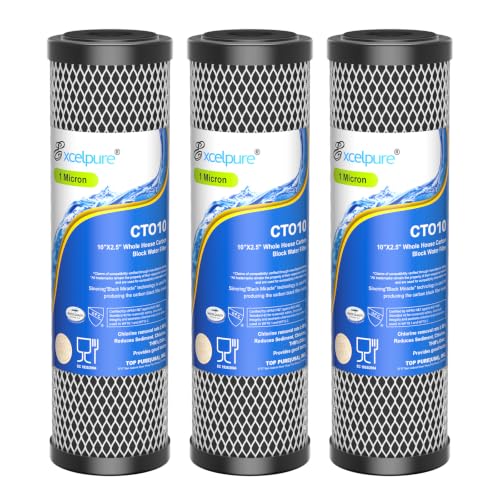
EXCELPURE 1 Micron Whole House CTO Carbon Water Filter, 3-Pack

isinlive A2002 Replacement Filter Compatible with A2002 Air Purifier

PUREPLUS 5 Micron Whole House Carbon Water Filter, CTO10BB, 3 Pack

Brita Water Bottle Replacement Filters, BPA-Free, 3 Filters
Taking A Closer Look At The Options
The fourth stage of a multi-step purifier is where the polish happens, and this AquaTru cartridge sits exactly there. It targets VOCs (volatile organic compounds, the carbon-based chemicals that can slip past earlier stages) along with trace prescription residue, aiming to clean up the taste and odor of water that has already been through reverse osmosis. The Stage 4 slot is engineered for the Classic, Classic Smart, and Under Sink models, so installation is a swap rather than a retrofit.
For most households already running an AquaTru system, this is the obvious next filter on the rotation. Anyone relying on well water or older municipal lines where taste issues linger after primary filtration may notice the difference most.
Positive Points
- Targets VOCs, prescription residue, and trace chemicals that basic carbon misses
- Designed specifically as a drop-in Stage 4 for three AquaTru purifier models
- Improves taste and odor in water that has already been filtered
- Compact footprint keeps the purifier countertop-friendly
Things To Consider
- Only compatible with specific AquaTru units, so it has no value for other brands
- Lifespan depends on how heavily the upstream stages are working, so replacement timing varies
Who It Suits Best
AquaTru system owners who want a finishing stage to catch what earlier filters leave behind.
A Better Fit Elsewhere
Shoppers without an AquaTru purifier should look at the PUREPLUS 5 Micron Whole House Carbon Water Filter for a broader-application option.
The Stream filter earns its name from how it operates, filtering water as you pour rather than requiring a long drip cycle. That changes the rhythm of a fridge pitcher: no waiting, no half-empty reservoir, no impatient morning. The dual-layer carbon core (a stacked filter design where two media layers handle different jobs in sequence) pulls out chlorine taste and odor alongside Class VI particulates (the smallest sediment category, particles down to a defined fine threshold).
For families refilling pitchers several times a day, the pour-through design means each glass tastes consistent. Renters and small households get a meaningful upgrade in everyday drinking water without plumbing anything in.
Practical Advantages
- Pour-as-you-go design skips the long drip-and-wait step of older pitchers
- Activated carbon core addresses both chlorine taste and fine particulates
- Three-pack format covers roughly six months for a typical household
- Slide-in replacement makes filter swaps fast and mess-free
Worth Noting
- Replacement interval is tied to gallons, not time, so heavy users may burn through filters faster
- Not designed to remove microbial contaminants or dissolved minerals
Feature Snapshot
Made For
Daily fridge-pitcher households that want cleaner-tasting water without changing their routine.
Look Elsewhere When
On-the-go drinkers who want filtered water at the gym or on a commute should consider the Brita Water Bottle Replacement Filters instead.
A whole-house CTO (chlorine, taste, and odor) carbon block at 1 micron is a meaningful step beyond the loose granular carbon in basic pitcher filters. The 1-micron rating refers to the pore size of the carbon block, meaning particles as small as one micrometer are physically blocked in addition to being absorbed. That catches sediment, rust, and color along with chemical taste issues, which is why these 10-inch cartridges get used as the primary stage in many home systems.
The four-pack format makes sense for owners running multiple filter housings or simply stocking up. Compared to the smaller Brita Stream Pitcher filter above, this cartridge trades pour-and-go convenience for whole-home coverage and a much longer service life.
Benefits That Matter
- 1-micron carbon block reduces chlorine, sediment, rust, and discoloration
- Standard 10-inch by 2.5-inch size fits the most common household housings
- Drop-in compatibility with a long list of legacy whole-house models
- Food-grade construction with multiple international safety certifications
Trade Offs
- Requires a separate filter housing and basic installation skill
- Service life varies sharply with incoming water quality, especially on unfiltered well supplies
Who Will Love This
Homeowners running a multi-stage filtration system who want a long-lasting primary carbon stage.
Consider Something Else When
Apartment dwellers without a dedicated filter housing should look at the Brita Stream Pitcher Replacement Water Filter for a simpler setup.
This is the same EXCELPURE cartridge as the four-pack above, just trimmed down to a three-count for tighter budgets or smaller households. The 10-inch standard size, 1-micron carbon block, and food-grade media all carry over. For shoppers comparing pack counts, this one tends to fit a one-filter setup that gets changed on a predictable annual cycle.
The trade-off versus the four-pack is mostly about shelf coverage and per-unit cost. Pick this if you only have one housing or want to test the cartridge before committing to a larger supply.
What Works In Its Favor
- Same proven 1-micron carbon block as the larger four-pack
- Three-count format keeps the upfront spend lower
- Universal 10-inch by 2.5-inch fit for most common housings
- Reduces sediment and discoloration along with chlorine taste
Points To Note
- Per-filter cost runs higher than the four-pack version
- Still requires a dedicated housing, so no good for renters without installed plumbing
Feature Card
Right Fit For
Single-housing households that want the same cartridge quality as a multi-stage system without buying more than they need.
Skip It When
Anyone running multiple filter housings in series will get better coverage from the EXCELPURE 1 Micron Whole House CTO Carbon Water Filter, 4-Pack.
Activated carbon isn’t only for water, and this is the entry in the list that proves it. The isinlive A2002 replacement is a three-layer cartridge built for a compatible air purifier: a nylon pre-filter catches larger particles, the HEPA layer handles fine dust, and the activated carbon layer absorbs odors and volatile compounds from the air. The square 5.7-inch format is designed as a direct swap for the named A2002 unit.
This belongs here because anyone shopping “activated carbon” often ends up browsing across both water and air categories. The honest read is that this filter only helps if you own the right purifier, and it won’t do anything for your tap water.
Useful Touches
- Three-stage design handles particulates and odors in a single cartridge
- Direct replacement for the A2002 model, no modification required
- Activated carbon media targets common household odors and VOCs in the air
- Compact square format keeps storage simple
Room For Improvement
- Only fits one specific air purifier model, with no water-filtration use
- Replacement cadence depends on room size and pollution load
Quick Facts
Perfect Match For
A2002 air purifier owners looking to keep odor and VOC reduction working without buying a new machine.
Another Choice May Suit
Anyone shopping for actual drinking-water filtration should turn to the AquaTru Classic VOC Carbon Replacement Filter (Stage 4) or one of the EXCELPURE whole-house options.
The “BB” in CTO10BB refers to “big blue,” the 10 by 4.5-inch housing format that holds roughly four times the media of a standard 10 by 2.5-inch cartridge. That extra capacity translates directly into longer service life and higher flow rates, which matters once you start feeding an entire house rather than a single tap. The 5-micron rating is less fine than the 1-micron EXCELPURE options above, but the trade-off is volume.
For households with higher water demand or incoming sediment loads that would clog a finer block prematurely, this cartridge makes practical sense. Anyone running a smaller 2.5-inch housing will need to size up before this filter will fit.
The Good Stuff
- Big-blue format holds more carbon for longer service intervals
- 5-micron block handles sediment without choking flow the way tighter filters can
- Drop-in fit for standard 10 by 4.5-inch big-blue housings
- Multiple safety certifications on the carbon media
Honest Caveats
- Does not fit 10 by 2.5-inch housings, so check the housing label carefully
- Coarser micron rating means very fine sediment passes through compared to 1-micron blocks
At A Glance
Whose Shelf It Belongs On
Homeowners with a big-blue whole-house manifold who want long intervals between cartridge swaps.
Swap It Out When
Anyone running a smaller 10 by 2.5-inch housing should reach for the EXCELPURE 1 Micron Whole House CTO Carbon Water Filter, 4-Pack instead.
Brita’s bottle filters bring activated carbon to the format that fits in a cup holder. The cartridge uses a proprietary blend of activated carbon and binders (the materials that hold the carbon granules into a workable filter shape) to address chlorine taste and Class VI particulates during a drink-through cycle. Each filter is rated for roughly 40 gallons, which lines up with about two months of personal daily use.
The trade-off is volume. A bottle filter cannot match the throughput of a pitcher or whole-house cartridge, so it makes most sense as a personal filter on the move rather than a primary home solution.
Where It Excels
- Portable format works at the gym, on commutes, or at the office
- Activated carbon media reduces chlorine taste in real time as you sip
- BPA-free construction keeps plastic contact safe
- Three-pack covers roughly half a year of daily personal use
A Few Limitations
- Limited to compatible Brita bottle hardware
- Sipping through a small filter takes longer than pouring from a pitcher
Best Suited To
Commuters and gym-goers who want filtered water away from a kitchen setup.
Reach For A Different Pick When
Households that need family-volume filtration will get more use out of the Brita Stream Pitcher Replacement Water Filter, 3 Pack.
What To Weigh Before Choosing Activated Carbon Filters
Filter format is the first fork in the road. Pitcher and bottle filters slot into existing habits without any plumbing work, which makes them the path of least resistance for renters and small households. Whole-house cartridges (10 by 2.5-inch or 10 by 4.5-inch “big blue”) require a dedicated filter housing installed on the main water line, and they only earn their keep when you actually want every tap in the home filtered. Specialty cartridges like the AquaTru Stage 4 are even narrower: they only matter if your purifier was designed around them.
Micron rating shapes the second decision. A 1-micron carbon block catches finer sediment but loads up faster, which means more frequent changes in dirty water. A 5-micron block trades some fine-particle capture for longer life and better flow, a fair swap when the incoming water is relatively clean. For most municipal supplies, either works well; for well water with visible sediment, pre-filtration often matters more than the carbon block’s micron rating.
Replacement intervals are where the ongoing cost shows. Pitcher cartridges are rated in weeks and gallons, bottle filters in months, and whole-house cartridges in months to years. Buyers tend to underestimate how quickly a heavily used pitcher filter wears out, so match the pack size to the household’s actual drinking-water volume rather than to the smallest available option.
Key Considerations Across These Picks
Common Shopping Slip Ups
The most frequent misstep is buying a whole-house cartridge without confirming the size. Standard 10 by 2.5-inch filters and 10 by 4.5-inch “big blue” filters look similar in photos but will not interchange, and forcing one into the wrong housing can damage the O-ring seal. A second trap is assuming all activated carbon is the same; coconut-shell carbon, bituminous coal carbon, and catalytic carbon each behave differently on chlorine, VOCs, and chloramines, so a label that just says “carbon block” tells you very little about real-world performance.
Where The Extra Money Goes
Higher-tier cartridges usually invest in denser carbon blocks, finer micron ratings, and more aggressive certifications, and each of those upgrades shows up in the actual filtering job. A denser block holds more media, which means longer life between changes, and a finer micron rating catches smaller particles that basic blocks miss. Certifications cost manufacturers real testing fees, so a cartridge carrying NSF/ANSI 42 has paid for that independent verification. The upgrade tends to pay off when incoming quality is poor or household water demand is high, but on clean municipal water, mid-tier cartridges often do the same job.
Frequently Asked Questions
How often should I swap an activated carbon filter?
Most pitcher and bottle cartridges are rated for about 40 gallons, while whole-house cartridges can run for several months to a year depending on water quality and household size.
Does a finer micron rating always mean better filtration?
Not always, since finer blocks clog faster and can reduce flow in homes with sediment-heavy water, so the best rating depends on what your water actually contains.
Can activated carbon remove bacteria or minerals?
Activated carbon targets chemical contaminants and taste issues, but it is not designed to address microbial contaminants or dissolved minerals, which require separate treatment stages.
What’s the difference between granular and block carbon?
Granular carbon offers high flow with less fine filtration, while block carbon compresses the media into a denser matrix that catches smaller particles and lasts longer.
Are these cartridges interchangeable between brands?
No, since housings, threads, and dimensions vary by manufacturer, so always confirm the exact model number before swapping in a replacement.
The Takeaway
The right activated carbon filter comes down to where you want cleaner water and how much of it you need. Pitcher and bottle cartridges fit easily into daily routines, whole-house blocks cover every tap, and specialty stages polish a system that’s already doing the heavy lifting. Match the format to your home, the micron rating to your water, and the pack size to how much you actually drink.