

Composite decking looks sharp until the morning frost or a sudden rain shower turns it into a slip hazard. Homeowners, contractors, and anyone with outdoor steps, ramps, or a backyard deck face the same frustration: beautiful boards that get slick the second conditions turn against you. This roundup breaks down nine traction-focused upgrades designed specifically for composite surfaces, from screw-down cleat strips and pebble-textured deck tiles to wide rolls of abrasive tape for ramps. Each pick is matched to a real use case, so you can match grip to the part of your property that needs it most.
The Essentials At A Glance

GripStrips Anti-Slip Treads 8-Pack Hi Viz Yellow 32″ x 2″

Myard 10-Pack Stair Railing Connectors for 2×4 Posts

GripStrips Anti-Slip Treads 8-Pack Beige 32″ x 2″

GripStrips Anti-Slip Treads 8-Pack Gray 32″ x 2″

Rovibek 60-Pack Plastic Interlocking Deck Tiles 12″ x 12″

SinoPack Anti-Slip Tape Black 6″ x 30FT

SinoPack Anti-Slip Tape Black 8″ x 30FT Outdoor
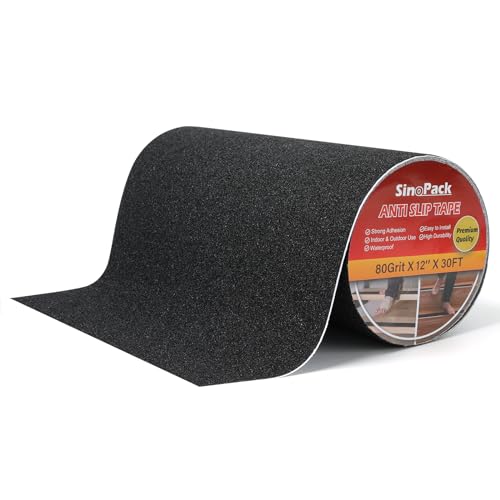
SinoPack Anti-Slip Tape Black 12″ x 30FT

SinoPack 18″ Wide Anti-Slip Tape Roll 30FT
More On The Choices That Made The List
Hi-viz yellow strips earn their keep on stairs that disappear into shadows after sunset. Each strip carries a dense field of raised cleats that bite into footwear even when the composite below is soaked through, and the screw-down installation means you can drive them into a deck edge, a wooden stoop, or a ramp without waiting for a dry day.
The bright color also doubles as a visual cue, so guests and delivery couriers see the edge before their foot finds it. Compared to adhesive tapes that creep up at the corners after a season, these strips are fastened down and meant to be walked on hard.
Where It Delivers
- High-contrast yellow reads clearly at dusk and in low-light stairwells
- Over 1800 cleats per set spread grip across a wide contact area
- Screw-down mounting holds firm where peel-and-stick products lift
- Installable on wood, concrete, metal, and composite surfaces alike
- Weather-resistant plastic shrugs off pressure washing and salting
Things To Consider
- Yellow stands out as a deliberate accent, so it may clash with muted color schemes
- Pre-drilling is needed for hardwoods, and concrete requires separate anchors
Key Advantages
Made For
Anyone with dimly lit outdoor stairs, basement entrances, or ramps who wants traction that catches the eye before it catches a foot.
Skip It When
You’d rather match the deck tone, in which case the GripStrips Beige version handles the same job in a quieter finish.
Traction strips get most of the attention, but the second half of any safe stair is a handrail you can actually grab. These Myard brackets lock standard 2×4 posts to stair stringers with a clean, repeatable geometry, and they come in matched pairs so the angle of the rail matches the angle of the rise.
They’re a quiet partner to the GripStrips above: the cleats keep your feet under you while the bracket keeps your hand supported at the right height. For a composite deck build, that pairing is hard to beat.
Positive Points
- Ten connectors cover a full stair run without hunting for matching hardware
- Stainless steel #304 fasteners resist rust at the post-to-bracket joint
- Fits true 1.5″ x 3.5″ posts, the actual dimension of standard 2×4 lumber
- Available in black or red to coordinate with rail and post color
Worth Noting
- Bracket angle is set for typical residential rises, so steep or shallow stairs may need shimming
- Screw head color is matte black and may stand out on painted rails
- Requires a drill, level, and square during install, no shortcut framing
Right Fit For
DIYers assembling a composite deck stair run who want the railing tied in cleanly with the rest of the structure.
Look Elsewhere When
You only need foot-level traction and no handrail upgrade, where the SinoPack tape rolls below solve that problem faster.
Beige strips tuck along the nosing of a sand-toned deck without announcing themselves. The cleat profile matches the yellow version above, so the grip performance is identical, only the pigment changes. That matters on homes where a bright warning stripe would fight the trim color.
Most property owners install these along the front edge of a stair tread and skip a center strip, which gives two firm contact points without covering half the tread. It’s a clean look that handles rain, leaf litter, and morning dew the same way the louder version does.
Reasons It Performs
- Neutral beige blends with most composite deck boards and timber tones
- Dense cleat field keeps traction steady through wet conditions
- Screw-down design outlasts adhesive strips at the nosing
- Reusable if a renovation moves the stair location later
Trade Offs
- Low-contrast color offers less visual warning in dim stairwells than the yellow variant
Feature Snapshot
Best Suited To
Homeowners who want safety cleats but don’t want them shouting from across the patio.
A Better Fit Elsewhere
The GripStrips Gray version suits cooler-toned composite boards better if your deck runs blue-gray rather than warm beige.
Gray strips slide into modern composite decks without calling attention to themselves. The cool tone mirrors the most popular composite board colors from the major decking brands, so the cleats read as part of the design rather than a safety afterthought.
Function is identical to the beige and yellow versions: weatherproof plastic, dense cleat pattern, screw-down hold. The difference is purely visual, which matters when the deck is the focal point of a backyard and you don’t want safety hardware breaking the line.
What Earns Its Place
- Gray tone pairs with the most common composite deck board shades
- Same cleat density as the rest of the GripStrips line
- Withstands shovels, salt, and pressure washing through multiple winters
Honest Caveats
- Dark gray can fade slightly under intense UV over several seasons
- Color match is approximate, since composite boards vary between manufacturers
Perfect Match For
Contemporary composite decks in cool gray, slate, or weathered-wood finishes where a warm-tone strip would clash.
Not Your Match When
You want high visibility for aging household members or guests, where the Hi Viz Yellow GripStrips handle the same job with stronger contrast.
Modular tile flips the question on its head: instead of adding traction to a slippery surface, you build a new surface that’s already grippy. The pebble top mimics wet-stream stones, and the underside channels water away through drain holes, which keeps the surface from puddling after a rain.
Sixty tiles cover a generous 60 square feet, enough for a compact patio, a hot tub surround, or a basement utility zone that tends to stay damp. The interlocking edges mean you can lay them down on a flat base without adhesive or fasteners.
Real-World Strengths
- Drain-through underside prevents standing water on the surface
- Modular layout lets you reconfigure or relocate the deck later
- Pebble texture delivers natural-feeling grip without harshness underfoot
- Plastic build holds up to repeated splashes near pools and spas
- Easy to trim for edges and odd corners
Minor Gripes
- Plastic look doesn’t blend with premium composite decking the way real board does
- Requires a flat, stable base, so it won’t correct a wobbly old subframe
- Interlocking edges can shift on very uneven ground without perimeter edging
Who Will Love This
Pool owners, hot tub owners, and anyone outfitting a wet zone where safety and drainage matter more than matching an existing deck.
Consider Something Else When
You want to retrofit an existing composite stair, where the GripStrips screw-down profile fits the nosing without rebuilding the surface.
Six inches of abrasive tape is the right width for a stair nosing without smothering the tread. The aluminum oxide grit, the same family of abrasive used on commercial floor surfaces, gives a coarse bite that holds up to scuffing and weather.
Thirty feet of roll covers most residential stair runs twice over, which lets you place a strip at each nosing and keep a backup section for the next season’s wear. Compared to the GripStrips cleats, this is a faster install with no drilling, just clean the surface, peel, and press.
Key Advantages
- Peel-and-stick install takes minutes per tread
- 80-grit aluminum oxide holds traction under heavy foot traffic
- Black color blends with composite, concrete, and metal edges
Points To Note
- Adhesive relies on a clean, dry surface for full bond strength
- Narrower than the other SinoPack rolls, so coverage on wide treads is partial
Built With In Mind
DIYers tackling a single stair run who want a quick refresh without pulling out a drill.
Another Choice May Suit
The SinoPack 12-inch roll suits wider treads better, especially on deck stairs that take a full foot strike.
Eight inches splits the difference between a thin nosing strip and a full-width tread cover. It catches the heel strike that follows the front of the foot on a stair, which is the most common slip point on a wet composite step.
The adhesive backing takes hold quickly on smooth composite boards once the surface is wiped down, and the same aluminum oxide grit as the rest of the SinoPack line keeps traction consistent across the season. It’s a versatile middle option for ramps and stairs alike.
Points In Its Favor
- Mid-width format catches the heel strike zone on standard stairs
- Same hard-wearing 80-grit surface as wider rolls in the line
- Clean peel-and-stick install with no special tools
Practical Considerations
- Adhesive edges may curl at the corners after a couple of seasons on heavily trafficked steps
- Eight-inch coverage leaves the back of wide treads untouched
Who Should Grab It
Homeowners with standard-depth stair treads who want better coverage than a 6-inch strip without committing to the full 12-inch roll.
Swap It Out When
You need to cover a wider landing or ramp surface, where the SinoPack 18-inch roll handles the same material in a single pass.
Twelve inches covers a full foot strike, which makes this roll the right call for wide treads and small landing pads. You can wrap the front and a generous section of the tread in one strip, which keeps the install tidy and avoids the seam where water can pool.
At 30 feet long, the roll handles a multi-step stair or a couple of short ramps with material to spare. The aluminum oxide grit behaves the same as the rest of the line, so the traction profile is consistent across the whole project.
Noteworthy Benefits
- Full-width coverage on standard 11-to-12 inch deep stair treads
- Same durable abrasive surface as the rest of the SinoPack line
- Generous roll length covers larger projects in one purchase
Where It May Fall Short
- Wider roll is harder to align neatly on narrow treads
- More material waste if your stair runs don’t divide evenly into 12-inch segments
Whose Shelf It Belongs On
Anyone resurfacing a full stair run or covering a deck landing where a single strip per surface is the goal.
Where A Sibling Pick Shines
The SinoPack 6-inch roll fits tighter geometry, like narrow basement treads, more cleanly than this wider format.
Eighteen inches is wide enough to handle a boat deck plank, a section of composite ramp, or a wide stair landing in one continuous strip. The aluminum oxide surface takes serious foot traffic, and the wider format means fewer edges where water and curling can start.
For larger projects, fewer seams translate to fewer weak points. You lay one strip down, press it flat, and the abrasive surface handles the rest of the season. It’s the right scale for docks, workshop ramps, and busy outdoor transitions.
A Favorable Mix
- Wide enough to cover most deck boards in a single pass
- Hard-wearing aluminum oxide grit for high-traffic zones
- Suited to indoor and outdoor surfaces, including wood, metal, and concrete
Things To Weigh
- Oversized for standard residential stair treads, which creates trimming waste
- Heavier roll takes two hands to align accurately during install
The Right Fit
Shoppers covering ramp surfaces, dock planks, or wide deck sections where one continuous strip is the goal.
Reach For A Different Pick When
You only need stair nosing coverage, since the SinoPack 6-inch or 8-inch rolls handle that with much less waste.
Choosing Traction That Holds Up To Real Weather
Slippery composite decking falls into two fix families: surface-applied traction and full-surface rebuilds. Surface-applied options like cleat strips and abrasive tape cost less per square foot and install in a single afternoon, but they add a visible stripe to the deck. Full-surface rebuilds like the Rovibek tiles change the look entirely, which can be a feature or a drawback depending on your design goals.
The first attribute to weigh is installation method. Screw-down cleats hold their grip for many seasons without lifting, but they require drilling and don’t release cleanly if you change your mind. Peel-and-stick tape installs in minutes, yet may need re-application every couple of years on heavily walked steps. Where the deck sees real foot traffic, mechanical fastening earns its extra effort.
Next, match the format to the surface. Narrow strips work on stair nosings, where the heel strike happens at the front edge. Wider rolls cover deck sections and ramps where a single continuous band of grip reads cleaner than multiple seams. Drain-through modular tiles shine in wet zones like pool surrounds, where standing water is the bigger problem.
Finally, think about color and contrast. Bright tones warn before the foot lands, which is useful for aging family members and guests unfamiliar with the space. Neutral tones blend with composite board colors for a quieter aesthetic. The honest read is that both work; the question is whether safety signaling or visual calm matters more in your setting.
Where Shoppers Slip Up
Common Shopping Slip Ups
A frequent misstep is buying tape without cleaning the deck first. Composite boards carry a film of pollen, mildew release, and sunscreen residue that breaks the adhesive bond within weeks. A wipe-down with a degreasing cleaner before peel-and-stick install is worth ten minutes of effort.
Another pitfall is assuming all “outdoor” tape behaves the same. Cheaper adhesive backing softens in summer heat and curls at the edges, especially on south-facing steps. Looking for aluminum oxide grit rather than generic abrasive is a more durable choice.
What The Higher Tier Buys
Premium-priced traction products earn the difference through material durability. Stainless steel fasteners on the Myard brackets resist rust where plated screws stain the surrounding composite. Higher-grade abrasive on the SinoPack rolls holds its bite longer than bargain-bin alternatives that glaze over after one season. The upgrade pays off on stairs that get walked on every day, where a re-install midseason eats the savings from a cheaper roll. For a single-step weekend project, the entry tier is plenty.




