

Slippery tile is one of those quiet household hazards that turns a quick kitchen dash into a real problem. Bathrooms, entryways, and pool decks all get slick, and the fix shouldn’t require a full renovation. The eight picks below split into two practical camps: roll-on additives that mix into your existing sealer or paint, and adhesive grit tapes that grip stairs, tubs, and ramps on contact.
A Side-By-Side Look

Stone Coat Countertops Epoxy Non-Skid Additive, Medium Grit

Reniteco Anti Slip Traction Tape 2″ x 33Ft, Yellow

Reniteco 2″ x 33Ft Anti Slip Tape, Red Heavy Duty

Reniteco 2″ x 33Ft Anti Slip Tape, Coffee Brown

Reniteco 2″ x 16.5Ft Anti Slip Tape Watch Your Step

Reniteco Glow-in-the-Dark Anti Slip Tape 2″ x 16.5Ft
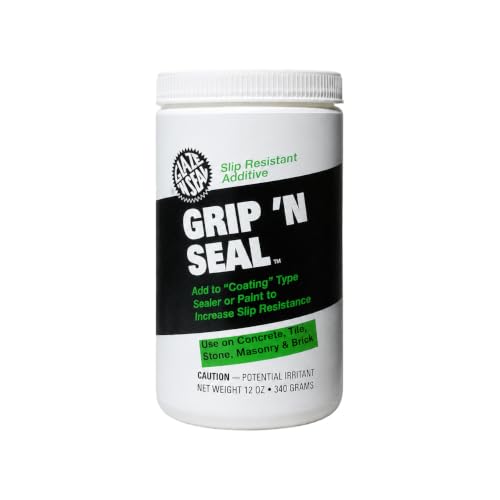
Glaze ‘N Seal Grip ‘N Seal Additive, 12 oz
Stone Grip Industrial Non-Slip Floor Treatment (Quart)
More On The Choices That Made The List
The Stone Coat Countertops additive is built for anyone already planning an epoxy floor refresh and wanting grip built into the topcoat. It’s a 16-ounce jar of medium-grit texture that stirs directly into a compatible epoxy system, so you get traction without changing the look of the finish much.
For garage conversions, basements, and home gyms, that mix-in approach keeps the install to one continuous pour rather than taping and sealing separately. Compared with the Stone Grip Industrial liquid treatment reviewed below, this one requires a full recoat, so it suits projects already in motion rather than quick touch-ups.
Notable Gains
- Customizable grit level, since you control how much you stir in per batch
- Locks into the epoxy, so there’s no tape to peel or replace later
- Ideal for large rooms, with a 16-ounce jar covering broad floor areas
- Coordinating with Stone Coat’s epoxy line keeps finish chemistry consistent
Things To Consider
- Requires an active epoxy project, so it isn’t a standalone fix
- Medium grit may feel coarse on bare feet in a kitchen
- Mixing ratios are tied to Stone Coat’s system
Feature Card
Made For
DIYers already pouring an epoxy floor who want built-in traction rather than surface tape.
Consider Something Else When
The Glaze ‘N Seal Grip ‘N Seal Additive fits better if you’re sealing existing tile rather than recoating with epoxy.
Bright yellow traction tape earns its place anywhere visibility matters as much as grip. The 2-inch width lays down clean lines on stair nosing, and the 33-foot roll covers a full flight or several shower entries before you reach for a second strip.
What sets this roll apart from the Reniteco red variant below is the safety-yellow hue, which reads clearly as a warning edge without feeling industrial. For households with kids darting through bathrooms, that visual cue matters as much as the mineral grit itself.
Noteworthy Benefits
- High-visibility yellow, so the slip zone is obvious even before contact
- Industrial adhesive that holds through wet conditions and foot traffic
- Wide 33-foot length covers a full staircase in one roll
- Mineral grit surface grips wet, oily, and soapy tile
- Usable on stairs, showers, and bathtubs without separate products
Worth Noting
- Yellow won’t blend with natural stone or earth-toned tile
- Grit feels rough under socked feet
At A Glance
Whose Shelf It Belongs On
Busy family homes and shared rentals where clear safety cues around showers and stairs help everyone stay upright.
A Better Fit Elsewhere
The Reniteco Anti Slip Tape in coffee brown suits wood steps where yellow would feel out of place.
Red tape says “stop and watch your step” the moment eyes hit it. This Reniteco roll carries the same mineral grit and aggressive adhesive as the yellow version above, wrapped in a color that fits industrial and workshop environments where caution is the whole point.
Garage workshops, loading docks, and home gyms with heavy equipment benefit from a hue that doubles as a visual barrier. The 33-foot length means one roll can run along the front of a workbench, down a ramp, or across a stair landing without splicing.
Useful Highlights
- Bold red signals hazard zones at a glance
- Industrial adhesive rated for foot traffic and exposure
- 33-foot roll suits long ramps or wide landings
- Same grit compound as the yellow variant, so traction is consistent
Trade Offs
- Red reads as industrial, which may clash in a finished bathroom
- Grit texture will collect dust and needs occasional sweeping
- Strips should be pressed firmly during install for the longest bond
Best Suited To
Workshops, garage gyms, and utility rooms where a strong warning cue is exactly what you want underfoot.
Look Elsewhere When
The Stone Grip Industrial treatment fits better when you need traction without any visible color on finished stone.
Coffee brown is the roll to reach for when yellow or red would clash with the room. The dark earthy tone disappears into wood steps, stained decking, and rustic tile entries, so the tape earns its safety job without pulling focus from the design.
You get the same 2-inch width, 33-foot length, and mineral grit profile as the other Reniteco rolls above. The difference is purely cosmetic, which matters when the stair nosing runs through a finished living area instead of a back-of-house utility zone.
What Works In Its Favor
- Brown tone blends into wood and earth-toned tile
- Same proven grit texture as the yellow and red Reniteco rolls
- 33-foot length covers a full residential staircase
- Sturdy adhesive rated for outdoor deck conditions
Honest Caveats
- Color may be too subtle if you also need a visible warning cue
- Grit feels coarse on bare feet
Right Fit For
Homeowners with stained wood steps or rustic tile who want grip without a safety-stripe aesthetic.
Swap It Out When
The Reniteco Anti Slip Traction Tape in yellow is the better call for staircases that need a clear visual warning.
Pre-printed caution messaging turns the tape itself into a sign, which is the whole pitch here. You don’t need a separate “Wet Floor” cone when the strip already says Watch Your Step in bold black-and-yellow contrast.
At 16.5 feet, this roll is half the length of the plain-color Reniteco options above. That actually works in your favor for doorways and thresholds, where you only need a short attention-grabber rather than a full staircase run.
What Pays Off
- Built-in caution text saves adding a separate floor sign
- 16.5-foot length suits short thresholds and entry strips
- Mineral grit grips wet entryways and tiled mudrooms
- Industrial adhesive bonds to concrete, tile, and metal thresholds
Points To Note
- Half the length of the longer Reniteco rolls
- Printed messaging may peel slightly at high-traffic edges over time
Who Should Grab It
Property managers and homeowners marking commercial-style thresholds where a verbal cue doubles the safety value.
Another Choice May Suit
The Reniteco Yellow Traction Tape is the better match when you want color-only signaling without printed text.
Photoluminescent strips charge up under ambient or daylight, then glow once the lights go out. For basement stairs, dark hallways, and windowless bathrooms, that glow marks the edge of every step when a nightlight just isn’t enough.
The black base hides the glow slightly compared with brighter tape colors, but the trade-off is a more residential look during daytime. You still get the same 2-inch width and mineral grit traction that the rest of the Reniteco lineup shares.
Positive Takeaways
- Glows after dark to outline steps in unlit areas
- Black base color blends into tile and wood during daytime
- Mineral grit grips wet surfaces just like the standard Reniteco rolls
- Industrial adhesive suited to indoor and covered outdoor steps
Less Ideal Details
- Glow intensity fades through the night and needs light to recharge
- Half-length 16.5-foot roll won’t cover a full staircase in one pass
Quick Facts
Built With In Mind
Older adults and night-time households where unlit stairs from bedroom to bathroom are a real concern.
Reach For A Different Pick When
The Reniteco Yellow Traction Tape is the stronger daytime signal for bright commercial-style safety markings.
Fine polymer powder is the headline difference from the Stone Coat additive reviewed above. Instead of mineral grit, Glaze ‘N Seal uses a soft micronized powder that won’t bother bare feet, which is the whole reason pool decks and patio sealers reach for it.
You mix it into your existing coating or sealer, so the finished floor looks the same as before, just grippier. That invisible-texture approach is the opposite of the tape options above and makes sense where you’d rather not see safety stripes.
Real-World Strengths
- Soft polymer texture stays comfortable under bare feet
- Does not alter the appearance of your sealer or paint
- Works in driveways, patios, pool decks, and walkways
- 12-ounce jar covers a moderate outdoor area per mix
A Few Limitations
- Requires an active sealing or painting project to apply
- Traction is moderate, so heavily sloped ramps may still need tape
- Mix ratio depends on the sealer brand used
Perfect Match For
Pool owners and patio dwellers who want traction without the rough texture or visible color of mineral grit tape.
Skip It When
The Reniteco glow-in-the-dark tape fits better when you need immediate traction on existing tile without resealing.
Stone Grip is the only true chemical treatment in this roundup. Instead of adding texture on top, it works into the surface of porcelain, ceramic, terrazzo, slate, travertine, and unsealed concrete, creating microscopic traction channels that the eye barely sees.
For high-end stone floors where tape or grit additive would ruin the look, that’s a real advantage. A quart covers a respectable floor area, and the change shows up within minutes of application, which is unusual for a treatment that doesn’t change the visible finish.
Good Reasons To Consider
- Works without adding any visible texture or color to natural stone
- Suitable for porcelain, ceramic, terrazzo, slate, travertine, and unsealed concrete
- Indoor and outdoor use from a single quart bottle
- Residential and commercial applications share the same formula
Practical Considerations
- Some sealed or polished stone may need sealing before treatment to bond properly
- Quart size suits small to mid-size rooms; larger floors need multiple bottles
- Treatment effects are permanent and can change the sheen of certain finishes
Key Product Details
Who Will Love This
Owners of natural stone or porcelain floors who want traction without any change in surface color or visible texture.
Where Another Pick Suits Better
The Glaze ‘N Seal Grip ‘N Seal Additive is a better fit if you’re already sealing and want a softer polymer texture underfoot.
What Matters Most Before Choosing Anti-Slip Coatings For Tiles
Surface Type Drives The Decision
Tile, stone, and concrete each behave differently once wet. Porcelain and ceramic are smooth and dense, so grit-based tape or polymer additives read clearly on top. Natural stone like slate and travertine has natural tooth, which means a chemical micro-etch like Stone Grip Industrial is often enough without anything visible on top.
Indoor Vs Outdoor Conditions
Outdoor surfaces see rain, UV, and freeze-thaw cycles that indoor tile doesn’t. Tape rated for outdoor exposure (like the Reniteco rolls) uses industrial adhesive that holds up under temperature swings, while indoor additives such as Glaze ‘N Seal work fine in climate-controlled rooms but may need recoating outside. Bathrooms sit in between, since they get wet often but stay climate-controlled.
Visibility Vs Invisible Texture
Safety stripes announce themselves with bright yellow or red, which helps in shared spaces and around kids. Invisible options like Stone Grip Industrial and Glaze ‘N Seal Grip ‘N Seal preserve a finished look but rely on the user knowing the floor is treated. Older adults often benefit from both cues layered together.
Comfort Underfoot
Mineral grit feels coarse, especially under bare feet or in socked households. Polymer-based additives soften that feel but offer less aggressive traction. Pool decks and patio spaces typically trade off toward comfort, while workshop ramps usually prioritize grip.
Key Considerations Across These Picks
Where Shoppers Go Wrong
The most common slip-up is choosing mineral grit tape for a pool deck or bathroom floor where bare feet are routine. The traction is real, but the texture will bother skin over time. For barefoot zones, polymer additives or chemical treatments keep comfort intact.
When Paying More Pays Off
Quart-sized chemical treatments and longer 33-foot tape rolls cost more per unit, but they cover larger spaces without seams. For whole-floor traction or full staircases, that higher spend translates into fewer joints and more consistent grip across the surface.
Frequently Asked Questions
Do anti-slip coatings change the look of tile?
Polymer additives and chemical treatments are designed to preserve the original color and sheen, while grit-based tapes add a visible stripe. Pick based on whether you want a visible warning or a hidden fix.
Can anti-slip tape go in a shower?
Yes, mineral grit tape with industrial adhesive is rated for wet areas including showers and bathtubs. Make sure the surface is clean and fully dry during installation so the bond holds up under constant water exposure.
How long does anti-slip tape last on stairs?
Indoor stair tape can last through years of regular foot traffic, while outdoor exposure to UV and temperature swings typically shortens that lifespan. Plan on replacing outdoor strips more often than indoor ones.
Are polymer additives safe for barefoot areas?
Micronized polymer powder is designed to add traction without the sharp grit feel, which is why pool and patio sealers reach for it. The trade-off is gentler traction compared to mineral grit options.
Do chemical treatments work on sealed stone?
Many sealed or polished stone surfaces need the sealer stripped before a chemical treatment can bond properly. Test a small inconspicuous area first to confirm the finish responds as expected.
Wrap Up
The right pick depends less on brand and more on what sits underfoot and who walks there. Barefoot pool decks point toward polymer additives, dark staircases benefit from glow tape, and finished natural stone calls for a chemical treatment that preserves the look. Match the format to the room, and the safety fix becomes invisible in the best possible way.




