
A leaking pipe under the kitchen sink or a slow drip behind the shower wall can turn a calm morning into a stressful one. Choosing the right shut-off valve lets you cut off water fast during a repair, isolate fixtures for an upgrade, or save a few gallons every shower without calling a plumber. The picks below cover PEX crimp valves for repipes, push-to-connect models for quick fixes, and compact shower-head shutoffs for renters and RV owners. Each one is sized for a specific job, from a 3/4″ main branch to a 1-1/4″ industrial line.
The Leading Options At A Glance

EZ-Fluid 3/4″ PEX Brass Ball Valve (50-Pack)

SharkBite 22222-0000LF Brass Push Ball Valve, 1/2″
Corbi 1″ PEX-B Lead-Free Brass Ball Valve (Red)

Shower Head Brass Shut Off Valve (Chrome)
carvedexquisitely 1/2″ Stainless Shower Shut Off (2-Pack)

carvedexquisitely 1/2″ Stainless RV Shower Shut Off

carvedexquisitely 1/2″ Stainless Mini Ball Valve
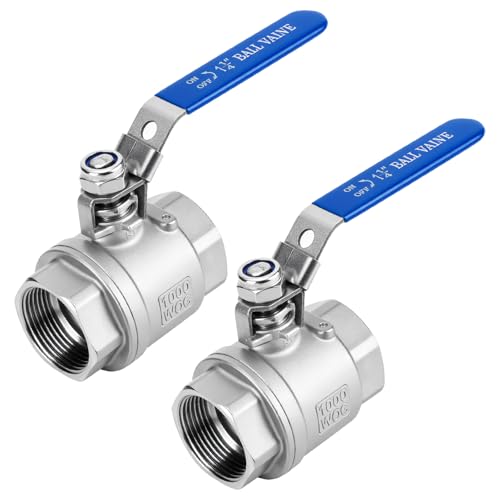
SKLSSVF 1-1/4″ Stainless Locking Ball Valve (2-Pack)

SKLSSVF 1-1/4″ Stainless 1000 WOG Ball Valve (2-Pack)
Meet The Standout Selections
If you’re plumbing an entire house with PEX and need a shut-off at every fixture, buying fifty brass ball valves at once keeps the project moving. The EZ-Fluid pack delivers 3/4″ full-port bodies with crimp-barb ends on both sides, and solid brass construction stands up to corrosion from mineral-heavy well water. You do need a separate crimp tool and copper rings, since the listing is valve-only, which adds to the upfront cost for first-timers.
Each valve turns a quarter rotation between open and closed, which matters when you’re reaching into a tight manifold cabinet at night. The blue handle makes the closed position easy to spot during a panicked shut-off. Compared with the SharkBite push-to-connect you’ll see next, this one trades tool-free speed for a permanent, solder-free crimp connection that plumbers tend to trust more.
What Makes Sense
- Solid brass body resists corrosion in hard-water regions
- Full-port design keeps flow close to pipe capacity, so shower pressure stays strong
- Works with any major PEX brand, including Watts, Viega, and Bow
- Fifty-pack pricing lowers the per-valve cost on whole-house repipes
Trade Offs
- Crimp rings and the crimp tool are sold separately
- Overkill for a single fixture swap or a small repair
Quick Facts
Best Suited To
Contractors and serious DIYers running long PEX branches through a crawlspace or basement.
Look Elsewhere When
A single leaky stop needs a faster fix, in which case the SharkBite 22222-0000LF brass push ball valve is the better call.
When a supply line under the toilet starts weeping and you don’t own a torch or a crimp ring, the SharkBite 22222-0000LF brass push ball valve gets the job done in seconds. Push-to-connect fittings (a style that grips pipe with internal teeth instead of glue or solder) accept PEX, copper, CPVC, PE-RT, or SDR-9 HDPE without any special tools. You push the pipe in, the O-ring seals, and the quarter-turn handle controls flow from there.
The brass body is sturdy enough for permanent installs behind a wall, which is why many plumbers spec it for repair jobs even when they prefer crimped connections elsewhere. The 1/2″ size is the workhorse for residential fixtures like faucets, ice makers, and toilets. You may find the price per valve a bit higher than crimp-style alternatives, but you save the cost of buying a tool you’ll only use once.
Everyday Wins
- Push-to-connect design cuts installation time dramatically
- Multi-material compatibility means one valve covers mixed plumbing in older homes
- Brass body holds pressure ratings suitable for behind-the-wall use
- Removable with a simple disconnect clip, helpful for future service
Honest Caveats
- Costs more per valve than crimp-barb brass equivalents
- Behind-wall installs may require anchoring to prevent pipe twist over time
Whose Shelf It Belongs On
Renters, homeowners, and maintenance teams who need a tool-free fix on a wide mix of pipe types.
Another Choice May Suit
The EZ-Fluid 3/4″ PEX Brass Ball Valve 50-pack is the smarter buy for anyone running full PEX repipes where tool-free speed matters less than cost per fitting.
For a main feed or a manifold trunk line, 1″ PEX changes the math on flow, and the Corbi 1″ PEX-B ball valve steps up to match. The lead-free brass body suits drinking-water lines, and the red handle codes it instantly as a hot-side shut-off in a paired install. It plays nicely with PEX-A, PEX-B, and PEX-C tubing, plus both crimp and clamp ring systems, which keeps inventory simple on mixed-job sites.
The full-port bore inside the valve keeps turbulence low so a multi-head shower doesn’t lose pressure when two fixtures run at once. NSF and UPC certifications (third-party marks that confirm the valve meets drinking-water and plumbing-code standards) matter if a local inspector signs off on residential work. Compared with the smaller 1/2″ SharkBite, this Corbi trades fixture-level convenience for main-line capacity, so pick it when the upstream pipe is at least 1″.
Useful Strengths
- 1″ full-port path supports manifold-style plumbing with strong flow
- Lead-free brass and dual certifications for code-conscious installs
- Red handle helps color-code hot-side or critical shut-offs
- Works across PEX-A, B, and C with crimp or clamp rings
Points To Keep In Mind
- Single-pack quantity drives a higher per-valve price
- Requires matching 1″ crimp or clamp rings, sold separately
Built With In Mind
Homeowners and pros installing or upgrading a 1″ PEX manifold, water heater feed, or boiler loop.
Swap It Out When
Tighter 1/2″ supply lines dominate the project, in which case the SharkBite 22222-0000LF brass push ball valve is the cleaner pick.
Soaping up the dog and needing to halt the spray mid-rinse is exactly where this carvedexquisitely shower head shut-off earns its place. The brass body is chrome-plated for rust resistance, and a sliding mechanism turns flow on and off without a quarter-turn handle. The 1/2″ G-thread fits most handheld shower and bidet sprayer hoses, which is handy in rentals where you can’t modify the shower valve behind the wall.
Operating the slider with soapy or wet fingers is genuinely easier than reaching for a lever, a small but real ergonomic win. Unlike the stainless steel ball valves further down the list, this one is designed for point-of-use convenience rather than heavy industrial duty, so it’s a better fit for low-pressure shower pauses than for cutting off a geyser.
Where It Excels
- Sliding action stays controllable even with soapy hands
- Brass body with chrome plating resists bathroom humidity
- Doubles as a flow restrictor for water-saving routines
- Low cost keeps it attractive for multi-bath retrofits
Worth Bearing In Mind
- Not built for high-pressure main lines or behind-wall placement
- Sliding seals may need occasional cleaning to stay smooth
Made For
Anyone who wants a quick pause control at the shower head without touching the main wall valve.
Where A Sibling Pick Shines
The carvedexquisitely 1/2″ Stainless Mini Ball Valve is a tougher alternative for RV or workshop environments where the slider design might wear faster.

Two valves in one pack means you can put one on the master shower and one on the guest bath without a second order. The 304 stainless steel body is the same alloy used on kitchen cutlery, so corrosion resistance in a steamy bathroom is essentially a given. The 1/2″ NPT female and male ends (NPT stands for National Pipe Thread, the tapered thread standard for U.S. plumbing fittings) connect to most U.S. shower heads, including handheld and fixed combos.
Heat tolerance is solid, which matters for homes where hot water lines run near the valve. Unlike the chrome-plated brass shower shut-off above, this one skips plating entirely, so there’s no finish to chip or peel over years of use. The trade-off shows up in cost, since stainless costs more than chrome brass, though the two-pack pricing softens that hit.
Strengths Worth Knowing
- 304 stainless body outlasts chrome-plated brass in humid bathrooms
- Two-pack suits whole-home retrofits on a single order
- Standard NPT threads fit most U.S. shower head connectors
- Works in RVs and small kitchens as a flow-saver
Points To Note
- Stainless costs more than chrome alternatives for the same size
Who Should Grab It
Homeowners and RV owners upgrading both a primary and secondary shower at once.
Reach For A Different Pick When
Only a single point-of-use pause is needed, in which case the Shower Head Brass Shut Off Valve is the lower-cost option.
RVs vibrate, run hot and cold through temperature swings, and often sit unused for months, so a heavy-duty 304 stainless valve makes sense. The female-by-male NPT threading works as an inline shut-off between the shower hose and the wall outlet, and the quarter-turn ball action matches what you’d expect from a household valve. Carrying the same stainless build as the two-pack above, this version is sized for a single installation where you don’t need a spare.
Pressure tolerance suits both campground city-water hookups and standard home pressure, so it doubles as a travel spare. You may find the female end slightly tighter against certain shower wand threads, so a wrap of plumber’s tape (Teflon tape that seals tapered pipe threads) is worth adding during install. Compared with the chrome slider shut-off earlier, this ball valve trades the sliding ergonomic feel for longer seal life under vibration.
A Few Strong Suits
- Stainless build handles RV temperature swings without finish flaking
- Standard 1/2″ NPT female and male threads fit common U.S. connectors
- Works as a water-saving flow restrictor for tanked RV systems
- Single-pack pricing makes sense for one-off installations
Less Ideal Details
- Thread sealing tape not included in the box
- Bulk two-packs work out cheaper per valve if you need more than one
Perfect Match For
RV owners, van builders, and mobile homeowners who need corrosion-resistant shut-off at the shower hose.
Consider Something Else When
You’re outfitting a residential home with two or more showers, where the carvedexquisitely 1/2″ Stainless 2-Pack saves a trip back to the listing.
The mini-ball form factor on this carvedexquisitely model keeps the body short enough to tuck behind a tight shower arm connection without stressing the elbow joint. The all-stainless body matches the other carvedexquisitely valves in this lineup, with NPT threading on both ends for U.S. standard shower hoses. Heat and pressure tolerance are well above what a residential shower line ever asks for, so you’re not paying for capacity you’ll never use, but you do get the corrosion margin.
There’s no locking handle on this single pack, unlike the SKLSSVF industrial pair further down. For a homeowner or renter who just wants a clean, minimal shut-off between shower head and arm, that’s a non-issue. The honest read is that this model fits neatly between the cheaper chrome slider and the heavier industrial SKLSSVF locks.
What Helps Most
- Compact stainless body fits cramped shower arm clearances
- Standard NPT threads suit most U.S. shower head hoses
- Heat and pressure ratings exceed typical home shower demand
- Works in kitchens and utility sinks as a flow saver
Possible Compromises
- No locking handle to prevent accidental bump-shut-off
- Single-pack only, so two-bath installs need a second order
The Right Fit
Anyone retrofitting one shower with a clean, compact stainless shut-off and no need for a lockable lever.
Skip It When
You’re running a workshop, compressor line, or any system where accidental handle movement is a safety concern, in which case the SKLSSVF 1-1/4″ Stainless Locking Ball Valve is purpose-built for that.
Compressed air lines, irrigation mains, and chemical transfer setups all share one safety need: the valve should stay exactly where you left it. The SKLSSVF 1-1/4″ locking ball valve uses a lever with a locking device so curious hands or shop vibrations can’t nudge it open or closed unintentionally. The 304 stainless body shrugs off corrosive fluids, and the full-port bore keeps flow restriction minimal for high-throughput lines.
Pressure handling is rated for the kind of loads an industrial or workshop environment throws at plumbing fixtures, well beyond household supply. The female NPT threads on both ends install with standard pipe sealant (a paste or tape applied to tapered threads before assembly) for a leak-resistant join. This is heavier hardware than any shower shut-off, so it makes most sense on plumbing you genuinely need to control, not on a point-of-use pause.
A Few Highlights
- Locking handle prevents accidental position changes in busy shops
- 304 stainless body resists corrosion from chemicals and outdoor exposure
- Full-port design minimizes pressure drop on high-flow lines
- Two-pack supports dual-line installs without a separate order
Some Limits To Know
- 1-1/4″ sizing is too large for residential shower and sink stubs
- Thread sealant not included, so budget for tape or paste
Who It Suits Best
Shop owners, garage tinkerers, and small-business operators running air, water, or light chemical lines.
A Better Fit Elsewhere
Homeowners on standard 1/2″ residential lines should pivot to the carvedexquisitely 1/2″ Stainless Mini Ball Valve for a less industrial option.
WOG stands for Water, Oil, and Gas, the three media this valve is rated to handle, and 1000 is the working-pressure figure in PSI. That rating makes the SKLSSVF 1-1/4″ full-port ball valve appropriate for oil and gas pipelines, irrigation laterals, and process water, anywhere you need confidence under pressure. PTFE seals (a Teflon-based seat material that tolerates heat and a wide pH range) give the valve chemical compatibility beyond what rubber seats offer.
The male-by-female NPT combination lets you transition between two different pipe ends without an extra coupling. The blue vinyl-insulated handle is comfortable to grip even when the line is cold and the shop is drafty. Locking device included, same as the SKLSSVF pair above, so the safety story stays consistent.
The Helpful Details
- 1000 PSI WOG rating handles water, oil, and gas service
- PTFE seals resist chemical attack better than standard rubber seats
- Male-by-female NPT combination reduces coupling count on transitions
- Vinyl-coated handle stays comfortable in cold and wet work areas
Where It Is Less Suited
- Over-spec for ordinary residential shower and sink plumbing
- Requires careful thread prep to avoid leaks on high-pressure lines
Made For
Industrial buyers, farmers, and serious DIYers running high-pressure water, oil, or gas lines on a private system.
Not Your Match When
The job is a residential shower pause or fixture isolation, where the carvedexquisitely 1/2″ Stainless Mini Ball Valve is the right size and budget.
Picking The Right Shut-Off Valve Without Overbuying
Connection type is the single biggest filter. If your home runs on PEX, a crimp or clamp ball valve (the EZ-Fluid pack or the Corbi 1″) gives you a permanent, code-friendly joint. If the pipe is copper, CPVC, or a mix of older and newer materials, the SharkBite push-to-connect valve sidesteps torch work and tool investment. Mismatched threads are the most common reason a valve leaks after install, so confirming NPT vs. G-thread (a British/imperial pipe thread common on imported fittings) vs. crimp-barb before ordering saves a return trip.
Material matters more than most shoppers expect. Brass valves in dry indoor plumbing can last decades, but coastal humidity, well water with high mineral content, or chemical exposure chew through cheaper alloys. Stainless 304 is the practical upgrade for bathrooms, kitchens, and outdoor lines. Pressure rating is the next checkpoint. Residential supply sits around 40 to 80 PSI, so almost any valve handles it. Workshop compressed air, irrigation pumps, and oil lines climb into the hundreds of PSI, where a 1000 WOG stainless valve earns its price.
Size, handle style, and locking features round out the decision. Shower-head shut-offs at 1/2″ fit standard hoses, while 1″ and 1-1/4″ valves belong on branch lines and industrial runs. Quarter-turn ball handles give quick shut-off, sliding controls add ergonomic convenience at the shower head, and locking levers prevent accidental position changes in busy shops. RV owners should weight stainless builds higher to handle vibration and temperature swings on the road.
Key Considerations Across These Picks
Where Shoppers Go Wrong
The most common slip-up is buying a valve without confirming the pipe material on both ends of the install. A push-to-connect valve works on copper and PEX alike, but a crimp-barb valve only seals to PEX with the right copper rings, and a threaded NPT valve needs matching male or female threads. Skipping thread sealant on tapered NPT joints is the second classic mistake, and it’s almost always the cause of a slow drip that shows up a week after install. For shower valves, underestimating clearance behind the arm is a frequent surprise: bulkier bodies may not seat flat against the wall.
What The Higher Tier Buys
Premium valves spend their extra money on three things: body material, seal chemistry, and pressure rating. Lead-free brass and 304 stainless resist corrosion that cheaper alloys can’t, so the valve is still turning smoothly ten years later. PTFE seats handle heat and a wider chemical range than standard rubber. Higher pressure ratings, like the SKLSSVF 1000 WOG, give you margin for pumps, compression, and temperature spikes. None of that matters on a low-pressure shower pause, but on a workshop air line or an irrigation main, the upgrade is the difference between a working system and a recurring leak.
Frequently Asked Questions
What Is A Full-Port Ball Valve?
A full-port ball valve has an internal bore the same diameter as the connecting pipe, so flow passes through with minimal restriction. This keeps pressure high and turbulence low, which matters on long runs or manifolds feeding multiple fixtures.
Can I Install A Push-To-Connect Valve Behind A Wall?
Push-to-connect fittings are rated for behind-wall use when properly anchored and matched to the pipe material. Securing the pipe so it cannot twist or pull outward is important, since the seal relies on the pipe staying seated against the internal O-ring.
Do Stainless Steel Valves Last Longer Than Brass?
Stainless steel resists corrosion better than chrome-plated brass in humid, coastal, or chemically aggressive water, so it often outlasts brass in those conditions. In standard indoor plumbing with balanced water chemistry, both can serve reliably for many years.
What Does WOG Mean On A Ball Valve?
WOG means Water, Oil, and Gas, the three media categories the valve is rated to handle. The number before it, like 1000 WOG, is the working pressure in PSI that the valve is designed to contain under normal operation.
How Do I Pick The Right Thread Size For A Shower Shut-Off?
Most U.S. shower heads and hoses use a 1/2″ thread, either NPT or G-type, depending on the brand. Measure the male thread on the shower arm or hose and confirm whether it is tapered (NPT) or parallel (G) before ordering a shut-off to match.