

A buried downspout line fails quietly for years, then ruins a Saturday. One clogged grate pushes water back toward the foundation, and suddenly you’re staring at a soggy lawn strip or a basement edge that never quite dries. Underground gutter drainage components, grates, basins, emitters, and downspout filters, fix that mess by routing roof runoff where it belongs. The right setup depends on your pipe diameter, soil, and how much leaf litter your trees drop each fall. This list walks through ten solid picks covering common residential setups so you can match parts to your existing layout without overspending or under-building the system.
A Snapshot Of The Selections

Calvana 4″ Plastic Round Drainage Grate Cover (2 Pack, Green)

Calvana 12″ Catch Basin Drain Grate (2 Pack, Black)
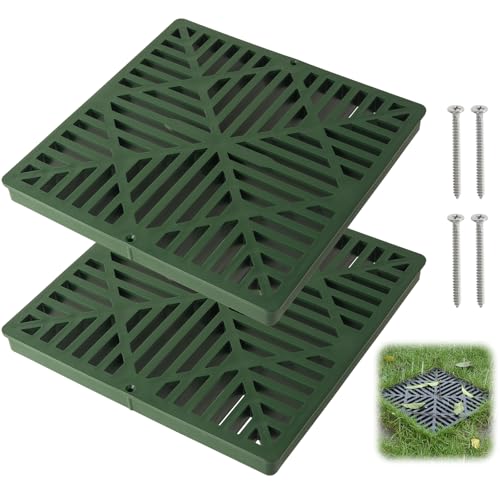
Calvana 12″ Catch Basin Drain Grate (2 Pack, Green)

VEVOR Aluminum Gutter Guard 5″ (52 ft, 13 Pack)

Calvana 6″ Round Drain Grate Cover (4 Pack, Green)

Calvana Pop-Up Drain Emitter Cap (2 Pack, Green)

Calvana 3″ Round Atrium Drain Grate Cover (3 Pack, Green)

Calvana 4″ Round Atrium Drain Grate Cover (3 Pack, Black)

Calvana 4″ Round Atrium Drain Grate Cover (3 Pack, Green)

French Drain Man Leaf Filter and Downspout Cleanout
The Picks, Examined More Closely
Two-pack economy grates for basic 4″ pipe terminations, ideal when you’re capping a short run under a lawn or behind a planting bed. The green tone blends into turf better than gray or black, and the round footprint matches a standard sewer-and-drain hub. You get one in reserve if the first one cracks during a rough winter or gets run over by a wheelbarrow.
Compared to the heavier catch basin grates later on this list, this is a lighter-duty option. For most suburban yards with modest leaf drop, it’s a sensible starting point.
Useful Highlights
- UV-resistant polypropylene handle, resists sun fade
- Accepts 4″ sewer, drain, single-wall corrugated, and triple-wall pipe
- Two-pack leaves a spare for future replacement
- Lightweight enough to lift without tools for cleaning
Things To Consider
- Not suited for driveway or foot-traffic loads
- Lacks the fiberglass reinforcement of heavier basin grates
Feature Snapshot
Who Should Grab It
Homeowners capping off a small lawn drainage line on a tight budget.
Swap It Out When
Step up to the Calvana 12″ Catch Basin Drain Grate in black if you need a load-rated cover for vehicle traffic.
Square 12-inch grates built for catch basins in spots that see real weight. The black color hides grime and tire marks, which matters if the basin sits near a driveway apron. With 20% fiberglass woven into the polyethylene, the panel stays flat under load instead of bowing like a thin plastic sheet.
Where Item 1 is a pipe-end cap, this is the lid for an in-ground collection box. That distinction matters: a basin gathers debris so you can clean it out without digging up the line.
The Case For It
- Fiberglass-reinforced polyethylene resists flex under load
- 12″ square footprint matches standard catch basins and risers
- Drains surface water quickly during heavy rain
- Sits flush on low-profile adapters for turf-level installs
Worth Noting
- Black finish can warm in direct summer sun
- Heavier than plastic-only grates, two-person lift on full install
- Requires a compatible basin or riser to seat properly
Quick Facts
Best Suited To
Properties with multiple catch basins near driveways or hardscape edges.
Reach For A Different Pick When
Choose the Calvana 4-Pack 6″ Round Drain Grate if your system runs on smaller 6″ pipe instead of basin boxes.
Same basin-ready 12-inch grate as Item 2, but in a green finish that disappears into the lawn. Useful when the basin sits in the middle of a visible turf strip rather than tucked beside paving. The green tone keeps the eye on the grass, not on a dark plastic square.
For homeowners who care about curb appeal as much as function, this is the friendlier sibling of the black version reviewed above.
Everyday Advantages
- Green color blends into grass and ground cover
- Fiberglass-reinforced body holds shape under foot traffic
- Accepts standard 12″ basins and risers
- Two-pack fits a small front-and-back yard layout
Trade Offs
- Green may weather unevenly depending on sun exposure
- Same weight class as the black version, still two-hand placement
Details At A Glance
Whose Shelf It Belongs On
Anyone installing basins in a visible lawn area who wants the grate to recede visually.
A Better Fit Elsewhere
Pick the black Calvana 12″ Catch Basin Drain Grate instead if the basin sits on dark mulch or near asphalt.
Aluminum gutter covers that stop leaves before they ever reach the underground line. Thirteen panels cover roughly 52 linear feet, enough for most single-story homes. The 0.157″ hole diameter blocks large debris while letting heavy rain pour through, and the 0.02″ aluminum thickness resists denting better than thin foam inserts.
This is upstream of everything else on the list. Stopping debris at the gutter means less cleanup at the basin or pop-up emitter later.
Real-World Strengths
- 52 ft total covers a full gutter perimeter
- Aluminum body won’t rust or rot
- 0.157″ holes screen leaves without choking flow
- Works with most standard 5″ gutter profiles
Room For Improvement
- Aluminum edges can be sharp during install, gloves recommended
- Tapping screws require drilling on certain gutter materials
- Not a fit for half-round gutters without an adapter strip
Core Details
Made For
Homeowners fighting heavy leaf drop who want to cut down on underground line clogs.
Look Elsewhere When
Skip this if you already have functional gutter screens, and direct spending toward the Calvana Pop-Up Drain Emitter instead.
Four round grates sized for 6″ pipe, the larger stormwater diameter used on many properties with wide roof lines or long gutter runs. The 6.75″ top diameter sits over a 5.75″ opening, giving a stable seat on standard outdoor drain fittings. Four units let you cap multiple points or keep spares after a few seasons.
If your system runs on 6″ pipe rather than 4″, this fills the gap the smaller Calvana round grates can’t cover.
Where It Excels
- 10% fiberglass reinforcement adds stiffness
- Four-pack pricing stretches across multiple drain points
- Green finish suits lawn installations
- Fits common 6″ outdoor drain fittings cleanly
Points To Note
- Lower fiberglass ratio than the 12″ basin grates
- Confirm pipe diameter before ordering, mixing 4″ and 6″ parts is a common mistake
The Right Fit
Property owners with 6″ stormwater laterals and several drain caps to replace.
Not Your Match When
Stick with Calvana 4″ Round Drainage Grate if your pipe network runs on smaller 4″ SDR lines.
A pop-up emitter cap that rises when water pressure builds and reseats itself once flow drops. Designed as a replacement lid compatible with 420C-style pop-up drainage emitters, fitting both 3″ and 4″ sewer and drain connections. It’s the small part that often cracks first, and replacing it restores the system without re-trenching.
For anyone whose pop-up emitter has split or vanished under a mower pass, this is the targeted fix.
Benefits That Matter
- Auto pop-up roughly 1″ to clear discharge
- Fits common 420C-style emitter bodies
- Works with 3″ and 4″ pipe transitions
- Two-pack covers front and rear discharge points
Honest Caveats
- Replacement cap only, not a full emitter unit
- Body housing must be intact for the cap to seat correctly
Perfect Match For
Shoppers who already run 420C emitters and just need a fresh cap or two.
Skip It When
Choose Calvana 12″ Catch Basin Drain Grate instead if the system uses catch basins without pop-up emitters.
Compact atrium-style grates for narrow beds, tight planting strips, and small lawn patches where a 12″ basin would be overkill. Compatible with NDS 78A fittings, they seat cleanly on 3″ sewer and drain pipes including SDR 35, triple wall, and corrugated styles. The dome-like atrium profile sheds leaves to the sides instead of catching them on top.
Where basin grates handle volume, atrium grates handle precision in tight spaces.
Practical Advantages
- Compact 3″ footprint suits tight garden beds
- Dome profile sheds leaves rather than trapping them
- Compatible with common NDS 78A fittings
- Three-pack covers a small front-yard network
Softer Spots
- Requires belled-end PVC fittings for proper seat
- Smaller opening limits flow on steep roof valleys
Best Suited To
Yards with narrow planting beds and modest 3″ lateral lines.
Consider Something Else When
Step up to Calvana 4″ Round Atrium Drain Grate if your pipe runs on standard 4″ SDR 35.
Atrium grates in black, with treated polyethylene designed to take punishment from sun and temperature swings. The 20% reinforcement boost (over standard formulas) helps the dome hold its shape when soil shifts around the pipe. Black hides against dark mulch and shaded beds, useful for installations where you don’t want a green dot drawing the eye.
Same fit family as Item 7, different finish and a heavier material recipe.
Useful Strengths
- UV-treated polyethylene resists cracking in harsh sun
- 20% reinforcement over baseline formula
- Fits 4″ SDR 35, triple wall, and corrugated pipe
- Black finish disappears in shaded beds
Small Caveats
- Belled-end fittings still required for a tight install
- Three-pack may be more than a single-point fix needs
The Right Fit
Properties in high-UV or freeze-thaw zones needing tougher atrium grates.
Reach For A Different Pick When
Choose the green Calvana 4″ Atrium Drain Grate instead for visible lawn placement.
The classic residential 4″ atrium grate in green, the most common size in suburban drainage work. Fits SDR 35, triple wall, and corrugated pipe with a belled-end hub. The green tone helps the dome blend into turf lines and mossy edges, where most homeowners want the hardware to disappear.
If you’ve ever watched a landscaping crew install a yard drain, this is probably the part in their truck.
The Value In It
- Standard 4″ SDR 35 compatibility covers most installs
- Green finish recedes into lawn and bed edges
- Three-pack covers typical three-point layouts
- UV-treated for season-after-season outdoor use
Worth Bearing In Mind
- Lower reinforcement ratio than the black sibling
- Belled-end requirement rules out plain-end pipe
Who It Suits Best
DIYers tackling a standard 4″ residential drainage project with a clean turf setting.
Where Another Pick Suits Better
Pick the VEVOR Aluminum Gutter Guard upstream if your main issue is leaves entering the line, not drainage at the cap.
A downspout-to-drain transition fitting that filters leaves at the top of the buried line. Sized for 3″ x 4″ gutters, it sits between the downspout outlet and the underground pipe, catching debris before it enters the system. The removable screen simplifies cleaning, no need to dig up the line when things slow down.
This is the boundary piece between above-grade gutters and below-grade pipe, the spot where most clogs actually start.
A Few Highlights
- Removable screen for tool-free cleaning
- Stops debris at the downspout-to-drain handoff
- Compatible with 3″ x 4″ gutter outlets
- Helps water enter the buried line without splashing
A Few Limitations
- Only fits 3″ x 4″ downspouts, not 2″ x 3″
- Screen needs seasonal clearing in heavy leaf zones
Made For
Properties with 3″ x 4″ downspouts feeding directly into an underground drain.
Look Elsewhere When
Pick Calvana 4″ Round Atrium Drain Grate if the transition point is already past the downspout and at the pipe end.
What Matters Most Before Choosing Underground Gutter Drainages
Match Pipe Diameter First
Every underground drainage part lives or dies by whether it actually fits the pipe already in the ground. SDR 35, triple wall, and single-wall corrugated each behave differently, and adapters vary by manufacturer. Before picking grates or emitters, confirm the outside diameter of your existing pipe and the type of hub at each fitting. SDR 35 refers to a standard dimension ratio for PVC sewer pipe, meaning wall thickness relative to outside diameter. A “belled end” is a flared socket that lets one pipe section slip into another without a separate coupler. Buying a 4″ grate for a 6″ line is the single most common waste of money in this category.
Think About Load, Not Just Flow
A grate that handles heavy rain may still fail under a parked car. Catch basin grates rated for foot traffic differ sharply from those rated for vehicle loads. Driveways, parking strips, and paths near service vehicles all need reinforced panels. Lawns and planting beds can use lighter materials, since soil and turf distribute weight across the grate.
Plan Upstream and Downstream Together
A great grate at the pipe end can’t save a system buried under leaf-filled gutters. The cleanest underground runs pair gutter guards at the roofline with grates, basins, and emitters at ground level. Treating the whole water path, roof to discharge point, gives you fewer surprises during a storm and less digging later.
Key Considerations Across These Picks
Where Shoppers Go Wrong
The biggest mistake is mixing pipe diameters without a reducer. A 6″ grate jammed onto a 4″ pipe leaves gaps that catch debris, and a 4″ grate dropped into a 6″ basin wobbles loose. Second on the list: skipping the upstream filter. Without a gutter screen or downspout leaf filter, even the best basin grate fills up twice a season. Always walk the full water path before ordering parts.
What Separates Premium From Basic
Higher-tier grates earn their keep through reinforcement and material stability. Fiberglass-loaded polyethylene holds shape under thermal cycling, where plain plastic warps after a few summers. Aluminum gutter guards outlast foam and plastic mesh by years in direct sun. The upgrade pays off most in climates with strong UV exposure or deep freeze-thaw swings, where cheaper materials degrade fastest and digging up a failed grate costs more than the part itself.
Frequently Asked Questions
What size pipe do most residential underground drainage systems use?
Most homes run on 4″ SDR 35 PVC for downspout laterals, with 6″ pipe reserved for longer runs and higher-volume roof areas. Catch basins typically use 9″ to 12″ square or round boxes that accept the smaller pipe at inlets and outlets.
How often should underground drainage grates be cleaned?
Twice a year is a reasonable baseline, once after spring pollen drop and again after fall leaf drop. Properties under heavy tree cover may need monthly clearing during peak leaf season.
Can driveway runoff share the same underground line as downspouts?
Yes, many properties combine roof and surface runoff into a single line, but the pipe and basins must be sized for the combined flow. Driveway water carries grit and sediment, so grates with smaller openings need more frequent cleaning.
Do pop-up emitters need a specific slope to work?
Pop-up emitters rely on gravity to deliver flow to the cap, but a minimum slope of 1 to 2 percent across the line keeps water moving. Flat runs cause emitters to stay partially open and let debris enter.
What’s the difference between a catch basin grate and an atrium grate?
Catch basin grates sit flat on a collection box and handle higher flow from surface water. Atrium grates have a domed top that sheds leaves and suit narrow beds or low-volume points where a basin would be overkill.
The Takeaway
A reliable underground drainage system comes down to matching the part to the pipe, the load, and the debris load. Start by confirming your existing pipe diameter and material, then work from the gutter down: gutter guards first, mid-line grates and basins next, and a pop-up emitter or downspout cleanout at the discharge. For most suburban properties, the Calvana atrium and basin grates cover the middle of the system well, while the VEVOR guard and French Drain Man filter handle the messy upstream work. Pick the layer that solves your specific failure point, and your yard stays walkable even after the heaviest rain.




