Brief, diluted bleach contact can be safe for a stainless steel sink, but it should not replace routine washing. Chlorine bleach can mark stainless steel, especially after pooling or drying, so use it only for a labeled sanitation task your sink maker permits, then rinse and dry the basin right away.
You’ll find practical cleanup steps, stain clues, daily methods, and product limits for a stainless steel sink exposed to food residue, hard-water haze, illness cleanup, or an accidental bleach splash.
Bleach Has a Narrow Role in Sink Care
Stainless steel resists rust because chromium in the metal forms a thin protective surface film. Chlorine bleach can disturb that film near the drain, under a dish rack, along seams, and in welded corners where liquid stays trapped.
Your manufacturer care instructions set the rule for your basin. Some sink makers prohibit chlorine products, and cleaner-related damage can fall outside the maker’s service terms.
Different Sink Problems Need Different Methods
Grease, food odor, mineral haze, surface stains, and sanitation needs call for different approaches. You do not need bleach for coffee drips, cooking grease, or pasta-water residue.
- Daily soil: Wash grease with warm water, Dawn dish soap, and a soft microfiber cloth.
- Food odor: Flush the drain with water, then wash the basin, disposal splash guard, and drain flange.
- Mineral film: Choose a cleaner suited to hard-water residue rather than chlorine bleach.
- Surface stains: Start with baking soda or a stainless cleaner listed in your manufacturer care instructions.
- Sanitation task: Follow the bleach label and your sink maker’s directions after raw poultry prep or stomach illness.
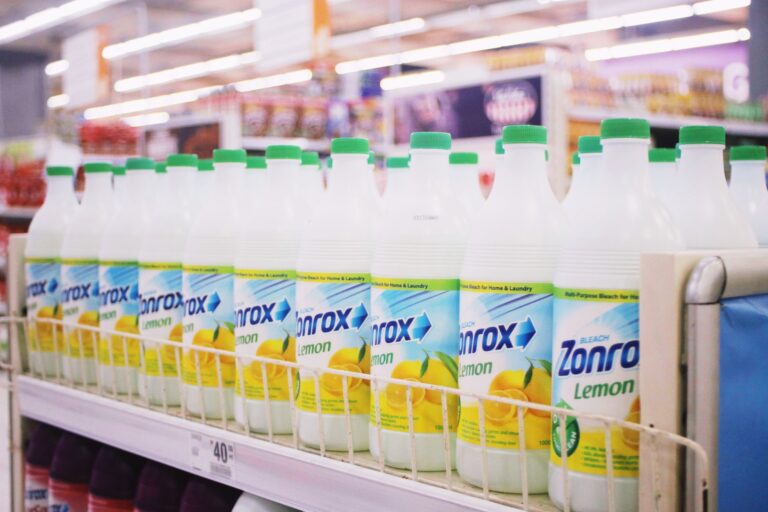
Clorox and similar household bleach products contain sodium hypochlorite. That ingredient has a place in limited sanitation work, yet it is a poor fit for daily stainless steel sink care.
Use bleach only for a clear sanitation purpose and only after checking your sink maker’s care directions. A shiny basin does not need chlorine for routine washing.
For your normal kitchen cleanup, soap and water leave far less residue behind. That lower-residue approach matters because chloride deposits are the source of the larger problem.
Chloride Residue Can Cause Pitting Corrosion
Sodium hypochlorite leaves chloride-containing residue after bleach contacts the metal. Chlorides can break tiny gaps in stainless steel’s protective film, especially where water evaporates and concentrates the residue.
Moisture can reach metal beneath a damaged spot. The result can be pitting corrosion, pinhole-like defects that hold grime and resist polishing.
Pooled Bleach Creates the Greatest Exposure
A bleach-water puddle around the drain creates more surface stress than a brief wiped application followed by rinsing. As water dries, chloride residue becomes more concentrated against the steel.
You raise the chance of dull flecks by soaking utensils, dishcloths, or food containers in bleach water inside the basin. A bleach-soaked towel left overnight can leave a mark in the same outline as the cloth.
It can contribute to rust-like marks and pitting, though orange spots also come from iron transferred by cookware, cans, or abrasive pads.
Other Kitchen Habits Can Scar the Finish
Bleach is not the only source of visible damage. Loose iron particles can cling to stainless steel and form rust spots after getting wet, which aligns with guidance from the American Iron and Steel Institute.
- Steel wool pads: Loose fragments can settle in the grain and leave orange-brown specks after moisture reaches them.
- Coarse scrubbers: Rough pads scratch the finish and make later stains stand out under overhead light.
- Standing hard water: Mineral deposits dry into chalky film that dulls the steel’s reflective finish.
- Wet cast iron: A skillet left in the basin can transfer iron staining to the surface beneath it.
- Cleaner residue: Strong cleaner left to dry can leave streaks, haze, or etched patches.
Those risks explain why contact time matters more than a quick splash. Rinsing right away removes residue before it settles into the sink grain or gathers around seams.
Brief Bleach Contact Needs Dilution and Rinsing
Pouring undiluted bleach into a steel basin creates the exposure you want to avoid. Follow the dilution and contact time printed on your specific product label because bleach formulas and sanitation directions differ.
Your lowest-exposure method uses only the liquid needed for the sanitation task. Put diluted solution on a soft cloth or sponge rather than filling the basin or soaking dishes.
Short Contact Reduces Surface Stress
- Clear the basin: Remove dishes, food scraps, mats, and metal tools before chlorine solution reaches your sink.
- Wash visible soil: Remove grease and crumbs with dish soap and water before sanitation work begins.
- Dilute as labeled: Follow the product label instead of making a stronger mixture for your kitchen.
- Wet briefly: Spread the diluted solution for the stated contact time without letting liquid pool.
- Rinse every edge: Run clean water over the basin, drain, corners, and backsplash edge right afterward.
- Dry the metal: Wipe the entire surface with a soft microfiber cloth so salts cannot dry in place.
Drying does more than improve the appearance of your basin. It removes water that can concentrate remaining salts at the drain rim, faucet lip, and lower corners.
Never mix bleach with ammonia, acids, white vinegar, drain cleaners, or another household cleaner. Hazardous gases can form from mixed products and residue in a bowl, bottle, or drain.
An accidental splash needs the same response. Rinse the area at once, dry it, and check for a new dull patch during the next day.
Do not scour a fresh mark with steel wool. Your attempt to remove a small bleach mark can leave a broader scratch pattern that catches light more clearly.
Preventing collateral damage begins with choosing tools according to the mark rather than reaching for the strongest option.
Match Each Cleaner to the Sink Problem
Most kitchen messes respond better to mild soap than chlorine. Warm water, mild dish soap, and a nonabrasive cloth lift greasy film without stressing the steel’s protective surface.
Dawn dish soap is safe on stainless steel during normal washing, provided you rinse away the suds afterward. Your dish soap does not need a 20-minute soak to loosen an ordinary greasy film.
| Sink problem | Starting method | Use pattern |
|---|---|---|
| Daily grease and food film | Warm water and mild dish soap | Wash with a soft cloth, rinse, then dry your basin. |
| Dried-on food residue | Baking soda paste | Rub lightly with the grain, rinse fully, and wipe dry. |
| Hard-water haze | Sink-maker-listed mineral remover | Use a short application, then rinse every trace from your sink. |
| Dark discoloration | Stainless steel cleanser | Check maker directions before use and follow the grain direction. |
| Rust transfer marks | Nonabrasive stainless cleaner | Lift residue gently rather than scouring deeply into the finish. |
The Sink Grain Direction Limits Visible Scratches
A brushed basin has faint lines running in one direction. Move your cloth along the sink grain direction because cross-grain rubbing can leave hazy scratch marks under kitchen lighting.
Bar Keepers Friend can help with some discoloration, but only where your sink maker lists it as suitable. Brand labels vary, so your manufacturer care instructions matter more than a product name.
Safe cleaners for stainless steel sinks start with mild dish soap, water, baking soda, and a soft cloth. Stronger formulas belong after soap, rinsing, and gentle rubbing have not lifted the mark.
When gentle methods handle most marks, consistent upkeep reduces how often harsher products become necessary.
Daily Habits Keep the Finish Clear
Salt, lemon juice, tomato sauce, and coffee grounds can leave residue in a damp basin overnight. Rinse those materials away after cooking, especially near the drain where food particles gather.
Your basic routine is wash, rinse, and dry. It takes less than two minutes after dishes and reduces water spots, food residue, mineral film, and harsh-cleaner use.
Items Left in the Basin Leave Distinct Marks
- Wet cans: Remove opened food cans instead of leaving damp rims against your sink overnight.
- Cast-iron cookware: Dry skillets elsewhere because iron transfer can leave orange stains beneath the pan.
- Steel wool: Store pads outside the basin so fragments cannot settle into your sink’s brushed grain.
- Rubber mats: Lift and dry sink mats after use because trapped water leaves mineral outlines underneath.
- Bleach cloths: Keep chlorine-soaked rags out of the basin and rinse them in a suitable container.
What can damage a stainless steel sink includes prolonged moisture, salt residue, coarse abrasives, iron transfer, and cleaner film left behind. Your daily rinse addresses several of those sources in one step.
And a dry basin gives you a clearer view of new marks. A stain that appears after drying tells you more than a wet surface covered by water spots.
Stains and Rust-Like Marks Need a Different Response
A brown dot does not always mean the basin itself is rusting. Metal fragments from a can, steel wool pad, or cast-iron pan can oxidize on top of stainless steel and leave a removable mark.
Start with a rinse and full drying. A pale ring that fades after drying points toward water residue, while a rough pinhole or etched dull spot points toward surface damage.
Surface Residue Responds to Gentle Cleaning
Mineral haze feels smooth and looks cloudy under a kitchen light. Use a suitable nonabrasive cleaner, follow the sink grain direction, rinse fully, and dry with a soft microfiber cloth.
A baking soda paste can loosen food residue without the sharp scratch pattern left by steel wool. Keep pressure light because hard scrubbing can turn a small stain into a broad dull patch.
White vinegar can react with cleaner residue and should never meet bleach residue. Rinse the basin fully before using any separate cleaner, then dry the surface after the task.
Pitting Needs Documentation and Skilled Help
Real pitting looks like tiny dark craters that remain after cleaning and drying. You may see it near a drain basket, beneath a soaked cloth, or in the outline of pooled bleach water.
Stop bleach contact where the finish is etched or pitted. Take clear photos in side light, record the cleaner used, and contact the sink manufacturer or a qualified metal repair professional for persistent corrosion.
Your record should include the product name, dilution, contact time, and mark location. That detail helps the manufacturer distinguish transferred rust spots from pitting corrosion.
Bottom Line for Bleach and Stainless Steel
Yes, but only as a brief, diluted, label-directed task your sink maker permits.
For nearly every kitchen mess, use dish soap, warm water, a soft microfiber cloth, rinsing, and full drying. Your sink keeps its finish longer with that gentle routine than with repeated chlorine exposure.
No. Residue left near drains, seams, dish racks, and damp cloths can lead to dull marks, rust spots, and pitting corrosion.
FAQ
Can I use bleach to clean my stainless steel sink?
You can use a properly diluted bleach solution for a brief labeled sanitation task, provided your sink maker permits it. Do not pour concentrated bleach into the basin, leave it pooled, soak dishes in it, or allow residue to dry on your sink.
What is the best thing to clean a stainless steel sink?
Warm water, mild dish soap, and a soft microfiber cloth are the best starting tools for your daily sink cleaning. Work along the brushed grain, rinse away soap, and dry the metal so minerals do not form visible water spots.
Is Dawn dish soap safe on stainless steel?
A quick rinse after washing keeps Dawn dish soap from leaving suds or residue on a stainless steel sink. Its mild formula handles grease without chloride residue from chlorine bleach or scratch risk from coarse pads.
How long can bleach sit on stainless steel before it causes damage?
No universal safe time exists because bleach strength, dilution, temperature, water chemistry, and your sink finish affect the result. Follow the product label contact time, rinse with clean water right afterward, and never leave bleach standing or drying in the basin.
Can bleach cause rust on stainless steel?
Bleach can contribute to rust-like spotting and pitting corrosion because sodium hypochlorite leaves chloride-containing residue on the metal. Your sink can also show orange marks from transferred iron, so rinse, dry, and use a gentle stainless cleaner before assuming the steel itself has failed.
What happens if bleach sits in a stainless steel sink?
Bleach left in a stainless steel sink can dry into concentrated chloride residue. That residue can dull the finish, leave rust-like spots, and contribute to pitting corrosion near a drain, seam, or pooled area.