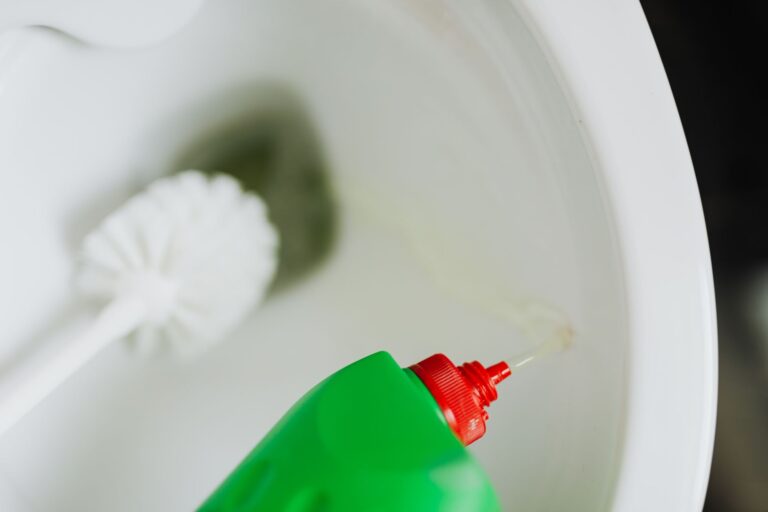
Routine toilet clogs rarely justify chemical drain cleaner, which can damage plumbing and create safety hazards. Sink and shower formulas can leave caustic water above trapped paper, creating burn and splash hazards during plunging or flushing. Your toilet needs a tool that reaches the blockage.
Below, you’ll find practical clearing methods, chemical risks, brown-stain advice, and clear signs that a professional plumber should take over.
Keep Drain Cleaner Out of Toilets
A toilet uses a narrow, curved toilet trapway that holds water and blocks sewer gas. Paper, wipes, and small objects can lodge in that bend, while sink and shower formulas target hair, soap film, and grease in straighter drain lines.
Conventional formulas miss the blockage
Drano, Liquid-Plumr, and similar chemical drain cleaner products do not reliably dissolve a thick plug of toilet paper, a flushed wipe, or a plastic object. Those materials remain lodged in your toilet trapway while the chemical sits in standing water.
That mismatch creates the main hazard. Your next flush, plunge, or snake attempt can push corrosive water toward your hands, eyes, floor, or nearby fixtures.
A flange plunger seals the outlet
A flange plunger is the right starting tool for an ordinary paper clog. Its fold-out rubber collar seals against the toilet drain opening, while a flat sink plunger lets air and water escape around the rim.
Use a plunger only before any chemical product enters the bowl. Once cleaner reaches the water, mechanical force can throw caustic liquid upward.
Set the flange over the outlet and press gently to remove trapped air. Then use controlled strokes rather than hard impacts against the porcelain. Your seal moves water through the trapway, which is what shifts a soft paper blockage.
Chemical Cleaners Raise the Risk
A tight plunger seal can clear paper, but it can also throw contaminated water from the bowl. A toilet containing drain opener requires chemical caution rather than normal clog-clearing force.
Caustic and acidic liquids burn tissue
Sodium hydroxide, also called lye, is a strong alkali found in some caustic formulas. Sulfuric acid appears in certain acidic formulas. Both substances can burn skin and eyes, while fumes can irritate your nose and throat.
Porcelain handles many household substances, but your toilet includes more than a porcelain bowl. Rubber seals, wax rings, metal fittings, PVC plumbing pipes, and older joints can react poorly after repeated or concentrated chemical contact.
Mechanical work becomes hazardous after pouring
| Situation | What happens | Safer response |
|---|---|---|
| Paper caught in trapway | Cleaner can sit against the blockage | Use a flange plunger before chemicals enter |
| Object lodged in bowl outlet | Liquid cannot dissolve plastic or fabric | Use a toilet auger or call a plumber |
| Cleaner in standing water | Plunging can splash corrosive liquid | Stop mechanical work and follow the label |
| Septic-system plumbing | Strong formulas can disrupt tank bacteria | Use mechanical clearing and septic-safe upkeep |
Plumbers avoid chemical drain openers because the liquid hides the physical cause and raises the danger level. Your plumber needs details about any product in the bowl before using a cable machine, removing the toilet, or opening a drain line.
That disclosure also explains why physical tools are safer first choices before reactive products enter the bowl.
Start With Mechanical Clearing Methods
Water rising toward the rim turns a clog into an overflow risk. Stop flushing, lift the tank lid, and close the flapper over the flush valve so no more water enters the bowl.
Controlled steps clear routine paper clogs
- Wait for drainage Allow the bowl water to drop several inches so your plunger strokes stay inside the bowl.
- Set the flange Cover the outlet with a flange plunger and keep water over the rubber cup for a tight seal.
- Press and pull Make 10 to 15 controlled strokes, then lift slightly to check whether water starts draining.
- Flush one time Test with one careful flush after normal drainage returns, then stop at any rising-water sign.
- Move to auger Feed a toilet auger into the trapway after plunging fails to shift the obstruction.
A toilet auger, also called a closet auger, uses a protected curved tube that helps shield the porcelain bowl. RIDGID models and similar tools use a hand crank to extend a cable into the trapway, break apart compacted paper, or retrieve an item.
Warm water and soap have limits
A few tablespoons of dish soap followed by warm, nonboiling tap water can loosen a minor organic clog. Soap can lubricate paper and waste, while boiling water can crack cold porcelain or harm seals.
Warm water and soap will not move a toy, dental-floss bundle, feminine hygiene product, or disposable wipe. What to use to unclog a toilet depends on the material: use a plunger for soft paper and a closet auger for an obstruction farther past the outlet.
Toilet Products Have Narrow Uses
Mechanical tools work because they reach the blockage, while drain products need much tighter limits. No standard sink, tub, or shower formula works well for toilet clogs, regardless of the language printed on the bottle.
Enzymes belong in maintenance
An enzyme-based drain cleaner or bacteria-based product has a narrow role in a toilet system. It can break down organic residue during maintenance only where its label permits toilet use and the bowl drains normally.
Green Gobbler, Zep, Seventh Generation, and similar brands do not replace label directions. Your product must fit the cause, and no additive belongs in a bowl containing bleach, ammonia, acids, or another cleaning product.
Brown buildup sits on the bowl surface
Brown rings around the waterline point to hard-water mineral deposits, iron rust, or manganese staining rather than a blocked drain. The stain sits on the porcelain surface, while a clog blocks water movement through the toilet trapway.
| What you see | Probable cause | Appropriate response |
|---|---|---|
| Slow drain after flushing | Paper or waste restriction | Flange plunger, then toilet auger |
| Water rises and stays high | Trapway or branch-line blockage | Stop flushing and use mechanical clearing |
| Brown ring at waterline | Mineral deposits or rust | Toilet-bowl cleaner for mineral staining |
| Dark marks under rim | Mineral buildup around rinse ports | Scrub gently with a non-damaging tool |
Use a toilet-bowl cleaner made for mineral deposits and a non-scratching scrubber for stains. A pumice stone can scratch some glazed surfaces, so keep it wet and stop once the bowl finish feels rough.
Drain Cleaner Spills Need a Different Response
Once a chemical product reaches the bowl, your response must change. Do not plunge, run a toilet auger, add another cleaner, or send repeated flushes through water that can splash or react.
Contain the area and follow the label
- Block bathroom access Keep children and pets away from the bowl, floor, and nearby cleaning tools.
- Ventilate with care Open a door or window where the product label permits ventilation without spreading fumes through your home.
- Read the label Follow its first-aid, disposal, and emergency directions rather than adding water or another substance.
- Rinse exposed skin Rinse skin or eyes at once according to label directions, then contact Poison Control about exposure.
- Call before clearing Contact a professional plumber before mechanical work begins inside the contaminated toilet.
Tell the plumber the exact brand, active ingredient, and time of use. A technician facing sodium hydroxide or sulfuric acid needs that information before placing a hand tool or cable into the trapway.
Even after a spill is contained, a clog that returns points to a cause tools alone cannot identify.
Never mix drain cleaner with bleach, ammonia, acids, or another cleaner. Chemical reactions can release irritating fumes or produce heat inside the bowl.
Persistent Clogs Need Diagnosis
A bowl that blocks again within days points beyond ordinary paper buildup. Repeated trouble can signal a trapped object, a partial branch-line restriction, poor venting, damaged plumbing pipes, or a developing sewer-line obstruction.
Fixture patterns locate the restriction
A toilet that backs up while a nearby tub gurgles can point to a shared drain problem. Water appearing in a shower after a toilet flush is a stronger sign that the restriction sits farther down the branch line.
Your septic system adds another reason to avoid harsh drain chemicals. Tank bacteria break down waste solids, and repeated doses of strong formulas can disrupt that work while leaving a physical blockage in place.
Rental properties need prompt reporting
Renters should report overflow, chemical exposure, repeat clogs, or trouble affecting multiple fixtures to a landlord or property manager promptly. Photos of the water level, visible overflow, and product label can document the condition before service arrives.
Can you put drain cleaner in a toilet remains a no after several failed attempts. Your safer path is a flange plunger for routine paper, a toilet auger for the trapway, and professional diagnosis for recurring trouble.
Bottom Line
A toilet clog is a physical problem far more than a chemistry problem. Keep drain cleaner out of the bowl, stop flushing before overflow starts, and use the tool that can reach the blockage. Once corrosive liquid enters the water, step back and tell a plumber rather than forcing the clog loose yourself.
FAQ
What do you pour down a toilet to unclog it?
For a minor paper or waste clog, use a small amount of dish soap followed by warm, non-boiling water. Your main tool should still be a flange plunger because soap and water lubricate material but do not remove a solid object caught in the toilet trapway.
What drain cleaner can I use in my toilet?
Products formulated for sinks, tubs, or showers can damage toilet components and should stay out of the bowl. An enzyme-based drain cleaner has a limited maintenance role only where its label permits toilet use, the bowl drains normally, and organic residue is the issue rather than an active blockage.
Why do plumbers say not to use drain cleaner?
Chemical splashes and trapped fumes make drain cleaner especially risky when a toilet remains clogged. Caustic or acidic liquid can remain in standing water and splash during plunging, snaking, or toilet removal, leaving your plumber with a more hazardous repair.
Can Drano damage a toilet or pipes?
Can you use Drano in a toilet without risk to every part is not a safe assumption. Drano and similar formulas can harm rubber seals, older fittings, PVC sections, wax rings, drain connections, and metal hardware after improper or repeated use.
How do you unclog a toilet without drain cleaner?
Safe toilet clog removers include a flange plunger and a toilet auger. Start with 10 to 15 controlled plunger strokes, then feed the protected auger cable through the bowl outlet where plunging does not restore normal drainage.
When should you call a plumber for a clogged toilet?
Repeat clogs, auger resistance, rising shower water, or gurgling fixtures signal that professional help is needed. Those signs can point to a branch-line or sewer-line restriction beyond the toilet trapway.