

When a basement bathroom sits below the main sewer line, gravity stops helping and a dependable pump takes over. Sewer ejector pumps quietly handle everything from a basement half-bath to a full laundry room, pushing waste up to the level where the municipal system can take over. Choosing the wrong one means clogs, overflows, or a motor that gives up during the second storm of the season.
The list below mixes homeowner-friendly 1/2 HP cast iron sewage pumps, heavy-duty 2HP cast iron submersible options, and grinder-style units built to chew through wipes and debris. Every pick was matched to a specific household scenario, so the right one for a finished basement bar is rarely the right one for a high-head uphill run.
The Leading Options At A Glance

Dewinston 2HP Submersible Sump Pump 220V Cast Iron

Dewinston 2HP Sewage Grinder Pump 4380GPH
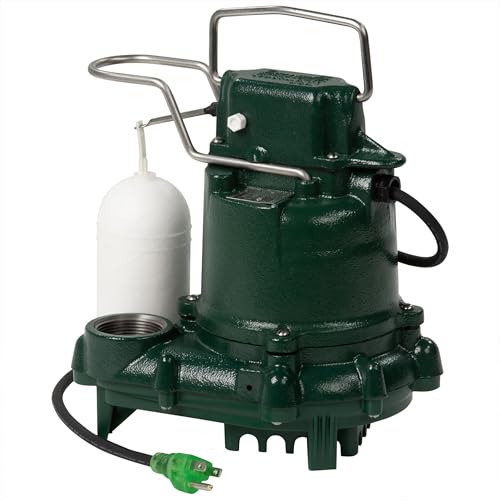
Zoeller M53 Mighty-mate Submersible Sump Pump 1/3 HP

Zoeller M98 Flow-Mate Sump Pump 1/2 HP
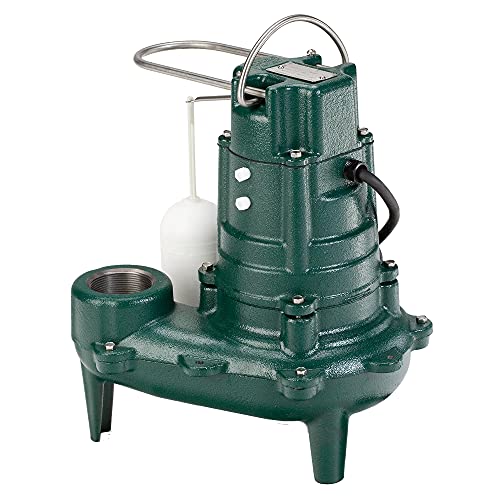
Zoeller Waste-Mate 267-0001 Sewage Pump 1/2 HP

Star 1102RP Replacement Pump for S1101 & S1102

Liberty Pumps LE51A 1/2 HP Sewage Pump

LEO 1/2 HP Submersible Sewage Pump 120V 6000 GPH

Dewinston 2HP Sewage Grinder Pump 6498GPH

Dewinston 2HP Submersible Sump Pump 6498GPH
Why These Options Stand Out
High-output sewage pits in finished basements tend to punish lightweight plastic pumps, which is why this Dewinston 2HP cast iron unit earns its place at the top of the list. Running on 220V with a 6498 GPH ceiling, it clears flooded sumps faster than most 1/2 HP residential picks can even reach their rated head. The IP68 sealing and elevated base plate (the bottom platform that lifts the pump above settled debris) suggest it can sit in a damp basin long-term without wicking moisture into the motor.
Compared to the smaller Zoeller M53 covered below, this is a true sewage pump with the muscle for a basement that drains a full bath, laundry, and bar sink at once. You trade quiet for throughput, so placement in a sealed basin cover matters more than with a 1/3 HP model.
Key Advantages
- 2HP motor paired with a 6498 GPH ceiling covers large residential pits without bogging down.
- Cast iron body sheds heat better than thermoplastic housings during long pumping cycles.
- IP68 rating (a top-tier dust and continuous-submersion rating) means full water immersion is part of the design envelope.
- Elevated base plate helps the pump avoid sucking in settled sediment and lint.
- 2-inch discharge standard matches most residential check-valve and pipe layouts.
Things To Consider
- 220V wiring means an electrician for most households that already run 115V outlets to the basin.
- Heavier than 1/2 HP cast iron alternatives, so hauling it down basement stairs is a two-handed job.
- Not a grinder model, so wipes and fibrous debris can still snag the impeller.
Feature Snapshot
Who It Suits Best
Homeowners with high-output basins serving multiple fixtures who already have (or can install) a 220V circuit and want raw flow over finesse.
Consider Something Else When
Pick the Dewinston 2HP Sewage Grinder Pump 4380GPH instead if wipes and fibrous debris are a recurring clog in your line.
Where the previous Dewinston is a flow-first pump, this grinder version swaps some gallons-per-hour for cutting blades that chew through the wipes, hygiene products, and small fabric scraps that jam vortex impellers (the curved-blade rotors that move water without clogging on large solids). The 2HP motor still delivers a 51 ft maximum head (the vertical distance a pump can push water before flow drops to nothing), making it a strong match for uphill or long horizontal discharge runs.
The trade-off shows up in flow rating: 4380 GPH is meaningfully less than the non-grinder 2HP Dewinston above. For a basement bathroom with a quiet usage pattern, that gap rarely matters, but a basement that drains a whole-house overflow during a storm may notice.
Well-Handled Touches
- Integrated grinder blades reduce the wipe clogs that plague standard sewage pumps.
- 51 ft max head covers most basement-to-street vertical lifts without losing prime.
- 20 ft power cord eases placement away from the basin lid junction box.
- 3420 RPM motor speed keeps solids moving once the grinder stage breaks them down.
Trade Offs
- 4380 GPH ceiling is lower than the non-grinder Dewinston at the top of this list.
- Grinder stages add wear parts that may need eventual service.
- Still requires a 220V circuit.
Made For
Households with older sewer laterals (the underground pipe from the house to the street main) prone to clogging where any non-grinder pump risks backing up.
Swap It Out When
Choose the Dewinston 2HP Submersible Sump Pump 6498GPH if you need raw flow and your household avoids sending wipes down the drain.
The Zoeller M53 is a sump pump, not a true sewage ejector, which is the first thing to clear up before adding it to a basement bathroom shopping list. It is included because many homeowners shopping for an ejector pump are really shopping for groundwater control, and the M53 is the long-standing name in that lane. With a 1/3 HP motor, cast iron switch case, and a non-clogging vortex impeller, it handles clear water from a perimeter drain without complaint.
If your project involves raw sewage from a basement bathroom, look at the Zoeller Waste-Mate later in this list instead. The M53’s plastic base and 1/3 HP output are built for clear water duty, not solids.
Positive Takeaways
- Float-activated automatic switch removes the need for manual operation during power-on cycles.
- Vortex impeller design resists clogging from small debris in clear water.
- Cast iron switch case and motor housing add years of service life.
- Compact size fits narrow sump pits where bigger 2HP units cannot drop in.
Points To Note
- Not designed to pass solids, so it should never be tied to a sewage line.
- 1/3 HP limits how high it can push water compared to 1/2 HP cast iron models.
Feature Rundown
Best Suited To
Homeowners who need clear-water sump duty in a narrow pit rather than full sewage handling from a basement bathroom.
Look Elsewhere When
Choose the Zoeller Waste-Mate 267-0001 if your basin is collecting actual sewage from a basement bathroom or laundry.
Step up from the M53 and you land on the M98 Flow-Mate, which is where Zoeller’s reputation for residential cast iron sewage and sump pumps gets put to the test. The 1/2 HP oil-filled motor, factory-tested float switch, and LED power plug give it a polished feel that cheaper 1/2 HP cast iron pumps miss. Stainless steel hardware on the exterior keeps rust streaks off the basin walls over time.
Like the M53, the M98 is technically a sump pump rather than a solids-handling sewage ejector. Basements with light sewage from a half bath may push it past its design, but for groundwater and greywater (laundry, shower, sink water without toilet waste) it is a confident upgrade.
Strong Points
- LED power plug provides at-a-glance confirmation that the outlet is live.
- Oil-filled motor design dissipates heat better than dry-air equivalents.
- 9 ft power cord reaches most residential outlets without an extension.
- Vortex impeller resists the small debris common in perimeter drains.
- Stainless steel hardware slows corrosion in damp pit environments.
Less-Strong Areas
- Factory-tested float switch is reliable but not user-adjustable.
- Still a sump-class pump, so toilet discharge should go to a dedicated sewage ejector.
Whose Shelf It Belongs On
Homeowners replacing an aging sump pump who want a long-running residential name and an LED plug that simplifies troubleshooting.
Another Choice May Suit
Pick the Zoeller M53 Mighty-mate if the basin is very narrow and you do not need the extra flow or LED plug.
The Waste-Mate is where Zoeller shifts from clear-water sump duty into actual sewage handling, and the difference shows up in the spec sheet. This pump passes 2-inch spherical solids, runs a 2-pole mechanical switch for snap-action float control, and uses an ASTM Class 25 cast iron body rated for the wettest basement environment. The non-clogging vortex impeller is the same engineering concept as the M98 above, but applied to solids-laden waste.
For a basement bathroom that actually flushes into a holding basin, the Waste-Mate is the right category of pump. Its 1/2 HP motor keeps electrical draw modest, which matters in older homes where a 220V circuit is not on the menu.
Bright Spots
- Passes 2-inch spherical solids, which covers almost every residential sewage scenario.
- ASTM Class 25 cast iron housing is the strongest grade in residential sewage pumps.
- Float switch with 2-pole mechanical action provides reliable automatic cycling.
- Suitable for both residential and light commercial sewage basins.
Some Limits To Know
- 1/2 HP output is lower than the 2HP Dewinston units at the top of this list.
- Not a grinder, so heavy wipe use can still challenge the vortex impeller.
Technical Reference
Right Fit For
Households installing a true residential sewage ejector basin that needs proven cast iron construction and 115V/230V flexibility.
Reach For A Different Pick When
Choose the Liberty Pumps LE51A if you want stainless steel fasteners for a long service interval in a damp basin.
The 1102RP is a different kind of entry, and listing it honestly means calling that out: this is a replacement pump, not a general-purpose sewage ejector. It is built to fit the basin of a Saniflo PowerFlush S1101 or S1102 above-floor toilet system, which is the kind of macerating bathroom setup (a toilet that grinds waste and pumps it upward through a small pipe) found in basement conversions where breaking concrete for a sewage ejector is not an option.
Made in the USA and backed by a 90-day manufacturer’s limited warranty, the 1102RP drops into the existing Saniflo enclosure without modification. Outside that exact use case, it is not the right tool.
What Pays Off
- Direct-fit replacement for the Saniflo S1101 and S1102 macerating systems.
- USA manufacturing suggests tighter tolerance on internal components.
- Drops into the existing basin without plumbing modifications.
Practical Considerations
- Only fits Saniflo PowerFlush S1101 and S1102 systems, so it is not a universal sewage ejector.
- 90-day limited warranty is shorter than what most cast iron sewage pumps carry.
Who Will Love This
Owners of an existing Saniflo PowerFlush bathroom whose original pump has finally given up and who want a direct OEM-spec replacement.
A Better Fit Elsewhere
Choose the Zoeller Waste-Mate 267-0001 if you are plumbing a traditional sewage ejector basin rather than replacing a macerator pump.
Liberty Pumps has a quiet following among plumbers who specify LE50-series sewage ejectors for basement bathrooms, and the LE51A is the automatic 1/2 HP version of that family. The build quality leans toward service-interval thinking: heavy cast iron housing, oil-filled thermally protected motor, permanently lubricated ball bearings, and stainless steel fasteners that hold up to years of submersion.
Where Zoeller’s Waste-Mate leans on a 2-pole mechanical switch, Liberty uses a quick-connect 10 ft power cord that simplifies removal for service. For homeowners who never want to call a plumber for anything short of a basin rebuild, that detail is genuinely useful.
The Good Stuff
- Stainless steel fasteners and shaft components resist corrosion in damp pits.
- Oil-filled motor with thermal protection prevents overheating during stalled cycles.
- 2-inch discharge matches standard residential sewage plumbing.
- Quick-connect 10 ft cord speeds removal for cleaning or replacement.
- Permanently lubricated bearings reduce annual maintenance.
Possible Compromises
- 1/2 HP ceiling is lower than the 2HP Dewinston units, limiting uphill discharge runs.
- Not a grinder, so heavy wipe loads can still challenge the impeller.
Key Product Details
Perfect Match For
Homeowners who want a low-maintenance residential sewage ejector and value corrosion-resistant fasteners over raw flow.
Skip It When
Pick the Dewinston 2HP Submersible Sump Pump 220V Cast Iron if your basin needs higher GPH and you have a 220V circuit available.
The LEO sewage pump fills the gap that 220V Dewinston units leave open: households that do not want to wire a dedicated 220V line to the basin. Running on standard 120V household current with a 1/2 HP oil-filled split capacitor motor, it still claims a 6000 GPH ceiling and a 29 ft maximum head, both numbers that punch above what most 120V 1/2 HP cast iron alternatives offer.
For DIYers installing a basement half-bath themselves, the LEO removes the largest electrical obstacle and keeps the rest of the install familiar. Compared with the Zoeller Waste-Mate above, you trade some build heritage for a friendlier electrical spec.
The Upside
- 120V operation means no electrician needed for a dedicated 220V circuit.
- 6000 GPH flow rating outpaces most 1/2 HP cast iron alternatives.
- Oil-filled split capacitor motor handles frequent cycling without overheating.
- Automatic and manual control modes give flexibility during commissioning.
Where It May Fall Short
- 29 ft max head is lower than the 2HP Dewinston units for uphill discharge runs.
- Brand is less established than Zoeller in the residential cast iron sewage space.
Who Should Grab It
DIY homeowners who want a plug-and-play 120V install and a high flow ceiling without hiring an electrician.
Where Another Pick Suits Better
Pick the Zoeller Waste-Mate 267-0001 if long-term brand reliability matters more than 120V convenience.
This is the grinder pump to choose when flow and lift both matter. Where the other Dewinston grinder at pick #2 drops to 4380 GPH for a 51 ft head, this model keeps 6498 GPH at a 49.2 ft maximum head. The stainless steel blades handle wipes, twigs, and zip ties without slowing the pump, which makes it a strong fit for basement conversions with long horizontal runs to the sewer tap.
Note that the manufacturer specifically warns against sending thick towels and rubber items through the cutting stage. A household that respects that line will get years of service from this pump.
A Strong Showing
- 6498 GPH ceiling keeps pace with the non-grinder 2HP Dewinston.
- Stainless blades shred soft and semi-rigid debris before it reaches the impeller.
- 49.2 ft max head supports uphill basement discharge runs.
- 2HP motor handles long pumping cycles without tripping thermal protection.
Worth Bearing In Mind
- Manufacturer guidance warns against rubber items and thick towels in the grinding stage.
- 220V wiring required, similar to other 2HP Dewinston models.
- Grinder blades are wear items that may need eventual service.
Built With In Mind
Homes with long horizontal discharge runs and households that want grinder protection without giving up high flow.
Not Your Match When
Choose the Dewinston 2HP Sewage Grinder Pump 4380GPH if a shorter lift and lower electrical draw suit your install.
The final Dewinston in this roundup lands in similar territory to the top pick but with subtle differences worth noting. The 2HP 1500W motor, 6498 GPH ceiling, and 49.2 ft max head match the numbers on pick #1, and the IP68 sealing and cast iron body are the same build language. The included 66 ft hose is the standout extra for households that need flexible hose routing to a hard discharge line.
Where it differs from pick #1 is more about presentation than engineering, and either could anchor a high-output basin. The honest read is that this unit appeals to shoppers who want everything in the box on day one.
Useful Touches
- 66 ft included hose simplifies routing from basin to existing discharge plumbing.
- Cast iron construction matches the other 2HP Dewinston picks.
- IP68 rating supports permanent submersion in a sealed basin.
- High-base design reduces the chance of sediment ingestion into the impeller.
Details To Watch
- Spec sheet is nearly identical to pick #1, so price and included accessories may be the real tiebreaker.
- 220V circuit still required for full output.
Whose Shelf It Belongs On
Shops that want the pump, hose, and accessories in one box without separate fittings runs to the hardware store.
A Different Pick May Suit
Pick the Dewinston 2HP Sewage Grinder Pump 6498GPH instead if wipe shredding matters more than hose inclusion.
What To Weigh Before Choosing A Sewage Ejector Pump
Match The Pump To The Waste, Not The Other Way Around
Sewage ejector pumps are not interchangeable with sump pumps, and the distinction shows up the first time the basin fills with a flushed wipe. A sump pump like the Zoeller M53 or M98 moves clear groundwater through a perimeter drain. A sewage ejector handles solids from a basement bathroom or laundry, which is why picks like the Zoeller Waste-Mate and Liberty Pumps LE51A specify 2-inch spherical solid handling.
If your project involves toilet discharge, choose a pump rated for solids from the start. Substituting a clear-water sump unit is one of the most common basement plumbing mistakes and tends to end with a service call rather than a fix.
Voltage, Head, And Flow Form A Triangle
Every sewage ejector pump picks a side in the voltage-versus-flow trade-off. 120V pumps like the LEO 1/2 HP install easily but cap out on vertical lift. 220V 2HP units like the Dewinston cast iron models move more water higher, at the cost of a dedicated electrical circuit. The maximum head spec, measured in feet, tells you how high the pump can push water before flow drops to zero, while GPH tells you how fast it moves water at low head.
Measure the vertical distance from the basin to the sewer tap and add 10 percent for friction losses in the discharge pipe. That number sets the minimum head you should look for, and most residential basements land in the 10 to 20 ft range.
Grinder Vs Vortex Impeller Changes Maintenance
A vortex impeller pushes water through a curved chamber that resists clogging from soft solids. A grinder stage adds sharp blades that actively chop debris before it reaches the impeller. Grinder pumps like the Dewinston 2HP Sewage Grinder Pump reduce wipe clogs but introduce a wear surface that may eventually need service.
Households prone to wipes and feminine products reaching the drain benefit from grinder protection. Households that stick to toilet paper and stay mindful of what they flush get years of service from a vortex impeller without the added complexity.
Basin Size And Float Switch Type Matter Quietly
The pump is only half of an ejector system; the basin, check valve, and float switch complete the picture. Narrow basins limit pump size, while taller basins add cycle time and reduce motor wear. Snap-action float switches cycle more predictably than tethered floats, which drift with water turbulence.
If your basin is shallower than 18 inches, a compact pump like the Zoeller M53 fits where bigger 2HP cast iron sewage options will not. For deeper residential basins with a sealed lid, a standard 1/2 HP or 2HP unit drops in without drama.
What The Higher Tier Buys You
Wrong Turns To Avoid
Skipping the solids-handling check is the single biggest buying mistake in this category. A pump rated for clear water will run fine for months before a single wipe catches the impeller and burns out the motor. Confirm the spec sheet lists spherical solid handling before anything else.
Underestimating voltage is the next common miss. Homeowners often buy a 220V pump only to discover their panel does not have a free 2-pole breaker. Match the pump to the circuit you actually have, not the circuit you wish you had.
The Case For Spending Up
The gap between a budget 1/2 HP cast iron sewage pump and a premium 2HP model usually pays back in three places: flow capacity, head height, and grinder protection. For a single basement half-bath with a short discharge, a 1/2 HP Zoeller Waste-Mate or Liberty LE51A is the right spending level.
For a basement that drains a full bath, laundry, and bar sink through a long horizontal run, the jump to a 2HP cast iron Dewinston or grinder model removes the weak link in the plumbing chain. The honest read is that the upgrade pays off most when the basin sees heavy use, and overspends when it does not.
Frequently Asked Questions
What Is The Difference Between A Sump Pump And A Sewer Ejector Pump?
A sump pump moves clear groundwater from around a foundation, while a sewer ejector pump handles solids-laden waste from a basement bathroom or laundry. Sewage ejector pumps specify a spherical solid size they can pass; sump pumps do not.
How Many Gallons Per Hour Do I Need From A Sewage Ejector Pump?
Most residential basins need between 4000 and 7000 GPH at low head to clear a basin in a reasonable cycle. Higher flow rates matter most when the basin fills quickly from multiple fixtures at once.
Can I Install A Sewer Ejector Pump Without An Electrician?
A 120V pump like the LEO 1/2 HP Submersible Sewage Pump can be wired into a standard outlet. A 220V model requires a dedicated 2-pole breaker and properly rated wire, which is electrical work that often needs a licensed electrician.
How Often Should A Sewage Ejector Pump Be Replaced?
Most residential cast iron sewage pumps last 7 to 10 years under normal use, depending on cycle frequency and water quality. Backup pumps and periodic basin cleaning extend service life, while grinder stages may need blade service sooner.
Do I Need A Grinder Pump For A Basement Bathroom?
A grinder pump helps if your sewer line is prone to clogs or your household regularly sends wipes and hygiene products through the drain. A standard vortex sewage ejector handles toilet paper and typical waste without grinder protection.
Bottom Line
Match the pump to the waste it actually sees, not the spec sheet that looks best on paper. For a single basement half-bath, the Zoeller Waste-Mate or Liberty Pumps LE51A delivers reliable cast iron sewage handling without the 220V requirement. For larger pits or long discharge runs, a 2HP Dewinston cast iron or grinder model earns its extra muscle.




