

A sump pump isn’t exciting until your basement starts taking on water. Then nothing else in the house matters. The right pump sits in its pit, kicks on without drama, and clears the water before you even know it arrived. The wrong pump clicks too late, leaves debris sitting in the sump, or burns out halfway through a storm.
This list is for homeowners who already have a sump pit (or are about to install one) and want a reliable residential sump pump without wading through contractor-grade catalogs. Every pick below comes from real residential use cases: small pits, narrow basins, finished basements, and the occasional sump that doubles as a flood emergency tool.
The Leading Options At A Glance

WAYNE CDU800 1/2 HP Submersible Sump Pump
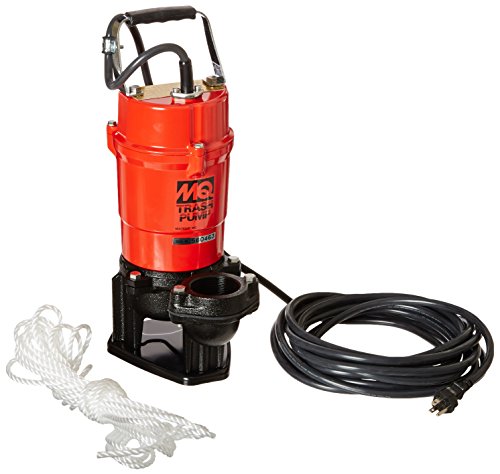
Multiquip ST2040T Electric Submersible Trash Pump

Tsurumi Pump LB-480 Submersible Dewatering Pump

AQUASTRONG 1 HP Sump Pump 4500 GPH

Aquastrong 1/2 HP Submersible Utility Pump
Aquastrong 1/2 HP Utility Pump with Float Switch

Aquastrong 1/2 HP Automatic Sump Pump

Red Lion RL-SC33V 1/3 HP Sump Pump

Red Lion RL-SC50T 1/2 HP Sump Pump
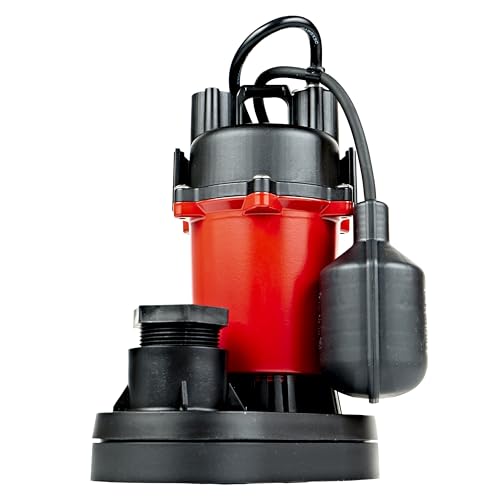
Red Lion RL-SP50T 1/2 HP Sump Pump
More Details On Our Top Picks
Most homes dealing with regular groundwater seepage need more than a basic utility pump. The WAYNE CDU800 is built around a 1/2 HP motor rated to move up to 5,100 gallons per hour, which translates to clearing a typical 18-inch sump pit in roughly a minute during heavy inflow. Compared to the lightweight thermoplastic picks further down the list, this one leans on cast iron and corrosion-resistant steel, so it stays planted at the bottom of the pit without floating.
The vertical float switch is rated for 1 million cycles, which matters more than people expect since cheaper floats tend to be the first thing that fails. A top-suction intake pulls water in from above the pump base, which reduces the chance of pulling sediment into the impeller. Homeowners with active sump pits and clay-heavy soil will probably appreciate that detail most.
Noteworthy Benefits
- 5,100 GPH flow rate handles the worst spring thaw most homes see
- Cast iron and steel body resists corrosion better than plastic alternatives
- Vertical float rated to 1 million cycles for long service life
- Top-suction design pulls water from above to reduce sediment clogging
- Includes a 3-year warranty for added peace of mind
Things To Consider
- Heavier cast iron body makes installation a two-person job in deep pits
- 5,100 GPH can be overkill for homes with very small sump basins
- No backup power option, so a separate battery pump is needed during outages
Who It Suits Best
Homeowners in wet regions with a standard-sized sump pit who want a permanent install rather than a portable utility pump.
Look Elsewhere When
You need a pump for an unusually narrow basin, where the Tsurumi Pump LB-480 slimline body will fit more easily.
The Multiquip ST2040T crosses the line from clean-water sump pump into trash-pump territory. It passes up to 1-inch solids, which is a big deal if your sump catches anything besides groundwater, like construction debris after a basement remodel or leaves that migrated through the foundation drain. Output sits at 79 GPM through a 2-inch discharge, sized for serious volume.
Industrial cast iron housing and an abrasion-resistant cast iron impeller with neoprene overlay handle the gritty work. Internal thermal overload protection and dual shaft seals suggest this one is built for jobs where the pump runs longer than a typical residential cycle. It’s heavier and more aggressive than most picks here, and that is exactly the point.
Everyday Advantages
- Handles 1-inch solids without choking where standard sumps fail
- 79 GPM output clears flooded areas faster than most residential picks
- Cast iron body with neoprene overlay for abrasion resistance
Honest Caveats
- Industrial size makes it oversized for a quiet basement sump
- Heavier than typical residential picks, so storage is awkward
Feature Snapshot
Made For
Homeowners dealing with floodwater that carries silt, leaves, or construction debris rather than clean groundwater.
A Better Fit Elsewhere
The WAYNE CDU800 suits homeowners who want a quieter, sump-specific install rather than a trash-rated workhorse.
Tight sump pits are the most common reason a perfectly good pump doesn’t fit. The Tsurumi LB-480 is engineered around a slimline 8-inch caisson-friendly profile, which lets it slip into narrower basins where the cast iron WAYNE CDU800 simply won’t drop in. The 2/3 HP motor moves up to 3,780 GPH, more than enough for tight residential installs.
It includes a 32-foot power cord, which is generous and removes the need for an extension in most basements. The urethane impeller and wear plates are designed for abrasive conditions, which helps when groundwater carries fine sand. Most homeowners never see a Tsurumi brand, but contractors swear by them for good reason.
Real-World Strengths
- Slimline design fits 8-inch caissons that reject standard pumps
- 32-foot cord simplifies placement without an extension
- Urethane impeller resists abrasive wear from sandy water
Points To Note
- Industrial footprint may feel oversized in shallow residential pits
- Higher price point than consumer-focused sump models
Best Suited To
Homeowners with narrow sump pits or new construction where the basin diameter is already locked in.
Swap It Out When
You have a wider pit and want a quieter daily driver, where the Red Lion RL-SC50T tends to feel less industrial.
If raw flow is the metric, the AQUASTRONG 1 HP is the loudest number on this list at 4,500 GPH with up to 30 feet of vertical lift. That’s a serious number, and it makes sense for homes that see sudden surge events, like a summer thunderstorm dumping three inches in an hour. The plug-and-play setup is the most beginner-friendly here, with no float switch to fiddle with.
The bottom suction design pulls water down to about 1/5 inch from the surface, which leaves the sump pit drier between cycles. That matters in finished basements where lingering moisture can feed mold. It handles solids up to 1/5 inch, which is fine for typical groundwater but not construction debris.
Strong Points
- 4,500 GPH output handles the worst-case residential inflow
- 30-foot vertical lift for deep basements or uphill discharge runs
- Drains sump pit to 1/5 inch for drier, cleaner cycles
Trade Offs
- Manual on/off without an automatic float can be a step backward for some
- 1/5-inch solid handling won’t tolerate gritty construction runoff
Who Should Grab It
Homeowners in flood-prone zones who want maximum pump capacity and don’t mind a manual operation style.
Where Another Pick Suits Better
The Aquastrong 1/2 HP Automatic Sump Pump offers electronic sensor control if hands-off automation matters more than peak flow.
Not every job needs a permanent sump install. The Aquastrong 1/2 HP is a portable thermoplastic utility pump that drains pools, ponds, hot tubs, and flooded basements with a 3,159 GPH output. At roughly 26 feet of vertical lift, it can push water uphill to a garden discharge point without losing much flow. The 10-foot cord is enough for most yard setups.
It lacks a float switch, which means it runs whenever plugged in. That style suits manual operation, like draining a pool cover before winter or pulling water out of a flooded window well. For a dedicated basement sump, most homeowners will want the float-switch version instead, but for grab-and-go chores this fills the role nicely.
Everyday Wins
- Lightweight thermoplastic body is easy to carry to the pool or pond
- 3,159 GPH handles most residential water transfer tasks
- 10-foot cord reaches standard outdoor outlets without extension
Soft Spots
- No float switch, so it needs manual supervision during use
- Thermoplastic body is less durable than the cast iron picks above
Perfect Match For
Homeowners who need one pump for pool draining, garden irrigation, and occasional basement water removal.
Not Your Match When
You want automatic sump operation, where the Aquastrong 1/2 HP Utility Pump with Float Switch is a smarter choice.
The tethered float switch version of the same 1/2 HP Aquastrong adds the missing piece: automation. You can adjust the tether length to set the activation height, which lets you match it to your sump pit size or pool skimmer depth. At 3,159 GPH and 26 feet of lift, the performance matches the manual version exactly.
It handles 1/5-inch solids, which is standard for utility-grade pumps in this class. The 10-foot cord is the same as the manual version, so placement flexibility is unchanged. Owners commonly use this model for both permanent sump duty and seasonal water transfer, which is a rare combination at this price point.
A Few Highlights
- Adjustable tether float gives control over activation depth
- Same 3,159 GPH and 26-foot lift as the manual sibling
- Doubles as a sump pump and seasonal utility drainer
Possible Compromises
- Tethered float needs clearance to swing, so very narrow pits can bind it
- Thermoplastic housing shows wear faster than cast iron in permanent installs
Quick Facts
Built With In Mind
Homeowners who want one pump that handles automatic basement sump duty and occasional yard water transfer.
Reach For A Different Pick When
You prefer the slim profile and proven contractor pedigree of the Tsurumi Pump LB-480.
Float switches have a weakness: moving parts wear out. The Aquastrong 1/2 HP Automatic Sump Pump replaces the float with an electronic sensor that triggers at six adjustable water levels, from 1 inch to 5 inches. The sensor approach means no tether to snag and no float to stick, which is the most common cause of sump pump failure in older basements.
Output stays at 3,159 GPH with 26 feet of vertical lift, identical to the float-switch siblings. The pump shuts off at 0.4 inches, leaving the sump almost dry between cycles. That feature alone can reduce musty smells during humid summers, and homeowners who have dealt with a stuck float appreciate the switchless reliability.
What Helps Most
- Electronic sensor eliminates the most common float-switch failure point
- Six adjustable activation levels fit different pit depths
- Shuts off at 0.4 inches for drier sump pit cycles
Where It May Fall Short
- Sensor-based controls depend on electronics that can fail differently than floats
- Same thermoplastic housing as the other Aquastrong picks
The Right Fit
Homeowners who want modern automation without the maintenance quirks of a tethered float.
Where A Sibling Pick Shines
The WAYNE CDU800 is a better match when long-term cast iron durability matters more than electronic controls.
Not every sump pit is generous with space. The Red Lion RL-SC33V is a 1/3 HP pump built around a piggyback vertical float switch, designed specifically for narrow sump pits where a tethered float would hit the walls. The float activates at 7.25 inches and shuts off at 2.75 inches, which keeps the pump cycling cleanly in compact basins.
Cast iron housing and volute construction handle semi-solids up to 3/8 inch, which is more grit tolerance than most residential picks in this size class. At 1/3 HP, it’s the smaller sibling to the RL-SC50T, but for low-inflow basements it cycles just fine without drawing excess current.
Useful Touches
- Vertical float switch fits narrow pits without tangling
- Handles 3/8-inch semi-solids better than similar small pumps
- Cast iron build outlasts plastic in permanent installs
Less Ideal Details
- Lower 1/3 HP motor limits inflow tolerance in heavy storms
- Vertical float needs vertical clearance above the pump
Feature Card
Whose Shelf It Belongs On
Homeowners with narrow sump pits and moderate groundwater who don’t need industrial horsepower.
Consider Something Else When
You need higher inflow capacity, where the Red Lion RL-SC50T brings the extra half-horsepower to handle bigger events.
The Red Lion RL-SC50T takes the proven SC-Series platform and adds the half-horsepower motor most homes actually need. The tethered float switch activates at 13 inches and shuts off at 5 inches, which is a generous range that works in deeper pits without needing to adjust the tether every season. Cast iron housing, volute, and a clog-resistant impeller form a tough daily runner.
Semi-solid handling up to 3/8 inch covers typical groundwater debris without complaint. This is the kind of pump that disappears into the basement and works for years without attention, which is exactly what most homeowners want from a residential sump pump.
Bright Spots
- 1/2 HP motor handles standard residential inflow reliably
- Wide 13-inch activation depth suits deeper sump pits
- Cast iron build quality for long service life
Areas To Watch
- Tethered float needs clearance room to swing freely
- No backup or secondary pump integration built in
Who Should Grab It
Homeowners who want a no-fuss daily driver for a typical residential sump pit.
Skip It When
You have a narrow pit, where the Red Lion RL-SC33V vertical-float design fits where this tethered float won’t.
The RL-SP50T rounds out the Red Lion trio with a focus on corrosion resistance. The pump housing uses an epoxy-coated aluminum shell, while the volute, base, and motor cover are made from thermoplastic to keep the total weight manageable. Output hits 3,600 GPH with a 28-foot shutoff, which is strong for a 1/2 HP residential pump.
The 8-foot cord is shorter than most picks here, so an extension or a closer outlet may be required depending on your pit location. The 1-1/2 inch FNPT discharge with a 1-1/4 inch adapter gives flexibility on discharge pipe sizing. For homeowners in humid basements where corrosion is a real concern, the epoxy coating is the most practical feature on the spec sheet.
What It Does Well
- Epoxy-coated aluminum shell fights corrosion in humid basements
- 3,600 GPH output with a 28-foot shutoff for serious vertical lift
- Discharge adapter accepts both 1-1/2 and 1-1/4 inch piping
Some Limits To Know
- 8-foot cord is shorter than most residential picks here
- Thermoplastic volute may show wear before the epoxy housing does
Core Details
Who Will Love This
Homeowners in humid climates or older basements where moisture-related corrosion is a recurring problem.
Where A Sibling Pick Shines
The Red Lion RL-SC50T suits a deeper pit better, with its wider activation range and longer-cord expectations.
What To Weigh Before Choosing A Sump Pump
Residential sump pumps live in a pretty narrow category, but the differences matter more than they look at first glance. The biggest fork in the road is horsepower: 1/3 HP handles modest groundwater in small pits, 1/2 HP covers most homes, and anything above that starts to look like flood-emergency equipment.
The next decision is float versus sensor. Float switches are simple and field-proven, but they have moving parts that wear out, and they need clearance inside the pit. Electronic sensors remove the mechanical failure point but introduce electronics into a wet environment. Either approach works; the honest trade-off is repair familiarity versus moving-part count.
Solid handling is the third filter worth thinking about. A pump rated for clean groundwater will choke on silt, sand, or anything past about 1/5 inch. If your sump catches runoff from a dirt-floor crawlspace or post-construction debris, a trash-tolerant pump like the Multiquip ST2040T makes more sense than a clean-water residential model.
Material choice quietly drives lifespan. Cast iron housings outlast thermoplastic, especially in permanent installs where the pump sits in groundwater year-round. Thermoplastic picks weigh less and cost less, but owners commonly report them showing wear faster in continuous-duty applications.
Smart Shopping Considerations For Sump Pumps
Wrong Turns To Avoid
The most common sump pump mistake is sizing for current conditions instead of worst-case conditions. A pump that handles a light spring rain may stall during a once-a-decade storm, and that one failure is what the sump was installed for. Building in headroom matters more than shaving dollars.
Another trap is ignoring the check valve and discharge piping. A good pump with a missing or stuck check valve will short-cycle, burning out the motor within months. Some shoppers also forget that sump pumps need a dedicated GFCI outlet, and an extension cord run across the basement floor is both a code issue and a wear hazard on the cord itself.
Where The Extra Money Goes
Premium residential pumps spend the budget on corrosion resistance, heavier-duty impellers, and longer-rated switches. Cast iron housings and tested-to-1-million-cycle floats cost more up front but tend to outlast budget models by years in continuous-duty installs. Higher flow rates and longer shutoff heads also fall into this category, useful for homes with uphill discharge or unusually deep pits.
Frequently Asked Questions
How Often Should A Residential Sump Pump Run?
Normal operation is a few short cycles per day during wet weather and almost no activity during dry stretches. Constant running every few minutes usually points to a stuck float, an undersized pump, or groundwater conditions beyond the pump’s capacity.
What Size Sump Pump Do Most Homes Need?
A 1/2 HP pump covers the majority of residential sump pits with standard inflow. Homes with high water tables, finished basements, or frequent heavy storms may want the headroom of a 1 HP model like the AQUASTRONG 4500 GPH.
Can A Sump Pump Run Continuously?
Briefly, yes, but continuous duty shortens motor life dramatically. If a pump needs to run for more than 15 to 20 minutes straight, the inflow likely exceeds the pump’s capacity or the discharge is restricted.
How Long Do Residential Sump Pumps Last?
Most residential pumps last 5 to 10 years depending on duty cycle and water quality. Cast iron models in moderate-use pits often reach the longer end of that range.
Do Sump Pumps Need A Backup?
In areas with frequent power outages or critical finished basements, a battery backup or water-powered backup pump is worth considering. The picks here are primary pumps, not backup systems.
The Takeaway
A sump pump earns its keep the night you don’t notice it working. The right pick comes down to pit size, inflow volume, and how much attention you want to give the system. Cast iron models like the WAYNE CDU800 or Red Lion SC-Series suit permanent installs, while the Aquastrong utility picks cover grab-and-go water transfer. For narrow basins and high debris, the Tsurumi LB-480 and Multiquip ST2040T earn their place. Match the pump to your basement, not the other way around.




