A leach field is one of those parts of a property you never think about until something goes wrong, and by then the repair bill can climb fast. The right bacterial or enzymatic treatment keeps waste breaking down, protects the drain field from clogging, and stretches the time between pump-outs. Homeowners, cabin owners, and anyone managing a remote system on a budget can save real money with consistent preventive care.
The Choices Worth Comparing

Green Gobbler Septic Tank Treatment Packets, 12 Month Supply

Cabin Obsession Septic Tank Treatment, 12-Month Dissolvable Packets

Septic-Flow Enzyme Pods, 1 Year Supply

Green Pig Septic Tank Treatment Packets (60 Packets)

CCLS Septic Tank and Cesspool Treatment Additive (4-Pack)

MICROBE-LIFT Original Septic Treatment Liquid, 1 Gallon
Cabin Obsession 52 Weekly Septic Tank Treatment Fizz Tablets

Cabin Obsession Drain Field Cleaner (32 oz) Shock Treatment
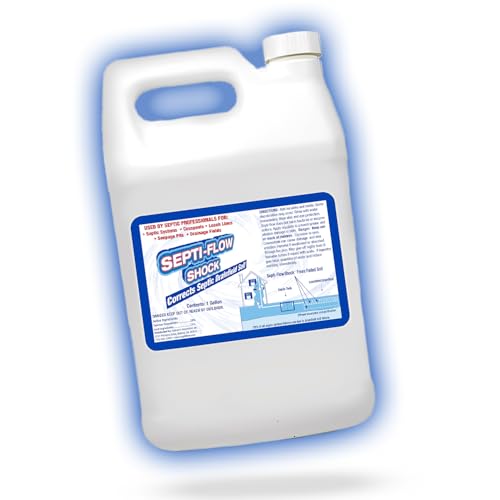
Septic-Flow Shock Drain Field Cleaner, 1 Gallon
The Details Behind The Selections
The Green Gobbler packets land at the top of this list because they cover more ground than most. The formula blends bacteria (microscopic organisms that consume organic waste) with enzymes (proteins that speed up the breakdown of solids), and the pods target the usual culprits that overwhelm a leach field: paper, grease, starches, and proteins. Homeowners running a standard residential tank, an RV holding setup, or even a marine system can use the same supply, which keeps the medicine cabinet simple.
For a family of four doing weekly laundry and daily showers, one pod per month fits easily into a routine. Compared to the Cabin Obsession monthly packets ahead, this blend leans a bit harder on grease and protein breakdown, which matters in households that cook often.
Positive Points
- Twelve-month supply means no mid-year reorder scramble
- Multi-system versatility covers home, RV, marine, and cesspool use
- Targets the most common clog-causing substances in a leach field
- Pod format dissolves in the tank without measuring or mess
Points To Keep In Mind
- Monthly cadence may be too frequent for very small households, where owners commonly report using the supply across longer stretches
- Pods do not replace scheduled pumping, a fact the listing itself acknowledges
Who It Suits Best
Active households with full kitchens and laundry routines, or anyone juggling more than one septic-fed system on the property.
Look Elsewhere When
You want a single yearly shock dose instead of monthly maintenance, in which case the Cabin Obsession Drain Field Cleaner (32 oz) Shock Treatment is the better fit.
Cabin Obsession’s monthly packets make the routine nearly foolproof. You drop one down the toilet, flush, and the packet dissolves on its way to the tank. The brand also offers a related weekly tablet (covered later), but this 12-pack targets the easier monthly cadence that suits most households.
First-time homeowners who don’t yet know what their tank needs will appreciate the predictability. Compared to Green Gobbler ahead of it, this option skips some of the heavier grease-targeting claims, but it stays in step with the basics of bacterial maintenance for a residential leach field.
Where It Helps
- Twelve packets align neatly with calendar reminders, one per month
- Flush-dissolving format requires no measuring cup or contact with the product
- Suited to households that want a no-thinking routine
Honest Caveats
- Owners commonly report storing the box in a dry bathroom spot, since humidity can clump exposed packets over time
- Monthly dosing may not be aggressive enough for systems already showing slow drainage
Right Fit For
New homeowners and cabin owners who want a simple, year-long routine without learning the science behind bacterial counts.
Where Another Pick Suits Better
Cabin owners whose leach field is already sluggish should reach for the Cabin Obsession Drain Field Cleaner (32 oz) Shock Treatment instead.
Septic-Flow’s enzyme pods carry a clear domestic-manufacturing angle that resonates with shoppers who prioritize US-made household products. The pods focus on enzyme-driven breakdown, which means the bacteria in the tank get help digesting solids rather than competing with harsh cleaners.
Households that buy American whenever possible can pair that value with solid drain field protection. The format mirrors the Cabin Obsession packets ahead in terms of routine, so swapping between them would feel nearly seamless in practice.
Real-World Strengths
- Domestic production supports a clear sourcing story
- Enzyme-forward formula supports ongoing solids breakdown
- One-year packaging suits set-and-forget households
Potential Compromises
- No multi-system claim like Green Gobbler’s, so RV and marine use is less clearly defined
- Enzyme-only emphasis may underdeliver on heavy grease accumulation compared to bacterial-and-enzyme blends
Best Suited To
Shoppers who specifically want a US-manufactured monthly maintenance pod for a single residential system.
Swap It Out When
You manage multiple systems or want broader clog-targeting, in which case the Green Gobbler Septic Tank Treatment Packets are the stronger match.
Sixty packets make Green Pig the bulk option of the bunch, and that scale pays off for households that don’t want to reorder every year. The enzymatic approach targets organic waste, including the buildup that can clog drain field lines.
The honest read: at sixty packets, this covers roughly five years at one per month, which is a long runway for households that prefer to stock up. It’s a good fit for properties that treat septic maintenance as background infrastructure rather than a monthly chore.
A Few Highlights
- Five-year monthly coverage at typical dosing
- Enzymatic action supports drain line and leach field health
- Shareable supply is convenient for landlords or multi-property owners
- Septic-safe formula suits everyday plumbing
Worth Noting
- Bulk packaging requires dry, cool storage so the pods stay usable over time
- Per-packet convenience is similar to smaller packs, so the value really shines for long-horizon planning
Made For
Long-term planners and landlords who want to stock a single supply for a rental property or family home without yearly reorders.
Not Your Match When
Your leach field already shows warning signs, in which case the Septic-Flow Shock Drain Field Cleaner is the more aggressive option.
CCLS leans into the “soft chemistry” angle: the additive is non-toxic, non-hazardous, and non-corrosive, which reassures homeowners worried about what washes into well water or nearby soil. The formula combines enzyme-producing bacteria with the goal of restoring a healthy microbial balance between pump-outs.
Older homes with aging plumbing, or any property near a sensitive well, get a friendlier profile here. Compared to the heavy-duty pour-in options later on the list, this is the gentler maintenance approach.
The Good Stuff
- Non-corrosive profile protects older pipes and fittings
- Aims to normalize BOD and COD levels (measures of how much organic matter the effluent carries) between pump-outs
- Works on septic tanks, cesspools, and adjacent drain fields
Trade-Offs To Consider
- Four-pack volume suits quarterly dosing, not monthly habits
- Gentler chemistry means slower visible results in heavily neglected systems
Who Should Grab It
Homeowners on shared wells or with older plumbing who want a non-aggressive maintenance routine.
Consider Something Else When
You need a stronger intervention, in which case the MICROBE-LIFT Original Septic Treatment Liquid provides heavier bacterial loading per dose.
Quick Facts
MICROBE-LIFT is the pour-in option that runs for two years on a single gallon, with a 32-oz dose every six months. For homeowners who treat septic care as a twice-yearly project on the calendar, this format removes the monthly remembering entirely.
The catch is the upfront commitment to a one-gallon jug, but the trade is fewer orders and a heavier bacterial dose per application. It’s the right rhythm for vacation homes, where you only visit during specific seasons and want a single dose to cover the rest of the year.
Good Reasons To Consider
- One gallon covers roughly two years of maintenance
- Semi-annual cadence suits hands-off owners
- Liquid format reaches all corners of the tank quickly
- Also works for cesspools, broadening the use case
Practical Considerations
- First-dose odor is widely reported as noticeable but short-lived
- Gallon jug requires closet storage space
The Right Fit
Seasonal property owners or anyone who’d rather dose twice a year than track twelve monthly reminders.
A Better Fit Elsewhere
Households that want monthly visibility into their system should reach for the Cabin Obsession Septic Tank Treatment packets instead.
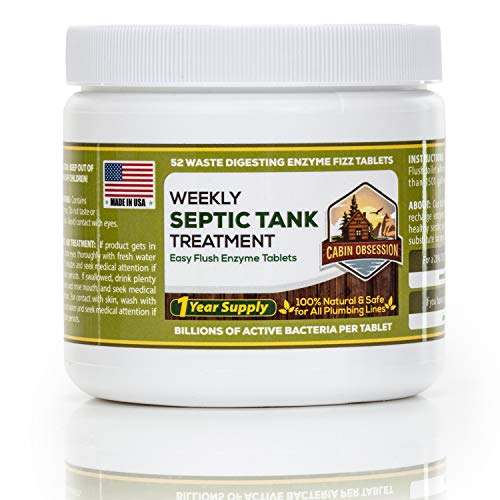
Where most treatments dose monthly, Cabin Obsession’s fizz tablets dose weekly. Each tablet carries billions of active cultures that recharge the enzyme activity in the sludge and scum layers, plus the leach field itself. For high-occupancy homes running constant showers, laundry, and dishwasher cycles, that ongoing feed keeps the bacterial population from crashing between doses.
Think of it as the difference between a daily multivitamin and a monthly booster: smaller, more frequent, and steadier. Compared to the brand’s monthly packets covered earlier, this is the more aggressive but more even-handed approach.
The Case For It
- Weekly cadence keeps bacteria counts steady in busy households
- Fizz format dissolves quickly and evenly
- Tablets are natural and safe for all standard plumbing
Things To Consider
- 52 tablets per year means a tablet every single week, no skipping
- Smaller per-dose delivery may not be enough for neglected systems, depending on existing solids load
Perfect Match For
Larger families or shared households running multiple bathrooms and frequent laundry loads day after day.
Skip It When
You live alone or as a couple, where the Septic-Flow Enzyme Pods (1 Year Supply) provide a lighter, more affordable cadence.
This is the option to reach for when the leach field already feels sluggish. The Cabin Obsession shock treatment is a professional-strength concentrate aimed at clearing grease, starch, paper, and protein buildup that’s choking the lines. The brand recommends one annual shock, plus an extra dose when a backup is suspected.
It’s the strong medicine in this list, and it pairs naturally with a maintenance routine like the weekly tablets above. Used together, the daily work keeps the system healthy and the annual dose clears whatever the maintenance layer missed.
A Strong Showing
- Concentrated formula targets the specific solids that block leach lines
- Annual dosing schedule is easy to plan around
- Can be used as an emergency response to early backup signs
Possible Compromises
- Not a daily or weekly maintenance tool; needs a partner routine
- Owners commonly report a stronger initial smell during dosing, though it fades
Whose Shelf It Belongs On
Homeowners already noticing slower drains who want a one-shot intervention to restore flow before calling a service technician.
Another Choice May Suit
Households seeking prevention rather than recovery should default to the Green Gobbler Septic Tank Treatment Packets as their primary routine.
The Septic-Flow shock treatment zeroes in on a specific enemy: the sodium, sulfate, and detergent residue that accumulates from heavy laundry and dishwasher use. In homes that run multiple loads per week, this residue can compact into a layer that blocks soil absorption in the leach field. A targeted shock dose breaks that layer down and lets the field breathe again.
This pairs well with a routine maintenance product, but it can also stand alone if your main concern is soap-related clogging. For most backyards with average laundry habits, one annual dose is enough.
Features That Help
- Targets sodium, sulfate, and phosphate buildup specifically
- One-gallon size supports repeat dosing across multiple years
- Helps restore drainage flow in fields compacted by detergent residue
A Few Limitations
- Narrower focus means it does less for grease or paper clogs than broader shock treatments
- Gallon packaging needs closet or garage space
Built With In Mind
Laundry-heavy households that notice the leach field struggling after heavy detergent or fabric softener use.
Reach For A Different Pick When
Your clog is grease or paper based, in which case the Cabin Obsession Drain Field Cleaner (32 oz) Shock Treatment is the broader-action choice.
What Matters Most Before Choosing Leach Field Treatments
The first decision is routine versus intervention. Routine products (the monthly and weekly packets above) keep a healthy system stable. Shock treatments (the two drain field cleaners) clear buildup that’s already forming. Many homeowners use both: a maintenance product year-round, with an annual shock dose as insurance.
Match the format to your household rhythm. Monthly packets suit forgetful homeowners who like calendar reminders. Weekly fizz tablets suit busy families running constant water usage. Pour-in liquids suit seasonal properties with biannual visits. Bulk packs suit landlords and long-term planners who want to stock once and forget.
Look for septic-safe labeling, especially in homes on shared wells. The CCLS option above leans into non-toxic and non-corrosive chemistry, which matters where well water and soil sensitivity are real concerns.
Finally, consider your leach field’s age and condition. Newer fields with no warning signs respond well to lighter maintenance. Older fields, or those showing slow drains, benefit from a shock dose alongside routine care. No treatment replaces professional pumping, but the right product can extend the time between service calls significantly.
Key Considerations Across These Picks
Pitfalls Shoppers Hit
The most common mistake is treating shock products as routine maintenance. Shock doses deliver a heavy bacterial payload meant for occasional use; daily or weekly use can disrupt the tank’s natural balance. Pick a maintenance product for the regular rhythm and reserve shock treatments for annual or emergency dosing.
Another trap is ignoring water habits. Heavy laundry loads, long showers, and excessive garbage disposal use all increase solids loading on the leach field. Even the strongest treatment struggles if the household consistently outpaces what the soil can absorb.
Where The Extra Money Goes
Higher-tier options in this category typically buy you larger bacterial counts, broader substrate targeting (the range of materials the formula can break down), or more frequent dosing intervals. A gallon jug lasts longer per dose but costs more upfront. Weekly tablets cost more annually than monthly packets but deliver steadier bacterial support.
The upgrade pays off most in high-occupancy homes and older leach fields where the bacterial community needs more reinforcement. For small households on healthy systems, a budget-friendly monthly packet delivers nearly all the benefit at a fraction of the cost.
Frequently Asked Questions
How often should I treat my leach field?
Most maintenance products suggest monthly or weekly dosing. For most homes, monthly packets paired with an annual shock dose cover the routine well. High-occupancy households may prefer weekly tablets.
Can a treatment really fix a slow drain?
A shock dose can restore flow if the slowdown comes from organic buildup in the leach lines. If the field itself is failing due to age, saturation, or root intrusion, no treatment will substitute for professional repair or replacement.
Do I still need to pump my tank if I use treatments?
Yes. Treatments reduce solids between pump-outs and extend the system’s life, but they cannot remove the inorganic material that accumulates at the bottom of the tank over years. Pumping remains non-negotiable.
Are these products safe for septic systems with aerobic treatment units?
Most bacterial and enzymatic treatments are compatible with both conventional anaerobic systems and aerobic units. Check the specific product labeling for aerobic compatibility if your system uses one.
Will using treatments void any warranties on my system?
Routine bacterial and enzymatic treatments are widely accepted and do not void standard system warranties. Avoid harsh chemical drain cleaners, which are a different category and can damage system components.
Closing Remarks
The right leach field treatment is less about chasing the strongest formula and more about matching the format to your routine. Pick the packet you will actually use, layer in a shock dose when the system asks for it, and keep up with scheduled pumping. That combination is what keeps the field working quietly for years, which is exactly what you want from infrastructure you never have to think about.