

Steam pipe insulation earns its keep two ways. The right wrap keeps a basement line from sweating through humid summers, and the same wrap keeps a frozen exterior backflow from cracking during a hard January night. You cover a pipe once, and it quietly does both jobs for years. That dual-purpose reality is what makes the category feel less like decorating and more like plumbing insurance.
What follows is a roundup shaped around the way people actually use these products: outdoor backflow covers, HVAC line sleeves, foam tubes, and rubber tape for tight retrofit jobs. Every pick has a clear lane. Some are sized for a quick weekend fix, others for a full mechanical room. The shortlist reads from cover-style products down to peel-and-stick foam, so you can match the form factor to your pipe.
The Shortlist At A Glance

Adamoss Backflow Preventer Insulated Cover 6-Layer 14″x12″
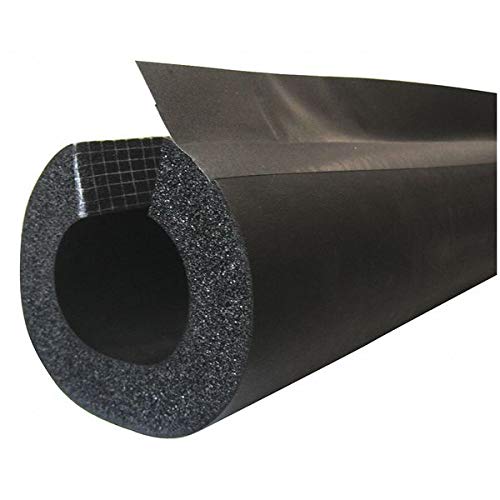
K-FLEX USA 3/4″ x 6 ft. Elastomeric Pipe Insulation

i frmmy Heavy Duty Backflow Insulation Cover 16″x20″

COVERTIFY 5-Layer HVAC AC Line Pipe Insulation 72″x10.2″

DEMEDO Pipe Insulation Tape 2″ x 16.5 ft (Black)

Srmayyi 12-Pack Pipe Insulation Foam Tube with Tape and Zip Ties

DEMEDO Pipe Insulation Tape 3″ x 16.5 ft (Black)
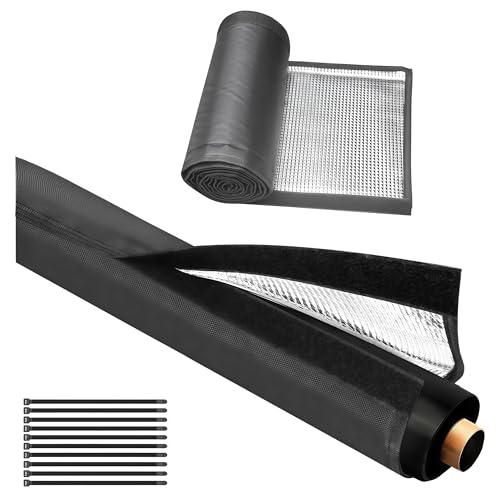
AXIFOUJ 5-Layer HVAC Line Insulation Wrap 78.7″x10″
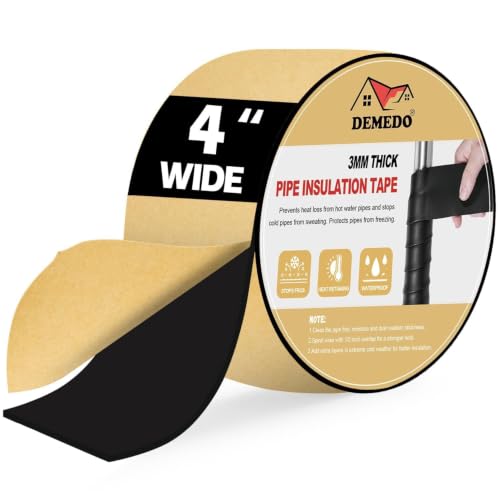
DEMEDO Pipe Insulation Tape 4″ x 16.5 ft (Black)

Duck Brand Foam Pipe Covers Pre-Slit 0.75″ x 1 ft, 6 Pack
What Each Pick Brings To The Table
When the temperature drops into single digits, an exposed backflow preventer becomes a real liability, and the Adamoss cover is built around that exact scenario. Its 6-layer build stacks aluminum reflective insulation, dual layers of insulation cotton, and a waterproof Oxford shell, all rated for conditions down to 5°F. The 14″ x 12″ footprint fits the typical residential backflow housing without dwarfing it.
The whole thing slips on like a sleeve, which matters when you’re working outside in the cold and want minimal fuss. You may find the sizing runs a touch tight on unusually tall assemblies, so measure your backflow housing first.
Bright Spots
- Six-layer construction that combines reflective foil and thick insulation cotton for genuine freeze defense
- Waterproof Oxford outer fabric sheds rain, snow, and morning dew
- UV-coated exterior resists sun damage during long summer exposure
- Slip-on sleeve design means no tools, tape, or fasteners
- Compact 14″ x 12″ footprint suits most residential backflow valves
Things To Consider
- Fit may run tight on taller or non-standard backflow assemblies
- Outer Oxford fabric can collect dirt and may need an occasional wipe-down
- Not designed to insulate long straight pipe runs, just the valve body
Key Specs
Who It Suits Best
Homeowners in cold-winter climates who want a no-tool freeze solution for a single backflow valve.
Look Elsewhere When
You need to insulate a long straight pipe run, in which case the K-FLEX USA elastomeric tubing will do the job with cleaner coverage.
K-FLEX is the name most HVAC contractors reach for first, and this 3/4″ x 6 ft. elastomeric tube shows why. Elastomeric insulation is a flexible, closed-cell rubber foam that slips over a pipe and resists both condensation and modest heat loss. At a 0.25″ wall thickness, it handles residential cold-water and refrigeration lines without feeling bulky, and it cuts cleanly with a utility knife for custom lengths.
You get a single 6-foot section here, which is plenty for a basement run or a short attic segment but you’ll want to buy multiples for whole-house coverage. Compared to the Adamoss cover above, this is the right pick for a long pipe, not a single valve.
Everyday Advantages
- Closed-cell rubber foam resists moisture absorption and condensation drip
- Cuts easily to fit any length or fitting
- Slides over copper or iron pipe without disassembly
- Trusted brand used widely by HVAC professionals
- Helps quiet pipe noise from thermal expansion
Room For Improvement
- Single 6-foot length means multiple pieces for longer runs
- Needs separate adhesive or tape at joints to seal properly
- Outdoor UV exposure degrades unprotected rubber over time
Right Fit For
Homeowners insulating exposed basement, garage, or crawlspace lines where condensation and modest freeze protection matter.
Consider Something Else When
You need to cover a tall outdoor valve assembly, where the i frmmy backflow cover offers more usable interior space.
Larger backflow assemblies, especially commercial-grade or irrigation manifolds, won’t fit a standard residential cover, and that’s the gap i frmmy fills. The 16″ x 20″ footprint gives you real interior room, and the dual hook-and-loop openings let you wrap around piping without disconnecting anything. Five-layer construction layers insulating felt, cotton, and aluminum foil inside a waterproof Oxford shell.
The hook-and-loop access design is the standout feature, because it means you can service the valve mid-winter without cutting anything open. For most homeowners with a standard residential backflow, the Adamoss is plenty; this one is built for the bigger job.
What Stands Out
- Generous 16″ x 20″ interior fits large commercial and irrigation backflow assemblies
- Two hook-and-loop openings allow service without removal
- Five-layer build includes foil, felt, and cotton insulation
- Waterproof Oxford exterior handles standing snow and rain
Honest Caveats
- Bulky size makes it awkward on small residential valves
- Hook-and-loop material can collect debris and lint over time
Key Specs
Made For
Property managers and homeowners with oversized backflow preventers, irrigation manifolds, or commercial-grade valve assemblies.
Reach For A Different Pick When
Your valve is a standard residential backflow, where the slimmer Adamoss cover is a better fit.
Mini-split line sets and copper AC refrigerant lines need insulation that holds up to sun exposure and tight wraps, and COVERTIFY’s 5-layer cover is shaped for exactly that job. The 72″ length can be trimmed to fit your exact run, and the adjustable strap keeps it snug without sliding. 600D Oxford on the outside is significantly thicker than typical fabric covers, which matters when this thing lives on a south-facing wall.
The trade-off shows up in width: 10.2″ wide is generous for bundled line sets but may leave gaps on a single skinny pipe. You may find yourself pairing it with rubber tape for a fully sealed install.
Standout Benefits
- Trimmable 72″ length fits most residential line sets without excess waste
- 600D Oxford exterior resists tearing and UV degradation
- Adjustable strap locks insulation in place during wind and temperature swings
- Five-layer build includes pearl cotton and aluminum foil for heat reflection
Small Caveats
- Strap-based closure can loosen in extreme cold and may need re-tensioning
- Wide 10.2″ body leaves slack when wrapping single small-diameter lines
Best Suited To
Homeowners insulating outdoor mini-split line covers or copper refrigerant runs exposed to direct sunlight.
Skip It When
You only need to wrap a short, single small-diameter line, where the DEMEDO 2″ tape is the cleaner fit.
Peel-and-stick rubber tape is the unsung hero of awkward pipe runs, and DEMEDO’s 2″ version handles the tight spots other products can’t. The soft rubber foam conforms to elbows, valves, and odd geometries without bunching. At 16.5 feet, you get enough length for several short exposed sections, and the self-adhesive backing saves you from buying separate tape.
The 2-inch width is genuinely narrow, which means longer wrap time on wide pipes. Compared to the bulkier COVERTIFY cover, this trades convenience for precision.
Where It Delivers
- Bends cleanly around elbows, joints, and irregular pipe shapes
- Self-adhesive backing eliminates the need for separate fastening tape
- Cuts to size with ordinary household scissors
- Compact roll stores easily in a utility drawer
Points To Note
- Adhesive can lose grip on dusty pipes without a wipe-down first
- Narrow 2″ width means multiple wraps on larger-diameter pipes
Who Will Love This
DIYers insulating short stretches of small-diameter pipe, especially around tight bends and fittings.
Another Choice May Suit
You have a long straight run, where the DEMEDO 4″ tape covers more pipe per pass.
Bulk foam tubes make sense when you have several outdoor spigots, sprinkler valves, or short pipe stubs to cover in one go. Srmayyi ships 12 self-adhesive foam tubes alongside 6 feet of aluminum foil seam tape and 50 zip ties, so you have everything needed for a clean install. Each tube runs about 1.3 feet, with the full set giving you roughly 15.6 feet of coverage.
The 0.8″ inner diameter suits smaller spigots and valve risers, but won’t fit large-diameter supply lines. Owners commonly report that the included zip ties are a nice touch for outdoor installs where adhesive alone doesn’t last.
Useful Strengths
- Twelve tubes cover multiple spigots and sprinkler heads in one purchase
- Aluminum foil seam tape and zip ties included for full installation
- Self-adhesive backing sticks without extra glue
- Modular design lets you cover only the pipes that need it
Practical Considerations
- 0.8″ inner diameter is too small for larger supply lines
- Foam is thinner than elastomeric options like K-FLEX USA
Perfect Match For
Homeowners with several short outdoor spigots, hose bibs, or sprinkler risers needing winter protection.
Where A Sibling Pick Shines
You need thick closed-cell foam on a single long basement line, where the K-FLEX USA elastomeric tube is a better match.
The 3-inch DEMEDO is the sweet spot in the tape lineup, narrow enough to handle bends, wide enough to cover standard residential water lines in one pass. The same soft rubber foam formula carries over from the 2″ version, so it conforms to irregular pipe runs without splitting or bunching. For most homeowners with a typical 3/4″ copper or PEX run, this width means a single wrap usually does the job.
Compared to the narrow 2″ tape, you’ll finish the same job noticeably faster. The trade-off is that it won’t dive into the tightest crevices where the slimmer version fits.
A Few Highlights
- 3″ width covers standard residential pipes in a single wrap
- Same soft rubber foam conforms to elbows and joints without cracking
- Self-adhesive backing saves time during installation
- Cuts cleanly with scissors for custom lengths
Where It May Fall Short
- Less maneuverable than the 2″ tape in very tight spaces
- Surface prep still matters; oily or wet pipes weaken the adhesive
Who Should Grab It
DIYers tackling a typical residential water line or HVAC run where one-wrap coverage matters.
Swap It Out When
Your pipe has many tight 90-degree turns, where the DEMEDO 2″ tape threads through narrow gaps more easily.
When your line set is genuinely long, the difference between 72 inches and 78.7 inches saves a seam, and seams are where insulation fails first. AXIFOUJ’s 5-layer wrap covers a longer run than most competitors in the category, with a high-density design that locks in heat and cold. The aluminum foil layer reflects radiant energy while the outer fabric shields against UV and physical wear.
You may find the extra length awkward to handle on shorter runs, but for a full outdoor mini-split install, it eliminates the weakest point of multi-piece systems. Compared to the COVERTIFY, this trades a slightly different layer recipe for more length.
Good Reasons To Consider
- 78.7″ length reduces the number of seams on long line sets
- Five-layer design includes foil for radiant heat reflection
- High-density build resists compression and physical damage
- UV-resistant outer layer suited for direct sun exposure
Trade-Offs To Consider
- Extra length creates excess waste on short installations
- Heavier construction can be cumbersome to position alone on a ladder
Built With In Mind
Installers and homeowners running a long outdoor mini-split or AC line set where fewer seams matter.
Not Your Match When
Your line set is short, where the COVERTIFY 72″ cover wastes less material.
Larger-diameter supply lines, cast iron stacks, and big PVC drains call for the widest tape in the DEMEDO lineup. At 4 inches, this wrap covers main lines in a single pass, which matters when you’re insulating 1.5″ or 2″ pipe. The same soft rubber foam formula holds up to outdoor weather, and self-adhesive backing keeps installation to a single step.
The trade-off is reduced flexibility on tight bends, so for runs full of elbows, the 3″ version is friendlier. Assuming you have a mostly straight larger pipe, this width is the cleanest fit.
Reasons It Performs
- 4″ width handles 1.5″ and 2″ pipes in a single wrap
- Soft rubber foam stays pliable in cold weather during installation
- Self-adhesive backing speeds up long runs
- Cuts easily for custom lengths around fittings
Things To Weigh
- Reduced bend radius makes tight elbows more difficult to wrap cleanly
- Adhesive may struggle on porous surfaces like cast iron without prep
The Right Fit
Homeowners insulating larger-diameter water mains, drains, or main supply lines where one-pass coverage matters.
Where Another Pick Suits Better
Your pipe is full of tight turns, where the DEMEDO 3″ tape bends more cleanly around fittings.
Duck Brand’s pre-slit foam tubes are the entry point most people remember from a hardware store trip, and they’re still the easiest install on this list. The slit runs the full length, so you peel it open, fit it over the pipe, and press the self-sealing adhesive edge closed. At 1 foot each and 6 sticks per pack, you get 6 feet of coverage for short indoor hot and cold water lines.
For most homeowners, this is the gentlest introduction to pipe insulation: no cutting, no tools, just peel and press. The 0.75″ inner diameter suits common residential copper and PEX, but won’t fit larger supply lines where the K-FLEX USA elastomeric tube is a better match.
The Upside
- Pre-slit design opens like a book for instant fit over existing pipes
- Self-sealing adhesive edge closes cleanly without extra tape
- Six 1-foot sticks cover several short indoor sections in one pack
- Suitable for both hot and cold water lines
Potential Compromises
- 0.75″ inner diameter is too small for larger supply pipes
- Foam is thinner than elastomeric alternatives, so less thermal resistance
Whose Shelf It Belongs On
First-time DIYers covering indoor hot and cold water lines under sinks or in basements with a no-tool install.
A Better Fit Elsewhere
You need serious freeze protection on outdoor pipes, where the Adamoss backflow cover is the heavier-duty choice.
Matching Pipe Insulation to the Job at Hand
Insulation choices feel confusing because the category blends three different jobs: condensation control on cold lines, heat retention on hot lines, and outright freeze protection on exposed exterior pipes. Each job asks for a different material thickness and form factor.
For indoor condensation control on copper or PEX, closed-cell elastomeric foam like the K-FLEX USA tube is the standard. The closed-cell structure means moisture can’t wick through, which is what causes basement pipe sweating in summer. Thinner foam tubes like the Duck Brand pack handle modest condensation and basic energy savings without the cost of elastomeric material.
For hot lines like steam supply runs, thicker insulation with a reflective foil facing pays off, because you’re trying to retain heat rather than block cold. The HVAC line covers from COVERTIFY and AXIFOUJ both layer aluminum foil inside fabric sleeves, which is exactly the structure that reduces radiant heat loss. The trade-off is flexibility: a sleeve is faster to install on a long straight run but won’t form around elbows.
For outdoor freeze protection, the requirements shift again. You need a weatherproof outer shell, multiple internal layers, and access for occasional service. The Adamoss and i frmmy backflow covers are both built around that outdoor reality. Rubber tape like the DEMEDO lineup handles the connecting pipes once the valve itself is covered.
In our view, the smartest approach for a whole-property insulation project is a combination, not a single product: a backflow cover at the meter, elastomeric foam on the basement runs, and self-adhesive rubber tape on the awkward transitions. Most homeowners start with one piece and add as winter exposes weaknesses.
Key Considerations Across These Picks
Common Shopping Slip Ups
The biggest mistake is buying indoor foam for outdoor use. Indoor foam tubes like the Duck Brand pack absorb water over time, which makes them worse than no insulation at all once they’re saturated. You may find a foam product marketed for both indoor and outdoor use, but always confirm the outer shell is waterproof Oxford or similar before trusting it to a backflow preventer.
Another trap is underestimating pipe diameter. Insulating a 1″ pipe with a 0.75″ tube creates gaps that trap moisture and defeat the purpose. Measure the actual outside diameter of your pipe before ordering, and add roughly a quarter inch for fit.
Where The Extra Money Goes
Higher-tier insulation earns its premium through layer count and material quality. A six-layer outdoor cover costs more than a single foam tube because of the aluminum foil, multiple cotton layers, and UV-treated shell. Where the upgrade genuinely matters is on outdoor or exposed lines: the extra layers translate directly to longer service life and better freeze defense.
Indoor-only applications rarely justify premium pricing. A standard foam tube handles condensation and modest energy savings on basement copper without needing foil or weatherproof shells. Save the upgrade dollars for the pipes that actually face weather, and use simpler foam everywhere else.
Frequently Asked Questions
What thickness of pipe insulation do I actually need?
For indoor condensation control on cold lines, 3/8″ to 1/2″ closed-cell foam is plenty. For outdoor freeze protection, multi-layer fabric covers with at least 1″ of effective insulation are more practical than chasing wall thickness in foam.
Can I use foam pipe insulation on steam lines?
Foam rated for the temperatures involved works for low-pressure steam lines, but standard indoor foam tubes may not handle high-temperature applications. Confirm the temperature rating before wrapping any steam line, and avoid closed-cell foam if the surface runs above its rated limit.
How do I seal the seams between foam tube pieces?
Aluminum foil tape is the most common seam sealer, and the Srmayyi value pack actually includes it. Press the tape firmly along the joint and overlap by at least half an inch for a clean seal that resists moisture intrusion.
Should I insulate both hot and cold water pipes?
Cold pipes benefit from insulation primarily to prevent condensation in humid months. Hot pipes benefit because they retain heat longer, reducing standby energy loss at fixtures. The savings on hot lines are usually larger, but cold-line insulation prevents a real water-damage problem.
How long does outdoor pipe insulation last?
UV-rated fabric covers typically last several seasons before outer shell degradation, while closed-cell elastomeric foam can last much longer when protected from direct sunlight. Annual inspection for tears, moisture intrusion, and compression set keeps either type performing as intended.
Wrap Up
Steam pipe insulation is one of those quiet home upgrades that pays you back in lower energy bills, fewer summer drips, and no frantic midnight calls about a frozen pipe. The right pick depends on what you’re covering and where it lives. Start with the form factor, outdoor cover, foam tube, or self-adhesive tape, then match thickness and layer count to your climate. For most homeowners, a combination of an outdoor backflow cover plus indoor foam tube handles the full year without overcomplicating the install.




