

A flooded basement rarely gives you warning. One spring thaw or a sideways storm can push groundwater where it does not belong, and a tired, undersized sump pump turns a wet day into a ruined one. The right pump, sized to your pit and matched to the way water actually arrives in your home, changes the entire equation. The list below focuses on residential picks across horsepower classes, body materials, and float-switch styles, so a homeowner replacing a dead unit and a first-time installer setting up a new pit can both find something that fits.
The Picks In Brief

WAYNE CDU800 1/2 HP Submersible Sump Pump (Cast Iron & Stainless Steel)

Tsurumi Pump LB-480 Submersible Dewatering Pump 2/3 HP (Slimline)

Little Giant VCMA-20ULST Automatic Condensate Removal Pump

Liberty Pumps 237 1/3 HP Submersible Sump Pump

AQUASTRONG 1 HP Sump Pump 4500 GPH Submersible Water Pump

Aquastrong 1/2 HP Submersible Thermoplastic Utility Pump 3159 GPH
Aquastrong 1/2 HP Utility Pump 3159 GPH with Float Switch

Aquastrong 1/2 HP Automatic Sump Pump 3159 GPH
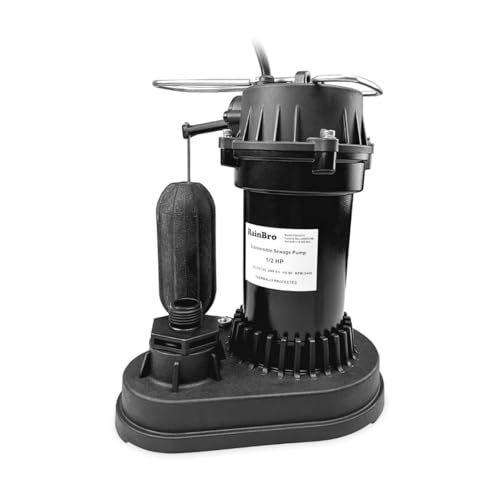
Rainbro 1/2 HP Thermoplastic Submersible Sump Pump (Model PSU051V)

XtremepowerUS Automatic 1/2 HP 3800 GPH Submersible Sump Pump
A Breakdown Of The Leading Choices
The WAYNE CDU800 sits at the top of the list because it balances raw flow with the kind of build that survives years of sitting in a cold pit. Its 1/2 HP motor pushes up to 5,100 gallons per hour, which is enough headroom for most homes dealing with heavy spring runoff. The cast-iron and stainless-steel body gives it real weight in the water and helps dissipate motor heat during long run cycles.
A vertical float switch, the small tethered arm that rises and falls with the water level and tells the pump when to fire, was tested to one million cycles according to the spec sheet. Top-suction flow design cuts down on the air-lock problems that plague cheaper units, and you don’t need to drill a weep hole during installation. This is the pick for households that want a primary pump installed and forgotten.
Real Benefits
- High 5,100 GPH output handles major inflow events without the motor straining.
- Cast-iron housing resists corrosion and dampens operating noise compared with all-plastic bodies.
- One-million-cycle float switch rating suggests long automatic-operation life.
- Top-suction design minimizes the sediment clogs that ruin unprotected impellers.
- Vertical float layout fits tight basins where tethered floats snag on plumbing.
Trade-Offs Worth Knowing
- Heavy cast-iron body makes installation a two-person job in deep pits.
- Higher flow comes with a larger footprint than compact 1/3 HP alternatives.
- Overkill for very small pits with minimal groundwater intrusion.
Quick Facts
Whose Shelf It Belongs On
Homeowners with active groundwater, finished basements, or regions that see heavy rain and rapid snowmelt benefit most from this pick.
Where A Sibling Pick Shines
For a much smaller pit or a basement that only sees occasional dampness, the lighter Liberty Pumps 237 1/3 HP Submersible Sump Pump is a friendlier fit.
The Tsurumi LB-480 looks more like a contractor’s tool than a household appliance, and that is exactly the point. Its slim body drops into an 8-inch caisson, the narrow cylindrical chamber often used in tight construction or retrofit installs. The 2/3 HP motor and 32-foot cord give it the reach and stamina needed for job sites, flooded yards, and basements where the discharge point is far away.
For homeowners, the LB-480 makes sense in narrow sump pits, crawlspace sumps, or anywhere a standard pump simply will not fit. Its urethane impeller resists abrasive sediment that wears down standard plastic wheels. Compared with the WAYNE CDU800’s focus on basement duty, this one is built to roam from pit to pit and pump to drain.
The Value In It
- Slimline housing fits 8-inch caissons where standard pumps stall.
- 32-foot power cord reaches distant outlets without extension cords.
- Urethane impeller stands up to gritty, sandy water better than basic plastic.
- 63 GPM throughput covers demanding dewatering jobs.
Less Ideal Details
- Industrial styling and price push it beyond what a small basement needs.
- 2-inch discharge may not match common 1.5-inch residential fittings without an adapter.
Specification Snapshot
Made For
Contractors, homeowners with cramped caissons, and anyone needing a portable dewatering pump that survives job-site abuse.
Not Your Match When
You simply need a quiet primary pump in a standard residential pit, where the WAYNE CDU800 fits more naturally.
The Little Giant VCMA-20ULST is not a basement pump, and that distinction matters. It handles the steady drip from air handlers, high-efficiency furnaces, and dehumidifiers, the kind of low-volume condensate that needs moving but cannot rely on gravity alone. With an 80 GPH rating and a 1/30 HP motor, it is sized for drip lines, not deluges.
The 20-foot included discharge tube gives you reach to a sink, floor drain, or utility sink. An overflow detection switch shuts the system down before a tray overflows. If you have ever found a soggy ceiling because a condensate line clogged, this small pump is the fix. It earns its place in any finished basement where a dehumidifier runs around the clock.
The Helpful Details
- Vertical float switch keeps the footprint tiny in tight utility closets.
- Overflow detection switch adds a safety net against backed-up lines.
- 20-foot tubing covers most basement-to-drain routing without extras.
- Fan-cooled 1/30 HP motor runs cool during extended dehumidifier cycles.
Soft Spots
- Not designed for groundwater or sump duty, only for condensate drip.
- Plastic tank body needs a stable shelf and protection from freezing.
Best Suited To
Homeowners running a basement dehumidifier, a high-efficiency furnace, or an HVAC system that produces steady condensate.
Reach For A Different Pick When
You need to clear standing groundwater, where the AQUASTRONG 1 HP Sump Pump is the better tool.
The Liberty Pumps 237 lands in the middle of the residential field, and that is its strength. At 1/3 HP, it covers most basements that see occasional seepage rather than flood conditions. The powder-coated aluminum motor housing sheds heat efficiently and resists corrosion in pits that stay damp year-round.
A vortex-style impeller, an impeller designed to spin water rather than chop it, helps pass small solids without clogging. The vertical magnetic float switch adds reliable auto operation without the moving tether arms that snag on pit walls. For a homeowner replacing a worn pump in a standard 18-inch basin, the 237 is a measured upgrade.
Practical Pluses
- Vortex impeller reduces clogging from small gravel and sediment.
- Deep-finned aluminum housing pulls heat away from the motor.
- Standard 1.5-inch discharge matches most residential plumbing.
- Vertical magnetic float keeps the switch away from side walls.
Honest Caveats
- Lower horsepower than the WAYNE CDU800 for flood-prone basements.
- Aluminum body is lighter than cast iron, which can matter in very deep pits.
The Right Fit
Standard residential basements with moderate groundwater and homeowners who want a balance of flow, weight, and price.
Skip It When
Your pit sits in a flood-prone zone where the higher-flow WAYNE CDU800 is worth the extra muscle.
AQUASTRONG’s 1 HP pump is the muscle car of the list. At 4,500 GPH and a 30-foot vertical lift, it moves serious water fast and pushes it uphill to a distant discharge. The bottom-suction design pulls water down to about a fifth of an inch from the floor, which means a drier pit after each cycle and less standing water feeding humidity.
Plug-in operation and an unload-to-stop feature make it portable enough for emergency jobs beyond its permanent home. If your basement has ever taken on water during a power outage or a sump that ran too long, this kind of output gives you breathing room. The trade-off is energy draw and the need for a dedicated circuit in most homes.
What Pays Off
- 1 HP motor handles the largest residential inflows in this roundup.
- 30-foot lift pushes water to uphill discharge points and long runs.
- Bottom suction empties pits almost completely between cycles.
- Plug-and-play design works for both permanent and emergency use.
Points To Keep In Mind
- 1 HP draw requires a properly rated circuit and outlet.
- Higher output is wasted in tiny pits with modest inflow.
Built With In Mind
Homeowners in flood-prone regions, finished basements with valuable contents, and anyone needing a backup pump that can outwork the primary.
Look Elsewhere When
You need a quiet everyday pump for a small residential pit, where the Liberty Pumps 237 is the more measured choice.
This Aquastrong 1/2 HP utility pump trades the heft of cast iron for portability. The thermoplastic body is light enough to carry out to a pool, down a basement stair, or out to a flooded garden bed. At 3,159 GPH and a 26-foot lift, it covers the kind of midrange tasks that come up a few times a year but never quite on schedule.
The 10-foot cord and bottom-suction design make it a quick grab-and-go tool. Without an automatic float, it runs as long as it has power, so you control the cycle. For homeowners who do not want a permanent installation but want real pumping capacity in a closet, this hits the middle ground between the larger AQUASTRONG 1 HP and a small backup unit.
Where It Helps
- Lightweight thermoplastic body suits portable, occasional use.
- 3,159 GPH output handles pools, hot tubs, and pond cleanouts.
- Bottom suction empties flat surfaces almost dry.
- 10-foot cord reaches most outdoor outlets without extensions.
Trade-Offs To Consider
- Manual operation means you must monitor the run cycle.
- Thermoplastic body is less rugged than cast iron for permanent installs.
Feature Snapshot
Who Should Grab It
Pool owners, gardeners, and homeowners who want one pump they can carry anywhere water collects without a permanent install.
Swap It Out When
You want automatic in-pit operation, where the Aquastrong 1/2 HP Utility Pump 3159 GPH with Float Switch handles the same flow on its own.
This version of Aquastrong’s 1/2 HP pump adds what the manual model lacks: an adjustable tether float. You set the float at the height that matches your pit, and the pump turns on and off on its own. The plug-and-play design still lets you set the switch upward to keep it locked on for unattended draining.
It pushes the same 3,159 GPH and 26-foot lift as its manual sibling, which makes the choice mostly about how much attention you want to give it. For seasonal basement humidity, hot tub draining, or a pool cover pumpout, the automatic float is the difference between babysitting the job and walking away. Compared with the WAYNE CDU800’s heavy-duty cast-iron build, this is the lighter, more flexible approach.
What Stands Out
- Adjustable tether float lets you tune the on and off level to your pit.
- 3,159 GPH output matches heavier residential demands.
- Lock-on position supports continuous unattended draining.
- 26-foot vertical lift handles long or uphill discharge runs.
A Few Limitations
- Tether float needs clearance around the pump to move freely.
- Thermoplastic body is less durable than the cast-iron WAYNE CDU800 for permanent duty.
At A Glance
Perfect Match For
Homeowners who want automatic operation without committing to a heavier cast-iron install and who value easy seasonal storage.
A Better Fit Elsewhere
If you need a permanent basement pump with maximum durability, the WAYNE CDU800 is the stronger long-term choice.
The Aquastrong automatic model swaps the tether float for an electronic sensor, the kind that triggers at precise water levels without any moving parts in the pit. Six adjustable start points, from about one inch up to five inches, give you finer control over when the pump fires. That makes it a natural fit for sealed basins or tight pits where a tethered arm would snag on plumbing.
Flow and lift match the rest of the Aquastrong 1/2 HP family at 3,159 GPH and a usable lift for most basements. The electronic sensor approach means fewer mechanical wear points, though it adds a dependence on the electronics holding up over years of submerged use. For a modern sealed sump system, this is the cleaner install.
Real-World Strengths
- Electronic sensor avoids tethered float arms that catch on pit walls.
- Six adjustable trigger levels give finer control over cycle behavior.
- Automatic shutoff at low water protects the motor from dry running.
- Compatible with sealed lid basins common in newer construction.
Small Caveats
- Electronic components add one more thing that can fail over time.
- Same thermoplastic body as the tethered Aquastrong siblings.
Who Will Love This
Homeowners with sealed sump basins or those who want precise control over activation levels without mechanical floats.
Consider Something Else When
You prefer simple mechanical reliability, where the WAYNE CDU800 remains a steadier long-term bet.
The Rainbro PSU051V lands in the list with a familiar spec set: 1/2 HP, vertical float switch, thermoplastic housing. What separates it is the headline numbers. At 3,600 GPH and a 31-foot maximum head, it claims more lift and flow than many competitors in the same class, which matters when the discharge line runs up out of the basement and across the yard.
The vertical float keeps the switch footprint small, and a 22-foot maximum immersion depth lets the pump sit lower in deeper pits. If you live somewhere with high water tables and have watched a smaller pump stall mid-cycle, the extra lift headroom is a real comfort. It runs quieter than older cast-iron designs, though the plastic body trades long-term heat dissipation for lighter handling.
The Practical Payoff
- 31-foot head handles long uphill discharge runs where other pumps stall.
- Vertical float fits tight basins without snagging.
- 10-foot cord provides standard reach for most outlets.
- Handles clean and dirty water for flexible use cases.
Practical Considerations
- Thermoplastic body is lighter and may shift in very turbulent pits.
- Higher flow claims come with corresponding energy draw.
Who It Suits Best
Homeowners with deep pits, long discharge runs, or high water tables who want extra headroom over typical 1/2 HP picks.
Where Another Pick Suits Better
For a heavier-duty permanent install, the cast-iron WAYNE CDU800 is worth the extra weight.
The XtremepowerUS rounds out the list with a 3,800 GPH aluminum-body pump that installs in roughly 15 minutes according to the spec sheet. The epoxy-coated cast aluminum housing gives you the lighter handling of plastic with the heat dissipation of metal, a useful middle ground for a secondary or backup pump.
A vertical float switch starts the pump at around 9 inches of water and shuts it off below 2 inches, which means it leaves the pit drier than pumps that cut off higher. The 30-foot vertical lift is enough for most residential discharge setups. For homeowners who already have a primary pump and want a manageable backup, this is a sensible add-on.
Benefits That Matter
- 3,800 GPH output outpaces most 1/2 HP competitors in this category.
- Aluminum body handles heat better than all-plastic utility pumps.
- Top-suction design reduces air lock and bottom-sediment clogs.
- 15-minute install works for first-time sump installers.
A Few Things To Weigh
- Aluminum body is lighter than cast iron for permanent high-cycle use.
- Vertical float needs clearance from pit walls and discharge plumbing.
Feature Card
Right Fit For
Homeowners adding a backup pump to an existing setup or anyone wanting a quick-install unit in a finished basement.
Another Choice May Suit
For a primary pump with long-term cast-iron durability, the WAYNE CDU800 is the stronger long-term anchor.
What To Weigh Before Choosing A Household Sump Pump
Match The Pump To The Pit, Not The Brochure
Sump pumps live or die on matching to the actual pit. Measure basin diameter and depth before choosing, since a slim Tsurumi LB-480 fits an 8-inch caisson where a full-size WAYNE CDU800 simply will not drop in. Vertical float switches need lateral clearance, while tethered floats need room to swing. For pits under 18 inches across, compact 1/3 HP models like the Liberty Pumps 237 tend to fit better than high-flow 1 HP options.
Match Flow To Actual Inflow, Not Worst-Case Imagination
GPH numbers look impressive on paper, but most basements never see 5,000 GPH of inflow. A 1/3 HP unit at roughly 2,500 to 3,000 GPH handles typical residential groundwater without the energy cost of a 1 HP model. If your basement only seeps after major storms, a midrange pick covers you at a friendlier operating cost than the heavy-duty class.
Material And Float Style Are Long-Term Choices
Cast-iron motors run cooler and quieter, which matters in finished basements where pump noise carries. Thermoplastic and aluminum bodies weigh less for portable use, but they trade away some thermal mass for a primary install. Float switches come down to preference: mechanical vertical switches like the WAYNE CDU800’s tested-to-one-million-cycles design offer proven reliability, while electronic sensors like the Aquastrong 1/2 HP Automatic Sump Pump avoid snag-prone moving parts in sealed pits.
Key Considerations Across These Picks
Pitfalls Shoppers Hit
The most common mistake is sizing a pump by horsepower alone rather than by the discharge run. A 1/2 HP pump with a 26-foot lift can stall halfway up a long uphill discharge, while a 3,000 GPH spec can vanish against 30 feet of vertical pipe. Measure your lift height before deciding, and remember that every elbow and check valve eats into that number.
Where The Extra Money Goes
Higher-tier models earn their keep through build materials, switch testing, and corrosion resistance. The WAYNE CDU800’s cast-iron body and one-million-cycle float rating represent years of reliable automatic operation in conditions that destroy cheaper plastic pumps. Spending more upfront usually buys quieter running, longer service intervals, and fewer emergency replacements during the worst storm of the year.
Frequently Asked Questions
How Often Should A Household Sump Pump Run?
A properly sized sump pump should run only when groundwater actually rises, which in most homes means minutes at a time during heavy rain or snowmelt. Constant short cycling, where the pump fires every few minutes, usually signals a stuck float or an undersized basin. Quiet pits with infrequent cycles are the healthy norm.
Can One Pump Handle Both Groundwater And Condensate?
In practice, no. Basement sump pumps like the WAYNE CDU800 handle solids and high volume, while condensate pumps like the Little Giant VCMA-20ULST move small steady drips under pressure to a drain line. Trying to route HVAC condensate through a sump pump can overwhelm the float switch and burn out the motor.
What Is A Float Switch?
A float switch is the component that tells the pump when to turn on and off based on water level. Mechanical floats rise with the water and trigger a switch at a set height, while electronic versions use sensors to detect water at adjustable levels without moving parts.
How Long Do Household Sump Pumps Last?
Typical residential sump pumps run seven to ten years before the motor or seals wear out, though cast-iron models with quality float switches often outlast lighter thermoplastic units. Backup pumps like the XtremepowerUS Automatic add a second line of defense when the primary finally fails.
Do I Need A Backup Pump?
A backup pump earns its place anywhere a primary failure would mean serious damage, especially finished basements with furniture or equipment. A second pump, often a smaller utility model, sits slightly above the primary and takes over if the first unit stalls or loses power.
Bottom Line
The right sump pump depends on your pit, your inflow, and how much attention you want to give the system. Heavy-duty cast-iron picks like the WAYNE CDU800 anchor a permanent install, while lighter thermoplastic and aluminum models like the Aquastrong and XtremepowerUS units cover seasonal and backup roles. Match the pump to the job, and the basement stays quietly dry through whatever the weather sends.




