

A flooded basement is one of those homeowner headaches that arrives without warning, often during the worst possible storm. Double sump pumps handle that risk by pairing a primary pump with a backup unit, so a single failure doesn’t translate into soaked drywall and ruined storage. The ten models below run the gamut from heavy-duty cast iron workhorses to slim construction-site dewatering tools, with enough variety to suit a finished basement, a job-site pit, or a seasonal pool cover. Picking the right configuration comes down to flow rate, head height, switch style, and how often the pump actually has to work.
The Choices Worth Comparing

Tsurumi LB-480 Submersible Dewatering Pump (2/3 HP)

WAYNE CDU790 1/3 HP Cast Iron Sump Pump

Saker Automatic On/Off 1/4 HP Sump Pump

AQUASTRONG 1 HP 4500 GPH Sump Pump

Aquastrong 1/2 HP 3159 GPH Portable Utility Pump
Aquastrong 1/2 HP Utility Pump with Float Switch

Aquastrong 1/2 HP Automatic Sump Pump
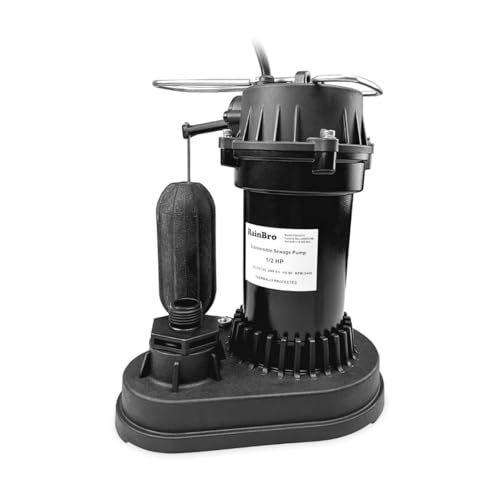
Rainbro 1/2 HP PSU051V Thermoplastic Sump Pump

XtremepowerUS 1/2 HP 3800 GPH Aluminum Sump Pump

Green Expert 1/2 HP 2500 GPH Utility Pump
The Strengths Of Each Pick
The Tsurumi LB-480 reads like a tool built for someone who thinks in terms of caissons (small-diameter access shafts) rather than finished basements. Its slimline profile drops cleanly into an 8-inch opening, which matters on job sites where pits are narrow and unforgiving. The 2/3 HP motor moves up to 3780 GPH, enough to keep up with the kind of seepage that shows up after a heavy rain on freshly disturbed soil.
Contractors and serious DIYers working on foundation work will appreciate the 32-foot power cord, which gives real reach without dragging an extension across the site. The urethane impeller (the rotating blade that pushes water through the housing) is engineered to take abuse from silt and grit that would chew up a basement-rated unit.
Features That Help
- Slimline body fits an 8-inch caisson, where most residential sump pumps won’t clear.
- 2/3 HP output at 3780 GPH keeps pace with rapid groundwater infiltration.
- 32-foot cord reduces the hunt for an outlet mid-site.
- Urethane impeller resists wear from sand and sediment common on construction sites.
Things To Consider
- Less suited as a permanent basement install than the WAYNE CDU790 below, since the slimline form factor trades bulk for footprint.
- Owners should expect periodic rinsing of the impeller chamber, since construction water carries more debris than finished basement drainage.
Who It Suits Best
Contractors, foundation crews, and homeowners managing active construction sites with narrow access pits will find this Tsurumi model uniquely capable.
Consider Something Else When
For a finished basement where a compact, quiet-running residential pump matters more than raw site reach, the WAYNE CDU790 is the better long-term fit.
The WAYNE CDU790 carries the kind of heft you feel the moment you lift it. A cast iron volute (the curved housing that channels water through the pump) paired with stainless steel fasteners gives this pump the longevity spec sheets love to promise and few actually deliver. Rated for indoor basement use, it pushes up to 4600 GPH, which covers most residential flooding scenarios short of a true river running through the foundation.
For homeowners who set it and forget it, the integrated vertical float switch (a tethered bobber that triggers the pump at a set water height) handles on/off cycling without moving parts that snag on pit walls. The epoxy-coated steel motor housing keeps corrosion at bay in the damp, mineral-rich water common to sump pits.
What Helps Most
- Cast iron volute adds serious mass, which dampens vibration and noise during long cycles.
- 4600 GPH ceiling handles aggressive water rise during storms.
- Integrated vertical float removes the wiring step of an external switch.
- Epoxy-coated steel motor housing resists corrosion in mineral-heavy water.
- Stainless fasteners prevent the rust bloom that plagues cheaper assemblies.
Honest Caveats
- The 1/3 HP rating is on the modest side for very high-volume pits, where the AQUASTRONG 1 HP below would clear water faster.
- Heavier cast iron body makes installation a two-person lift in tight basins.
Made For
Homeowners with finished basements who want a long-service, set-and-forget primary pump and don’t mind the extra weight during install.
A Better Fit Elsewhere
If your pit fills faster than 4600 GPH can keep up, the AQUASTRONG 1 HP Sump Pump offers meaningfully higher flow for similar basement duty.
The Saker pump solves a problem many homeowners don’t realize they have: water pooling on top of a winter pool cover. With an activation depth around 2.5 inches and shut-off near 0.75 inches, plus a 30-second run-on after the level drops, it keeps the cover from sagging without short-cycling the motor.
At 1/4 HP and 2377 GPH, it sits at the lower-output end of this list, but that’s the point. Light, sub-cycle work where the pump runs often but briefly is exactly what it’s tuned for. The pre-installed check valve (a one-way valve that stops water from flowing back into the pit after the pump shuts off) saves an installation step and the frustration of digging one out of the box.
Where It Helps
- Smart on/off thresholds protect pool covers without burning through motor cycles.
- Pre-installed check valve eliminates an extra plumbing step.
- Compact form slides into tight spots where bigger pumps won’t fit.
- Run-on delay keeps the motor from hammering on and off.
Points To Keep In Mind
- 2377 GPH won’t keep up with serious basement flooding, where the AQUASTRONG 1 HP clearly outclasses it.
- 1/4 HP motor isn’t designed for continuous heavy debris loads in sump pits.
Right Fit For
Pool owners who want to clear rainwater from winter covers, and homeowners handling low-volume spot drainage like window wells.
Skip It When
If the goal is true basement flood defense during storm season, the WAYNE CDU790 has the build and capacity you need.
When the basement is actively taking on water and you need it gone now, the AQUASTRONG 1 HP is the muscle pick of this lineup. Moving 4500 GPH at 5 feet of head (the vertical distance the pump must push water upward) and lifting up to 30 feet vertically, it covers the scenarios where mid-tier pumps stall out. The bottom-suction design pulls water down to roughly 1/5 inch from the floor, leaving the surface almost dry.
Plug-and-play simplicity means there’s no float to adjust and no wiring to second-guess. For emergency response, that simplicity is the feature, since you want fewer decisions during a storm.
The Value In It
- 4500 GPH at 5 ft of head, the highest output in this roundup.
- Lifts up to 30 ft vertically, useful where the discharge point sits well above the pit.
- Bottom-suction design clears water nearly to the floor surface.
- Handles up to 1/5 inch solids without clogging.
- Plug-in operation removes switch setup from the install list.
- Versatile across hot tub, pool, and basement flooding jobs.
Worth Noting
- No automatic float means it runs as long as it’s plugged in, which isn’t ideal for unattended permanent install.
- Owners commonly monitor run time carefully to avoid dry-running the pump on an empty pit.
Who Will Love This
Homeowners managing active flood emergencies or large-volume dewatering where speed matters more than automation.
Look Elsewhere When
For unattended basement duty where hands-free cycling matters, the Aquastrong Automatic Sump Pump below adds smart on/off control.
Portable utility pumps earn their keep by going where the water is, not by anchoring in one spot. This Aquastrong 1/2 HP moves between swimming pool, garden pond, basement window well, and flooded hot tub without ceremony. The thermoplastic body keeps the weight manageable at roughly 7.7 pounds, light enough to grab one-handed from a shelf.
Flow sits at 3159 GPH with a 26-foot vertical lift ceiling. A 10-foot cord gives reasonable reach without an extension in most setups. The same bottom-suction design as the 1 HP sibling pulls water down to about 1/5 inch off the floor.
Everyday Wins
- Lightweight thermoplastic build moves easily between job sites.
- 1/5 inch solids handling covers leaves and small debris in pond water.
- 10-foot cord reaches most outdoor outlets without an extension.
- Bottom-suction design leaves surfaces nearly dry.
Trade Offs
- Thermoplastic body is less rugged than the cast iron WAYNE CDU790 for permanent installs.
- No automatic switch, so it’s a manual plug-in operation.
Best Suited To
Homeowners who want one pump to move between the pool, pond, and basement window wells across the seasons.
Not Your Match When
If your primary need is unattended basement cycling, the WAYNE CDU790 offers the cast iron build and integrated float for hands-off service.
Where the previous Aquastrong relies on manual plug-in control, this sibling adds a tether float switch (a tethered bobber that can be repositioned to set the on/off water height) for genuine automatic cycling. The adjustable tether lets you set the activation depth to match the pit size, which prevents the short-cycling that wears out cheaper pumps in shallow basins.
At 3159 GPH and 26 feet of vertical lift, performance matches the manual version. The motor runs quieter than expected for the output class, a real plus in finished basements where the pump sits near living space.
Real-World Strengths
- Adjustable tether float matches the activation depth to your pit geometry.
- Manual lock-on position for continuous draining when needed.
- Quieter operation than most 1/2 HP utility pumps.
- 10-foot cord reaches typical basement outlets.
- 1/5 inch solids handling covers typical debris.
Things To Consider
- Output matches the manual Aquastrong above, so high-volume emergencies still favor the AQUASTRONG 1 HP.
Perfect Match For
Homeowners with varying pit depths who want one pump that adjusts to different installations without rewiring a switch.
Another Choice May Suit
If your pit fills aggressively and you want hands-off cycling without adjusting tethers, the Aquastrong Automatic Sump Pump below uses electronic sensing instead.
Mechanical floats are simple, and simple is good, until they jam against a pit wall. This Aquastrong model replaces the tethered bobber with a built-in electronic sensor that triggers at six preset water levels, from 1 inch up to 5 inches. Shutting off at 0.4 inch, it leaves less standing water than most float-based pumps, which matters in tight basins where every fraction of an inch counts.
The 1/2 HP motor still pushes 3159 GPH, so you don’t trade flow for the smarter switch. The lack of a moving float also means fewer mechanical parts to wear out or snag on debris, a real benefit over years of unattended service.
The Helpful Details
- Electronic sensor avoids the snag-and-jam failures of mechanical floats.
- Six adjustable trigger levels adapt to varied pit depths.
- 0.4 inch shut-off leaves the pit nearly empty.
- 3159 GPH output matches the float-switch sibling above.
- Fewer moving parts to replace over years of cycling.
Softer Spots
- Electronics can fail differently than mechanical floats, so some owners prefer the simpler switch in the WAYNE CDU790 for predictable service.
- Output ceiling at 3159 GPH falls short of the AQUASTRONG 1 HP for surge scenarios.
Who Should Grab It
Homeowners with narrow or unusually shaped sump basins where mechanical floats have a history of sticking.
Reach For A Different Pick When
If your pit regularly demands higher flow than 3159 GPH, the AQUASTRONG 1 HP Sump Pump moves water noticeably faster.
Deep pits and dirty water both punish pumps, and the Rainbro PSU051V is built for both. A 22-foot maximum immersion depth (how far below the waterline the pump can sit while running) lets it drop into unusually deep basins where typical residential pumps bottom out. The 31-foot maximum head handles the steep discharge runs that crop up in hillside foundations.
Output reaches 3600 GPH, which puts it slightly ahead of most 1/2 HP competitors in this list. The vertical float switch handles automatic cycling without the snagging issues of longer tether floats, and the 10-foot power cord covers most basement outlet distances.
A Favorable Mix
- 22 ft immersion depth suits unusually deep sump basins.
- 31 ft maximum head handles steep discharge runs.
- 3600 GPH tops most 1/2 HP competitors in this lineup.
- Vertical float design resists tangling in tight pits.
- Capable of both clean and dirty water applications.
Areas To Watch
- Thermoplastic housing won’t outlast the cast iron WAYNE CDU790 in permanent install.
- Owners should clean the intake screen periodically when used in dirty water.
Built With In Mind
Homeowners with deep sump pits or hillside foundations where standard residential pumps fall short on head and immersion ratings.
Swap It Out When
For shallow, finished-basement installs where long-term durability matters more than deep-immersion capability, the WAYNE CDU790 is the more appropriate match.
Backup pumps need to install fast and stay out of the way, and the XtremepowerUS design reflects that priority. The epoxy-coated cast aluminum housing cuts weight compared to cast iron, so mounting it as a secondary unit alongside a primary pump doesn’t fight your back. A copper motor with thermal overload protection (an internal breaker that shuts the motor down if it overheats) prevents burnout during the extended dry-running that backup duty sometimes demands.
The top-suction design eliminates air lock (a trapped air pocket that prevents water from reaching the impeller) and minimizes debris ingestion from the pit floor. The integrated vertical float handles cycling automatically, and installation reportedly takes about 15 minutes without drilling a weep hole (a small vent hole that prevents air from getting trapped in the discharge pipe).
The Practical Payoff
- Aluminum housing keeps weight low for easy backup-pump mounting.
- 3800 GPH at 30 ft lift handles serious inflow.
- Thermal overload protects the motor during extended dry runs.
- Top-suction design prevents air lock and reduces clogging.
- Install reportedly takes about 15 minutes with no weep hole drilling.
Honest Caveats
- Aluminum is lighter than cast iron but typically shorter-lived in continuous primary duty.
- Disconnect below 2 inches may leave a small puddle in very shallow pits.
The Right Fit
Homeowners adding a secondary pump alongside an existing primary who want a fast install and light weight during setup.
Where A Sibling Pick Shines
For heavy-duty primary service over many years, the cast iron WAYNE CDU790 has the build and longevity to anchor basement protection.
Sometimes the job isn’t moving a flood, it’s mopping up what a flood leaves behind. The Green Expert 2500 GPH model targets exactly that role, with a manual plug-in design and last-inch drainage that pulls water flat to the floor surface. The included check valve and hose adapters make it a true utility pump, ready to deploy without extra trips to the hardware store.
The 1/2 HP PSC motor (permanent split capacitor, a motor design that runs cooler and quieter under varied loads) includes thermal overload protection, so forgetting to unplug doesn’t mean a fried motor. At 25 GPM at a 10-foot discharge lift, it handles realistic household cleanup without the bulk of higher-output models.
Practical Advantages
- Last-inch drainage pulls water flat to the floor surface.
- Check valve and hose adapters included for immediate deployment.
- Oil-free PSC motor runs cooler and quieter under varied loads.
- Thermal overload protects against dry-run burnout.
- Manual operation removes float setup entirely.
Points To Weigh
- 2500 GPH is the lowest in this lineup, so it’s a cleanup tool rather than a flood fighter.
- Manual plug-in design won’t run unattended, unlike the automatic Aquastrong models above.
Whose Shelf It Belongs On
Homeowners who want a dedicated “after the flood” pump to drain puddles and hot tubs without babysitting a high-output unit.
Reach For A Different Pick When
For active flood response where speed matters most, the AQUASTRONG 1 HP Sump Pump clears water nearly twice as fast.
Picking The Right Pump For Your Pit
Shopping for a sump pump starts with a few practical measurements and a clear sense of where the water comes from. The right pump for a finished basement is rarely the right pump for a construction site, and the specs that matter shift with the application.
Measure Your Pit And Match Flow To Your Worst Storm
Start with pit diameter and depth, since these determine which pumps physically fit. Most residential basins sit between 18 and 24 inches wide, but construction caissons can drop to 8 inches, which is exactly why the Tsurumi LB-480 has a slimline body. Flow rate, measured in gallons per hour (GPH), should comfortably exceed the inflow rate during your region’s worst rain event. For finished basements, anything from 3000 to 4600 GPH covers typical residential scenarios without strain.
Match Switch Type To Pit Geometry And Reliability Goals
Mechanical float switches are simple and proven, but they can snag in narrow basins or stick against uneven walls. Vertical floats like the one on the WAYNE CDU790 reduce snag risk in tight spaces. Electronic sensors, as on the Aquastrong 1/2 HP Automatic model, eliminate moving parts entirely, though some homeowners prefer mechanical simplicity for long-term serviceability. Tether floats offer adjustability but need a wider basin to swing freely.
Check Head Height And Discharge Run
Head height, the vertical distance the pump must push water, cuts flow significantly as it climbs. A pump rated at 4500 GPH at 5 feet may deliver only 1500 GPH at 25 feet. Measure the vertical rise from the pit floor to the discharge point, plus the horizontal run, and pick a pump whose head rating leaves margin. The Rainbro PSU051V’s 31-foot maximum head suits hillside foundations where standard pumps stall out.
Build Material And Service Life Trade-Offs
Cast iron lasts longer and damps vibration but weighs more. Thermoplastic and aluminum keep weight manageable but typically show wear sooner in continuous primary duty. For a permanent basement primary, cast iron earns its keep. For a portable that moves between pool, pond, and basement, lighter materials make sense.
Smart Buying Decisions Before You Commit
Common Shopping Slip Ups
The most frequent mistake is sizing for average rainfall rather than the worst-case storm your region actually sees. A pump that handles a half-inch rain can drown in a three-inch event. Equally common is ignoring vertical head, since GPH numbers quoted at zero feet of lift look very different at 20 feet of rise. Lastly, skipping a check valve install leads to pump short-cycling as water falls back into the pit after shut-off, a wear pattern that shortens motor life noticeably over years.
What The Higher Tier Buys
Premium pricing in this category tends to buy cast iron construction, integrated rather than tethered floats, and higher-output motors that maintain flow at meaningful head heights. The WAYNE CDU790, for instance, costs more than basic thermoplastic units but adds integrated switch simplicity, corrosion-resistant fasteners, and the longevity that comes from heavier materials. The upgrade pays off most in finished basements where service access is inconvenient and long intervals between replacements matter more than upfront savings. For occasional pool-cover duty or window-well work, the lighter and more affordable models deliver everything those scenarios actually require.




