

Water access shapes everything, from backyard ponds to rural cabins. Choosing the right well pump or transfer pump turns a frustrating trickle into a steady stream you can count on. This roundup sorts through submersible pond models, deep well units, sump pumps, and shallow well boosters for the situations homeowners and hobbyists actually face.
The Essentials At A Glance

OYO WATER 850GPH Pond Pump, Submersible with Filter Bag & 20.3 ft Cord

OYO WATER 5100 GPH Pond Pump with Copper Motor & 20.3ft Cord

mignonnememe Submersible Deep Well Pump 0.5HP Stainless Steel
OYO WATER 1300GPH Pond Pump, Submersible with Filter Bag
OYO WATER 1100GPH Pond Pump, Submersible with Filter Bag
OYO WATER 2400 GPH Pond Pump with Copper Motor & 20.3ft Cord
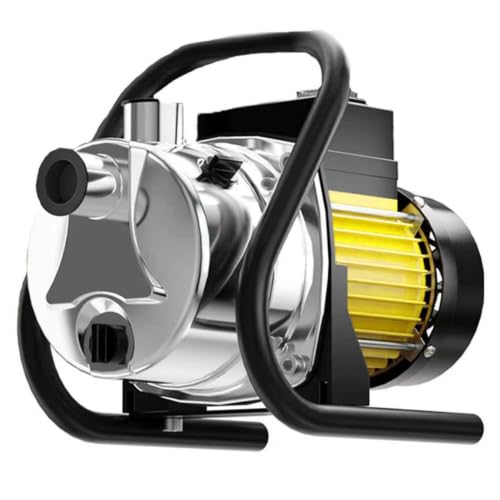
SHANGDA Water Transfer Pump 1.6HP Shallow Well Booster

AQUASTRONG 1 HP Sump Pump 4500 GPH for Water Removal

AQUASTRONG 1/2 HP Sump Pump 3159 GPH with 10ft Cord

OYO WATER 8000 GPH Pond Pump with Copper Motor & UL Listing
More Details On Our Top Picks
A small pond rarely needs brute force, and that’s exactly where the OYO WATER 850GPH Pond Pump earns its spot. Rated as a submersible water pump for outdoor ponds, it handles gentle circulation in ornamental setups where heavier flow would stir up sediment. The two install options, fully submerged or inline, give beginners room to experiment without rewiring the backyard.
You get adjustable flow control, a 20.3 ft power cord that reaches most outdoor outlets without an extension, and an IPX8 waterproof rating for steady operation in standing water. A ceramic shaft (a wear-resistant rotating component that keeps the impeller centered) helps the motor run quietly through long summer days. For a tiny water garden or a modest fountain, this is a sensible starting point.
The Helpful Details
- Adjustable flow dial lets you match output to pond size without swapping equipment.
- Ceramic shaft construction resists wear during continuous submerged use.
- 20.3 ft cord reaches typical outdoor outlets without risky extension cords.
- IPX8 waterproof rating supports continuous submersion at rated depth.
- Filter bag traps debris before it clogs the impeller (the spinning blade that pushes water through the pump).
Things To Consider
- 850 GPH (gallons per hour) may feel underpowered for ponds larger than a few hundred gallons.
- The included filter bag needs periodic rinsing to prevent flow loss in leaf-heavy environments.
Who It Suits Best
First-time pond owners and small-garden hobbyists who want quiet, controllable flow without overspending.
Where Another Pick Suits Better
Anyone running a koi pond over 1,500 gallons will find the OYO WATER 5100 GPH Pond Pump a far better match for circulation needs.
Step up in scale and the OYO WATER Pond Pump 5100 GPH takes over where the 850 GPH leaves off. Built around a UL-listed copper motor (a winding of copper wire that drives the impeller, generally more durable than aluminum alternatives in continuous-duty pumps), this unit is engineered for serious water gardens and koi setups where flow drives oxygen and filtration. The 20.3 ft heavy-duty cord stretches across larger yards without forcing you near an outlet with extension cords.
You get 10% to 90% precision flow control via an upgraded valve, so a single pump can dial back for a quiet trickle or ramp up for a busy waterfall. The IPX8 waterproof rating supports continuous submersion, and the included filter bag keeps leaves and grit out of the impeller. For properties where a smaller pump would struggle to keep water moving, this one’s worth the jump.
Standout Benefits
- 5100 GPH output handles large koi ponds and ambitious waterfall builds.
- UL-listed copper motor supports continuous duty cycles without overheating quickly.
- 10% to 90% flow adjustment suits different seasons and water feature sizes.
- Filter bag reduces routine maintenance by catching debris at the intake.
Worth Noting
- Higher flow draws more power, so verify your outdoor circuit can handle continuous loads.
- The pump body runs warmer than smaller units, which is normal but worth positioning away from plant roots.
- Heavier weight makes periodic cleaning more of a two-handed task.
Made For
Serious pond keepers running koi ponds or large multi-tier waterfalls who need durable, continuous-duty circulation.
Consider Something Else When
Those working with shallow well applications should consider the SHANGDA Water Transfer Pump instead, since it’s designed for above-ground pressure boosting rather than fully submerged duty.
Garden ponds are one thing; pulling groundwater from a real well is another animal entirely. The mignonnememe Submersible Deep Well Pump steps into the borehole category with a 0.5HP motor and a stainless steel housing built for the long haul. Its 1.25″ outlet and OD pipe form factor fit standard residential well installations, and 110V/60Hz operation matches typical North American household current.
For property owners drilling or replacing an aging well pump, the stainless construction handles mineral-rich water better than cast-iron alternatives. You won’t find the same flow dial you get with a pond pump, since deep well units run at designed output for their lift range. Where this pump earns its keep is reliability underground, where pulling it out for service is a major undertaking.
Strong Points
- Stainless steel casing resists the mineral corrosion that wears down cheaper housings.
- 0.5HP output suits typical residential well depths and household demand.
- 1.25″ outlet threads match common residential plumbing adapters.
- 110V/60Hz operation works with standard North American power supplies.
Trade Offs
- Flow isn’t user-adjustable, so sizing the pump to your well depth matters more than with pond units.
- Installation typically requires a qualified technician for safe electrical and plumbing connections.
Right Fit For
Rural homeowners, small farm operators, and off-grid properties that depend on well water for daily household use.
Skip It When
Anyone needing gentle pond circulation should look at the OYO WATER 850GPH Pond Pump instead, since a deep well unit delivers the wrong flow profile for shallow ornamental work.
Mid-sized water gardens need a middle ground between the gentle 850 GPH and the heavy-hitting 2400 GPH units, and the OYO WATER 1300GPH Pond Pump lands right in that sweet spot. You get adjustable flow control with two install modes, submersible or inline, plus the same 20.3 ft cord length and IPX8 waterproofing shared across the smaller OYO models. A ceramic shaft keeps the motor smooth through daily cycles, and the included filter bag cuts down on routine cleaning.
For a backyard pond with a modest waterfall or a fountain that needs reliable circulation, this pump is a sensible step up without overcommitting on flow. Compared to the 850 GPH, you gain enough extra push to handle a slightly larger water feature or a higher waterfall lip. Compared to the 2400 GPH, you save on power draw for setups that don’t need that much muscle.
Advantages To Know
- 1300 GPH balances energy use against output for medium-feature owners.
- Adjustable flow lets you tune output as plants, fish load, or seasons change.
- Two install modes give flexibility for retrofits and new builds alike.
Small Caveats
- Filter bag still demands regular emptying in fall when leaves drop heavily.
- Power draw sits between the smallest and largest OYO pond pumps, so it isn’t the lightest option on a single outdoor circuit.
Who Should Grab It
Owners of medium ponds who want a single pump that handles modest waterfalls and seasonal adjustments without buying two separate units.
Look Elsewhere When
Anyone running a high-volume waterfall over three feet tall will find the OYO WATER 2400 GPH Pond Pump better suited to that lift.
Where the 850 GPH feels a touch light and the 1300 GPH feels like overkill, the OYO WATER 1100GPH Pond Pump fits the most common backyard pond size in the United States. You get the same two install modes, adjustable flow, ceramic shaft, and 20.3 ft IPX8-rated cord that define the rest of OYO’s freshwater pond lineup. A filter bag comes standard.
This pump handles a basic waterfall lip up to a couple of feet and circulates a typical 500-to-1,000 gallon pond reliably. It sits in the middle of OYO’s small-pump range, which makes it a go-to for property owners who want enough push for a fountain without paying for capacity they won’t use. If you keep fish, the steady turnover matters more than peak gallons.
Why It Works Well
- 1100 GPH is the practical middle ground for typical residential pond volumes.
- Adjustable flow valve supports seasonal tuning without equipment swaps.
- Ceramic shaft extends service life under continuous submerged operation.
- 20.3 ft cord simplifies placement around patios and gardens.
A Few Limitations
- Won’t push water up a tall waterfall lip the way the 2400 GPH or higher models can.
- Same freshwater-only engineering as the rest of the line, so saltwater use is off the table.
Best Suited To
Homeowners with mid-sized ornamental ponds and modest fountain setups who want steady circulation on a typical residential outlet.
Not Your Match When
If your feature includes a tall waterfall or a long stream run, step up to the OYO WATER 2400 GPH Pond Pump for the lift you need.
For ambitious backyard builds, the OYO WATER Pond Pump 2400 GPH delivers the lift and volume that small pumps can’t match. Built around a UL-listed copper motor and a precision flow valve running from 10% to 90%, it pushes water up taller waterfall lips, drives hydroponic loops, and feeds garden irrigation without losing pressure. The 20.3 ft heavy-duty power cord stretches across large yards to reach outdoor receptacles.
What sets this model apart from the smaller 1100 GPH and 1300 GPH versions is the copper motor’s thermal tolerance, which holds up under longer continuous runs. You also get the same IPX8 waterproof rating and filter bag design. For property owners whose water features double as irrigation or hydroponic supply, this is the practical sweet spot before jumping to the 5100 GPH or 8000 GPH heavyweights.
The Case For It
- 2400 GPH handles tall waterfall lips and moderate hydroponic demand.
- Copper motor supports the longer duty cycles irrigation work requires.
- 10% to 90% precision valve adapts to seasonal flow needs without tools.
- Filter bag keeps debris out of the impeller during heavy outdoor use.
Points To Keep In Mind
- Power draw is meaningfully higher than the 1100 GPH, so older circuits may need a dedicated breaker.
- The unit weighs more than smaller OYO models, making periodic cleaning a two-handed task.
Who Will Love This
DIYers running multi-feature yards with waterfalls, hydroponic beds, or modest irrigation lines who need one pump to handle mixed duties.
A Better Fit Elsewhere
If your build centers on a single small fountain, the OYO WATER 1100GPH Pond Pump will save energy without sacrificing circulation quality.
Different problem, different tool. The SHANGDA Water Transfer Pump is a shallow well unit built for above-ground pressure boosting, sprinkler feeds, and moving water from one tank to another. At 1.6HP with a 110V motor, it sits on a patio or workbench, draws from a reservoir or shallow source, and pushes water through standard garden hose fittings.
Where submersible pond pumps live in the water, this one stays dry and gets dragged out when the job’s done. For lawn sprinkling, pool draining, or filling raised beds from a rain barrel, that portability is the whole point. You trade continuous submerged operation for a lightweight tool you can stow in a garage. The included adapters cover common hose thread sizes so setup stays quick.
Bright Spots
- 1.6HP output handles sprinkler lines and water transfer without straining.
- Portable design stows easily between uses for seasonal lawn work.
- Adapter kit covers standard garden hose connections out of the box.
Where It May Fall Short
- Shallow well design means it’s not built for the deep lifts a submersible well pump handles.
- Open-frame construction needs shelter from heavy weather during long sessions.
- Not designed for continuous-duty submersion the way pond pumps are.
Perfect Match For
Homeowners handling sprinkler irrigation, pool draining, or rain barrel transfer who want a portable electric pump without buying well installation gear.
Another Choice May Suit
For continuous submerged circulation in an ornamental pond, the OYO WATER 1300GPH Pond Pump is the better category fit.
Sump pumps live a different life from pond pumps, and the AQUASTRONG 1 HP Sump Pump is built for the moments when water shows up where it shouldn’t. With a 1HP motor pushing 4500 GPH at 5-foot lift, it clears flooded basements, drained hot tubs, and pond overflow fast enough to matter when you’re standing in water. The bottom suction design filters debris and pulls the surface down to roughly 1/5 inch.
Unlike the OYO pond models, this isn’t engineered for continuous circulation. It’s a high-output utility tool you drop into a problem and run until the water’s gone, then unplug and store. The trade-off shows up in continuous-duty noise and wear, since sump pumps work hardest in short, intense bursts. For emergency water removal, that profile is exactly right.
Noteworthy Benefits
- 4500 GPH output clears standing water faster than any pond pump on this list.
- Bottom suction pulls surface level down to roughly 1/5 inch for near-complete drainage.
- Plug-in operation starts and stops without complex setup.
Things To Consider
- Not designed for continuous submerged circulation, so it isn’t a pond pump substitute.
- Higher power draw means you want a dedicated circuit for extended runs.
- Owners commonly report the thermoplastic body needs careful handling during transport to avoid cracks.
Built With In Mind
Homeowners in flood-prone basements, hot tub owners draining for maintenance, and anyone who needs emergency water removal on demand.
Swap It Out When
For ongoing pond or fountain circulation, the AQUASTRONG 1/2 HP Sump Pump’s smaller sibling won’t fit either, so turn to the OYO WATER 2400 GPH Pond Pump instead.
When the AQUASTRONG 1 HP model feels like overkill, the 1/2 HP sibling handles lighter water removal without the heavier power draw. Rated at 3159 GPH at 5-foot lift, it covers window wells, swimming pool cover drainage, and smaller basement cleanups with room to spare. The thermoplastic body keeps weight low for casual carrying, and the 10 ft power cord reaches most indoor outlets without extension cords.
Compared to the 1 HP version, you sacrifice top-end flow for easier handling and lower power consumption on standard 15-amp circuits. For pool owners draining cover water or homeowners chasing down window well seepage, that trade is well spent. The bottom suction design still pulls surface water down to roughly 1/5 inch, matching the bigger model’s drain profile.
Useful Highlights
- 3159 GPH handles common utility jobs without taxing residential circuits.
- Lightweight thermoplastic body is easier to carry than cast-iron alternatives.
- 10 ft cord suits typical indoor outlet placement.
A Few Limitations
- Slower drain times than the 1 HP version during heavy basement flooding.
- Thermoplastic body needs protection from drops during transport.
- Same utility-pump limitations as its sibling, so it isn’t built for continuous circulation.
The Right Fit
Pool owners, casual gardeners, and homeowners wanting a lightweight utility pump for window wells and small basement seepage.
Reach For A Different Pick When
Anyone facing a flooded basement with several inches of standing water should step up to the AQUASTRONG 1 HP Sump Pump for faster clearing.
At the top of OYO’s pond lineup sits the 8000 GPH model, a serious piece of equipment engineered for large koi ponds, multi-tier waterfalls, and ambitious irrigation networks. The UL-listed copper motor handles the thermal load that smaller aluminum-wound motors can’t sustain under continuous high output. You get the full 10% to 90% precision flow valve, the 20.3 ft heavy-duty power cord, the IPX8 waterproof rating, and the included filter bag shared across the higher-output OYO models.
Where this pump pulls ahead of the 5100 GPH version is sustained lift. Big waterfalls and long stream runs drain smaller pumps of their pressure, but 8000 GPH keeps the visual volume where the designer intended. The trade-off is power consumption and weight, which is the honest read for any homeowner considering a pump this size. For serious water feature builders, that cost buys you headroom you can grow into.
The Good Stuff
- 8000 GPH sustains large multi-tier waterfalls and big koi ponds without losing pressure.
- UL-listed copper motor supports the continuous duty large features demand.
- 10% to 90% precision valve handles everything from a trickle to peak flow.
- 20.3 ft cord reaches far outlet placements in larger yards.
Honest Caveats
- Power draw requires a dedicated circuit on most residential electrical panels.
- Physical size and weight make initial installation a planned project rather than a casual setup.
- Owners commonly report that filter bag maintenance matters more at this flow level, since debris moves through faster.
Whose Shelf It Belongs On
Serious water feature builders managing large koi ponds, multi-tier waterfalls, or commercial-scale hydroponic operations.
Where A Sibling Pick Shines
For a typical backyard pond under 2,000 gallons, the OYO WATER 2400 GPH Pond Pump delivers ample flow with far less electrical demand.
What Matters Most When Choosing a Well or Pond Pump
Choosing a bomba de agua para pozos starts with matching the pump type to the water source. Submersible well pumps like the mignonnememe unit drop directly into the borehole, while pond and fountain pumps sit inside open water features. Sump pumps like the AQUASTRONG models handle removal, not circulation, so they belong in basements and utility drains rather than landscaped ponds. Mixing those categories is the fastest path to frustration.
Flow Rate Versus Lift
GPH measures how much water moves per hour, but lift determines where that water can go. A 2400 GPH pond pump rated for low lift will struggle to push water up a four-foot waterfall lip, even though the gallon rating sounds impressive. For pond applications, balance GPH against the vertical distance between the pump and the highest point in the feature.
Power Supply And Circuit Capacity
Continuous-duty pumps draw meaningful current, especially above 1HP. Verify your outdoor outlet is on a GFCI (Ground Fault Circuit Interrupter, a shock-preventing breaker required by code for outdoor and wet-location receptacles) circuit and check the panel for available breaker space before plugging in a 5100 GPH or larger unit. Standard 15-amp circuits may not handle sustained loads from the bigger models without nuisance trips.
Build Materials For Your Water
Freshwater pond pumps use ceramic shafts and copper motors rated for clean water. Mineral-heavy well water calls for stainless steel housings, which is why the mignonnememe deep well pump steps away from the plastic-bodied pond units. Match the housing material to the water chemistry, and the pump lasts longer with fewer service calls.
Cord Length And Installation Layout
A 20.3 ft power cord removes the temptation to chain extension cords across wet ground, which is a safety hazard around water. Plan the pump location first, then verify the cord reaches a GFCI outlet without strain. Shorter 10 ft cords, like the AQUASTRONG 1/2 HP sump pump, suit indoor utility setups where outlet placement is already close.
Key Considerations Across These Picks
Where Shoppers Go Wrong
The most common misstep is buying by GPH alone, ignoring lift. A high-gallon pump with a low lift ceiling looks great on paper and disappoints the moment water has to climb. Match the rated lift to the vertical distance between pump and highest discharge point, and check the manufacturer’s flow curve (a graph showing how GPH drops as lift increases) when available. The second common mistake is skimping on circuit capacity, then wondering why the breaker trips mid-summer when the pump runs continuously.
What Separates Premium From Basic
Higher-tier pumps earn their position through three concrete differences: copper motors over aluminum, stainless housings over plastic, and UL safety listings backed by independent lab testing. Those upgrades matter most in continuous-duty situations where cheaper motors overheat, plastic cracks under thermal cycling, and unlisted units carry unknown failure modes. For a small seasonal fountain, basic plastic-bodied pumps work fine. For a year-round koi pond or a deep well, the premium tier pays for itself in service intervals and reliability.
Frequently Asked Questions
What size bomba de agua para pozos do I need for a typical backyard pond?
Most residential ponds between 500 and 2,000 gallons circulate well with a pump in the 1100 to 2400 GPH range. Smaller ornamental setups under 500 gallons run comfortably on an 850 GPH unit, while larger koi ponds over 2,000 gallons benefit from 5100 GPH or higher to maintain oxygen levels.
Can a sump pump double as a pond pump?
Sump pumps like the AQUASTRONG models move water fast but aren’t engineered for continuous submerged circulation. They run hot under sustained load and lack filter media sized for pond debris, so they wear out faster in feature duty. Use them for water removal, not circulation.
Do I need a GFCI outlet for an outdoor pump?
Yes. Any pump installed outdoors or near water should plug into a GFCI-protected receptacle, which is also code-required for new outdoor outlet installations. The shock-prevention feature matters more around water than almost any other residential appliance.
How deep can a submersible well pump actually lift?
The mignonnememe 0.5HP submersible deep well pump is engineered for residential well depths commonly drilled in North America. Actual lift capacity depends on pipe diameter, water table depth, and plumbing restrictions, so verify the rated maximum head (the manufacturer’s term for vertical lift ceiling) against your well specifications before installation.
What’s the practical difference between a 1/2 HP and 1 HP sump pump?
The 1 HP AQUASTRONG moves roughly 40% more water at typical lift heights, which translates to faster drain times during heavy flooding. The 1/2 HP version uses less power and runs on more circuits without tripping, making it the better fit for routine window well and pool cover drainage.
Bottom Line
The right pump depends entirely on where the water needs to go. Pond keepers will find their match across OYO’s freshwater lineup, from the gentle 850 GPH to the heavy-duty 8000 GPH. Property owners with real wells need the stainless steel construction of a proper submersible unit. Emergency water removal calls for a sump pump, and lawn irrigation work fits a portable shallow well booster. Match the pump type to the job, and the rest of the decision follows.




