

Measuring in grains sounds niche, but it changes the way you work, whether you’re dosing espresso, weighing out supplement powders, weighing precious metals, or running precise bench chemistry. A scale that reads in grains (with the rest of the usual units) keeps tiny weights accurate and big jobs honest. The picks below cover kitchen-friendly platforms, dual-platform setups, and serious lab balances from 0.1g to 0.0001g readability.
The Picks In Brief

Letron Rechargeable Kitchen Scale with 7 Units
Bonvoisin Lab Scale 5000g x 0.01g Analytical Balance

Bonvoisin Lab Scale 5000g x 0.01g with USB Interface

Letron Dual Platform Kitchen Scale with Dual-Line LCD

TANITA KD-321 Digital Kitchen Scale (Silver)

BOMATA Large Kitchen Scale 0.1g Precision, 11lb

Bonvoisin Digital Lab Scale 600g x 0.01g

Bonvoisin Lab Analytical Balance 500g x 0.001g
Bonvoisin Analytical Balance 220g x 0.0001g
The Strengths Of Each Pick
The Letron rechargeable kitchen scale hits a sweet spot for anyone juggling portion control and weekend baking. With a 33 lb (15 kg) capacity and seven switchable units covering grams, kilograms, pounds, ounces, pounds:ounces, fluid ounces, and milliliters, it handles flour sacks, coffee dosing, and liquid builds without swapping equipment. The USB-C rechargeable cell removes the annoyance of AAA swaps.
Setup is straightforward: zero the platform, drop your bowl, tare, and pour. In a typical home kitchen, that workflow covers everything from bread dough to meal-prepped proteins. The reading settles quickly, and the slim profile slides under a cabinet when counter space gets tight.
Features That Help
- Seven measurement modes remove the need for separate kitchen and postal scales.
- USB-C charging cuts down on disposable batteries over years of regular use.
- 33 lb capacity covers bulk flour bags, big-batch soups, and pet food portioning.
- Tare function simplifies incremental weighing without resetting the bowl.
Points To Keep In Mind
- It doesn’t list a sub-gram readability, so spice-level precision is limited compared with lab balances later in the list.
- The wide plastic platform collects flour dust in busy kitchens and needs wiping between uses.
Made For
Home bakers and meal-preppers who want one reliable counter scale that handles everything from a sourdough loaf to a protein portion.
Look Elsewhere When
Reach for the Bonvoisin Lab Scale 5000g x 0.01g if your work demands real milligram-level accuracy rather than cooking-level precision.
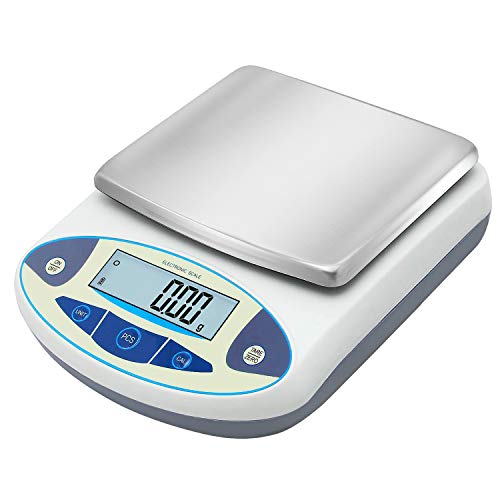
Stepping into proper lab territory, the Bonvoisin 5000g analytical balance offers 0.01g readability across eight selectable ranges from 200g up to its 5kg ceiling. The stainless steel platform measures roughly 180 x 140mm, big enough for beakers, small bottles, and dense sample containers. Adjustable feet plus a level bubble help you dial out bench wobble before any reading.
Calibration matters at this resolution, and external calibration with optional weights keeps drift honest. In a classroom or small production space, the overload alarm and error indication both save you from silent measurement mistakes when samples run hot, cold, or slightly over the rated capacity.
Positive Takeaways
- Eight selectable ranges from 200g to 5000g give you flexibility across very different sample sizes.
- External calibration with weights keeps long-term accuracy verifiable, not just assumed.
- Stainless pan wipes clean after sticky or powdery samples, which matters in busy labs.
Trade Offs
- No draft shield, so very light samples can drift in breezy rooms.
- 5kg capacity is generous, but the footprint grows accordingly and demands a steady bench.
Key Attributes
Built With In Mind
Mid-range lab users running classroom, QC, or small-batch formulation work who need consistent 0.01g readings without microgram cost.
Swap It Out When
The Bonvoisin Analytical Balance 220g x 0.0001g makes more sense if your heaviest sample is small and your tolerance is measured in milligrams.
Where the previous Bonvoisin model covers the basics, this version adds a USB port for direct data transfer to a computer or printer, plus an enlarged 7.2-inch stainless pan for bulkier items. Thirteen switchable units include a percentage mode, which is handy for formulation work where you track ingredient ratios rather than absolute weights. The widened battery compartment makes swaps less fiddly in regular service.
Owners running batch records, batch sheets, or compliance logs benefit most from that USB feed: no manual transcription, fewer copy errors. For a small lab or compounding workspace, the trade-off is a slightly larger footprint in exchange for cleaner data trails.
A Few Strong Suits
- USB data output removes transcription errors in record-keeping workflows.
- 7.2-inch pan handles wider containers than a typical analytical platform.
- Percentage mode supports formulation work where ratios matter more than absolute weight.
Honest Caveats
- USB cable and software setup take time on first use, especially for non-technical users.
- 0.01g readability still trails true micro-analytical balances for the smallest samples.
Who Will Love This
Lab managers and technicians who need traceable, exportable weight data for batch records, QC logs, or compounding documentation.
Where A Sibling Pick Shines
The Bonvoisin Lab Scale 5000g x 0.01g Analytical Balance suits users who don’t need USB logging and prefer a slightly tidier bench footprint.
The dual-platform Letron is built for kitchens that handle both spices and bulk flour in the same session. The mini scale offers 0.01g readability up to 500g for tiny doses, while the larger platform carries up to 33 lb (15 kg) at 1g resolution. The dual-line LCD shows both readings at once and supports adding the two together, which matters when a recipe crosses scales.
You place yeast and salt on the small platform, flour and milk on the larger one, and watch totals accumulate. The stainless finish tolerates splashes and sticky fingers, and the wider surface area on the big side accepts sheet-pan weights, mixing bowls, and roasting pans without repositioning.
Useful Highlights
- Two scales in one unit remove the need to swap platforms mid-recipe.
- Simultaneous dual-line display makes cross-scale totals easy to verify.
- Stainless finish cleans up after flour clouds and oil splatters.
Practical Considerations
- The combined footprint is larger than a single scale, so counter real estate matters.
- Mini-platform calibration can drift with heavy daily spice use, so periodic checks help.
Key Attributes
Best Suited To
Bakers and home cooks who routinely shift between pinch-precise spices and heavy dry goods in the same prep session.
Not Your Match When
The TANITA KD-321 Digital Kitchen Scale is a simpler single-platform choice if dual-zone workflow isn’t part of your routine.
The TANITA KD-321 is a long-standing kitchen workhorse, and the design explains why it sticks around. A 3kg capacity paired with 0.1g graduation covers most small-batch baking and recipe development. The removable, washable stainless platform tray is the real headline: it pops off, rinses, and goes back in, which makes dough-and-flour cleanup trivial.
The unit measures water and milk in ml or fluid ounces, so liquids get the same handling as dry ingredients. Tare works the way you’d expect, and the silver finish hides smudges better than glossy black surfaces in a working kitchen.
Notable Gains
- Washable stainless tray separates from the body for actual soap-and-water cleaning.
- 0.1g readability is plenty for bread, pastry, and most kitchen recipes.
- Tare function and fluid conversion handle multi-ingredient workflows cleanly.
Small Caveats
- 3kg ceiling rules out big-batch baking or heavy kitchen tasks.
- No USB or app connectivity, so it stays a purely manual instrument.
Right Fit For
Small-batch bakers and home cooks who want a simple, durable single scale that cleans easily between sessions.
Skip It When
The BOMATA Large Kitchen Scale 0.1g makes more sense if your baking involves oversized trays and you need the hold function for overhanging items.
BOMATA’s large kitchen scale leans into bakery-scale workflows. The 7.2 x 7.2-inch platform swallows mixing bowls and sheet pans, and the hold function locks a reading even when oversized items overhang the pan edges. A measurement range of 0.5g to 5kg paired with 0.1g resolution handles everything from a single vanilla bean to a holiday bread dough.
Percentage mode appeals to formula-driven bakers who think in baker’s percentages. The hold button is the unsung feature: with larger trays, the display often disappears under the rim, and hold keeps the final weight visible after you remove the load.
Noteworthy Benefits
- 7.2-inch square pan fits oversized mixing bowls without repositioning.
- Hold function keeps the weight visible when large items cover the screen.
- Percentage mode supports baker’s-percentage recipes and formula scaling.
Things To Weigh
- 11 lb ceiling is lower than the Letron 33 lb options for very heavy bulk work.
- Wide footprint crowds compact counters, so apartment kitchens may feel the squeeze.
Feature Snapshot
The Right Fit
Bakers working with wide trays, big dough batches, or formula-style recipes who want a generous platform with locked readings.
Consider Something Else When
The Letron Rechargeable Kitchen Scale with 7 Units is the better match if you need 33 lb capacity and a rechargeable battery.
The Bonvoisin 600g lab scale is where the grain mode starts to matter for non-kitchen users. It carries a high-precision strain gauge sensor and switches between gram, ounce, carat, pennyweight, Tola, and grain with a single mode button. The grain unit (gr) is the historic measure for gunpowder charges, jewelry, and precious-metal samples, so this scale serves reloaders, jewelers, and small-batch chemists.
A 600g ceiling with 0.01g resolution strikes a useful balance for bench-scale work that doesn’t need milligram resolution. The unit is compact, so it fits a jeweler’s bench or a reloading station without dominating the workspace.
Notable Upsides
- Dedicated grain mode (gr) covers reloading, jewelry, and precious-metal weighing.
- 0.01g readability is finer than kitchen scales for tiny charges and stones.
- Compact body fits jewelry benches and reloading stations easily.
Trade-Offs To Consider
- 600g capacity rules out bulkier samples that the larger Bonvoisin models handle.
- No data output, so logs stay manual.
Made For
Jewelers, reloaders, and small-batch users who specifically need grain-mode weighing in a portable bench-friendly package.
Reach For A Different Pick When
The Bonvoisin Lab Analytical Balance 500g x 0.001g is the smarter pick if milligram readability matters more than grain mode.
This Bonvoisin model steps into true analytical territory with 0.001g (1mg) readability and a 500g capacity. A standout feature is the customizable units menu: 17 units are onboard, but you can disable any you don’t use, so cycling back to grams takes one or two button presses rather than scrolling through every mode. An integrated draft shield reduces airflow drift that would otherwise ruin milligram-level readings.
The integrated shield is more durable than the snap-on or DIY windshields you sometimes see on entry-level balances. For analytical chemistry, pharmaceutical prep, or quality control, that stability difference matters every single session.
Key Advantages
- 1mg readability supports pharmaceutical prep and analytical chemistry.
- Customizable units menu shortens mode-cycling for daily workflows.
- Integrated windshield reduces drift from room air currents.
Points To Note
- 500g ceiling limits this to small samples, not bulk weighing.
- Milligram work is sensitive to bench vibrations, so a stable surface is required.
Who Should Grab It
Lab analysts and pharmacists handling milligram-sensitive samples who need reliable 0.001g readings in routine workflows.
Where Another Pick Suits Better
The Bonvoisin Lab Scale 5000g x 0.01g is the better choice when your heaviest sample is heavier than a few hundred grams.
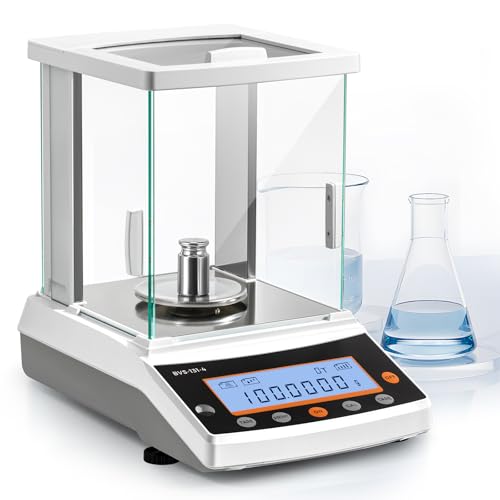
The Bonvoisin 220g x 0.0001g balance sits at the top of this list by readability. A 0.1mg resolution with 0.0004g tolerance catches variations that any coarser scale would miss, which is why pharmacy, jewelry, and research labs reach for this tier. It reads gram, ounce, carat, and milligram, and offers percentage weighing for formulation tracking.
Readings settle quickly and consistently thanks to the upgraded sensor design, so the unit doesn’t keep you waiting during repetitive dosing. For weighing sub-100mg reagent quantities or matching fine jewelry tolerances, the patience pays back in fewer wasted samples and tighter batches.
Practical Pluses
- 0.1mg readability is the finest in this roundup for pharmacy and research work.
- Fast, stable readings reduce downtime during repetitive micro-weighing.
- Percentage mode supports precise formulation adjustments.
Honest Caveats
- 220g ceiling restricts this to small, valuable samples rather than bulk work.
- Sub-milligram readability demands a vibration-free bench and stable room temperature.
The Right Fit
Pharmacy, jewelry, and research users who weigh small, high-value samples where every milligram affects cost or compliance.
A Better Fit Elsewhere
The Bonvoisin Digital Lab Scale 600g x 0.01g is the smarter pick when grain mode for reloading matters more than microgram-level readability.
What To Weigh Before Choosing A Digital Scale
Start with the resolution your task actually demands. Kitchen baking rarely needs finer than 0.1g, so the TANITA KD-321 or BOMATA are usually plenty. Bench chemistry, reloading, and jewelry work step up to 0.01g or finer, which is where the Bonvoisin lab models earn their keep. Readability is the smallest step the scale can show, so smaller numbers mean finer work.
Capacity comes next. The 33 lb Letron models and BOMATA swallow flour bags and roasting pans; the analytical balances cap out well below that because fine resolution and high capacity are engineering trade-offs, not bonuses you can stack. Match your largest regular sample to the capacity, not your smallest, since overloading is a common way to shorten a balance’s life.
Units and data handling matter once the basics are settled. Grain mode (gr) is a must for reloaders and jewelers, while percentage mode helps bakers and formulators. USB output on the Bonvoisin 5000g USB model is valuable when record-keeping matters more than manual notes.
Finally, think about the environment. Draft shields and stable benches protect milligram and microgram readability. If your bench vibrates from a refrigerator or sits near a window with shifting sun, even a 0.0001g balance will drift. A flat, vibration-free surface is part of the purchase, not an afterthought.
Picking The Right Scale Without Regrets
Mistakes Worth Dodging
A common slip is buying a kitchen-scale resolution for a job that actually needs lab precision. Spice weighing, jewelry dosing, and bench chemistry all show errors at 1g steps that are invisible at 0.1g. On the flip side, paying for 0.0001g readability when you’re weighing flour is wasted budget and bench space. Match the scale to the work.
Another trap is ignoring capacity. A scale that maxes out at 500g is the wrong tool for a 10 lb roast, no matter how precise it reads. Equally, dropping a heavy mixing bowl on a 600g balance risks damage the spec sheet won’t mention. Check both ends of your range before committing.
When Paying More Pays Off
Higher-tier models buy three things that matter: finer readability, draft protection, and verified calibration paths. The Bonvoisin 500g x 0.001g and 220g x 0.0001g balances add integrated windshields and faster settling sensors, which is what separates a research-grade reading from a hopeful one.
You also pay for build longevity. Stainless platforms, external calibration, and stable housings extend service life in working environments. If your scale sits on a busy bench and gets used daily, the upgrade usually pays back in fewer recalibrations and more reliable logs.
Frequently Asked Questions
What is a grain on a digital scale?
A grain is a traditional unit of mass equal to 0.0648 grams, still used in jewelry, reloading, and pharmacy contexts. Scales that offer a grain mode let you weigh in that unit without manual conversion.
Do kitchen scales show grains?
Most kitchen scales don’t include grain mode, since grains are a very small unit aimed at specialty work. Models like the Bonvoisin 600g x 0.01g scale do list grain alongside grams, ounces, carats, and other units.
How accurate does a digital scale need to be for grains?
For typical reloading or jewelry dosing, 0.01g resolution is comfortable and reads in whole grains cleanly. Microgram-level readability is reserved for laboratory or pharmaceutical use, where charges or doses are much smaller than a typical reloading quantity.
Can I calibrate a digital scale at home?
Analytical balances like the Bonvoisin lab models support external calibration using known reference weights, which lets you verify accuracy in your own workspace. Kitchen scales generally don’t accept user calibration and rely on factory-set baselines.
Is a lab balance overkill for home use?
For everyday baking and meal prep, yes. For dosing supplements, weighing jewelry, reloading, or running bench chemistry at home, a lab balance gives the resolution and stability a kitchen scale can’t match.
The Takeaway
A scale that reads in grains opens up work that kitchen-only models can’t reach, from reloading charges to bench chemistry. Match readability and capacity to your real workload, give the unit a stable surface, and the right pick from this list will pay you back every session in cleaner measurements and fewer costly errors.




