

A reliable doorbell chime keeps you connected to what’s happening at your front door, whether you live in a small apartment, work from a home office, or run a busy retail shop. The right setup means you hear visitors without fail, even if you’re in the basement, garden, or upstairs bedroom. This roundup covers nine distinct picks that address everyday visitor alerts, open-door safety for kids and seniors, and even a children’s book that turns the classic doorbell sound into a learning moment.
A Quick View Of The Lineup

Satisure Wireless Doorbell Sensor Alarm

The Doorbell Rang by Pat Hutchins

OYOCAM Video Doorbell Key Tool

SECRUI Wireless Doorbell M520+F55

SECRUI Wireless Doorbell with 2 Receivers

SECRUI Mini Doorbell with Blue LED

SECRUI 3-Sensor Door Open Alarm
SECRUI 2-Sensor Door Opened Alarm
SECRUI Single-Sensor Door Chime
A Closer Look At Each Pick
The Satisure wireless doorbell sensor alarm works as a visitor chime and a door-open alert in one compact unit. You mount the sensor on a door and the receiver inside your living space, so it pings the moment anyone opens the entry. It’s especially useful in households where a curious toddler might wander out of a bedroom, or where a family member with dementia is prone to slipping out unnoticed.
Compared with standard push-button doorbells, this one doesn’t require a visitor to ring anything. The sensor detects motion when the door itself moves, which means it also doubles as a shop-entry alert for small retail spaces. For most parents and caregivers, that dual purpose removes the guesswork of whether someone came or went.
Where It Helps
- Senses door movement without requiring a press, so you catch kids or seniors slipping out.
- Doubles as a shop-entry chime for retail owners who need a heads-up on customers walking in.
- Wireless pairing keeps installation free of drilling into doorframes in most cases.
- Compact receiver fits on a kitchen counter or office shelf without dominating the space.
Things To Consider
- Battery life depends on how often the door opens, so high-traffic entries may need more frequent swaps.
- The sensor and receiver need to stay within wireless range, which can be tight in larger homes.
Who It Suits Best
Parents of toddlers and caregivers of seniors who want a heads-up the moment an interior or exterior door opens.
Where Another Pick Suits Better
Retail owners wanting a more decorative button-style chime may prefer the SECRUI Wireless Doorbell M520+F55 for its colorful LED and traditional button setup.
Pat Hutchins’ classic picture book uses the simple act of a doorbell ringing to teach early math concepts. Each ring brings more visitors, more cookies, and a new division problem for children to solve alongside the story. It sits in that sweet spot where a familiar sound, the doorbell chime, becomes the launching point for sharing, counting, and conversation.
Unlike the electronic picks on this list, this title is a reading experience, not a functional chime. It belongs on a shelf where bedtime stories and classroom read-alouds happen, and it earns its place here because the doorbell motif ties it directly to the theme. For most parents and early-elementary teachers, it’s a low-effort way to bring the doorbell sound into storytime.
The Upside
- Uses the doorbell sound as a counting prompt, which keeps young readers engaged through repetition.
- Reinforces the concept of sharing as the cookies must be divided among more and more visitors.
- Short, predictable text makes it ideal for early readers who want to “read along” with you.
Points To Note
- It is a book, not a working doorbell, so shoppers looking for an audible chime will need a different pick on this list.
- The storyline is dated in places, depending on your view of older picture-book illustrations.
Feature Card
Right Fit For
Parents, grandparents, and preschool or kindergarten teachers who want a read-aloud that quietly teaches division and sharing.
Skip It When
Shoppers who need a working audible chime for a home or shop should step to the SECRUI Mini Doorbell with Blue LED for a real plug-in alert.
The OYOCAM video doorbell key tool is a small but vital accessory for anyone who owns a video doorbell that detaches from its mounting bracket for charging. If you’ve ever lost the tiny release key, you already know how quickly the entire doorbell becomes unusable. This replacement restores the ability to pop the unit off the wall and plug it in.
It’s built specifically for battery-powered video doorbell models, including the most recent releases and a few earlier generations. Compared with the wireless chimes on this list, it’s a maintenance tool rather than an alert system. For most video doorbell owners, it’s the kind of thing you don’t think about until you need it, and then you really need it.
What Pays Off
- Compatible with multiple current and previous-generation battery doorbell models, so households often have a backup key on hand.
- Tiny form factor makes it easy to toss in a drawer or tape inside a closet for emergencies.
- Restores the basic detach-and-charge workflow that owners rely on every few weeks or months.
Worth Noting
- Not a chime itself, so it doesn’t address audible alerts, only the maintenance side of a smart doorbell.
- You need to confirm your exact doorbell model before ordering to avoid an incompatible fit.
Made For
Owners of battery-powered video doorbells who have misplaced their original release key and need a working replacement fast.
Reach For A Different Pick When
Shoppers who need an audible indoor chime should head to the SECRUI Wireless Doorbell with 2 Receivers for full plug-in coverage.
The SECRUI M520+F55 is a plug-and-play wireless doorbell designed for households that want a working chime in minutes. The receiver plugs into any wall outlet and the push button mounts with adhesive or screws, no electrician required. For renters and homeowners who can’t (or don’t want to) wire anything, that’s the main appeal.
You get 58 chime options, adjustable volume, and a colorful LED flash on the receiver for hearing-impaired users. The 1000-foot wireless range handles most single-family homes and even lets you place the receiver in a detached garage. It’s a quieter alternative to the open-door sensors earlier in this list, since it only triggers when someone presses the button.
Practical Advantages
- Plug-in receiver means no battery swaps in the chime itself.
- Waterproof button holds up to rain and direct sun on most front porches.
- LED flash gives a visual cue for anyone in the household who is hard of hearing.
- Wide chime selection keeps things from getting stale when visitors press it twenty times a day.
Small Caveats
- The receiver occupies an outlet, which matters in older homes with limited sockets.
- Range is generous but can drop if the signal passes through dense masonry or metal doors.
Feature Snapshot
Best Suited To
Renters, small-home owners, and first-time shoppers who want a working doorbell chime without touching a single wire.
Look Elsewhere When
Families who need an open-door alert for child or senior safety should consider the Satisure Wireless Doorbell Sensor Alarm instead.
The dual-receiver version of the SECRUI wireless doorbell solves the most common complaint about single-receiver setups: you can’t hear the chime in every room. With two plug-in receivers and one push button, you can cover an upstairs bedroom and a basement workshop without buying a second kit. For most two-story homes, that’s the right balance.
Setup mirrors the single-receiver M520+F55, so the learning curve is essentially zero. You get the same 58 chimes, adjustable volume, and a 1000-foot wireless range, which means the button can sit at a gate or detached garage and still reach both receivers. It’s the logical upgrade when the single-receiver version feels too quiet in your space.
Strong Points
- Two receivers spread the alert across floors and rooms without buying a second kit.
- Memory function keeps your last ringtone and volume setting after power outages.
- Mute mode helps in homes with napping kids or late-night shifts.
- Volume range from 0 to 120 dB covers everything from a quiet study to a noisy garage.
A Few Limitations
- Each receiver still occupies an outlet, so placement planning matters in older homes.
- Both receivers play the same tone at the same volume, with no per-unit customization in the base kit.
Perfect Match For
Two-story homes, finished basements, and home offices where one chime in the hallway just isn’t enough.
A Better Fit Elsewhere
Shoppers with only one or two small rooms to cover may find the SECRUI Mini Doorbell with Blue LED more efficient and easier to place.
The SECRUI mini doorbell leans into a clean white finish and a small footprint that disappears into a kitchen or classroom wall. It comes with two plug-in receivers and a single waterproof button, giving you solid coverage without visual clutter. For most apartments and small offices, that discreet design is the whole point.
You still get 58 chimes and five volume levels, so the audio side matches the larger M520 series. The blue LED indicator on the receivers adds a soft visual alert that doubles as a night light in darker hallways. It’s a nice middle-ground pick when you want SECRUI’s reliability but not the bulkier black styling.
Where It Excels
- White finish blends with most interior walls and rental-friendly paint schemes.
- Blue LED indicator doubles as a soft night light in hallways and entryways.
- Compact receiver size doesn’t block the second outlet on a standard wall plate.
- Works well in classrooms and offices where a louder industrial chime feels out of place.
Honest Caveats
- White plastic shows scuffs more easily than darker finishes over time.
- Same volume ceiling as other SECRUI kits, so very large homes may still need a louder alternative.
Quick Facts
Who Should Grab It
Apartment dwellers, classroom teachers, and small-office managers who want a low-profile chime that doesn’t clash with white walls.
Swap It Out When
Homeowners wanting a more rugged, weatherproof setup for a busy entryway should consider the SECRUI Wireless Doorbell M520+F55 with its classic black finish.
The three-sensor SECRUI door chime covers multiple entry points from a single receiver, which is exactly what most caregivers and shop owners actually need. You place one sensor on the front door, one on the back, and one on a bedroom or stockroom door, and the receiver chimes no matter which one opens. For most households juggling safety and daily routines, that coverage removes the need to monitor each door separately.
It carries the same 58 chimes and 5 volume levels as the rest of the SECRUI family, so swapping between this and the button-style kits feels familiar. The 500-foot wireless range handles typical home layouts without losing signal. Compared with the single-sensor units lower on this list, this is the obvious step up when more than one door matters.
A Few Strong Suits
- Three sensors let you watch a front door, back door, and bedroom from one receiver.
- Useful for dementia care, where wandering through any exit is a real concern.
- Works in small businesses that need alerts on a stockroom, back door, and customer entry.
- Same SECRUI chime library means easy tonal matching if you already own other units.
Practical Considerations
- More sensors mean more batteries to check, especially in high-traffic entries.
- All three sensors trigger the same chime, so you don’t know which door opened without checking.
Whose Shelf It Belongs On
Caregivers and small-business owners who want one receiver to monitor multiple doors without buying separate kits.
Not Your Match When
Shoppers only need to watch a single door should save money with the SECRUI Single-Sensor Door Chime further down the list.
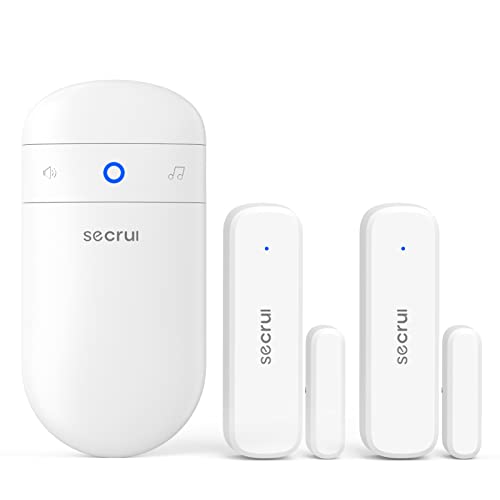
The two-sensor SECRUI open-door alarm hits a sweet spot for households that need to monitor more than one entry but don’t want to overbuy. It covers a front door and a back door, or a front door and a child’s bedroom, from a single receiver. For most small homes and home offices, that’s the right amount of coverage without paying for extras you won’t use.
Like the rest of this SECRUI family, you get 58 chimes and 5 volume levels to dial in the alert tone. The sensors mount with adhesive and detect door movement rather than requiring a button press. It’s a quieter, less conspicuous alert compared with a standard push-button doorbell, which suits caregivers who want a heads-up without announcing every visitor.
The Good Stuff
- Two sensors cover both main entry points of most apartments and small homes.
- Open-door detection works without any visitor action, useful for wandering kids or seniors.
- Compatible with the same SECRUI ecosystem, so adding more receivers later is straightforward.
- Volume range fits everything from a quiet study to a noisier retail back room.
Trade-Offs To Consider
- Like the 3-sensor kit, both sensors share a single chime tone, so you can’t distinguish doors by sound alone.
- Battery replacement on two sensors is slightly more upkeep than a single-sensor unit.
Built With In Mind
Parents of young kids and caregivers who need alerts on two specific doors, like a front entry and a bedroom.
Another Choice May Suit
Shoppers needing coverage for three or more doors should look at the SECRUI 3-Sensor Door Open Alarm for fuller monitoring.
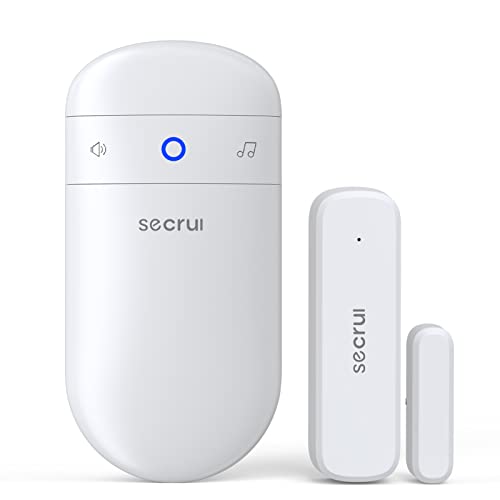
The single-sensor SECRUI door chime is the simplest starting point for anyone who just needs to know when one specific door opens. It pairs one door sensor with one receiver, which is often enough for a small shop back door, an apartment entry, or a child’s bedroom. For most first-time shoppers, the appeal is doing one job without paying for capacity you don’t need.
It carries the familiar 58 chimes and 5 volume levels, so you still get tonal variety even at the entry level. Setup follows the same plug-and-play pattern as the rest of the SECRUI family, with adhesive or screw mounting on the sensor side. It’s the natural pick when you want to test open-door alerts before expanding into a multi-sensor setup.
Strengths Worth Knowing
- Single-sensor focus keeps the price low for first-time shoppers.
- Same 58-chime library as larger kits, so you don’t sacrifice tonal choice.
- Easy to expand later by adding sensors or receivers from the same SECRUI line.
- Compact receiver fits on a small shelf or counter without dominating the space.
Possible Compromises
- Only covers one door, so larger homes with multiple entries will outgrow it quickly.
- Doesn’t include the LED visual alert that some larger kits offer, depending on configuration.
Core Details
Who Will Love This
First-time shoppers with a single door to monitor, like a small shop back entry or a child’s bedroom.
Consider Something Else When
Households that need coverage on two or three doors should jump to the SECRUI 2-Sensor or 3-Sensor kits for a better fit.
Choosing The Right Doorbell Chime For Your Space
Picking the right doorbell chime starts with how you’ll actually use it. A push-button wireless kit works well when you just want to hear visitors at the front door, while open-door sensor kits make more sense for households managing child safety, dementia care, or shop-entry alerts. Think about the number of doors you need to monitor, where you’ll plug in receivers, and whether a visual LED cue matters for anyone in the home.
Sound, Volume, And Visual Cues
Most modern wireless chimes offer 30 to 60 melody options, which sounds like a lot until you live with a tinny default tone for six months. Adjustable volume matters more than people expect, especially if you live in a split-level home where the chime sits far from your main living space. A LED flash on the receiver is a quiet bonus for anyone in the household who is hard of hearing or works with the volume muted.
Wired Vs. Wireless And Sensor Vs. Button
Wired chimes deliver consistent power and tie into your home’s existing doorbell wiring, but they require more installation effort. Wireless plug-in kits skip the wiring entirely and trade that simplicity for an occupied outlet. Sensor-based chimes detect door movement without requiring a press, which suits safety scenarios, while button-based chimes remain the standard for visitor alerts at the front door.
Range, Expansion, And Real-World Layouts
Manufacturer range ratings, often quoted at 500 or 1000 feet, assume open air. Walls, floors, and metal doors cut that range in real homes, so plan for less than the headline number. For most apartments and small homes, a single receiver handles the job, but two-story houses usually benefit from a two-receiver kit or a sensor-and-receiver combo that covers upstairs and downstairs.
What To Watch For Before You Buy
Shopping for doorbell chimes can feel deceptively simple, since most kits look similar on the surface. A few common mistakes catch first-time shoppers off guard, and a quick awareness of what separates entry-level kits from higher-end options helps you spend wisely.
Pitfalls Shoppers Hit
The most common trap is buying a single-receiver kit for a two-story home and then realizing you can’t hear it from upstairs. Another is choosing a button-only chime when you actually needed an open-door sensor for safety. Range claims also mislead shoppers who forget that interior walls, especially brick or concrete, shrink the working distance considerably. Confirming the number of receivers, the type of trigger, and your home’s layout before ordering prevents each of these headaches.
Where The Extra Money Goes
Spending more on a doorbell chime typically buys you additional sensors or receivers, longer wireless range, weatherproof buttons rated for harsher climates, and memory functions that remember your last settings after a power outage. Higher-tier kits also tend to include better volume ranges, from a quiet whisper to a genuinely loud 120 dB alert. The upgrade pays off most in larger homes, multi-entry layouts, or households where reliability matters more than the absolute lowest cost.




