

Smart lighting earns its keep when the routines feel invisible. You walk in, the room softens to a warm reading glow, and your hands stay full. Pick the wrong bulb, though, and you fight flaky Wi-Fi, dimming quirks, and color modes that look more like a toy than a tool.
These eight picks cover everything from cinematic RGBWW studio bulbs to everyday accent lighting. You get clear guidance on what each one does well, where it falls short, and which fits your rooms best.
A Quick View Of The Lineup

Philips Hue Smart 60W A19 LED Bulb 2-Pack
Aputure Accent B7C Smart LED Bulb 7W RGBWW
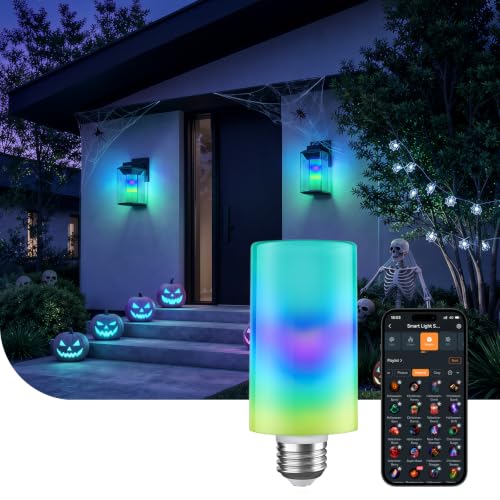
Linkind Smart Light Stick 850lm T19 Bulb
Philips Hue B39 Candle Bulb E12

Tapo L535E Multicolor Smart Bulb 2-Pack

Tapo L535E Multicolor Smart Bulb 4-Pack

Linkind Smart Bulb with AiDot App

Tapo L530E Smart Light Bulb 4-Pack
The Picks, Examined More Closely
The Philips Hue A19 is the safe starting point for anyone building a real smart lighting system rather than a single novelty lamp. It drops into a standard E26 socket, pulls about 9 watts for roughly 800 lumens, and pairs over Bluetooth for the first ten bulbs in a single room, no extra hardware required. Add the Hue Bridge later and the same bulb unlocks automations, remote access, and the full Hue app toolkit.
Compared to the Aputure B7C reviewed later, this Hue is built for ambient home use rather than cinematic color work. You get reliable voice control through Alexa, Google Assistant, and Apple HomeKit, plus steady dimming without buzzing. For renters and homeowners who want one brand that grows with the house, this is the most forgiving entry point on the list.
Useful Strengths
- Full spectrum of whites from warm to cool alongside millions of color tones, replacing two or three specialty bulbs.
- Bluetooth onboarding means you skip the hub for the first room, lowering the cost to try the system.
- Hue ecosystem is one of the widest supported, so add-on switches, motion sensors, and outdoor fixtures join cleanly later.
- Two-pack ships enough bulbs to light a small living room or a bedroom suite from one order.
Things To Consider
- Without the Hue Bridge, you lose away-from-home control and some advanced routines.
- Sticker price per bulb runs higher than budget picks like the Tapo L530E.
Who It Suits Best
Homeowners who plan to expand smart lighting room by room and want the most reliable ecosystem in the category.
Look Elsewhere When
Budget-focused shoppers will get more coverage for less from the Tapo L530E 4-Pack, especially if a single living room is the only priority.
The Aputure B7C sits in a different lane from the Hue A19. This is a 7-watt RGBWW bulb (RGB plus dedicated warm and cool white LEDs) tuned for color-critical work, not casual ambient glow. It carries a CRI above 95 and a TLCI above 96, meaning skin tones and product colors render with studio-grade accuracy when you’re filming or photographing.
CCT range stretches from 2,000K to 10,000K, with built-in FX modes that simulate paparazzi flashes, fireworks, and faulty bulbs for narrative lighting. App control replaces the typical consumer smart-home ecosystem, so it is not an Alexa-or-Google bulb. Creators, podcasters, and anyone lighting video content at home will get the most out of it.
Useful Highlights
- CRI 95+ and TLCI 96+ ensure skin tones and product shots render true to life on camera.
- Dual dedicated white LEDs alongside RGB deliver cleaner whites than standard RGB bulbs.
- HSI, CCT, and nine built-in FX modes cover everything from interviews to stylized mood scenes.
- Sidius app unlocks pixel-level control when you’re on set or in a home studio.
Honest Caveats
- Only 7W of output, so it is dimmer than the 800-lumen Hue or the 1100-lumen Tapo L535E for general lighting.
- No mainstream voice platform integration, which limits day-to-day convenience outside the studio.
Key Specs
Built With In Mind
Filmmakers, photographers, and content creators who need broadcast-grade color from a household socket.
Swap It Out When
Everyday living-room use is better served by the Philips Hue A19, which pairs with voice assistants and a fuller smart-home ecosystem.
Most smart bulbs hide inside a fixture, but the Linkind Light Stick is shaped to be seen. The T19 form factor (roughly 57 by 131mm) slips into a standard E26 socket and stretches out as a slim, elongated tube. Designers and renters with exposed-socket pendants get a fixture-quality look without rewiring a thing.
Output sits at 850 lumens, slightly above a standard A19, and the bulb supports 2.4GHz Wi-Fi only. Pair it with the AiDot app, Alexa, or Google Home, and you’re set. The honest read here is that this is a style-first pick: the look is the point, and the smart features are competent rather than exceptional.
A Favorable Mix
- Elongated tube shape doubles as decor in pendant and wall fixtures where a standard A19 would look ordinary.
- 850-lumen output handles reading nooks and dining tables without an extra lamp.
- Voice control through Alexa and Google Home covers the most common smart-home setups.
Points To Note
- 2.4GHz-only Wi-Fi means older dual-band routers may need a quick network split.
- T19 shape hangs visibly from some fixtures, which is a design choice, not a flaw, but worth noting.
- No compatibility with Tuya or Smart Life ecosystems, so it’s not the right fit if you’re already invested in those platforms.
Made For
Apartment dwellers and design-conscious shoppers who want a smart bulb that doubles as a visible light fixture.
Consider Something Else When
You need higher lumen output for a large living room, where the Tapo L535E 2-Pack delivers a stronger punch.
Standard A19 bulbs do not fit a chandelier’s candelabra sockets, and that’s exactly where this Hue B39 earns its place. The E12 base and candle-style body slide into wall sconces, dining chandeliers, and decorative lanterns without looking out of place. At 450 lumens, output is modest, but decorative fixtures rarely demand more.
Functionally, you get the same Hue app experience as the A19 above, plus Matter compatibility when paired with a Hue Bridge. For homeowners retrofitting a dining room or entryway without sacrificing color control, this is the most graceful option in the lineup.
What Pays Off
- Candelabra E12 base fits chandeliers and sconces where most smart bulbs physically cannot go.
- Same color and white range as the Hue A19, keeping the lighting consistent room to room.
- Matter support through the Hue Bridge future-proofs your setup as cross-platform standards settle.
Small Caveats
- Single-pack quantity means larger chandeliers require several bulbs, multiplying the cost.
- 450 lumens is dimmer than the A19, which limits utility in task-heavy spaces.
Right Fit For
Homeowners with decorative fixtures who want smart control without ruining the aesthetic of an exposed bulb.
Skip It When
You need bulk lighting for a main living area, where the Tapo L530E 4-Pack covers more ground at a friendlier cost.
The Tapo L535E is one of the brighter consumer smart bulbs on the market, pushing 1100 lumens from a standard A19 form factor. That extra output makes it the right call for larger rooms, kitchens, and anywhere an 800-lumen bulb feels underpowered. It pairs directly with Matter, Apple Home, Alexa, Google Home, and SmartThings, skipping the hub requirement entirely.
Compared to the Hue A19 above, the Tapo delivers more raw light per bulb at a lower cost, though the app experience and ecosystem depth don’t match Philips. You trade polish for brightness and savings, and for many households that’s the right call.
Standout Benefits
- 1100 lumens comfortably lights large living rooms and open-plan spaces without doubling up on bulbs.
- Matter-certified compatibility keeps the bulb future-ready across Apple, Google, and Alexa ecosystems.
- High CRI rating means colors look clean and whites don’t drift muddy at lower dimming levels.
- No hub required, so setup is the same as a standard Wi-Fi device.
Some Limits To Know
- Runs on 2.4GHz Wi-Fi only, which can be a hurdle on newer mesh networks.
- Color depth and app polish don’t match premium ecosystems like Hue.
Quick Facts
Whose Shelf It Belongs On
Shoppers who want above-average brightness from a hub-free smart bulb that plays nicely with multiple voice platforms.
Another Choice May Suit
Owners already deep in the Hue ecosystem will find tighter integration with the Philips Hue A19 for routine-based automation.
The 4-Pack version of the Tapo L535E delivers the same 1100-lumen brightness and Matter compatibility as the 2-Pack, just doubled for households outfitting multiple rooms at once. Families outfitting a whole floor in a single afternoon get a cleaner path here than mixing and matching SKUs.
You’ll find the same 2.4GHz Wi-Fi caveat and the same lack of Hue-level polish, but the practical appeal is straightforward: buy one box, light four rooms, and you’re done. For growing households, that’s a real convenience.
Where It Helps
- Four bulbs per box means consistent lighting across living room, bedrooms, and hallways without mismatched models.
- Same 1100-lumen brightness handles larger and smaller rooms alike.
- Matter compatibility keeps the setup flexible if you later add Apple Home or SmartThings.
Practical Considerations
- All four bulbs live on 2.4GHz Wi-Fi, so a crowded network can slow initial pairing.
- Bulk packaging offers less flexibility for households that only need two bulbs.
Best Suited To
Multi-room households and families that want to upgrade an entire floor with one purchase.
Reach For A Different Pick When
Single-room upgrades make more sense with the Linkind AiDot bulb if you only need two fixtures done today.
The Linkind AiDot bulb is the lowest-friction way to test what smart lighting actually feels like. No hub, no extra app subscriptions, just download AiDot, link your Alexa or Google account, and you’re speaking commands within minutes. For renters and first-time smart-home shoppers, that on-ramp matters more than a longer spec sheet.
Color control covers the basics, dimming is smooth, and voice integration handles the everyday commands. Where this bulb doesn’t compete with the Hue or Tapo lines is in-depth ecosystem support and color accuracy, but for one or two rooms on a starter budget, it’s a sensible call.
What Earns Its Place
- Hub-free setup and a short path to Alexa and Google voice control.
- Affordable entry point for shoppers testing smart lighting for the first time.
- Standard A19 form factor fits most lamps and ceiling fixtures.
A Few Limitations
- AiDot app ecosystem is smaller than Hue or Tapo, so advanced routines feel limited.
- Color rendering is serviceable but not as refined as higher-tier alternatives.
- Depends on a stable 2.4GHz network for reliable performance.
Perfect Match For
First-time smart-light shoppers and renters who want to dip a toe in without committing to an ecosystem.
A Better Fit Elsewhere
Whole-home upgraders will find the Tapo L530E 4-Pack a stronger long-term value for the same per-bulb investment.
The Tapo L530E is the 800-lumen sibling to the brighter L535E above, offered in a 4-Pack for whole-home rollouts. Each bulb draws about 9 watts for 60W-equivalent output and covers up to 16 million RGBW colors. CRI sits above 90, which is unusually high for a budget-tier bulb.
Setup skips the hub entirely, and the Tapo app handles grouping, schedules, and away modes for the full set. For shoppers outfitting a house on a tight budget, this is the strongest value play in the entire lineup, and the closest direct comparison to the Hue A19 2-Pack at a friendlier per-bulb price.
What It Does Well
- Four-bulb bundle covers most small homes or apartments in a single purchase.
- CRI above 90 means colors stay clean even when rendering warmer skin tones.
- Hub-free setup and reliable Alexa plus Google Home support.
- 16 million color steps handle accent lighting and holiday scenes without obvious banding.
Where It May Fall Short
- 800 lumens per bulb is dimmer than the 1100-lumen Tapo L535E for large rooms.
- 2.4GHz-only networking can complicate pairing on crowded mesh systems.
Feature Snapshot
Who Should Grab It
Households planning to outfit three or four rooms with smart color lighting on a single sensible budget.
Not Your Match When
You want premium polish and tighter app integration, where the Philips Hue A19 earns its higher sticker price.
What To Weigh Before Picking Smart Color Changing Light Bulbs
Brightness, color depth, and ecosystem fit are the three filters that actually decide whether a smart bulb feels invisible or annoying in daily use. A bulb that shines at 800 lumens can wash out a large open-plan room, while a 1100-lumen bulb in a small bedroom feels harsh at full output. Match the lumen count to the room size first, then worry about color accuracy and app polish.
Color quality lives in two numbers. CRI (Color Rendering Index) measures how accurately the bulb renders natural tones, and a rating above 90 is excellent for everyday living and casual photography. CCT (Correlated Color Temperature) is the Kelvin scale from warm amber to cool daylight, and a wide range (say 2,000K to 6,500K) means the bulb can handle cozy evenings and focused work sessions in the same fixture.
Ecosystem fit matters more than people expect. A Hue bulb in a Google Home household works fine, but routines and voice shortcuts are smoother when the bulb’s native platform matches the rest of your gear. Matter-certified bulbs like the Tapo L535E bridge multiple ecosystems cleanly, which makes them a smart hedge if your smart-home setup may shift in the next few years.
Hub or no hub is the final fork. Hub-based systems like Hue offer stronger reliability and broader accessory support, but they add cost up front. Hub-free Wi-Fi bulbs like the Linkind AiDot or Tapo lines trade some ecosystem depth for simpler onboarding and lower total spend. For renters and first-time shoppers, hub-free is usually the easier path.
Key Considerations Across These Picks
Traps First Timers Fall Into
The most common slip is choosing a bulb only by color count. Sixteen million colors sound impressive until you realize you cycle through the same five in a year. CRI, dimming smoothness, and ecosystem support affect daily satisfaction far more than headline color numbers.
Another frequent mistake is ignoring the Wi-Fi band. Most budget smart bulbs run on 2.4GHz only, and newer mesh routers sometimes default to 5GHz networks or band-steering that confuses initial pairing. Checking router settings before setup saves an hour of frustration.
Where The Extra Money Goes
Premium-tier bulbs like the Philips Hue A19 command higher prices for ecosystem depth, smoother dimming curves, and longer warranty support. The hardware is similar, but the software experience, app reliability, and cross-device routines run noticeably tighter than budget alternatives.
For a single room or starter setup, that premium rarely pays off. For households building a five-or-more-bulb system with routines, motion sensors, and away-from-home control, the Hue ecosystem earns its place over time, especially when you factor in the cost of replacing unreliable budget bulbs a year later.
Frequently Asked Questions
Do smart color changing light bulbs need a hub?
Some do, some don’t. Hue bulbs work over Bluetooth for basic control but require the Hue Bridge for full features, automations, and remote access. Tapo and Linkind bulbs connect directly to 2.4GHz Wi-Fi and skip the hub entirely.
Can I use smart bulbs with traditional dimmer switches?
You should avoid pairing smart bulbs with old wall dimmers, since the combined circuitry often causes buzzing or flickering. The safest setup is a standard on-off switch and dimming handled through the app or voice assistant.
What does CRI mean on a smart bulb?
CRI stands for Color Rendering Index, a score from 0 to 100 that measures how accurately the bulb shows natural colors. A CRI above 90 produces clean, accurate tones, while lower scores can make whites look muddy or skin tones appear off.
Will smart bulbs work during a power outage?
No. Smart bulbs are powered fixtures like any other bulb, so they go dark when the power cuts. Automations and schedules resume once power returns and the bulbs reconnect to Wi-Fi, which usually takes under a minute.
Are smart color changing light bulbs worth it for a single room?
For one room, budget-friendly options like the Linkind AiDot or Tapo L530E deliver the most value. Premium picks like the Hue A19 pay off when you plan to expand to multiple rooms and want routines that link across the whole home.
The Takeaway
Smart color changing light bulbs have crossed the line from gadget to genuinely useful home upgrade. Start with the room that gets the most daily use, pick a lumen count that matches its size, and lean on Matter-certified options like the Tapo L535E if your smart-home setup is still evolving. Once the routines feel natural, expanding room by room is the easy part.
