

The next big storm has a way of showing up right when you don’t need it. A propane home generator keeps the fridge cold, the sump pump running, and the Wi-Fi alive through multi-day outages, and it does so on a fuel that stores cleanly for years. This roundup looks at ten models built for real homes, not just job sites, so you can match the right size and feature set to your house, your climate, and how long you like to ride out a blackout.
A Side-By-Side Look

Westinghouse WGen11500TFc Tri-Fuel Portable Generator

Westinghouse WGen10500TFc Tri-Fuel Portable Generator

Westinghouse WGen9500DF Dual Fuel Portable Generator

Honda EU2200i Companion Inverter Generator
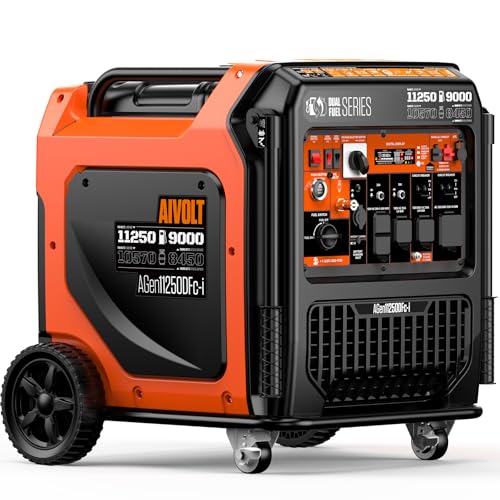
AIVOLT 11250W Dual Fuel Inverter Generator

Honda EB2200i Industrial Inverter Generator

Honda EB5000 5000W Industrial Generator

Westinghouse iGen12000TFc Tri-Fuel Inverter Generator

AIVOLT 4300W Dual Fuel Inverter Generator
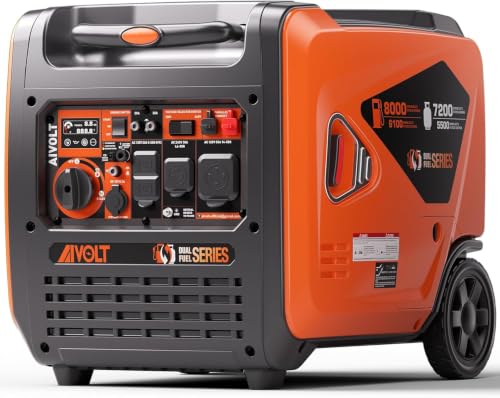
AIVOLT 8000W Dual Fuel Inverter Generator
Inside Each Recommended Option
The Westinghouse WGen11500TFc is the kind of generator that turns a multi-day outage into a mild inconvenience rather than a disaster. It’s a tri-fuel design, meaning it runs on gasoline, propane, or natural gas, which gives you real flexibility when fuel supplies get tight after a storm. For most large homes running a fridge, a furnace, lights, and a router at the same time, that headroom is more than welcome.
You’ll appreciate the remote electric start when the power dies at 2 a.m. and the rain is coming down sideways. Transfer switch readiness means an electrician can wire it into your panel for clean, whole-home backup. Compared to the smaller Honda inverters further down this list, this is a heavy portable, not a tailgate unit, so plan on a sturdy pad and a clear path for placement.
The Good Stuff
- Tri-fuel capability lets you switch between gasoline, propane, and natural gas as availability shifts.
- 14,500 peak watts handles central air, electric ranges, and well pumps at the same time.
- Remote electric start avoids trudging out to a cold engine in bad weather.
- Transfer switch ready, so an electrician can integrate it cleanly with your home panel.
- Built-in CO sensor for an extra layer of indoor-air safety.
Things To Consider
- Heavier than a typical portable, so a wheel kit and a second pair of hands really help.
- Conventional open-frame design runs louder than the inverter models below.
- Propane and natural gas hookups usually require a pro for the first install.
Key Specs
Best Suited To
Owners of larger homes in storm-prone regions who want one unit to cover nearly every circuit during a multi-day blackout.
Skip It When
The Honda EU2200i Companion suits you better, since it weighs a fraction as much and is plenty for a fridge, a few lights, and phone charging in a small home or apartment.
The WGen10500TFc sits one step down from its bigger sibling but keeps the same tri-fuel flexibility. With 13,500 peak watts and 10,500 running watts on tap, it has more than enough output for a mid-to-large home that wants to run the essentials plus a window AC or a furnace blower without juggling loads.
Where this generator stands out is balance. You still get gasoline, propane, and natural gas capability, remote start, and transfer switch compatibility, but in a slightly smaller footprint than the WGen11500TFc. For households that don’t need to power a 5-ton central air system, this is often the smarter fit.
Real-World Strengths
- Tri-fuel operation keeps fuel options open during regional shortages.
- Remote electric start saves a late-night trip into the garage.
- Transfer switch ready for a clean tie-in to your breaker panel.
- Cast iron engine sleeve supports long engine life under heavy use.
Honest Caveats
- Still a heavy unit, so storage planning matters in tighter yards.
- Conventional generator, not an inverter, so noise is significant under load.
- Fuel switching instructions take a careful read-through the first time.
Who It Suits Best
Mid-to-large households that want serious tri-fuel capacity without stepping all the way up to the biggest model in the lineup.
Look Elsewhere When
You only need to cover a few small loads and value quiet, in which case the Honda EB2200i is a much easier machine to live with day to day.
The WGen9500DF is a workhorse dual fuel generator that has earned its keep in countless driveways. You get gasoline and propane operation, 12,500 peak watts, and remote electric start, all in a package that tends to come in at a friendlier price than the tri-fuel models above it.
For a household that wants real backup muscle but doesn’t necessarily care about natural gas hookups, this is often the sweet spot. It pairs nicely with a basic transfer switch and a 250-gallon propane tank if you want to ride out long outages. Compared to the AIVOLT 8000W later in this roundup, the Westinghouse trades inverter quietness for higher raw output at a lower cost.
Everyday Perks
- Dual fuel design means gasoline or propane, whichever is on hand.
- 12,500 peak watts easily covers a fridge, freezer, and furnace blower together.
- Remote start is a real comfort when the power drops at bedtime.
- Transfer switch ready, with a matching inlet box sold as an add-on.
Points To Keep In Mind
- Conventional generator, so it will be louder than the inverter picks in this list.
- Propane output is slightly lower than gasoline, so size loads accordingly.
Feature Snapshot
Right Fit For
Budget-focused households that want a serious propane-capable backup without stepping into premium pricing territory.
A Better Fit Elsewhere
The Westinghouse iGen12000TFc is a better match when you also need clean inverter power for laptops, TVs, and audio gear, and you can handle the higher cost.
The Honda EU2200i Companion is what you reach for when you want a generator you can actually have a conversation next to. Inverter technology (a system that produces clean, stable power safe for sensitive electronics) keeps the output smooth, so phones, laptops, and modern TVs run without complaint. At around 2,200 watts, this is light-duty backup territory, but for a small fridge, a CPAP, and a few lights, it punches above its weight.
The built-in 30A outlet makes parallel pairing simple, so you can run two units together for higher output when you need it. For RV owners and small-home dwellers, the EU2200i is one of the most refined little generators you can buy. Where it doesn’t compete is whole-home coverage, where the Westinghouse tri-fuel units take over.
Strong Points
- Inverter output is safe for laptops, TVs, and audio gear.
- Runs at 48 to 57 dB(A), quiet enough for campgrounds and close neighbors.
- 30A outlet allows easy parallel connection with a second unit.
- Light enough to load into a trunk or RV bay by one person.
Trade Offs
- 2,200 watts is not enough to back a whole house or large appliances.
- Fuel source varies, so plan for the propane conversion path if you want that option.
Made For
RV owners, apartment dwellers, and anyone who values quiet, clean power for a handful of essentials during shorter outages.
Consider Something Else When
You need to back a well pump or central air, in which case the Honda EB5000 or the Westinghouse WGen10500TFc are far more appropriate tools for the job.
The AIVOLT 11250W brings inverter-clean power to a wattage range usually dominated by loud open-frame generators. You get 11,250 starting watts and around 9,000 running watts on gasoline, with a slightly lower figure on propane, plus a 50-amp outlet that’s friendly to large RVs and food trucks.
For homeowners with a transfer switch and a stable electronics load, this is an interesting middle ground. It runs the fridge, the router, and a window AC unit quietly enough that you can put it closer to the house than a conventional generator. Compared to the Westinghouse WGen9500DF, you trade a bit of raw peak wattage for cleaner output and lower noise.
Real Benefits
- Inverter output is gentle on sensitive electronics.
- Dual fuel design gives you gasoline or propane flexibility.
- 50A outlet is a strong match for large RV and food-truck users.
- Compatible with automatic transfer switch (ATS) setups for hands-free handoff.
Worth Noting
- Heavier than a typical portable inverter, so plan on wheels and a level surface.
- Larger investment than a basic open-frame model of similar output.
Who Should Grab It
Homeowners with significant electronics loads who want inverter-level power quality in a 10,000-watt-class machine.
Another Choice May Suit
The AIVOLT 8000W Dual Fuel Inverter Generator is a better match if you don’t need the extra 3,000 watts and want something easier to wheel around.
The Honda EB2200i is the contractor-friendly sibling of the EU2200i, with a tougher exterior built for jobsite abuse. The 120V inverter output, low 48 to 57 dB(A) noise level, and dependable Honda engineering make it a favorite on framing crews and small-event teams.
At home, the EB2200i slots in as a serious backup for a fridge, internet gear, and a few small tools during an outage. Where the EU2200i is the recreational pick, this is the one that takes a beating and keeps running. It’s not designed for whole-home duty, so pair it with the larger Westinghouse units in this list if you need broader coverage.
Notable Upsides
- Industrial-grade frame and components hold up to rougher handling.
- Inverter output is safe for sensitive electronics and power tools alike.
- Quiet operation around the same 48 to 57 dB(A) range as the EU2200i.
- Honda’s reputation for long engine life under regular maintenance.
A Few Limitations
- 2,200 watts is light for full home backup, so load planning is essential.
- Higher cost per watt than basic open-frame competitors.
Quick Facts
Whose Shelf It Belongs On
Contractors, hobbyists with a small shop, and homeowners who want a quiet, durable secondary generator alongside a larger backup unit.
Where Another Pick Suits Better
The Honda EU2200i Companion is the right pick for RV travel, while this EB2200i is better if you mostly need a tough unit that lives in a truck bed or garage.
The Honda EB5000 is the workhorse that bridges the gap between small portable inverters and full-size home backup units. With 5,000 running watts and 120/240V output, it can handle a well pump, a small AC unit, or a furnace blower that the smaller Hondas simply can’t touch.
Honda’s iAVR (Intelligent Automatic Voltage Regulation) technology keeps the output steady, which matters when you’re running tools or sensitive motors. At 63 to 65 dB(A) under load, it’s noticeably quieter than most open-frame competitors. Compared to the Westinghouse WGen9500DF, the EB5000 gives up raw wattage for cleaner voltage and a longer expected service life.
Where It Delivers
- 120/240V output supports well pumps and 240V appliances directly.
- iAVR technology helps maintain stable voltage under varying loads.
- Industrial build quality for daily jobsite and emergency use.
- Lower noise floor than most comparably sized open-frame generators.
Potential Compromises
- 5,000 watts is still modest for full whole-home coverage.
- Premium pricing for the Honda badge, even before adding a wheel kit.
Perfect Match For
Homeowners with 240V loads like well pumps or small window AC units who want a long-lasting, low-vibration machine.
Not Your Match When
You need to back a central air system or the whole house at once, in which case the Westinghouse WGen10500TFc is a more appropriate step up.
The iGen12000TFc is Westinghouse’s answer to anyone who wants a big, tri-fuel machine without the typical open-frame roar. With 12,000 peak watts and inverter technology keeping total harmonic distortion (the electrical “noise” that can damage sensitive gear) under 3%, you can power laptops, TVs, and audio systems without worrying about dirty power.
Tri-fuel operation, remote start, transfer switch readiness, and parallel capability all show up here. Eco Mode helps stretch fuel during long runtimes, and the CO sensor adds peace of mind in enclosed spaces. Against the conventional WGen10500TFc, this model trades a bit of raw simplicity for cleaner output and noticeably quieter operation.
Standout Benefits
- Under 3% THD output is safe for sensitive electronics.
- Tri-fuel flexibility across gasoline, propane, and natural gas.
- Eco Mode adjusts engine speed to load for better fuel economy.
- Parallel capable, so you can chain two units for higher output if needed.
Some Limits To Know
- Larger and heavier than the smaller Westinghouse portable units.
- Higher investment than a comparable open-frame generator of similar wattage.
Who Will Love This
Homeowners with significant electronics loads who want tri-fuel flexibility in a quieter, more refined package than a traditional open-frame generator.
Reach For A Different Pick When
The AIVOLT 8000W Dual Fuel Inverter Generator is a better fit if you don’t need the extra wattage and want something easier to wheel around the yard.
The AIVOLT 4300W is built for movement. At roughly 64 pounds with a telescoping handle and built-in wheels, it’s the easiest generator in this roundup to roll from the car to a campsite or to wheel out from a shed when the lights go out.
You get 4,300 starting watts, dual fuel operation on gasoline or propane, and a 30A outlet designed for RV air conditioners. The remote key fob means you can start it from inside the camper or the kitchen. It’s not large enough to back a whole home, but for renters, RV owners, and small-space households, it’s a versatile, travel-friendly machine.
Positive Points
- Lightweight build with a telescoping handle and wheels for easy transport.
- Remote start key fob is rare at this size and price.
- Dual fuel design gives you gasoline or propane flexibility.
- 53 dB rating keeps operation comfortable in campgrounds and neighborhoods.
Where It May Fall Short
- 4,300 watts won’t cover central air or large household loads.
- Smaller fuel tank means more frequent refueling on long runtime days.
Feature Card
Who Should Grab It
Campers, RV travelers, and renters who want portable dual fuel power that’s easy to load, move, and store.
Swap It Out When
You actually need whole-home coverage, in which case the Westinghouse WGen9500DF or a Honda EB5000 is a more serious tool for the job.
The AIVOLT 8000W lands in a useful middle spot. With 8,000 surge watts and 6,100 running watts from a 322cc engine, it’s big enough to back a fridge, a window AC, and a few smaller circuits at the same time, yet still portable enough to move around a yard or load into a truck bed.
Dual fuel operation, a 50A RV outlet, and Eco Mode for fuel economy round out the package. The 100% copper windings (the coiled wire inside the generator that produces electricity) tend to run cooler and last longer than aluminum alternatives, which is a quiet long-term value point. For homeowners who want more than a small inverter but aren’t ready for a 12,000-watt unit, this is a reasonable middle ground.
Reasons It Performs
- Dual fuel flexibility across gasoline and propane.
- 50A RV outlet works with larger motorhomes and food trucks.
- Eco Mode stretches runtime and reduces fuel use at lighter loads.
- Copper windings support cooler operation and longer service life.
Practical Considerations
- 8,000 watts still won’t cover a full central air system or large electric range.
- Bulkier than the smaller AIVOLT 4300W, so storage space matters.
Built With In Mind
Homeowners, RV travelers, and small business owners who want a versatile mid-size inverter for backup, travel, and jobsite use.
Where A Sibling Pick Shines
The AIVOLT 4300W is the better pick if portability is the top priority, while the Westinghouse iGen12000TFc is the right step up for whole-home tri-fuel coverage.
Picking the Right Propane Generator for Your Home
Generator shopping rewards a clear head and a rough load list. Before you fall for a wattage number, walk through your home and write down what truly must run during an outage: fridge, freezer, furnace blower, well pump, sump pump, internet, medical devices. Add the running watts of those items, then add the largest startup surge on top (motors and compressors briefly pull extra power when they kick on). That number is your real minimum.
Fuel type matters more than most people expect. Gasoline is convenient but degrades in storage and is hard to find after a big storm. Propane stores indefinitely in a tank and burns cleaner, which is why a propane-capable generator is often the better home choice. Natural gas is even cleaner but requires a utility hookup, so tri-fuel units are worth considering if you want every option available. Inverter models like the Honda EU2200i or the Westinghouse iGen12000TFc produce cleaner power that protects sensitive electronics, while open-frame units usually cost less per watt and deliver more raw output.
Sizing the Unit to Your Outage Plan
Think about how long your typical outage lasts and which fuel you can store on site. A small inverter in the 2,000 to 4,000-watt range handles a fridge, lights, and charging for a day or two. A 5,000 to 8,000-watt machine, like the Honda EB5000 or AIVOLT 8000W, adds well pumps, window AC units, and longer runtimes. A 10,000 to 14,500-watt tri-fuel generator covers most whole-home needs but needs more space, a sturdy pad, and likely a transfer switch installed by an electrician.
Noise, Placement, and Neighbor Relations
Open-frame generators run louder than inverter models, often in the 70+ dB range at full load. If your generator will sit close to a neighbor’s bedroom window, that matters. Inverter units in the 48 to 60 dB range are far easier to live with, though they typically cost more per watt. Either way, plan on a level, ventilated spot at least 20 feet from doors and windows, with a weatherproof cover or shelter overhead.
Installation and Long-Term Care
A transfer switch is a real safety upgrade. It prevents backfeeding (the dangerous flow of generator power back into utility lines that can injure line workers) and lets you run selected home circuits without running extension cords through the house. Most of the Westinghouse and AIVOLT units in this list are transfer switch ready. Beyond that, oil changes every 50 to 100 hours, fresh fuel or fuel stabilizer, and a quick run every few months are the basics of keeping a generator ready when you actually need it.
Key Considerations Across These Picks
Common Buying Slip Ups
A frequent mistake is sizing the generator to your total home load rather than your critical load. You don’t need to run every circuit during an outage, and oversizing leads to wasted fuel and money. Another trap is forgetting about startup surge; a fridge might run on 200 watts but spike to 1,200 at compressor kick-on. Plan for that spike. Finally, don’t skip the transfer switch. Running extension cords through a house is workable for one night, but it’s not a long-term solution and it can overload individual outlets.
When Paying More Pays Off
The premium for an inverter generator, a tri-fuel system, or a Honda badge usually shows up in three places: noise, fuel flexibility, and long-term reliability. Inverter models let you place the unit closer to the house without raising complaints. Tri-fuel capability keeps you running when one fuel type runs dry. Industrial-grade engines, like the Honda EB5000, tend to run for years with basic care, which justifies a higher upfront cost for households that depend on backup power every storm season.
Frequently Asked Questions
How long can a propane home generator run on a standard tank?
Most propane home generators paired with a 100-pound or 250-gallon propane tank can run between 5 and 20 hours depending on load and tank size. A 250-gallon tank at half load typically lasts well over a full day.
Do propane generators work in cold weather?
Propane generators actually perform well in cold weather because propane doesn’t degrade in storage like gasoline. Winter blends of gasoline can be harder to start, while propane stays consistent. You will need a reliable fuel line and regulator, since propane pressure can drop in extreme cold.
Is an inverter generator worth the higher cost?
An inverter generator is worth the higher cost if you plan to power laptops, TVs, and modern appliances with sensitive electronics. The cleaner power output reduces the risk of damage, and inverter units also run much quieter, which helps with neighbors and sleeping children.
Can a portable generator power a whole house?
A portable generator can power a whole house if it’s sized correctly and connected through a transfer switch. Tri-fuel models in the 10,000 to 14,500-watt range are usually the most realistic portable whole-home options.
How often should a home generator be serviced?
A home generator should be serviced roughly every 100 hours of runtime or once a year, whichever comes first. That includes oil changes, air filter checks, spark plug inspection, and a brief test run to confirm reliable starting.
Final Verdict
The right propane home generator comes down to honest answers about your house, your climate, and how you want to live through the next outage. A small inverter like the Honda EU2200i handles a fridge and the basics; a tri-fuel Westinghouse or AIVOLT unit covers a whole home for days. Match the machine to the moment you actually expect to face, and the rest of the decision tends to fall into place.




