

A good home generator is less about raw wattage and more about how calmly it handles the moment the lights go out. The right match keeps the fridge cold, the furnace blower turning, and the rest of the house livable without dragging out extension cords like a survivalist movie. This lineup covers full-home tri-fuel workhorses, quiet inverter companions, and the small interlock kits that make a portable safe to wire into your panel.
The Choices Worth Comparing

Westinghouse WGen11500TFc Tri-Fuel Portable Generator

Westinghouse WGen10500TFc Tri-Fuel Portable Generator

EXCELFU Generator Interlock Kit for Eaton BR Panels

Honda EU2200i Companion Inverter Generator
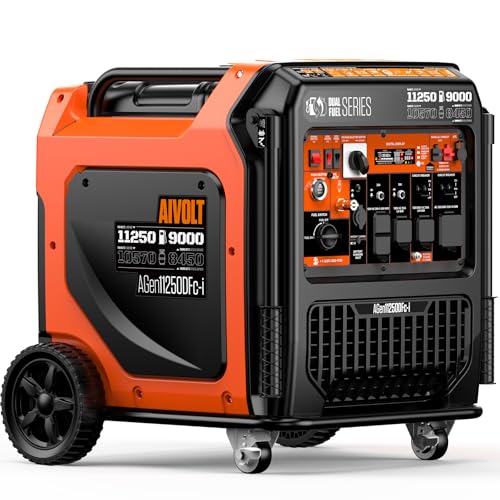
AIVOLT 11250W Dual Fuel Inverter Generator 50A

Honda EB2200i 2200W Super Quiet Inverter Generator

Honda EB5000 5000W 120/240V Quiet Generator

Flngr Generator Interlock Kit for GE Vertical Panels

AIVOLT 4300W Dual Fuel Inverter Generator
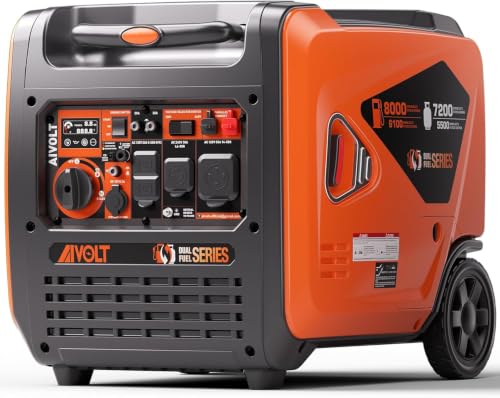
AIVOLT 8000W Dual Fuel Inverter Generator 50A
A Deeper Look At The Lineup
The Westinghouse WGen11500TFc is built for households that treat outages like a planning problem, not a surprise. A 550cc OHV engine with a cast-iron sleeve pushes 14,500 peak watts and 11,500 running watts on gasoline, with propane and natural gas as backup fuels. Tri-fuel flexibility means you’re not stuck hunting for one specific fuel during a multi-day storm.
Compared to smaller inverter models lower on this list, this is firmly in whole-home territory. A 9.5-gallon tank keeps it running up to 19 hours on gas, and remote electric start takes the cold-shiver factor out of morning cold starts in an unheated garage.
The Good Stuff
- Tri-fuel design covers gasoline, propane, and natural gas without aftermarket kits
- 14,500 peak watts comfortably handles well pumps, electric ranges, and central air in many homes
- 9.5-gallon tank stretches runtime to roughly 19 hours on gasoline
- Remote electric start and transfer-switch readiness simplify hookup to a home panel
- Cast-iron engine sleeve typically translates to longer service life under heavy use
Trade Offs
- Physical size and weight make it a two-person load and a permanent pad candidate
- Open-frame design runs noticeably louder than the inverter units further down the list
- Natural gas hookup may require a licensed plumber or gas-fitter in your jurisdiction
Made For
Owners in storm-prone regions who want one generator to run most of the house during multi-day outages.
Look Elsewhere When
The Honda EU2200i Companion is a calmer match for apartment dwellers and RV travelers who need quiet, portable power instead of whole-home capacity.
The Westinghouse WGen10500TFc steps down slightly from the 14,500-watt model above while keeping the tri-fuel flexibility intact. You still get a 500cc OHV engine, cast-iron sleeve, and the same gasoline / propane / natural gas switching. Peak output lands at 13,500 watts with 10,500 running watts, which covers nearly every practical home load short of a 5-ton central AC and electric dryer at the same time.
It runs on the same 9.5-gallon fuel tank for up to 19 hours on gasoline. Transfer-switch-ready outlets and remote electric start make day-to-day use straightforward.
Everyday Advantages
- Tri-fuel capability matches the bigger WGen above at a slightly lower output
- Up to 19-hour runtime on a full 9.5-gallon gas tank
- Remote electric start removes the manual pull-start hassle in cold weather
- Transfer-switch-ready panel simplifies safe home integration
- Cast-iron sleeve on the engine supports long service intervals
Minor Gripes
- Still a heavy, open-frame unit, so placement matters for noise and exhaust
- Running 1,000 watts below the WGen11500TFc means you must load-manage central AC more carefully
Who It Suits Best
Households that want genuine whole-home backup but don’t need the top-tier surge capacity of the larger Westinghouse.
A Better Fit Elsewhere
The AIVOLT 11250W Dual Fuel Inverter Generator is a quieter alternative for buyers who want inverter-clean power at a similar output level.
The EXCELFU interlock kit is not a generator. It is the small steel bracket that lets you legally and safely backfeed your home panel from a portable generator. Without an interlock, you can backfeed the grid, which is dangerous for utility workers and against code in most jurisdictions.
This model is built specifically for Eaton Cutler Hammer BR-series panels in 150 and 200 amp configurations, including BR and CH panels with plug-in neutrals. Mechanical interlocks physically prevent the main breaker and the generator breaker from being on at the same time, eliminating the human-error risk of flipping both at once.
What Works In Its Favor
- Brings Eaton panels up to code for safe portable generator backfeeding
- Mechanical interlock removes the chance of simultaneously closing main and generator breakers
- Works with 150A and 200A BR-series panels, including plug-in neutral variants
- Costs a fraction of a dedicated transfer switch installation
Points To Keep In Mind
- Only fits Eaton Cutler Hammer BR-series panels; the GE equivalent further down this list covers a different owner base
- Installation on a live panel should be performed by a licensed electrician in most areas
The Right Fit
Owners of Eaton BR-series load centers who already own or plan to buy a portable generator and want a code-compliant way to power their home circuits.
Consider Something Else When
Your home uses a GE vertical 150A or 200A panel, in which case the Flngr interlock kit covers your setup.
The Honda EU2200i Companion is the smaller sibling in Honda’s inverter lineup, built for portability and clean electricity. At 48 to 57 dB(A), it runs quieter than a window AC unit, which matters in campgrounds, tailgate lots, and dense neighborhoods where the Westinghouse tri-fuel units above would draw complaints.
The 30A outlet makes paralleling two units straightforward for higher loads. Inverter technology, meaning the engine speed adjusts to match demand rather than running flat-out, produces stable power safe for laptops, CPAP machines, and home networking gear. Output tops out at 2,200 watts peak.
Where It Excels
- 48 to 57 dB(A) operation is genuinely neighborhood-friendly
- Inverter output is safe for sensitive electronics like laptops and CPAP machines
- Built-in 30A outlet supports easy parallel operation for higher loads
- Lightweight enough for one person to load into an SUV or truck bed
Honest Caveats
- 2,200-watt ceiling rules out whole-home backup for central AC, electric ranges, or well pumps
- Companion models lack a 120V 30A twist-lock receptacle, so verify your RV shore cord matches
- Fuel tank capacity is small; expect to refill more often than the larger open-frame units above
Best Suited To
Campers, RV owners, and homeowners who want quiet backup power for refrigerators, modems, and small appliances during shorter outages.
Swap It Out When
You need to run a 240V well pump or central air, in which case the Honda EB5000 brings proper 120/240V output.
The AIVOLT 11250W is the kind of generator that splits the difference between the open-frame Westinghouse tri-fuels above and the smaller inverter companions. Dual-fuel capability delivers 11,250 starting watts and 9,000 running watts on gasoline, with 10,570 starting watts and 8,540 running watts on propane.
A heavy-duty 50-amp outlet makes it genuinely RV-ready and ATS-compatible, meaning it can pair with an automatic transfer switch for hands-free home backup. Inverter technology keeps the output clean enough for modern electronics.
Bright Spots
- 11,250W starting / 9,000W running on gasoline handles most home essentials
- 50A outlet is genuinely RV-ready and works with most automatic transfer switches
- Dual-fuel flexibility extends runtime when gasoline supplies run thin
- Inverter output is clean enough for sensitive electronics
Where It May Fall Short
- Larger chassis than the 4300W AIVOLT further down this list, so storage space matters
- Propane output drops about 700 running watts compared to gasoline
Feature Snapshot
Who Should Grab It
Homeowners with transfer switches or large RVs who want inverter-clean power at near-whole-home capacity.
Skip It When
You mostly camp and need a lighter unit, since the AIVOLT 4300W handles RV and camping duty with much less weight.
The Honda EB2200i shares the EU2200i platform but is positioned for contractors and jobsite use. Inverter technology delivers power clean enough for computers and modern tool electronics, and at 48 to 57 dB(A) it stays polite around customers, neighbors, and inspectors.
Output tops out at 2,200 watts, which suits lighting, corded tools, and small appliances on jobsites or in a home shop. The 120V configuration is straightforward for North American outlets.
Real-World Strengths
- 48 to 57 dB(A) output keeps noise complaints off jobsites
- Inverter-grade power is safe for laptops, cordless tool chargers, and diagnostic equipment
- Honda’s GXR120 engine is widely reported to be reliable under heavy commercial use
- Compact form factor stores easily in a work truck or trailer
Soft Spots
- 2,200-watt ceiling cannot run 240V equipment or whole-home circuits
- Single 120V output means you’ll parallel two units for higher-draw tools
Perfect Match For
Tradespeople and serious DIYers who need portable, quiet power for tools and electronics at jobsites or remote properties.
Reach For A Different Pick When
You want home backup that covers central AC, in which case the AIVOLT 11250W Dual Fuel Inverter Generator brings the necessary capacity.
The Honda EB5000 is the workhorse of the industrial lineup, delivering 5,000 running watts and bumping to 7,000 watts for 10 seconds to start larger equipment. The 120/240V output means it can power 240V tools, well pumps, and home subpanels that the smaller 2,200-watt Hondas above simply cannot.
At 63 to 65 dB(A), it is louder than the inverter models but quieter than most open-frame generators in its class. Intelligent Automatic Voltage Regulation, or iAVR, keeps output steady under varying loads, which protects sensitive equipment on the same circuit.
Good Reasons To Consider
- 7,000-watt startup surge handles motors up to 3 horsepower
- 120/240V output unlocks 240V well pumps, dryers, and subpanel feeds
- iAVR technology maintains consistent voltage under fluctuating loads
- 63 to 65 dB(A) is quieter than most open-frame generators in this output range
Some Limits To Know
- Heavier and bulkier than the inverter units; plan a permanent or semi-permanent spot
- Open-frame design means fuel and oil maintenance follow standard small-engine schedules
Whose Shelf It Belongs On
Homeowners with 240V well pumps, electric dryers, or workshop subpanels who need more muscle than a 2,200W inverter can provide.
Not Your Match When
You mostly tailgate or camp, where the quieter Honda EU2200i Companion is a lighter, more pleasant fit.
The Flngr interlock kit is the GE-panel counterpart to the Eaton BR-series kit reviewed earlier. It is a mechanical bracket that prevents the main breaker and a generator backfeed breaker from being closed at the same time, which is the safety backbone of any portable generator wired into a home panel.
This version fits GE vertical main breaker panels in 150A and 200A configurations, with a 2 1/4-inch spacing between main and branch breakers. For homes with Eaton or Siemens panels, this is the wrong kit; for GE homes, it is the right one.
The Upside
- Specifically designed for GE vertical 150A and 200A panels
- Mechanical interlock prevents accidental backfeed to the grid
- Much cheaper than a full transfer switch installation
- Compact bracket ships quickly and installs with standard tools
A Few Limitations
- Only fits GE panels with 2 1/4-inch spacing between breakers; confirm before ordering
- Installation on a live panel should be done by a licensed electrician in most jurisdictions
Built With In Mind
Owners of GE vertical main breaker panels who want a code-compliant way to backfeed their home from a portable generator.
Where Another Pick Suits Better
Homeowners with Eaton Cutler Hammer BR panels should use the EXCELFU interlock kit, which is built for that specific panel family.
The AIVOLT 4300W packs dual-fuel capability into a unit weighing about 64 pounds, which is light enough to lift into a truck bed without throwing out your back. Built-in wheels and a telescoping handle let you roll it across a campsite instead of carrying it.
At 53 dB, it sits between the louder Honda EB5000 above and the very quiet inverter companions, which is a comfortable compromise for RV parks with noise rules. A 30A outlet and key-fob remote start make morning warm-ups painless from inside the RV.
Benefits That Matter
- 53 dB operation is friendly to most RV park noise ordinances
- 64-pound dry weight plus wheels and handle make it genuinely portable
- Dual-fuel flexibility supports gasoline or propane depending on what’s on hand
- Key-fob remote start works from inside the RV cab
Worth Bearing In Mind
- 4,300-watt ceiling limits whole-home backup to essentials, not central AC
- Dedicated 30A outlet may need an adapter for some RV shore-cord configurations
Right Fit For
RV owners and campers who want inverter-clean power with enough headroom for a microwave and roof AC without towing a 200-pound open-frame generator.
Another Choice May Suit
Homeowners needing whole-home backup should look at the AIVOLT 11250W Dual Fuel Inverter Generator, which triples the output in a larger package.
The AIVOLT 8000W sits between the 4,300W AIVOLT above and the 11,250W AIVOLT in the middle of this list. A 322cc 4-stroke OHV engine with copper windings pushes 8,000 peak watts and 6,100 running watts, while an Eco-Mode function dials the engine back under light loads for fuel savings.
Rated runtime is over 10 hours at 25% load, which is realistic for typical backup use. The 50-amp outlet opens it up to larger RVs and food trucks without adapter juggling.
Strong Points
- 8,000W peak / 6,100W running covers most home circuits without load-shedding
- Copper windings on the alternator tend to dissipate heat more efficiently than aluminum
- Eco-Mode stretches runtime past 10 hours at 25% load
- 50A outlet is RV-ready and food-truck-friendly out of the box
Points To Note
- Heavier and bulkier than the 4,300W AIVOLT, so storage and transport take planning
- Open-frame noise level is higher than the smaller inverter companions on this list
Who Will Love This
Large-RV owners and homeowners with mid-size backup needs who want inverter-clean output without stepping up to a 10,000W-plus open-frame unit.
A Better Fit Elsewhere
Buyers needing whole-home coverage during multi-day outages should consider the Westinghouse WGen11500TFc at the top of this list.
Matching the Right Generator to the Way You Actually Live
Buying a home generator is mostly a sizing and fuel problem disguised as a shopping problem. Start with the loads you cannot live without during an outage: fridge, freezer, internet, sump pump, furnace blower, and any medical equipment. Add up their running watts, then look for a generator whose continuous rating clears that total with comfortable headroom for startup surges from motors and compressors.
Fuel choice matters more than people expect. Gasoline is easy to source but goes bad in storage and disappears fast during regional emergencies. Propane stores indefinitely and burns clean, but tanks run out. Natural gas pipes straight into the house but requires professional hookup. Tri-fuel units like the Westinghouse WGen11500TFc and WGen10500TFc cover all three, which is real flexibility during a multi-day storm.
Inverter versus open-frame is the next big decision. Inverter generators, including the Honda EU2200i, EB2200i, and the AIVOLT 4300W, 8000W, and 11250W in this list, throttle the engine to match demand, run quieter, and produce clean power safe for laptops and modern electronics. Open-frame workhorses like the Honda EB5000 are louder and rougher on power but handle heavy 240V tools and well pumps. Inverter output is also the right call for dense neighborhoods and campgrounds with noise rules.
Noise is the underappreciated factor. Open-frame units in the 60 to 70 dB range are louder than a vacuum cleaner and will draw neighbor attention during long outages. Inverter units in the 48 to 57 dB range are conversational-level and easier to live with. For campground and RV park use, anything above 60 dB can violate posted rules.
Finally, do not skip the interlock kits or transfer switches. An interlock is the mechanical bracket that prevents dangerous backfeed to the utility grid when a portable generator is wired into your home panel. The EXCELFU and Flngr kits above cover the two most common residential panel families. Either kit, plus a portable generator, delivers most of the benefit of a hardwired standby unit at a fraction of the cost.
Key Considerations Across These Picks
Pitfalls Shoppers Hit
The most common mistake is buying a generator that is technically big enough but ignores startup surge. Refrigerators, well pumps, and central air compressors draw two to four times their running wattage for a few seconds at startup. A 5,000-watt running rating can still struggle to start a 3-horsepower well pump. Look for models with documented surge capacity, like the Honda EB5000’s 7,000-watt ten-second burst.
The second trap is forgetting the panel compatibility step. Interlock kits are not universal. The EXCELFU kit fits Eaton BR panels, the Flngr kit fits GE vertical panels. Ordering the wrong one wastes a return window and delays the install. Confirm your panel brand and breaker spacing before you click.
What The Higher Tier Buys
Stepping up to a tri-fuel Westinghouse or the AIVOLT 11250W buys three things that matter during real outages. First, fuel flexibility, since gasoline shortages hit within hours of major storms. Second, 120/240V output for well pumps, electric ranges, and dryers that the smaller 2,200W inverters simply cannot run. Third, transfer-switch-ready outlets that let you wire the unit to your home panel through a code-compliant interlock or transfer switch instead of running extension cords.
For most households in storm-prone regions, that upgrade pays for itself the first time a multi-day outage hits and the nearest gas station has a two-hour line.
Frequently Asked Questions
What size generator do I need to back up a whole house?
Whole-home backup usually requires a generator with at least 10,000 running watts, plus headroom for motor startup surges. Tri-fuel units like the Westinghouse WGen11500TFc sit comfortably in this range and handle most 200-amp residential panels when paired with a proper interlock or transfer switch.
Can a portable generator power sensitive electronics like laptops and TVs?
Yes, when it uses inverter technology. Inverter generators produce clean, stable sine-wave output similar to grid power, which is safe for laptops, TVs, and modern appliance control boards. Open-frame generators are generally rougher on sensitive electronics unless paired with an external power conditioner.
How long can a home generator run continuously?
Most portable generators in this list can run 8 to 19 hours on a single tank, depending on tank size and load. Propane and natural gas units run as long as the fuel supply holds, since a residential propane tank or natural gas line essentially provides unlimited runtime during a grid outage.
Do I need a transfer switch or interlock kit?
An interlock kit or transfer switch is required to legally and safely connect a portable generator to your home electrical panel. Without one, you risk damaging the generator, your home wiring, and the utility grid. The EXCELFU and Flngr kits above are affordable interlock options for the two most common residential panel brands.
How loud are home generators?
Open-frame generators typically run at 65 to 75 dB, comparable to a vacuum cleaner or garbage disposal. Inverter generators run at 48 to 60 dB, closer to normal conversation. If you live in a dense neighborhood or campground, an inverter unit is usually the better neighbor.
The Takeaway
The right home generator depends less on a single spec sheet and more on how your household actually fails when the grid goes down. Whole-home tri-fuel workhorses fit storm-prone regions with frequent multi-day outages. Quiet inverter companions cover camping, RV life, and shorter blackouts with sensitive electronics. Interlock kits tie it all together safely. Pick the one that matches your real outage pattern, not the one with the most zeros on the spec sheet.




