

Most people never look at their electrical panel until something trips. Then the bill arrives, the numbers don’t match your gut, and the question becomes simple: where is all that power actually going? A solid home energy monitor turns guesswork into a number you can act on, whether you’re trying to tame a utility bill, balance a solar array, or figure out which appliance deserves a scolding. The eight picks below cover the full spread: smart whole-home meters, plug-in readers for spot checks, and the meter sockets that handle the wiring side of the job.
Your Options, Compared

Shelly Pro 3EM 3-Phase Smart Energy Meter

HIITIO Round 100 Amp Meter Socket

KETOTEK Watt Meter Plug Electricity Usage Monitor

HIITIO 120V Electric Voltage Meter

HIITIO 240V KWH Watt Meter
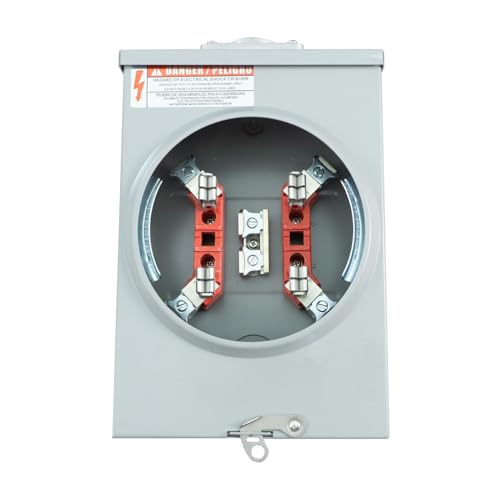
HIITIO Square 125 Amp Meter Socket

Emporia Vue 3 Home Energy Monitor

HIITIO Square 200 Amp Meter Socket
More Details On Our Top Picks
The Shelly Pro 3EM sits at the top of this list for a reason: it’s a DIN-rail energy meter, a DIN rail being the standardized metal strip inside your electrical panel, that handles three-phase power with both Wi-Fi and LAN connectivity. You don’t need a hub, and it talks to Alexa and Google Home if you want voice routines tied to your real usage. Three 120A current transformers (CTs, the clamp-on sensors that read how much current is flowing through a wire) come in the box, so the unit can monitor the full home right out of the gate.
For households with solar, the 1% active energy measurement accuracy and bidirectional reading matter because the meter can tell when you’re drawing from the grid and when you’re pushing back. Where the KETOTEK Watt Meter Plug covers one outlet at a time, this one watches the whole service entrance at once.
Where It Helps
- Three-phase coverage with 1% active energy accuracy for precise whole-home readings.
- Wi-Fi plus LAN dual connection keeps the data feed stable even if the router has a bad day.
- No hub required, and it plays nicely with Alexa and Google Home routines.
- Three 120A CT clamps included, so most homes are covered on day one.
- Bidirectional monitoring tracks both grid draw and solar feed-in accurately.
Things To Consider
- DIN-rail installation assumes you’re comfortable working near live service panels; for most homeowners, that means hiring an electrician.
- Three-phase service is overkill for a standard split-phase U.S. home, so the feature sits unused.
Who It Suits Best
Homeowners with three-phase service or solar arrays who want app-based whole-home tracking and don’t mind a more involved install.
Consider Something Else When
The Emporia Vue 3 is a smoother match for standard U.S. split-phase homes that want circuit-level detail without the DIN-rail commitment.
Not every project needs smart features. The HIITIO Round 100 Amp Meter Socket is the kind of hardware that handles the unglamorous side: the actual point where utility power meets your home. It’s a single-phase, 3-wire, 4-jaw 100A base designed for smaller homes and tight RV compartments. The round shape helps it fit in older service panels where a square housing would be a hassle.
The built-in bypass is the quiet hero. It lets a technician swap the meter without cutting power, which is genuinely useful in a shared space or a working shop. Where the Shelly Pro 3EM is all about data, this one is about getting the wires terminated safely and keeping weather out of the equation.
Good Reasons To Consider
- Built-in bypass streamlines meter swaps without a power interruption.
- Weatherproof, thick-metal enclosure with rust-resistant paint for outdoor or damp locations.
- Copper, plated terminals hold low resistance over years of use.
- Round footprint fits older service panels and compact RV bays more easily than a square housing.
Points To Note
- 100A rating caps this socket to smaller homes; large residences with central AC and EV chargers will outgrow it.
- This is a passive socket, not a monitor, so it won’t surface usage data on its own.
Made For
Smaller homes, mobile homes, and RVs with modest electrical loads that need a clean, weather-resistant service entrance point.
Look Elsewhere When
The HIITIO Square 200 Amp Meter Socket is a better fit when a standard single-family home needs full residential current capacity.
The KETOTEK Watt Meter is the simplest jump into energy monitoring: plug it into a wall outlet, plug an appliance into the front, and watch the LCD show you what that appliance is costing. The unit displays watts, voltage, amps, frequency, power factor, and cumulative kilowatt-hours, the standard unit your utility bills by, across an LCD screen you can actually read from across a room. The five-button interface cycles between metrics without a learning curve.
Renters and apartment dwellers who can’t open a service panel get the most value here. Overload protection cuts power if a device pulls more than the unit can safely pass, which is a small but meaningful safety touch. Compared to the Emporia Vue 3, this is a one-outlet-at-a-time solution, but it requires zero installation and zero subscriptions.
Bright Spots
- Plug-in form means no tools, no wiring, and no electrician visit.
- Wide LCD display shows watts, voltage, amps, kWh, and power factor.
- Overload protection helps guard against a misbehaving appliance.
- One-touch button switching between readings, no app required.
Honest Caveats
- Only monitors one outlet at a time, so tracking the whole home means moving it from room to room.
- No data logging or app, so historical trends live in your notes, not the cloud.
Key Specs
Right Fit For
Renters, apartment dwellers, and anyone curious about a single appliance’s draw without committing to a panel-level install.
Swap It Out When
The Emporia Vue 3 is a smarter match for whole-home tracking with circuit-level breakdowns and app-driven insights.
The HIITIO 120V Electric Voltage Meter is built for the road. It drops into a standard 4-jaw meter socket, the same kind of socket your home meter plugs into, and starts reporting on the RV’s real-time draw. Property managers use it on rental units, and homeowners wire it in for a dedicated 120V subpanel they want to watch closely. The large LCD keeps numbers visible even in a sunlit bay or a dim garage.
Where the round 100A socket from HIITIO is about safe termination, this one focuses on giving you numbers. For most RVers trying to manage battery life and generator hours, that readability is the difference between guessing and adjusting.
Positive Takeaways
- Drops into any standard 4-jaw socket, common in RVs and older homes.
- Real-time readouts help manage battery and generator run-time on the road.
- Large LCD display stays readable in low-light and outdoor conditions.
- Solid option for landlords tracking tenant consumption.
Trade Offs
- 120V only, so 240V appliances like dryers and well pumps need the 240V sibling unit instead.
- Requires a proper 4-jaw socket, so older two-slot setups may need an adapter or replacement.
Quick Facts
Best Suited To
RVers, mobile homeowners, and landlords who want a fixed, always-on 120V monitor at a single meter base.
Where A Sibling Pick Shines
For 240V circuits like ovens, dryers, or workshop subpanels, the HIITIO 240V KWH Watt Meter is the more useful companion.
Step up to 240V appliances and the 120V monitor above stops being useful. The HIITIO 240V KWH Watt Meter picks up where that one leaves off, slotting into a standard 4-jaw socket and reporting real-time wattage and cumulative kilowatt-hours for heavier loads. Think well pumps, electric dryers, workshop subpanels, and the kind of gear that quietly drives up a monthly bill.
The backlit LCD is the small detail that makes a real difference. Reading a meter in a dim utility room or after sunset becomes less of a chore. Compared to the KETOTEK plug-in model, this unit lives at the meter base, so it tracks a fixed circuit continuously without being moved around.
A Few Strong Suits
- 240V monitoring covers high-draw appliances and workshop subpanels.
- Backlit LCD stays legible day or night.
- Drops into standard 4-jaw sockets for clean, fixed installation.
- Reports real-time wattage and cumulative kWh, so trends build up without manual logging.
Some Limits To Know
- 240V is overkill for households that only need to track small 120V loads.
- Like other 4-jaw meters, the housing needs a proper socket base, which may mean a panel upgrade for very old homes.
Feature Snapshot
Who Should Grab It
Homeowners with a 240V subpanel, workshop, or heavy appliance they want to keep an eye on without a full smart-home setup.
Not Your Match When
Standard 120V-only homes that want circuit-level detail in an app should look at the Emporia Vue 3 instead.
The HIITIO Square 125 Amp Meter Socket lands in the middle of the residential current range. It’s a single-phase, 3-wire, 4-jaw 125A base built for larger homes and medium-to-large RV parks, the kind of places where 100A would feel stretched but 200A would be overkill. The integrated bypass makes meter swaps safe and clean, and the thick-metal enclosure is engineered to seal out water and dust in harsh outdoor settings.
Inside, copper-plated terminals and a firmly anchored neutral bus bar, the bar that ties together the neutral wires from each circuit, help the unit handle the full 125A rating without overheating. Where the round 100A socket suits tight RV bays, this square design fits modern residential service panels more naturally.
The Good Stuff
- 125A rating covers medium-to-large homes without stepping up to full 200A service.
- Integrated bypass streamlines meter swaps without power interruption.
- Thick-metal, sealed enclosure resists rust and water ingress outdoors.
- Copper-plated terminals and a sturdy neutral bus bar keep connections cool under load.
Details To Watch
- Square form factor is less forgiving in legacy round meter bases.
- Like all bare meter sockets, it needs a qualified installer for safe termination.
Core Details
Built With In Mind
Larger homes, mid-to-large RV parks, and any property with high-load appliances that need a service upgrade beyond 100A.
Reach For A Different Pick When
Single-family homes with full residential service capacity should look at the HIITIO Square 200 Amp Meter Socket instead.
The Emporia Vue 3 is the most user-friendly whole-home option in this lineup. It installs in your electrical panel with current transformers on each circuit, then streams real-time usage to the Emporia app. Solar households get net metering support, a billing method that credits you for excess solar power sent back to the grid, so the app can show draw, production, and net flow in the same view. The unit carries UL safety certification, a third-party safety standard widely recognized across the U.S. and Canada, which is the kind of detail that matters when something lives near live wires.
Where the Shelly Pro 3EM leans toward three-phase and tinkerers, the Vue 3 plays nicely with standard split-phase homes, the everyday North American arrangement that delivers 120V and 240V from two hot legs. If you want to know which breaker drives your dryer, your aquarium, or your always-on home office, the app breaks it down without you having to flip breakers one at a time.
Key Advantages
- UL-listed safety certification for installation in a live electrical panel.
- Real-time, circuit-level monitoring through the Emporia app.
- Solar and net metering support for households generating their own power.
- Smart home integration with popular automation platforms for usage-based routines.
- Tracks individual appliances by reading each circuit separately.
Worth Noting
- Installation in a live panel calls for an electrician unless you have direct experience working with mains wiring.
- Full circuit-level insight depends on adding CTs to every breaker you want to track.
Feature Rundown
Perfect Match For
Homeowners who want app-based, circuit-by-circuit energy insight with solar support and trusted safety certification.
Skip It When
Renters or anyone unable to access the electrical panel should reach for the KETOTEK Watt Meter Plug for a tool-free alternative.
The HIITIO Square 200 Amp Meter Socket rounds out the list as the standard residential service hardware most U.S. homes already use. It’s a single-phase, 3-wire, 4-jaw 200A base, the upper limit of typical home service entrance current. The integrated bypass means a meter swap doesn’t require killing power to the whole house, and the precision-fitted enclosure keeps weather and dust out.
For new construction or a service upgrade on a single-family home, this is the workhorse. The 125A socket above handles mid-range loads, while this one steps up for households running central AC, electric heat, or a future EV charger.
Notable Upsides
- 200A rating matches the common upper limit of U.S. residential service.
- Built-in bypass keeps meter changes from interrupting home power.
- Sealed metal enclosure stands up to outdoor mounting on the side of a house.
- Plated copper terminals hold a low-resistance connection over years of use.
Factors To Consider
- 200A capacity is more than small homes and most RVs actually need.
- Local codes often require utility approval and a licensed electrician for service entrance work.
Whose Shelf It Belongs On
Homeowners replacing a worn meter base, building a new single-family home, or upgrading service for an EV charger.
A Better Fit Elsewhere
Tight RV bays and smaller homes will find the HIITIO Round 100 Amp Meter Socket a more proportionate match for the load.
What Matters Most Before Choosing Home Energy Monitors
Match The Tool To The Panel
Start with access. Renters and apartment dwellers rarely get near a service panel, so a plug-in monitor like the KETOTEK Watt Meter is the realistic entry point. Homeowners comfortable with the panel can step up to a circuit-level system like the Emporia Vue 3. Anyone with three-phase service or a robust solar install will want the Shelly Pro 3EM, which speaks both Wi-Fi and LAN.
Get The Voltage Right
U.S. homes are mostly split-phase, meaning 120V for most outlets and 240V for heavy appliances. Meters like the HIITIO 120V and 240V siblings each cover one half of that world. Buying a 120V unit for a dryer circuit is a fast way to be disappointed. Match the meter to the actual circuit you want to watch.
Decide Between A Socket And A Smart Monitor
Meter sockets are passive hardware: safe terminations, weatherproof housing, and clean bypass. Smart monitors add app data, circuit-level breakdowns, and sometimes solar net metering. The right pick depends on whether you need numbers in your pocket or just a clean, code-compliant service entrance.
Think About Install Complexity
DIN-rail and panel-mounted units demand comfort with live wiring, and most homeowners hire an electrician for that work. Plug-in meters and surface-mount sockets are friendlier, but the socket side still benefits from a pro for any utility-side connections. Budget for installation, not just the device.
What The Higher Tier Buys In Home Energy Monitors
App Data And Circuit Detail
Stepping up from a plug-in meter to a smart panel monitor like the Emporia Vue 3 unlocks real-time app tracking, historical trends, and circuit-by-circuit breakdowns. That’s the difference between “your kitchen used a lot” and “your fridge draws 1.8 kWh a day.”
Solar And Bidirectional Tracking
Solar households pay more for bidirectional accuracy and net metering support. A basic meter can read draw, but only a three-phase or solar-aware model can show when you’re feeding the grid. The Shelly Pro 3EM handles this cleanly for three-phase homes; the Emporia Vue 3 covers split-phase solar.
Build Quality And Certification
Higher-tier units often come with thicker enclosures, copper-plated terminals, and third-party safety listings. For hardware mounted outdoors or near live panels, that upgrade pays back in longevity and peace of mind.
Pitfalls Shoppers Hit When Buying Home Energy Monitors
Buying a 120V meter for a 240V circuit tops the list. Equally common: grabbing a DIN-rail smart meter for a split-phase home and paying for three-phase features you can’t use. Some shoppers also skip the electrician step on panel-mounted units, which can void warranties or create safety issues. Finally, assuming a passive meter socket will give you app data leads to frustration; a socket is a wire-termination device, not a smart sensor.
What Separates Premium From Basic In This Category
The premium tier earns its keep with bidirectional solar reading, UL safety listing, and granular circuit-level breakdowns. Mid-range picks deliver the same voltage accuracy and durable construction in a passive socket form, without the app or smart features. Basic models handle single-outlet reads well and cost the least, but they don’t scale to whole-home insight. For most households, the sweet spot lives in the middle: a well-built socket or a panel monitor with just enough smart features to make the data useful.
Frequently Asked Questions
Do home energy monitors reduce utility bills on their own?
A monitor doesn’t save energy directly. It surfaces where power is going so you can act on real numbers instead of guesswork, which usually leads to behavior changes and a lower bill over time.
Can renters install any of these picks?
Renters can use plug-in monitors like the KETOTEK Watt Meter without touching a panel. Smart panel units and meter sockets generally require owner permission and, often, a licensed electrician.
Are whole-home monitors worth it for small apartments?
In a small apartment with one or two active circuits, a plug-in meter covers the most useful question: which appliance is the biggest draw. A whole-home system usually overshoots the need.
How do solar households benefit from these monitors?
Solar-ready units like the Shelly Pro 3EM and Emporia Vue 3 show draw, production, and net flow. That makes it easy to confirm your array is producing what you expect and to time heavy loads for sunny hours.
Do any of these work without an internet connection?
Plug-in meters and basic socket-based units display readings locally and don’t need the cloud. Smart panel monitors rely on app connectivity, so an outage can pause remote tracking until the network is back.
Closing Remarks
Energy monitoring is one of the rare upgrades where the data pays you back: a clear view of what each circuit costs, which phantom loads are worth unplugging, and whether solar is doing what it should. The eight picks above cover the full spread, from a five-second plug-in read to a panel-mounted smart meter. Start with what you can actually install in your space, and let the numbers guide the next step from there.




