

A mystery kilowatt-hour is one of the more frustrating household puzzles. The dryer cycle, the window AC, the always-on home office, the garage fridge, all quietly pulling from the same meter, yet most utility bills arrive with no breakdown of who did what. Home energy usage monitors fix that gap. Plug-in models tell you exactly which appliance is the culprit, while whole-panel monitors map the entire house. The eight picks below cover renters, RV owners, solar households, and tinkerers building a smarter electrical setup.
The Lineup, Simplified

MECHEER Upgraded Watt Meter Power Meter Plug

Shelly Pro 3EM 120A 3-Phase Energy Meter

Shelly Pro EM 50A Energy Meter With Contactor

Shelly EM Gen3 Smart Energy Meter 50A Clamp

HIITIO 120V Electric Voltage Meter Home Energy Monitor

HIITIO 240V KWH Watt Meter Electricity Usage Monitor

HIITIO Square 200 Amp Meter Socket
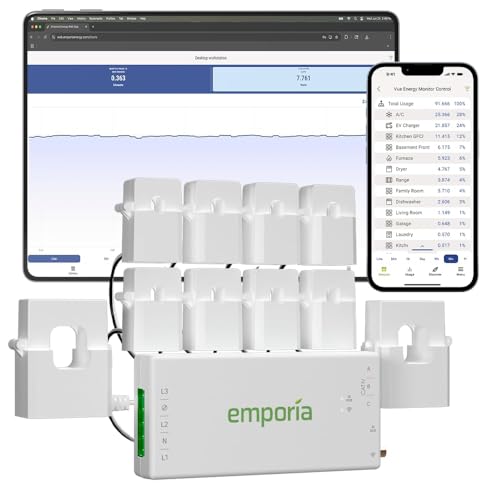
Emporia Vue 3 Home Energy Monitor
A Breakdown Of The Leading Choices
The MECHEER plug-in meter is the friendliest entry point on this list. You stick it into any outlet, then plug an appliance into its face, and the backlit screen shows watts, kilowatt-hours, voltage, current, frequency, and a power factor reading. There is no app, no account, and no Wi-Fi pairing to wrestle with. For a renter who simply wants to know what the window AC is actually costing, that ease is the whole point.
Eight display modes let you cycle through readings at the press of a button, and the overload protection cuts power if a connected device tries to draw more than the unit can safely handle. The tradeoff shows up in scope: it tells you about one appliance at a time, so chasing the whole house means unplugging and replugging. If you want appliance-level data without touching your breaker panel, this is a sensible first tool.
Positive Points
- No setup beyond plugging it in, which renters and travelers appreciate.
- Eight measurement modes cover the basics most households actually need.
- Built-in overload protection adds a layer of safety for older outlets.
- Backlit display remains readable in dim basements and garages.
Honest Caveats
- Monitors one device at a time, so whole-house tracking is tedious.
- No wireless data export, so log-keeping happens by hand or by phone photo.
Feature Snapshot
Who It Suits Best
Curious renters and apartment dwellers who want a single-appliance audit without modifying wiring or signing into anything.
Consider Something Else When
Anyone wanting whole-house visibility should reach for the Emporia Vue 3, which monitors every circuit from the panel at once.
The Shelly Pro 3EM lives in a different world than the MECHEER plug-in above. This is a DIN-rail mounted unit, the kind that snaps into the metal rail inside an electrical panel, with three 120A current transformers (CTs, the clamp-on sensors that read current flowing through a wire) included. It is built for homes with three-phase service, which in the U.S. is rare, but common in workshops, light commercial spaces, and some larger solar installs. Both Wi-Fi and LAN are baked in, so it talks to your network without a separate hub.
The headline number is 1% active energy measurement accuracy, which is precise enough for solar net metering and load balancing. Two-way consumption tracking means the meter reads both what you pull from the grid and what you push back from a solar array. Bluetooth gateway functions let nearby Shelly sensors relay through it. The honest read is that this is an electrician-friendly device, and you may find single-phase homes better served by a simpler Shelly model later in this list.
The Upside
- 1% measurement accuracy supports real solar and net-metering analysis.
- Three 120A current transformers ship in the box.
- Wi-Fi plus LAN gives flexible network placement.
- Two-way tracking reads both grid import and solar export.
Trade Offs
- Three-phase service is uncommon in U.S. residences, limiting the addressable market.
- DIN-rail installation requires comfort working inside a live panel.
- Software setup is denser than a typical consumer smart-home device.
Right Fit For
Owners of three-phase homes, workshops, or solar arrays who want lab-grade monitoring and are comfortable with panel-side wiring.
A Better Fit Elsewhere
Households on standard single-phase service should consider the Shelly Pro EM 50A, which fits the same DIN-rail format with a simpler channel count.
Step down from the three-phase Shelly and you land on the Pro EM 50A, which is built for the standard single-phase homes that dominate U.S. residential service. Two 50A current transformers monitor two separate channels, so you can track a specific circuit, like a sub-panel for an addition or a detached garage, alongside the main feed. The integrated switch with potential-free contacts (a relay that can open or close another circuit without carrying its own voltage) lets you trigger a contactor, the heavy-duty switch used to turn large loads on and off, from your phone or voice assistant.
Like its bigger sibling, it talks to both Wi-Fi and LAN, no hub required, and works with common voice assistants. Bluetooth gateway functionality comes along for the ride. Owners commonly report that the two-channel setup is the sweet spot for homes with a small solar array or a managed EV charger, where one channel tracks the array and the other tracks the charger. Where it may fall short is whole-house monitoring, since only two circuits are visible at a time.
A Strong Showing
- Two-channel single-phase design fits most U.S. homes.
- Contactor control enables load shedding, the deliberate shutdown of nonessential equipment during peak draw.
- Two 50A current transformers ship in the box.
- Hub-free Wi-Fi plus LAN connectivity.
Room For Improvement
- Limited to two circuits, so true whole-house coverage requires additional units.
- Contactor wiring adds a step that casual users may want an electrician to handle.
Quick Facts
Made For
Smart-home enthusiasts with a small solar array, managed EV charger, or two high-interest circuits they want to automate.
Skip It When
You need every circuit in the panel mapped. In that case, the Emporia Vue 3 monitors sixteen channels at once with a single install.
Same story with the EM Gen3, but shrunk down to fit where the Pro models cannot. The compact housing slips behind a wall outlet, inside a junction box, or into the cramped space behind a light switch. One 50A current transformer ships in the box, with a second channel available for an added clamp. The Gen3 chip brings local data logging, holding roughly ten days of one-minute interval readings on the device itself, so a brief Wi-Fi outage does not erase your history.
Wi-Fi and Bluetooth are both on board, and the meter integrates with common voice platforms. The hidden-install angle is what makes this one stand out, since DIN-rail models demand a visible panel location. The tradeoff is capacity: this is a single-phase, two-channel unit, so a busy panel with many circuits to track will need several of them. For most retrofitters adding a few targeted sensors, though, the small footprint is the real win.
Useful Highlights
- Compact size fits behind outlets and inside junction boxes.
- Ten days of on-device data logging keeps history during network drops.
- Hub-free Wi-Fi plus Bluetooth gateway functionality.
- Real-time energy tracking with one 50A clamp included.
Points To Keep In Mind
- Two channels max, so whole-house coverage requires multiples.
- Hidden install means a stronger DIY comfort level is helpful.
Best Suited To
Retrofit hobbyists who want to monitor a few specific loads without dedicating DIN-rail space in the main panel.
Where A Sibling Pick Shines
Whole-house hunters will prefer the Emporia Vue 3, which monitors sixteen channels from a single panel-side install.
HIITIO shifts the conversation away from the breaker panel and toward a different kind of home on wheels. This 120V unit installs directly into a standard 4-jaw meter socket (the round, four-prong receptacle common in RVs and mobile homes), the same form factor used by campground pedestals. The large LCD display is readable in daylight, and the readouts cover the basics: voltage, current, watts, and accumulated kilowatt-hours.
For RV owners running a generator or managing battery life, real-time consumption data is the difference between guessing and planning. The catch is that this is a permanent install, not a portable plug-in like the MECHEER above, so the meter stays in the socket. It is also a passive reader with no wireless export, so capturing long-term data means reading the screen on site. If your home happens to be a motorhome or a small cabin with a 4-jaw service, though, the form factor is exactly right.
Well-Handled Touches
- 4-jaw socket compatibility matches common RV and mobile-home service.
- Large LCD display readable in daylight and dim interiors.
- Real-time voltage, current, watts, and kilowatt-hour tracking.
Practical Considerations
- Permanent socket install limits portability between rigs.
- No wireless data export, so logging happens manually.
Who Should Grab It
RV owners, cabin dwellers, and small mobile-home residents who want a hardwired meter at the service socket.
Look Elsewhere When
Standard site-built homeowners should reach for the Emporia Vue 3, which monitors the main panel without swapping the meter base.
Where the 120V HIITIO handles mobile applications, the 240V sibling covers the heavier side of residential service. Same 4-jaw socket form factor, same large LCD with a backlight for night reading, but bumped to handle 240V loads like well pumps, electric ranges, and small workshop machinery. Electricians and property managers managing multiple units often use this kind of meter as a sanity check on tenant usage or to verify that a specific appliance is pulling what its spec sheet claims.
The trade-off is identical to the 120V model: it is a permanent install with no wireless data export, so capturing a month of data means visiting the meter and writing it down. In return, you get a rugged, no-nonsense read on what is happening at the service entrance (the point where utility power enters the building). For most homeowners in a standard panel setup, the Emporia Vue 3 below offers a more practical balance of features and ease.
A Few Strong Suits
- 240V support covers well pumps, ranges, and workshop equipment.
- Backlit LCD stays readable in low light.
- 4-jaw socket install suits small cabins, mobile homes, and outbuildings.
Less Ideal Details
- Permanent install means relocation is a project, not a swap.
- No wireless export, so remote reading requires on-site visits.
Technical Reference
Whose Shelf It Belongs On
Electricians, property managers, and homeowners with 240V service who want a hardwired read at the meter base.
Swap It Out When
You want remote, app-based access to your data. The Emporia Vue 3 streams usage to a phone over Wi-Fi, which is far easier for ongoing monitoring.
The HIITIO 200A meter socket is not a monitor in the traditional sense. It is the box that holds the utility meter at your service entrance, but it carries a built-in bypass that lets the utility swap your meter without cutting power to the house. For new construction, a service upgrade, or a replacement of a rusted-out original, that detail is what separates a smooth job from a frustrated one.
Single-phase, three-wire, four-jaw configuration matches the standard for U.S. residential service at the 200A level, the common upper limit for single-family homes. The thick metal enclosure is built for weather resistance, and the precise fit of the seams keeps moisture out. This is a project piece rather than a monitoring upgrade, so for most existing homes, the practical path is to leave the socket alone and add a clamp-on monitor like the Emporia Vue 3 instead.
Standout Benefits
- Built-in bypass streamlines utility meter swaps without power cuts.
- 200A rating matches standard U.S. residential service capacity.
- Thick metal enclosure with tight seam fit for weather sealing.
Possible Compromises
- Installation requires a licensed electrician and likely utility coordination.
- Does not provide monitoring data on its own, so it pairs with a separate sensor.
Perfect Match For
New builds, service upgrades, and replacement projects where the existing meter base has failed or is undersized.
Reach For A Different Pick When
You just want to start tracking your current usage. The Emporia Vue 3 installs in your existing panel without any service-entrance work.
The Emporia Vue 3 is the whole-house answer to the plug-in MECHEER at the start of this list. A small module installs inside your main electrical panel, and up to sixteen current clamps wrap around individual circuits to report their usage to the companion app in real time. Solar and net metering support means the system reads both directions of current flow, so homes with rooftop arrays can see production, consumption, and export at the same time.
For most homeowners, this is the monitor that finally makes the utility bill make sense. The honest read is that the install is a panel-side project, so if your breaker panel is sealed or you are not comfortable around live conductors, an electrician’s hour is a worthwhile spend. UL listing (an independent safety certification from Underwriters Laboratories) covers the major components, which matters when the device lives inches from bus bars. The Emporia Vue 3 is the pick that grows with you, since additional clamps expand circuit coverage over time.
Everyday Advantages
- Sixteen-channel monitoring covers most of a typical home panel.
- Real-time app access over Wi-Fi, with no subscription required.
- Solar and net metering support for grid-tied arrays.
- UL listed for safety in residential panel environments.
Things To Weigh
- Panel-side install means working near live electrical parts.
- Additional current clamps sold separately as you expand coverage.
Core Details
Who Will Love This
Homeowners who want a full picture of their electricity use, including solar production, and who are comfortable with a panel-side install.
Not Your Match When
Renters cannot easily open the panel. In that situation, the MECHEER plug-in meter offers a non-invasive starting point.
What To Weigh Before Choosing Home Energy Usage Monitors
Service Type And Voltage
Homes in the U.S. typically run single-phase 120V or 240V service, while larger properties and many solar installs may use three-phase. Matching the monitor to your service type avoids buying a DIN-rail three-phase unit for a single-phase panel, or vice versa. The Shelly Pro 3EM makes sense for three-phase, while the Pro EM 50A and Emporia Vue 3 cover most single-phase homes.
Install Location
Plug-in meters like the MECHEER need nothing more than an outlet. Panel-side monitors like the Emporia Vue 3 sit inside the breaker box and require either DIY comfort with electrical work or a licensed electrician. DIN-rail units like the Shelly Pro models also live in or near the panel, and the HIITIO 120V and 240V options install at the meter socket itself. The location decision shapes how much data you get, and how invasive the install will be.
Channel Count And Resolution
A plug-in meter covers one appliance at a time. Whole-panel monitors cover many circuits at once, with sixteen channels being a common ceiling for consumer-grade gear. Solar households should also look for two-way or net metering support, since a one-way sensor will underreport a home with significant export. Channel count is the single biggest factor separating a quick check from a full energy audit.
Smart Home And Data Logging
If you want app access, voice control, or long-term data history, the smart DIN-rail and panel monitors have the edge. Local logging, like the ten-day buffer on the Shelly EM Gen3, helps when the network is flaky. Plug-in meters are simpler, but they do not export data, so the trade-off is convenience versus depth of insight.
Key Considerations Across These Picks
Pitfalls Shoppers Hit
The most common buying slip-up is mismatching service type. A three-phase DIN-rail unit does nothing useful in a single-phase home, and a 240V meter socket will not fit a 120V socket. Another trap is underestimating install effort: a clamp-on panel monitor like the Emporia Vue 3 is approachable for many, but a true service-entrance swap like the HIITIO 200A meter socket needs professional coordination. Buying more channels than your panel actually uses is fine, since extras just go unused, but buying fewer channels than your goals demand means starting over.
When Paying More Pays Off
The price jump between a basic plug-in meter and a whole-panel monitor is real, and the upgrade is worth it for households that want appliance-level resolution across the whole house, or for anyone with solar. Higher-tier units also buy accuracy, with the Shelly Pro 3EM at 1% versus the looser tolerance of a generic plug-in reader. For solar and net metering households, the precision alone often justifies the step up, since billing-grade accuracy matters when the utility is settling the export side of the equation. For a single-appliance audit, though, the extra spend rarely changes the answer.
Frequently Asked Questions
How Accurate Are Home Energy Usage Monitors?
Consumer monitors typically read within 1 to 5 percent, with DIN-rail and panel-side units landing on the tighter end. Real-world accuracy depends on clamp placement, calibration, and the quality of the sensors, so for solar billing, look for units that publish a specific accuracy figure.
Can I Install A Panel Monitor Without An Electrician?
Comfortable DIYers often install clamp-on units like the Emporia Vue 3, but the panel cover comes off with the main breaker still live, so caution matters. Anything involving meter base work, like the HIITIO 200A socket, almost always needs a licensed electrician and utility coordination.
Do Plug-In Monitors Work With Smart Home Platforms?
Most plug-in meters are stand-alone with no wireless export, so they do not connect to smart home platforms. Wi-Fi DIN-rail and panel monitors, by contrast, are designed for app and voice assistant integration, including support for common voice platforms.
Will A Monitor Help Lower My Electric Bill?
A monitor itself does not save energy, but it reveals which loads are driving the bill, which is the prerequisite for any saving strategy. Once you see the always-on devices, the phantom loads (electronics that draw small amounts of power even when switched off, like TVs in standby or phone chargers plugged in without a phone) and the heavy hitters, you can target the right ones.
Are Solar-Ready Monitors Different From Standard Ones?
Solar-ready monitors track current in both directions, so they report grid import and solar export as separate values. Standard one-way sensors underreport a home with significant solar, since they only see the net flow and miss the gross production.
Bottom Line
The right home energy usage monitor depends on where you want the data to come from: a single outlet, a few key circuits, or the whole panel. Plug-in models offer the easiest on-ramp, DIN-rail smart meters open the door to automation, and panel-side units like the Emporia Vue 3 deliver the complete picture. Match the device to your service type, your install comfort, and your real goal, and the rest falls into place.




