

Switching from a bulky tank to an on-demand unit changes how a home uses hot water. No standby tank means less waiting for warm showers and more room in the basement or utility closet. The picks below span indoor gas rigs, outdoor whole-house workhorses, RV-ready units, and one electric point-of-use model that fills in the gaps. Read on to find the tankless water heater that matches your daily routines.
A Fast Comparison Of The Options

Condensate Neutralizer Kit

KINGRVER Tankless RV Water Heater SUMMIT XT
ThermoMate 6kW Electric Tankless Heater

APUS Propane Indoor Tankless Heater 140,000 BTU

KINGRVER SUMMIT XT RV Tankless Propane Heater
APUS Natural Gas Indoor Tankless 95,000 BTU

APUS Natural Gas Outdoor Tankless 190,000 BTU

KINGRVER SUMMIT XT Tankless RV Heater 3.8 GPM
Rheem RTG Series 8.4 GPM Outdoor Natural Gas
What Each Pick Brings To The Table
This is the unsung hero of any high-efficiency condensing tankless setup. Gas combustion produces water vapor, and that vapor condenses into an acidic liquid that should never hit a septic tank or floor drain untreated. The kit slips between the heater and the drain line, raising the pH before discharge. For homeowners investing in a premium on-demand system, skipping a neutralizer can mean corroded plumbing over time.
Installers typically tuck it near the wall-mounted unit where the condensate line exits. It sits quietly doing chemistry work that most people never notice.
Useful Touches
- Protects septic systems and floor drains from acidic condensate runoff
- Simple inline install that requires no electrical hookup
- Compact footprint fits next to wall-mounted tankless units
- Lets the homeowner meet local plumbing code for condensate disposal
Points To Note
- Owners must check and refill the neutralizing chamber periodically, depending on usage volume
- Not needed for non-condensing tankless heaters like the APUS indoor models
Made For
Anyone installing a high-efficiency condensing tankless unit who wants to protect their plumbing and stay on the right side of local code.
A Better Fit Elsewhere
Owners pairing the APUS 140,000 BTU propane unit with a non-condensing indoor setup may not need this kit at all and can skip straight to the main heater.
Campers who chase elevation already know the frustration of a tankless unit that flickers out at 8,000 feet. This KINGRVER model is engineered to keep firing up to 9,800 feet, so weekend trips through mountain passes stop being a guessing game. It swaps out a tired 6-gallon tank and starts producing hot water the moment a tap opens, which matters when you’re parked at a remote site without hookups.
Compare that to the APUS indoor rigs you’ll see later: those are whole-house wall units, while this one lives inside a standard RV cutout. Door kits in 15″×15″, 15″×18″, or 18″×18″ make a retrofit feel like an afternoon project rather than a weekend rebuild.
The Upside
- High-altitude operation up to 9,800 ft keeps hot water flowing in thin air
- Tankless design conserves propane by heating only on demand
- Multiple door size options fit most standard RV openings
- Provides continuous hot water for showers and dishes back-to-back
Things To Consider
- Door kits ship separately, so budgeting for one is part of the plan
- Propane-fired units need a fuel line that meets RV safety standards
Key Specs
Right Fit For
RVers and van converters who travel above 6,000 feet and want hot showers without hauling a bulky tank.
Look Elsewhere When
A homeowner upgrading a stationary residence should pivot to the APUS indoor or outdoor gas units for higher flow capacity.
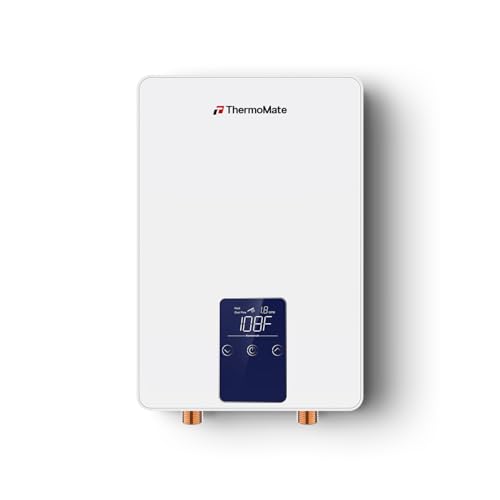
Not every hot-water gap needs a roaring gas burner. This ThermoMate unit is an electric point-of-use heater sized for a single sink, pulling 25 amps at 240 volts to deliver roughly 1 gallon per minute at a 35°F temperature rise. Think under-sink installations in a basement bar, a garage workshop, or a guest bath where running a gas line would be overkill.
Unlike the gas-fired APUS models later in this list, this one skips combustion entirely. There’s no venting, no flue, and no propane tank to monitor, which simplifies placement dramatically in tight spaces.
Points In Its Favor
- Compact body fits under a sink or inside a cabinet
- No venting required, so installation stays simple
- Self-modulating heating conserves energy at low flow
- Standby mode keeps water ready around the clock
Small Caveats
- 1 GPM output means simultaneous showers are not realistic
- Requires a dedicated 240V circuit, which older homes may lack
Best Suited To
Apartment dwellers, workshop owners, or homeowners adding a basement wet bar who just need warm water at one faucet.
Consider Something Else When
The household runs a natural gas line and needs whole-home coverage, in which case the APUS 95,000 BTU indoor unit is a smarter upgrade.
Rural homes and off-grid properties often depend on propane, and this APUS unit is tuned for exactly that scenario. The 140,000 BTU burner and up to 6.8 GPM flow rate handle two showers plus a kitchen tap without dropping temperature. An oxygen-free copper heat exchanger moves heat efficiently, which matters when the propane tank is the home’s primary fuel source.
Versus the smaller APUS 95,000 BTU indoor model further down, this one trades a slightly larger footprint for headroom. Larger families with multiple bathrooms will appreciate that buffer on busy mornings.
Benefits That Matter
- Up to 6.8 GPM supports multiple fixtures running together
- Copper heat exchanger promotes long service life
- Multiple variants available in propane and natural gas configurations
- Indoor mounting keeps the unit protected from weather
Honest Caveats
- Propane models require a properly sized fuel line and regulator
- Annual descaling helps maintain performance in hard-water regions
Key Specs
Who Should Grab It
Propane-heated households with three or more bathrooms who want whole-home flow without oversizing their utility bill.
Skip It When
The home runs on natural gas with lower simultaneous demand, where the APUS 95,000 BTU indoor model delivers comparable comfort at a friendlier footprint.
Full-time RVers often complain about their old tank heater running out mid-shower. This 65,000 BTU propane unit solves that by producing up to 3.8 GPM continuously, so two people can shower back-to-back without the dreaded cold burst. It’s noticeably more powerful than older 6-gallon tank rigs while staying compact enough for a standard RV cutout.
Where the KINGRVER SUMMIT XT earlier leans into multi-camper flexibility, this variant leans into raw on-demand performance. For road-trippers who treat their rig like a small apartment, that balance hits the sweet spot.
What Stands Out
- 65,000 BTU burner delivers up to 3.8 GPM continuous hot water
- Performs reliably at elevations up to 9,800 ft
- Drops into common RV water heater openings for easier retrofit
- Door kits available in multiple sizes to match the exterior panel (sold separately)
Trade Offs
- Door kit purchase is a separate line item
- Propane appliances need periodic combustion chamber inspection
Feature Snapshot
Who It Suits Best
Full-time RVers and overlanders who travel through variable elevations and need steady hot water on propane.
A Better Fit Elsewhere
Weekend tent campers who don’t need on-demand heat should consider a smaller portable setup or skip the tankless option entirely.
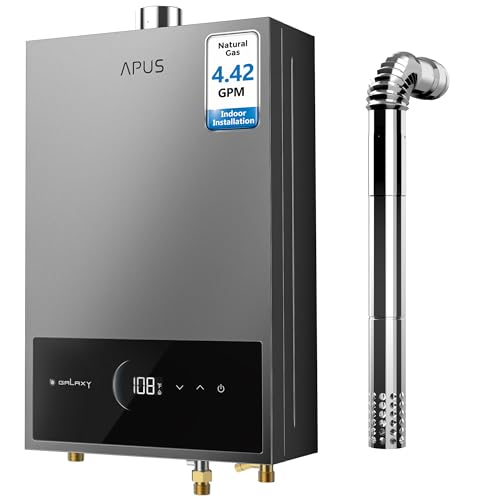
Not every household needs the fire-breathing 190,000 BTU capacity of the APUS outdoor model. This 95,000 BTU indoor unit produces 4.42 GPM and supports two showers plus a sink, an ideal fit for a mid-size home with two bathrooms. The 0.66 GPM low-flow start technology means even a slow trickle from a bathroom faucet wakes the burner without wasting gas.
Compared to the propane-only APUS 140,000 BTU earlier, this natural gas version trades a slightly lower flow ceiling for cleaner fuel and easier venting in many homes.
Why It Works Well
- 4.42 GPM flow handles two showers and a sink together
- Low 0.66 GPM activation saves fuel on small draws
- Natural gas fuel keeps operating costs predictable for grid-connected homes
- Available in multiple fuel and BTU variants for flexible installs
Worth Noting
- Not the right match for homes running five or more fixtures simultaneously
- Hard-water areas require a flush valve for periodic descaling
Perfect Match For
A two-bathroom suburban home on natural gas that wants a steady, efficient tankless without oversizing capacity.
Another Choice May Suit
Large families with three or more showers running at once should pivot to the APUS 190,000 BTU outdoor unit instead.
Big families with multiple showers running in parallel need flow capacity that smaller indoor units can’t sustain. This APUS outdoor model pushes 190,000 BTU and 8.1 GPM, enough to feed three showers plus two faucets without a temperature dip. Mounting it on an exterior surface also frees up basement space and eliminates the need for indoor venting runs.
Stepping up from the 95,000 BTU indoor APUS model earlier, this one suits homes where indoor utility space is tight and outdoor installation is permitted.
The Case For It
- 190,000 BTU output supports heavy simultaneous demand
- 8.1 GPM flow rate keeps showers steady during peak use
- Outdoor mounting removes the need for indoor exhaust venting
- Ultra-low 0.79 GPM activation handles small draws efficiently
Points To Keep In Mind
- Outdoor install requires freeze protection planning in cold climates
- Larger gas supply line may need an upgrade from the meter
Feature Card
Built With In Mind
Large households on natural gas with three-plus bathrooms and limited indoor utility space.
Reach For A Different Pick When
Smaller homes with only one or two bathrooms will oversize this unit, and the APUS 95,000 BTU indoor model matches more naturally.
The integrated thermostatic mixing chamber is the feature that separates this KINGRVER unit from the propane version earlier in the list. It continuously balances incoming cold and hot water, which reduces the surprise hot-and-cold swings that plague cheaper tankless setups. For families sharing one RV shower, that means fewer complaints and less middle-of-the-night fiddling with the tap.
Beyond the mixing chamber, the core spec sheet mirrors the 65,000 BTU / 3.8 GPM platform. Think of this as the comfort-tuned variant for RVers who prioritize shower consistency over absolute peak output.
Bright Spots
- Built-in thermostatic mixing reduces temperature swings at the tap
- Up to 3.8 GPM supports multi-faucet RV use
- Fits standard RV water heater cutouts with available door kits
- On-demand heating conserves propane during low-use days
Honest Caveats
- Door kits sell separately, so the total install cost is higher
- Mixing chamber adds slight bulk compared to bare-bones tankless units
Key Specs
Whose Shelf It Belongs On
RV households where shower temperature stability matters more than raw peak output, especially when multiple taps run together.
Swap It Out When
Solo travelers with minimal hot water needs may find the KINGRVER SUMMIT XT standard propane variant plenty capable without the extra mixing hardware.
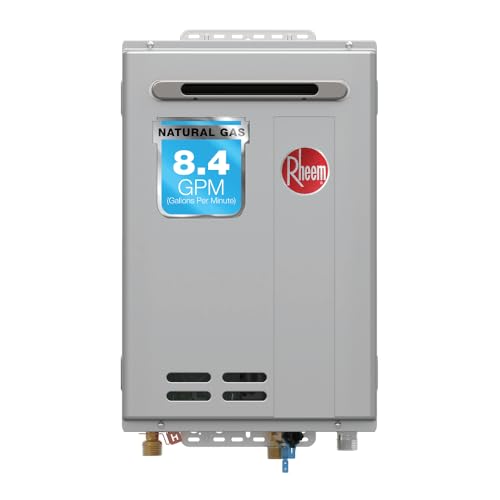
Rheem is a familiar name in home water heating, and this RTG model leans into that reputation. The 180,000 BTU output and 8.4 GPM flow rate handle a busy household running several fixtures without dropping temperature. Outdoor mounting means no exhaust venting through the roof, which simplifies retrofits in homes without existing chimney chases.
Set against the APUS 190,000 BTU outdoor model a few spots earlier, the Rheem is a near-twin in capacity with a long-established brand behind the warranty and service network.
A Favorable Mix
- 180,000 BTU output covers whole-house demand
- Outdoor design removes indoor venting concerns
- Hot Start Programming reduces cold bursts between back-to-back uses
- Overheat Film Wrap helps protect the heat exchanger
Things To Weigh
- This is a non-condensing unit, so a separate condensate path is not needed but efficiency is lower than condensing alternatives
- Outdoor placement requires planning for freeze protection in cold regions
Made For
Homeowners upgrading from a traditional tank who want a brand-backed, high-capacity natural gas unit mounted outside.
A Better Fit Elsewhere
RVers and apartment dwellers should ignore this unit and look at the KINGRVER SUMMIT XT or ThermoMate 6kW electric instead.
Matching The Right Tankless Heater To Your Home
Choosing a gas water heater tankless unit comes down to three practical questions: where will it live, how many fixtures will run at once, and what fuel is already plumbed in. An indoor unit keeps the heater protected from weather but requires venting and combustion air. An outdoor mount sidesteps venting but adds freeze-protection planning in northern climates. Fuel choice matters too, since propane homes can’t simply swap to natural gas without a conversion.
Flow rate, measured in GPM (gallons per minute), is the headline number. A single shower uses roughly 1.5 to 2.5 GPM, so two simultaneous showers plus a sink typically need 5 to 6 GPM. The APUS 95,000 BTU indoor unit handles that range for mid-size homes, while the 190,000 BTU outdoor models cover larger families. For RV owners, the 3.8 GPM ceiling of the KINGRVER SUMMIT XT family is sized for the realities of a compact water system.
Fuel type ties directly to installation cost. Natural gas lines are usually present in suburban homes and require less refueling attention. Propane is the go-to for rural properties and off-grid setups, though the fuel line and tank sizing need to match the heater’s BTU draw. The ThermoMate 6kW electric model fills a niche entirely: no combustion, no venting, just a 240V circuit and a single fixture.
Sizing For Household Demand
Count the fixtures that might run during the busiest hour. Morning routines that overlap two showers and a dishwasher push demand toward 6 GPM, while evening dishwasher-only use stays closer to 1.5 GPM. Picking a unit slightly above the peak demand leaves headroom for cold inlet water in winter, which lowers the effective flow rate.
Climate And Placement Decisions
Outdoor mounting simplifies venting but exposes the unit to the elements. In areas where winter temperatures drop well below freezing, an indoor installation with proper combustion air often pays back in fewer service calls. RV owners gain flexibility from the KINGRVER SUMMIT XT line, which tolerates high elevations and varied weather.
Ventilation, Venting, And Code
Gas units produce combustion gases that need a safe path outdoors. Indoor models require either a direct vent through an exterior wall or a traditional flue through the roof. Local plumbing and mechanical codes specify minimum clearances and vent materials, and ignoring them risks denied permits or unsafe operation.
Key Considerations Across These Picks
Pitfalls Shoppers Hit
The most common slip is sizing by the heater’s BTU number alone. A high-BTU unit with low GPM still struggles when two showers run at once, since flow rate, not just heat content, defines comfort. Another mistake is skipping a flush valve plan. Tankless units benefit from annual descaling in hard-water areas, and adding one during installation is far cheaper than retrofitting one later.
Why Top Tier Costs More
Higher-tier gas tankless units command more because of three underlying upgrades: a more durable heat exchanger, more precise flow sensors, and better modulation that matches burner output to actual demand. The APUS 190,000 BTU outdoor model and the Rheem RTG both lean on those refinements, which translate into steadier temperatures and longer service intervals. For households running multiple fixtures simultaneously, the upgrade typically pays back in fewer cold-shower mornings and a longer overall service life.
Frequently Asked Questions
Do gas tankless water heaters need electricity to run?
Most modern gas tankless units need a small amount of electricity for the control board and ignition, so a brief power outage will shut them down until power returns.
How often should a tankless water heater be flushed?
In most regions, an annual vinegar flush through a service valve clears scale buildup and keeps the heat exchanger efficient, though hard-water homes may need it more often.
Can a tankless unit supply two showers at once?
Yes, as long as the unit’s GPM rating covers both fixtures. A 6.8 GPM APUS model handles two showers plus a sink, while smaller 4 GPM units may struggle with simultaneous use.
Is a permit required to install a gas tankless water heater?
Most municipalities require a plumbing or mechanical permit for gas appliance replacements, especially when venting changes. Check with the local building department before scheduling an install.
Do outdoor tankless heaters freeze in winter?
Outdoor units include freeze protection circuitry that warms the heat exchanger in cold weather, but extreme cold combined with a power outage can still cause damage, so insulation wraps are common in northern climates.
Bottom Line
The right tankless water heater depends less on brand and more on matching flow rate, fuel type, and mounting location to your daily routine. RV owners and mountain campers will find the KINGRVER SUMMIT XT family hard to beat, while whole-home households gravitate toward the APUS indoor and outdoor units or the Rheem RTG. Take stock of fixture count, fuel availability, and climate before clicking through, and the right pick becomes much easier to spot.




