

Hard water leaves a quiet trail through a house: cloudy spots on glassware, stiff laundry, crusty buildup around showerheads, and water heaters that work harder than they should. The picks below tackle that reality from different angles, covering salt-based softening, hybrid filtration, point-of-use reverse osmosis, and the maintenance parts that keep everything running smoothly.
The Shortlist At A Glance
The Shortlist At A Glance

5 Micron Water Filter 20″ x 2.5″ Replacement Cartridge, 6-Pack

Autotrol 1000250 Valve Disk Kit 255 Valve
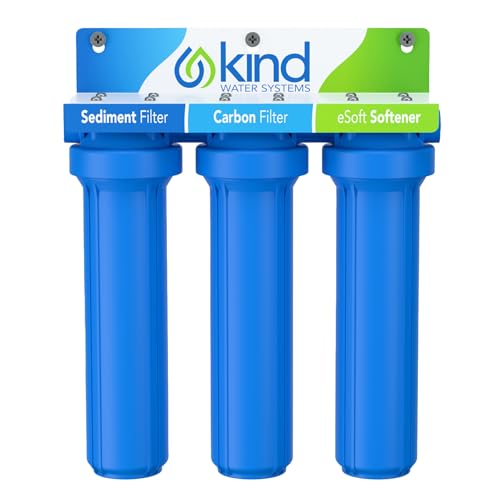
Kind Water Systems E-3000 Whole House Salt-Free Softener

Kind Water Systems E-3000UV Salt-Free Softener with UV

Kenmore Elite 520 Hybrid Water Softener & Filter
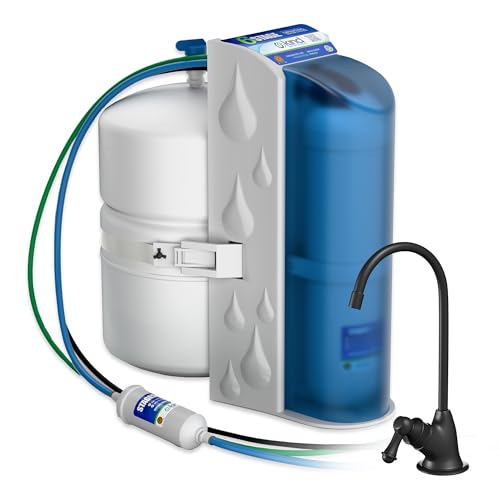
Kind Water 6-Stage RO System with Oil-Rubbed Bronze Faucet

AFWFilters 48K Grain Softener with Fleck 5600 SXT

Kenmore 350 Whole House Water Softener, 32,000 Grain

EcoPure EPCL Universal Water Softener Cleaner

Kenmore 420 Water Softener, 40,000 Grain
The Picks, Examined More Closely
Replacement cartridges are the unglamorous workhorses of any whole-home setup, and this Vegebe 6-pack is the kind of thing you stash in the basement and forget about until you need it. The standard 2.5″ x 20″ sizing means it drops into the housings most pre-filters already use, which sidesteps the compatibility headaches that catch first-time installers off guard.
You may find a 5 micron rating is a sweet spot for sediment, catching the rust flakes and sand grains that clog aerators and stain laundry without choking flow. Compared to the softener systems below, this cartridge handles the upstream mess so they don’t have to work as hard.
Strengths Worth Knowing
- Universal 2.5″ x 20″ sizing fits most standard whole-house housings, removing guesswork on swaps.
- 5 micron filtration reduces visible sediment like rust, sand, and dust before water reaches softer fixtures downstream.
- A 6-pack lowers the per-cartridge cost and covers roughly a year of typical replacements for most homes.
- Sediment-only focus means it doesn’t strip beneficial minerals or alter taste, just clears the cloudy bits.
Points To Keep In Mind
- Catches sediment only, so it won’t address hardness minerals or chemical taste on its own.
- Replacement frequency climbs noticeably on well water with high turbidity, and you’ll feel it in the wallet.
Whose Shelf It Belongs On
Homeowners running a standard pre-filter housing who want a low-effort, predictable sediment swap schedule.
A Better Fit Elsewhere
Skip it for actual softening and look at the Kenmore 350 Whole House Water Softener, which addresses mineral hardness rather than just sediment.
Somewhere in a garage or utility closet, an aging Autotrol softener is cycling endlessly without actually softening, and a worn valve disk is often the culprit. This replacement kit brings a 255-valve system back to spec without forcing a full control head swap.
The disk is a small part doing a specific job: it seals the valve so regeneration cycles hit the right gear at the right time. This isn’t a softener for new installs, so the audience is narrow by design.
Real Benefits
- Genuine Autotrol part, which matters because the 255 valve uses a proprietary sealing profile that generic disks often don’t replicate.
- Focused repair rather than replacement, which avoids pulling an entire control head off the brine tank.
- Useful across many Autotrol 255 setups already in service, so households with older equipment can find a match.
Worth Noting
- Only useful if you already own or are willing to learn the Autotrol 255 platform; it’s not a standalone softening solution.
- Installation assumes a comfort level with valve disassembly and reassembly, which a first-timer may not have.
- Doesn’t address resin bed fouling, so an iron-fouled tank still needs a cleaner like the EcoPure EPCL.
Best Suited To
DIYers and plumbers rebuilding an Autotrol 255 control valve where the existing disk has lost its seal.
Look Elsewhere When
Anyone needing a complete softening system should step up to the AFWFilters 48K Grain Water Softener instead.
The Kind E-3000 is built for households that want cleaner water throughout the house without the salt bags, brine discharge, or regeneration cycles that come with ion-exchange softeners. It stacks sediment filtration, carbon block filtration, and salt-free conditioning into one compact whole-house unit aimed squarely at municipal water.
Compared to the cartridge pick above, this one is a system rather than a consumable, and compared to the salt-based Kenmore and AFWFilters models below, it skips sodium entirely. For city water with chlorine taste and minor hardness, it’s a tidy middle path.
Benefits That Matter
- Three-in-one design combines sediment, carbon, and salt-free conditioning in a single compact footprint that fits tighter utility spaces.
- Targets a wide contaminant list including chlorine, chloramine, VOCs, and pesticides for noticeably better-tasting water at every tap.
- No salt means no brine discharge, no salt hauling, and no regeneration timer to program, which simplifies ownership.
- City-water-specific tuning means it doesn’t try to do what well-water systems handle, which keeps the design lean.
Less Ideal Details
- Salt-free conditioning alters how minerals behave rather than removing them, so on very hard water you may notice fewer suds.
- Cartridge replacement still applies, and skipping it tanks performance quickly.
- Not built for well water or high-iron applications, so rural households should look at iron-tolerant salt-based units instead.
Feature Snapshot
Made For
City-water households that want cleaner, better-tasting water at every tap without committing to a salt-based system.
Swap It Out When
Anyone on well water with iron issues should reach for the AFWFilters 48K Grain Water Softener instead.
The E-3000UV takes the E-3000 formula and stacks a UV chamber on top, addressing a concern salt-free conditioners don’t touch: microbial exposure. It’s a natural step up for households that care about both chemical reduction and biological neutralization.
Adding UV changes ownership a little: there’s a lamp to track and replace, and the unit draws power continuously. For most city-water homes, that’s a fair trade for an extra layer of confidence.
Standout Benefits
- UV stage neutralizes microorganisms that pass through filtration media, broadening protection beyond chemistry.
- Keeps the same compact footprint as the standard E-3000, which matters in tight mechanical rooms.
- Maintains the salt-free approach, so no brine discharge or salt hauling complicates daily life.
- Targets the same broad contaminant list as its sibling, including chlorine, chloramine, VOCs, and pesticides.
Honest Caveats
- UV lamp replacement adds an ongoing ownership cost the standard E-3000 doesn’t have.
- Requires a nearby outlet since the UV chamber runs continuously during water flow events.
- Still not suited to high-iron well water, so it doesn’t replace a dedicated iron-tolerant softener.
Who It Suits Best
City-water households that want salt-free conditioning plus a microbial safeguard in a single integrated package.
Where A Sibling Pick Shines
For pure under-sink drinking water, the Kind Water 6-Stage Reverse Osmosis system delivers finer dissolved-solid removal.
The Kenmore Elite 520 collapses two appliances into one: a 31,000-grain salt softener and a carbon filter, sharing a single footprint instead of demanding two units of floor space. For households that want both jobs done and don’t want a cluttered utility room, this is a deliberate answer to a real complaint.
The NSF certification adds paperwork-grade confidence that the unit performs to standard, and the carbon stage handles chlorine taste that salt-only softeners leave behind.
Practical Advantages
- Hybrid design softens and filters in one cabinet, freeing up floor space over a two-unit install.
- 31,000-grain capacity with up to 100 gpg hardness reduction covers most larger households without cycling constantly.
- NSF certification provides documented performance for contaminant reduction claims.
- Reduces clear-water iron up to 3 ppm, addressing mild iron alongside hardness in one pass.
A Few Limitations
- Salt-based regeneration still requires a brine tank, salt supply, and drain access.
- Higher grain capacity means a taller cabinet, so measuring doorway and utility-room clearance matters.
- Combined media means carbon and resin age together, so timing replacements as a pair keeps performance consistent.
Feature Snapshot
Right Fit For
Mid-to-large households that want both softened and chlorine-reduced water from a single installed unit.
Another Choice May Suit
Small households with light water use may find the Kenmore 350 Whole House Water Softener easier to live with.
Reverse osmosis (RO) is a separate job from whole-house softening: it pushes water through a semi-permeable membrane to drop dissolved solids, targeting the drinking-water glass and the kettle rather than every tap. The Kind Water 6-Stage system bundles a 4-stage pre-filter and membrane with a 2-stage post-filter into one slim under-sink cartridge, finished off with an oil-rubbed bronze faucet that doesn’t look like an afterthought.
The design choice matters here, since most RO systems live invisibly under a cabinet. The bronze faucet gives the visible half of the install a deliberate, kitchen-matching finish.
Noteworthy Benefits
- Combined 6-stage cartridge design simplifies what is normally a multi-canister install into one swap-out unit.
- Cuts wastewater by roughly half compared to typical 5-stage RO systems, which trims both water and environmental cost.
- Tool-free cartridge swaps mean annual maintenance doesn’t require a plumber’s visit or a wrench.
- Oil-rubbed bronze faucet blends with warm-tone kitchens instead of clashing like a stock chrome fixture.
Possible Compromises
- RO systems produce wastewater as part of the process, so monitoring drain line placement matters during install.
- Only treats the dedicated faucet, not the rest of the house, so it pairs with a softener rather than replacing one.
- Mineral content drops noticeably, which some people prefer and others find flat-tasting.
Made For
Homeowners who want the cleanest possible drinking and cooking water without a bulky multi-tank RO setup under the sink.
Reach For A Different Pick When
For whole-house coverage rather than a single faucet, the Kind Water Systems E-3000 stretches treatment to every tap.
The AFWFilters 48K combines a familiar workhorse control valve (the Fleck 5600 SXT) with a 48,000-grain capacity tank and 10% crosslink resin. Crosslink resin is the upgrade over standard softening resin because it tolerates chlorine better, which matters on chlorinated municipal water or wells with residual oxidizer.
Compared to the Kenmore Elite 520 above, this one targets higher capacity and tougher water without the carbon stage. If you want softness and durability as the priority, the Fleck valve platform is widely respected in the trade.
A Few Strong Suits
- Fleck 5600 SXT control valve is a recognized platform, widely serviced and supported by plumbers familiar with the brand.
- 10% crosslink resin tolerates chlorine exposure better than standard resin, extending resin life on chlorinated water.
- 48,000-grain capacity handles very hard water and larger households without daily regeneration cycles.
- Softeners of this class reduce scale buildup in water heaters, dishwashers, and washing machines, which owners commonly report as a noticeable efficiency gain.
Some Limits To Know
- Salt-based regeneration requires ongoing salt purchases, brine tank space, and a floor drain or standpipe.
- No carbon media in this build, so chlorine taste is handled by a separate filter or the whole-house carbon stage of another unit.
- Larger mineral tank footprint compared to smaller-grain units, so plan floor space accordingly.
Feature Snapshot
Perfect Match For
Homeowners on very hard or chlorinated water who want a high-capacity softener with a service-friendly control valve.
Skip It When
Anyone wanting combined softening and chlorine filtration in one cabinet should consider the Kenmore Elite 520 instead.
The Kenmore 350 is sized for 1–4 person households, the typical American family setup, and 32,000 grains is a comfortable match for that scale without oversizing. It tackles the core job: reducing hardness minerals to protect plumbing, appliances, and fixtures from scale and staining.
Compare this to the bigger AFWFilters 48K above and the larger Kenmore 420 below: this one is the deliberately right-sized middle.
Useful Touches
- 32,000-grain capacity fits typical 1–4 person households without frequent regeneration cycles.
- Compact cabinet footprint fits standard utility-room installations without dominating floor space.
- Reduces mineral buildup that causes scale on fixtures and inside water heaters, which owners commonly report as the most visible daily win.
- Soften water noticeably improves soap performance in showers, dishwashers, and washing machines.
Worth Bearing In Mind
- Salt-based system, so salt purchases and brine tank maintenance are part of ownership.
- No carbon filtration stage, so a separate filter handles chlorine taste and odor.
- Undercapacity on homes with very high hardness or larger families, who would regenerate too often for comfort.
Who Should Grab It
Small-to-mid households that want reliable hardness reduction without paying for capacity they won’t use.
Consider Something Else When
Larger families with high hardness should look at the Kenmore 420 instead for its 40,000-grain capacity.
Salt alone doesn’t keep a softener healthy. Iron, rust, and sediment accumulate on the resin bed and inside the valve over time, and EcoPure EPCL is the kind of universal cleaner that resets that mess without forcing a service call.
It’s compatible with all major brands, which is rare in a category where cleaners are often formulated for specific resin types or valve designs. For owners of the Kenmore or AFWFilters units above, this is a useful maintenance companion.
Reasons It Performs
- Brand-agnostic formula works across small, medium, and 2-in-1 water softeners, which removes the compatibility guessing game.
- Targets iron, rust, and sediment deposits that salt alone can’t lift from the resin bed and valve internals.
- Helps extend system life, which protects the investment in any of the larger softening units on this list.
- Simple pour-in application fits an annual maintenance routine without specialized tools.
Practical Considerations
- Not a substitute for actually replacing fouled resin; heavily degraded systems need a media swap, not just a cleaning.
- Works best on a regular schedule, so skipping use for years lets buildup return and reduce softening performance.
Built With In Mind
Existing softener owners who want a simple, brand-agnostic way to maintain resin performance annually.
Not Your Match When
Households without a softener won’t see any benefit from this cleaner on its own.
The Kenmore 420 picks up where the 350 leaves off, stepping into 40,000 grains and adding IntelliSoft Technology that regenerates only when needed rather than on a fixed schedule. For larger households, that on-demand cycle keeps salt use in check without sacrificing soft water.
It also pushes clear-water iron reduction up to 10 ppm, more than triple what the smaller 350 handles. The catch is footprint and salt commitment, both of which scale with capacity.
Features That Help
- 40,000-grain capacity fits larger households without forcing daily regeneration cycles.
- IntelliSoft Technology adapts regeneration to actual water use, which trims salt consumption over time.
- Reduces hardness up to 120 gpg and clear-water iron up to 10 ppm, handling tougher incoming water than smaller units.
- Compact cabinet design relative to capacity, which keeps install flexible in standard utility spaces.
Less-Strong Areas
- Salt-based regeneration still requires a steady salt supply, brine tank space, and drain access.
- Higher iron reduction comes with stricter resin care, so pairing with the EcoPure EPCL cleaner helps long-term performance.
- Bigger price tag than the 350, which may not pencil out for households that don’t need the extra capacity.
Feature Snapshot
Right Fit For
Larger families on very hard water or with mild iron issues who want adaptive regeneration to manage salt use.
Where Another Pick Suits Better
Anyone wanting salt-free conditioning instead should compare the Kind Water Systems E-3000.
What Matters Most Before Choosing Whole Home Water Softener Systems
Match Capacity To Household Size. Grain capacity refers to how much hardness a softener can remove before regenerating, and undersizing it forces daily or multi-daily regen cycles that waste salt and wear the valve. For 1–4 person homes, 32,000 grains typically covers the demand, while 5+ person households usually benefit from 40,000+ grains or higher. Right-sizing is the single biggest predictor of long-term satisfaction with any salt-based system.
Decide Between Salt, Salt-Free, and Hybrid Approaches. Salt-based ion exchange removes hardness minerals and is the most thorough option, but requires salt purchases, brine discharge, and a drain line. Salt-free systems condition water without removing minerals, so they don’t add sodium but also don’t reduce hardness the same way. Hybrid units combine softening with carbon filtration in a single cabinet, which saves floor space when both jobs matter.
Pay Attention To Iron Levels In Your Water. Clear-water iron under about 3 ppm is manageable for many softeners, but higher iron levels foul resin quickly and shorten system life. If your water tests high for iron, units like the Kenmore 420 or AFWFilters 48K handle it; the EcoPure EPCL cleaner helps maintain performance on any iron-exposed softener.
Plan For Installation Footprint And Maintenance Access. Cabinet-style softeners need floor space, drain access, and a nearby outlet for any electronic control valve. Under-sink reverse osmosis units need a dedicated faucet hole and drain saddle. Measure doorways, utility-room corners, and under-sink cabinets before ordering, because returning a softener because it doesn’t fit is a frustrating avoidable mistake.
Key Considerations Across These Picks
Where Shoppers Go Wrong
The most common slip is buying by grain capacity alone without checking the household’s actual hardness level and daily consumption. A 32,000-grain unit sounds impressive until you do the math and realize it regenerates every other day on a 5-person home with 25 gpg water. Test your water hardness first, then size to your real demand, not the number on the box.
Another trap is ignoring iron content because the water “looks fine.” Iron accumulates silently on resin and inside valve bodies, and a softener that isn’t rated for the iron in your water loses capacity faster than its spec sheet suggests. Pair any iron-exposed softener with a cleaner like the EcoPure EPCL to extend its useful life.
Where The Extra Money Goes
Higher-tier models typically earn their price through bigger resin tanks, more durable control valves, and adaptive regeneration logic that saves salt over time. The Kenmore 420’s IntelliSoft tech and the AFWFilters 48K’s Fleck 5600 SXT valve are examples: both spend more upfront to reduce ongoing cost and frustration.
Premium also buys certification and build quality. NSF certification, crosslink resin, and proven valve platforms add confidence that the unit will hit its rated performance for years. The honest read is that basic models work fine for many homes, but heavy-use or very-hard-water households usually recoup the upgrade through longer service life and lower salt use.
Frequently Asked Questions
What Size Water Softener Do I Need For A Family Of Four?
A 32,000-grain unit is a common starting point for 1–4 person households, though the right size depends on your specific hardness level and daily water use. Harder water and higher consumption both push you toward larger capacity.
How Often Does A Salt-Based Softener Need Salt?
Refill frequency depends on household size, hardness level, and how often the system regenerates, but most homes add salt every 1–3 months. IntelliSoft-style on-demand regeneration generally reduces salt use compared to fixed-schedule timers.
Can A Salt-Free System Actually Soften Water?
Salt-free systems condition water by changing how minerals behave rather than removing them, which reduces scale adhesion but doesn’t deliver the same “slick” feeling as salt-based softening. For light-to-moderate hardness on city water, that’s a meaningful upgrade with no salt commitment.
What Does UV Add To A Whole-House System?
A UV stage neutralizes microorganisms that pass through filtration media, adding a microbial safeguard on top of chemical and sediment reduction. It requires a power outlet and an annual lamp replacement, which adds to ownership cost.
Do I Still Need A Filter If I Have A Softener?
Often yes. Most salt-based softeners don’t address chlorine taste or sediment, so a sediment pre-filter like the Vegebe 5 micron cartridges or a carbon stage handles those jobs separately. Hybrid units combine both functions in one cabinet.
The Takeaway
Whole-home water softening isn’t one decision but a chain: test your water, match the system to your hardness level and iron content, and pick the maintenance approach you can actually live with. The picks above cover the practical range from simple sediment filtration to high-capacity hybrid softening, so the right answer depends more on your home than on the brand name on the box.




