

Hard water leaves its fingerprints everywhere: cloudy glasses, spotty faucets, dry skin after a shower, and a water heater working harder than it should. Choosing the right setup means matching your water chemistry, household size, and tolerance for maintenance to a system that handles the load without overcomplicating your routine. The lineup below covers whole-home softeners, salt-free alternatives, and the support gear that keeps everything running smoothly.
A Snapshot Of The Selections

Pro Products HP05N Neutra Sul Oxidizer (5 Gallon)
Clack Water Softener Repair Wrench V3193-02
Kind E-3000 Salt-Free Softener & Filter

Kind Whole Home Filtration System
Kind Salt-Free Scale Protection System

iSpring WSP100SL Replacement Cartridge

Standard 3/4″ Bypass Clip (7116713)

Sobana 10×54″ Neoprene Tank Jacket

Aquasure 64,000-Grain Whole Home Bundle

Aquasure Harmony 48,000-Grain Softener
Why These Options Stand Out
Sulfur in well water shows up as that rotten-egg smell that hits you every time the hot tap runs. The Pro Products HP05N Neutra Sul is a 7% hydrogen peroxide solution designed to oxidize the sulfur compounds at the source, neutralizing the odor before it spreads through the plumbing.
Unlike the salt-based softeners later in this list, this isn’t a daily-use appliance. It’s a treatment additive, so you dose it with a chemical feed pump into the water line. For most homes dealing with hydrogen sulfide, it’s the targeted fix when a softener alone won’t touch the smell.
Benefits That Matter
- Targets sulfur odor at its chemical source rather than masking it
- Five-gallon volume suits ongoing well-water treatment schedules
- Drops into an existing feed-pump setup, no plumbing reroute
- Works alongside a softener rather than replacing one
Things To Consider
- Requires a separate chemical feed pump, which adds to install scope
- Storage needs a cool, dark spot, and jugs are heavy to move
Key Specs
Right Fit For
Homeowners on well water with persistent sulfur smell who already plan to add a feed pump.
Where Another Pick Suits Better
The Kind Whole Home Filtration System covers chlorine and sediment if your odor trace points to city water chemistry instead.
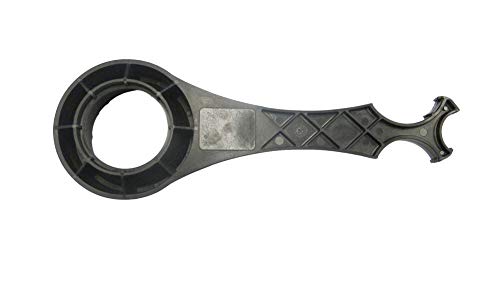
Anyone running a Clack control valve knows the frustration of trying to service the unit with the wrong tool. The V3193-02 wrench is the upgraded service wrench built specifically for that valve, the kind of spare that pays for itself the first time a seal or injector needs attention.
It pairs naturally with the heavy-duty whole-home softeners later in the lineup. Keep it in a drawer near the softener and you skip the service-call delay when something minor pops up.
A Strong Showing
- Engineered for Clack valve repairs, no improvised tools needed
- Newer upgraded design improves grip during service
- Compact enough to store beside the brine tank
Trade Offs
- Only useful if your softener runs a Clack control head
Best Suited To
DIY homeowners who service their own Clack valve and want the right tool staged ahead of a leak.
Skip It When
The Aquasure Harmony Series uses a different control head, so this wrench is not the right shelf pick there.
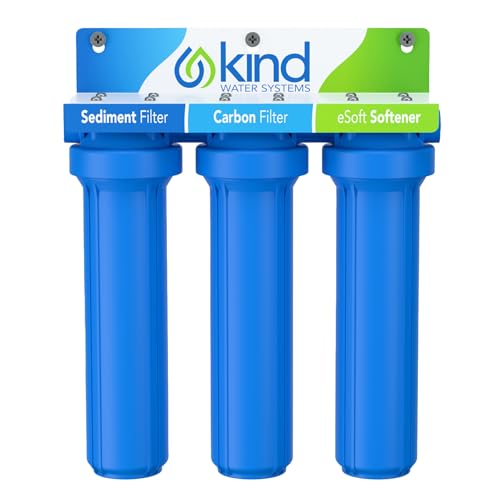
The Kind E-3000 collapses three jobs into one compact tower: sediment filtration, carbon block filtration, and salt-free conditioning. A “salt-free softener” technically doesn’t strip hardness minerals the way a salt-based unit does, it conditions them so they’re less likely to stick to surfaces, which is a meaningful distinction worth understanding before you buy.
For city water where chlorine and sediment drive most of the taste and skin complaints, the E-3000 is a clean install. No salt bags, no drain line, no electricity, and the regeneration cycles of the Aquasure units later in this list are simply absent here.
Where It Delivers
- Three-stage treatment in a single whole-house unit
- No salt, no drain, no power, lower ongoing upkeep
- Frees up space compared with a brine tank setup
- Sensible for renters and condo owners who can’t add a drain
Points To Note
- Salt-free conditioning reduces scale adherence rather than fully softening the water
- Replacement cartridges add a recurring cost to plan for
Whose Shelf It Belongs On
City-water households that want cleaner drinking and shower water without committing to salt maintenance.
Reach For A Different Pick When
The Aquasure 64,000-Grain Whole Home Bundle is the better route for very hard water that demands true mineral removal.
If your main complaint is the chemical taste and smell of chlorinated water, this Kind system targets that head-on. It pulls chlorine, chloramine, sediment, silt, debris, and VOCs (volatile organic compounds, which are carbon-based chemicals that vaporize from water and affect taste or smell) at the point of entry, so every tap in the house benefits.
Where the E-3000 leans into salt-free conditioning, this pick stays focused on filtration, which keeps the install simpler. Scaled for homes with up to six bathrooms, it’s the right match for big families running multiple showers at once.
What Stands Out
- Tackles both chlorine and chloramine, which many filters miss
- Whole-home coverage scales to larger households
- Improves taste in cooking and drinking water across every tap
- Simpler setup than a salt-based softener, no drain required
Worth Noting
- Filter media needs periodic replacement on a maintenance schedule
- It is a filter, not a softener, so hardness scale isn’t removed
Perfect Match For
Multi-bathroom homes where chemical taste and dry skin from chlorine are the daily frustrations.
Look Elsewhere When
Hard water scale is your dominant problem, and the Aquasure Harmony 48,000-Grain Softener is the more direct fix.
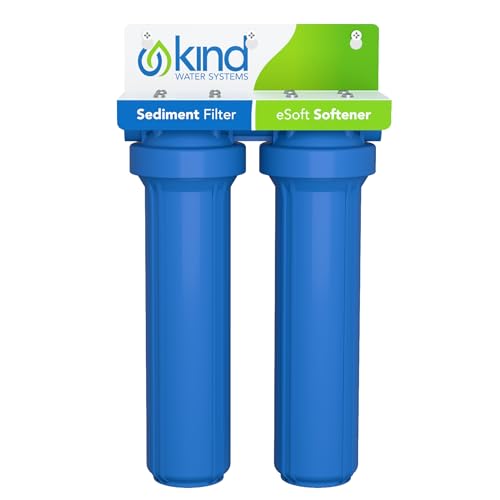
This Kind model sits in the same salt-free family as the E-3000 but leans harder into scale protection. The reusable sediment cartridge catches dirt, sand, silt, clay, and rust, while the conditioning media helps prevent hard-water scale from clinging to pipes and appliances. The zero-water-waste claim matters for anyone whose municipality charges for sewer use tied to softener discharge.
Compared with the Aquasure Harmony salt-based softener further down, there’s no brine tank to haul, no regeneration cycles to schedule, and no electricity. The trade-off is that you’re defending against scale rather than removing hardness.
Features That Help
- Reusable sediment cartridge trims long-term filter costs
- Zero water waste compared with traditional salt regeneration
- Covers homes with up to six bathrooms
- Low-maintenance daily operation, no salt to add
Points To Keep In Mind
- Does not remove hardness minerals, only conditions them
- Less effective in very high-grains-of-hardness water compared with salt-based units
Made For
Eco-conscious households in regions with moderate hardness who want scale defense without salt discharge.
A Better Fit Elsewhere
For very hard water where soft, lathered showers are the priority, the Aquasure 64,000-Grain Bundle is a stronger match.
Sediment is the silent killer of downstream filters. The iSpring WSP100SL is a 100-micron replacement cartridge for the WSP spin-down filter, the first line of defense that catches dirt, sand, and rust before they reach the rest of the plumbing.
Think of it as the supporting cast for the larger systems in this roundup. Pair it with the Aquasure bundle, and your pre-filters and water heater work less hard over time.
What Earns Its Place
- Siliphos media helps reduce scale in addition to catching sediment
- 100-micron rating balances flow rate and particle capture
- Drop-in replacement for existing iSpring WSP housings
Honest Caveats
- Only fits iSpring WSP spin-down series, not universal
- Replacement cadence shortens in high-sediment water
Who Should Grab It
Owners of an iSpring WSP spin-down filter keeping an extra cartridge on hand for quick swaps.
Swap It Out When
You don’t own the WSP housing, and the Kind Whole Home Filtration System covers sediment plus chemicals in one pass.
Tiny part, real consequence. The 7116713 bypass clip locks the control valve to the bypass assembly and also secures the float inside the brine tank, and a failed clip is often the difference between a controlled repair and a flooded utility room.
It fits standard 3/4-inch softener valves, which is the size on most residential units in this roundup. The honest read: keep a spare or two on hand, especially if your system is more than five years old.
The Upside
- Low-cost insurance against an unplanned service event
- Compatible with standard residential softener valves
- Simple to swap during routine maintenance
Practical Considerations
- Does not fit larger 1-inch control valves
- Clips can snap during removal if system pressure is not released first
Built With In Mind
Homeowners with a 3/4-inch valve softener who want a small stockpile of wear parts.
Another Choice May Suit
Owners of 1-inch systems should look at a model-specific replacement part, and the Aquasure Harmony runs a different valve layout.
When a softener lives in an unheated garage or basement, the tank “sweats” as warm interior water meets a cold exterior surface, and that condensation can drip onto the floor for hours. The Sobana neoprene slip sleeve is a 3.5mm insulated cover sized to standard 10×54-inch tanks, the most common residential footprint.
It complements the Aquasure units nicely. Slip it on after install, and the nuisance of pooled water around the tank disappears in most climates.
Why It Works Well
- 3.5mm neoprene layer resists moisture and UV exposure
- Fits the most common 10×54 residential tank size
- Storage bag included for off-season removal
- Slip-on design, no tools or straps needed
Some Limits To Know
- Confirm your tank dimensions before ordering, sizing is specific
- Adds a layer that can make reading tank labels harder
Who It Suits Best
Homeowners running a standard 10×54 tank in a humid garage, basement, or covered outdoor space.
Where A Sibling Pick Shines
The Aquasure 64,000-Grain Bundle includes an RO system, and an indoor install there may not need a jacket at all.
This is the big-hitter of the roundup. The Aquasure 64,000-grain bundle pairs a digital metered softener with triple-purpose pre-filters and a 75 GPD (gallons per day) reverse osmosis system under the sink. Reverse osmosis forces water through a semi-permeable membrane to strip dissolved solids, which is why it’s the gold standard for drinking-water polish.
Rated for homes with four to six bathrooms, it handles large families without the regeneration cycles eating into shower time. Salt-based softening is the real thing, removing calcium and magnesium rather than just conditioning them, which is the gap the salt-free Kind systems can’t close.
Good Reasons To Consider
- 64,000-grain capacity supports high daily water usage
- Digital metered head regenerates based on actual use, not a clock
- Pre-filters extend the life of the softener and RO membrane
- RO tap at the kitchen sink for cooking and drinking
Factors To Consider
- Larger footprint needs planning for drain, brine overflow, and a power outlet
- Salt refills and RO membrane swaps are recurring ownership costs
Key Specs
Who Will Love This
Owners of larger homes with very hard water who want a true softener, not a conditioner, plus polished drinking water.
Consider Something Else When
The Aquasure Harmony 48,000-Grain Softener is the better fit for a three- to four-bath home that doesn’t need an RO add-on.
The Harmony is the more accessible sibling to the 64,000-grain bundle, sized for homes with three to four bathrooms. The high-efficiency digital metered control head regenerates based on real demand, so you don’t waste salt or water on a fixed schedule.
It strips calcium and magnesium the way a true softener should, and the result is noticeable: soap lathers better, fixtures stay cleaner, and the water heater doesn’t work as hard. For most suburban households, this is the right-sized answer.
Strengths Worth Knowing
- 48,000-grain capacity suits three- to four-bathroom homes comfortably
- Digital metered valve trims salt and water waste
- True salt-based softening removes hardness, not just conditions it
Possible Compromises
- No bundled RO or pre-filters, those are separate add-ons
- Heavy unit may need a helper during install
The Right Fit
Suburban families with moderate-to-hard water and a standard three- to four-bathroom layout.
Not Your Match When
Bigger households should step up to the Aquasure 64,000-Grain Whole Home Bundle instead.
Matching Your Home To The Right Softener Setup
Start with your water, not the product. A basic test strips away most of the guessing: it tells you the grains of hardness (a measure of dissolved calcium and magnesium), the pH, and whether sulfur or iron are present. City-water homes with chlorine complaints land naturally on the Kind Whole Home Filtration System, while well-water homes with sulfur smell need the Neutra Sul oxidizer upstream of everything else.
Grain capacity is the next decision. Grains measure how much hardness the resin can remove before a regeneration, and a four-person family in moderately hard water typically needs somewhere in the 32,000 to 48,000 grain range. Bigger families, harder water, or both push you toward the 64,000-grain Aquasure bundle.
Salt-based versus salt-free is a values call, not just a feature comparison. Salt-based units remove hardness minerals, which is what you want for spotless glassware and a quiet water heater. Salt-free systems don’t discharge brine (the salty wastewater produced during regeneration) and need no electricity, but they condition rather than remove, so you’ll see less dramatic results in very hard water.
Don’t forget the support gear. A spin-down sediment filter protects everything downstream, a tank jacket keeps an unheated install dry, and a bypass clip plus a valve wrench turn a future service call into a 15-minute job. The picks above include all of it, because the softener is only as reliable as the parts around it.
Key Considerations Across These Picks
Pitfalls Shoppers Hit
Choosing by grain capacity alone misses the daily use pattern. A 64,000-grain unit on a small home wastes salt and water, while an undersized softener in a large household regenerates so often that you feel it in the shower. Match capacity to occupants and hardness, not to a number on the box. Also, watch for the salt-free versus true softener distinction: if your goal is lather, spot-free glassware, and extended water heater life, conditioning alone often disappoints.
Where The Extra Money Goes
Stepping from the Aquasure Harmony to the 64,000-grain bundle buys three real things: higher capacity, a bundled RO drinking-water tap, and pre-filters that protect the softener from sediment. The upgrade pays off when you actually use the extra capacity and drink from the RO tap daily. For a smaller home, that spend is harder to justify, and the Harmony delivers most of the same benefits at a lower ongoing cost.
Frequently Asked Questions
How do I know which grain capacity I need?
Multiply your home’s hardness (in grains per gallon) by the number of people, then by estimated daily water use. A family of four in 10-grain water lands in the 32,000 to 48,000 range, which is where the Aquasure Harmony fits comfortably.
Are salt-free softeners really effective?
They’re effective at reducing scale adherence and protecting plumbing, but they don’t remove hardness the way a salt-based unit does. For very hard water or noticeable soap scum, a salt-based system is the more direct answer.
Can I install a whole-home softener myself?
A handy homeowner can handle a basic install, but you’ll need a drain line for the brine discharge, a nearby power outlet, and access to the main water line. When in doubt, a plumber finishes the job faster and avoids leaks.
How often do the salt and filters need attention?
Salt levels need a quick check every one to two months, and pre-filter cartridges typically run on a three- to six-month swap schedule depending on water quality and household usage.
What does a tank jacket actually do?
It insulates the tank to prevent condensation in humid or unheated spaces, which keeps the floor dry and reduces moisture around the softener in basements and garages.
Closing Remarks
The right pick depends on your water first, your household second, and the maintenance you’re willing to take on third. Match those three honestly, and the rest of the decision tends to settle itself, whether that lands you on a salt-based workhorse, a salt-free conditioner, or the small parts that keep an existing system running well.




