

Clean drinking water at home rarely comes down to a single decision. You might be filling coffee pots and baby bottles from a dedicated filter, or you might want every shower, laundry load, and pasta pot drawing from the same treated source. The category spans countertop reverse osmosis units, under-sink cartridge kits, and full-house filtration rigs, each built around a different kind of household problem. This roundup covers nine water purifier systems for home use, mixing the simple-and-affordable end with whole-house setups that tackle chlorine, heavy metals, iron, manganese, and scale before water ever reaches a faucet. Pick by your water profile, your plumbing tolerance, and how much space you can spare under the sink or near the main line.
A Fast Comparison Of The Options

Better Home Water Treatment Ultima 7/VII 5-Stage RO Replacement Kit

Express Water Whole Home 3-Stage Essential Protection

Express Water Whole House 3-Stage Heavy Metal

Express Water Whole House 3-Stage Iron & Manganese

Express Water Ultimate Protection Pro 3-Stage

Express Water Whole House 3-Stage Anti-Scale

DREO Countertop RO 112 3L Autofill Pitcher
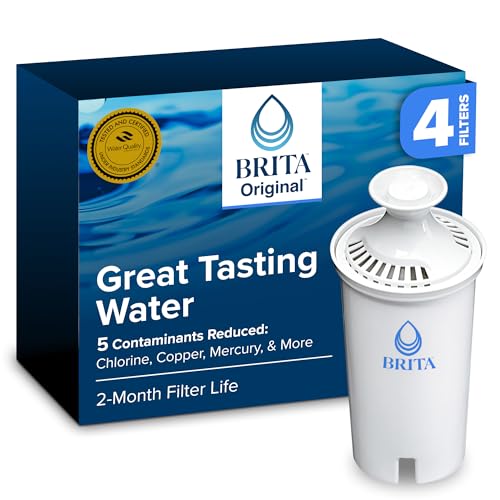
Brita Standard Pitcher Replacement Filters (4-Pack)

DREO Countertop RO with 2 Autofill Pitchers
More On The Choices That Made The List
This kit is built for households that already run an Ultima 7/VII reverse osmosis rig under the kitchen sink and need fresh cartridges on hand. The 50 GPD (gallons per day) membrane handles typical family drinking and cooking volume, while the inline coconut-shell carbon stage polishes taste at the end of the line.
The 1/4-inch NPT post carbon filter screws into standard RO tubing, so swap-in is a wrench-and-pliers job rather than a plumber call. Compared to the countertop DREO units further down, this one stays out of sight and out of mind, freeing counter space but requiring you to commit to filter changes on schedule.
Points In Its Favor
- Five-stage design with a final coconut-shell carbon polish improves flavor and odor in the glass.
- 50 GPD output covers typical household drinking and cooking needs without slow trickle at the tap.
- Standard 1/4-inch NPT post carbon fitting works with most RO plumbing.
- Cartridge-style swaps mean you replace filters, not the whole system.
Things To Consider
- Replacement-only: you need a compatible Ultima housing to use this kit.
- Annual filter changes are a recurring cost, commonly reported in the dozen-dollar range per stage.
- Under-sink installation requires a small amount of clearance and a nearby drain saddle.
Key Specs
Who It Suits Best
Owners of an existing Ultima 7/VII system who want a same-spec replacement kit without re-engineering their under-sink setup.
Consider Something Else When
Renters without a permanent under-sink solution may find the DREO countertop RO a simpler route that skips the wrench work entirely.
Express Water’s Essential Protection rig is the entry point in the brand’s whole-house lineup, and it works for households whose main complaint is chlorine taste and odor coming out of every tap. The three-stage configuration sits on the main supply line, so showers, dishwashers, and laundry all draw from treated water.
Unlike the replacement cartridge kit from Better Home Water Treatment, this is a full point-of-entry install with its own mounting bracket. You trade under-sink clearance for utility-room or garage space, and in return every faucet in the house gets the same baseline treatment.
Bright Spots
- Whole-house coverage means showers, laundry, and cooking water all benefit from reduced chlorine.
- Three-stage layout lets you swap sediment pre-filters without disturbing carbon stages.
- Mounting bracket included, simplifying installation on a basement or garage wall.
Worth Noting
- Does not target heavy metals, iron, manganese, or scale: owners in those categories need a different Express Water variant.
- Whole-house install typically needs a plumber if you lack sweat-soldering experience.
Made For
City-water households who want cleaner water from every tap without investing in a specialty media system.
Swap It Out When
Homes on well water with reddish staining should reach for the Express Water Iron & Manganese 3-Stage instead, since this kit is not tuned for those contaminants.
The Heavy Metal variant steps in where the Essential Protection rig falls short. KDF (kinetic degradation fluxion) media is the active ingredient here: a copper-zinc formulation that uses a redox (reduction-oxidation) reaction to neutralize dissolved metals like lead, mercury, and copper before they reach your glass.
For households on older plumbing or on well water with documented metal content, this setup adds genuine defense that carbon alone cannot provide. Compared to the Essential kit, you are paying more for targeted media rather than general chlorine reduction, so the value only lands if your water test actually shows a metal problem.
A Few Strong Suits
- KDF media targets dissolved metals through a redox process that carbon blocks cannot match.
- Whole-house scope means cooking, bathing, and laundry water all benefit.
- Compatible filter housing with the rest of the Express Water 3-Stage lineup simplifies future swaps.
Trade Offs
- Requires a water test to justify the upgrade: municipal water already low in metals does not need KDF media.
- KDF stages typically have higher replacement media costs than plain carbon blocks.
Right Fit For
Well-water households or homes built before lead-free plumbing mandates who want metal reduction at the point of entry.
Reach For A Different Pick When
City dwellers on treated municipal supply may find the Express Water Essential Protection more cost-efficient, since chlorine is typically their primary concern.
Reddish-brown stains in the toilet bowl or on porcelain sinks are usually the first hint of iron in the water, and blackish residue points to manganese. This Express Water variant is built to address those two minerals at the point of entry, sparing you from chasing stains with every fixture cleaning.
It uses a similar three-stage layout to the Essential and Heavy Metal kits, but the specialty media is tuned to oxidize and capture iron and manganese. The honest read is that this is a niche choice: if your water test does not show elevated iron or manganese, you would be paying for media you do not need.
What Stands Out
- Specialty media targets the specific minerals that cause staining in fixtures and laundry.
- Whole-house install protects water heaters, dishwashers, and washing machines from iron fouling.
- Housing design matches other Express Water 3-Stage models, simplifying future upgrades.
Honest Caveats
- Only useful with a confirmed iron or manganese issue: city water rarely has high levels.
- Specialty media replacement tends to cost more per cycle than generic carbon.
Key Specs
Best Suited To
Well-water households with reddish-brown staining in toilets, sinks, or laundry.
A Better Fit Elsewhere
If your water is simply hard and leaves scale rather than stains, the Express Water Anti-Scale 3-Stage is the more accurate media match.
The Ultimate Protection Pro sits at the top of the Express Water heap, and the difference is in the first stage. A reusable 50-micron spin-down sediment filter (a backflushing pre-filter that catches large particles before they reach the next stage) captures sand, silt, and rust flakes before they ever touch the specialty media, extending the life of everything downstream.
That pre-filter is a quiet workhorse: rinse it out, drop it back in, and your carbon and specialty stages run longer between changes. For homes with visible sediment in the toilet tank or on faucet aerators, this head-start alone can pay for itself in reduced filter replacement frequency.
The Practical Payoff
- Reusable spin-down pre-filter cuts down on disposable filter waste and cost over time.
- 50-micron sediment capture protects specialty media from premature fouling.
- Adds an upstream defense layer that the Essential kit lacks.
- Whole-house scope pairs pre-filtration with downstream specialty treatment.
Small Caveats
- Higher upfront cost than the bare-bones Essential rig.
- Spin-down valve needs occasional flushing, a small maintenance step the other Express Water kits do not require.
Who Should Grab It
Homeowners dealing with both sediment and chlorine or metal issues who want a longer-lasting whole-house solution.
Where A Sibling Pick Shines
Renters or households with relatively clean municipal supply may find the Express Water Essential Protection a simpler and lighter-weight match.
Scale is the chalky white crust that builds up inside kettles, on showerheads, and around faucet bases. The Anti-Scale variant of the Express Water lineup uses media designed to reduce the minerals that cause that crust before they ever reach a water heater or a glass shower door.
It follows the same three-stage layout as the rest of the brand’s whole-house line, so the install and housing footprint feel familiar. Compared to the Iron & Manganese kit, this one targets a different problem, hard-water minerals, so the right pick depends entirely on whether you see white crust or reddish stains.
Features That Help
- Reduces hard-water scale accumulation across water heaters, dishwashers, and glass surfaces.
- Whole-house install protects appliances that would otherwise need separate descaling cycles.
- Compatible Express Water housing means future swaps or upgrades are straightforward.
A Few Limitations
- Does not address chlorine, metals, or iron, so homes with multiple issues may need layered treatment.
- Specialty anti-scale media typically carries a higher replacement cost than carbon.
Whose Shelf It Belongs On
Households in hard-water regions who see white crust on shower doors and kettles, and who want to extend appliance life.
Look Elsewhere When
Homes with both scale and iron staining should consider pairing the Anti-Scale kit with the Express Water Iron & Manganese 3-Stage, or pick a single unit based on whichever issue is more visible.
DREO’s countertop RO unit ditches the wrench entirely: no under-sink drilling, no drain saddle, no plumber visit. The 3L autofill pitcher sits on the counter, the unit filters as water feeds into it, and the included pitcher is ready to pour.
The 3:1 pure-to-drain ratio (three gallons of clean water for every gallon of wastewater) is a reasonable efficiency for a countertop RO, and the built-in TDS (total dissolved solids) meter shows you what is going in versus what is coming out. Compare that to the under-sink Better Home Water Treatment kit: same RO concept, but the DREO trades a permanent install for portability.
The Case For It
- Installation-free design suits renters and small kitchens where under-sink work is not an option.
- 3:1 pure-to-drain ratio conserves water better than many older RO units.
- Real-time TDS display lets you see filtration performance without a separate meter.
- Self-cleaning cycle helps extend filter life in between changes.
Some Limits To Know
- Counter space: the unit plus the 3L pitcher together take up a meaningful corner of the counter.
- Countertop RO produces wastewater that flows back into the same vessel or a small reservoir, which must be emptied periodically.
Feature Snapshot
Who Will Love This
Apartment dwellers and renters who want RO-quality water without modifying plumbing or losing their security deposit.
Skip It When
Large families who go through a pitcher in minutes may find the DREO Countertop RO with 2 Autofill Pitchers a better fit since it doubles the on-hand capacity.
This is the simplest entry on the list: a four-pack of standard replacement cartridges for anyone who already owns a Brita pitcher or dispenser. Drop the filter in, run water through, and let the activated carbon plus ion-exchange resin (a resin that swaps unwanted ions like copper and cadmium for less harmful ones) do the rest.
Brita is not going to outperform any of the reverse osmosis or whole-house systems on this list, and the brand is upfront about that. The trade-off is convenience and cost: a pitcher costs a fraction of an RO unit, requires no plumbing, and slots into a refrigerator door.
Where It Helps
- Drop-in replacement for existing Brita pitchers and dispensers.
- Activated carbon reduces chlorine taste and odor, with ion-exchange resin for copper, cadmium, and mercury.
- Multi-pack spreads replacement cost across a longer window.
Honest Caveats
- Does not match RO or whole-house systems for dissolved solids or metals.
- Slow gravity filtration: filling a full pitcher takes patience.
Perfect Match For
Households already using a Brita pitcher who want fresh filters on hand without committing to a plumbed system.
Not Your Match When
Anyone seeking RO-level purity from a kitchen tap should reach for the DREO countertop units or the Better Home Water Treatment under-sink kit instead.
The second DREO countertop model solves the biggest complaint about the single-pitcher version: not enough water on hand. With two autofill pitchers in the box, you keep one in the fridge and one on the counter, so the second round of drinking water is already filtered and chilled when the first pitcher empties.
You get the same 3:1 pure-to-drain efficiency, the same TDS and filter life monitoring, and the same install-free footprint. The trade-off is simply more pitcher storage to manage on a small counter.
Notable Upsides
- Twin pitchers mean less waiting for a refill during busy mornings.
- Real-time TDS and filter life indicators take the guesswork out of replacement timing.
- Self-cleaning cycle helps the unit stay fresh between manual deep cleans.
- Same 3:1 efficiency as the single-pitcher DREO RO.
Practical Considerations
- Larger counter footprint than the single-pitcher version, which may cramp very small kitchens.
- Two pitchers means two sets of dishwasher runs if you clean them routinely.
At A Glance
Who Will Love This
Families or shared households who go through a single pitcher faster than the unit can refill it.
Swap It Out When
Solo dwellers or couples who only need a few cups at a time may find the DREO single-pitcher RO a more compact, lighter match for their counter space.
Choosing Water Purifier Systems For Home That Match Your Water
Match The Filter To The Contaminant
Start with what is actually in your water. Municipal suppliers publish annual water quality reports, and well owners can run a basic panel for iron, manganese, hardness, and total dissolved solids. Chlorine, sediment, heavy metals, hard-water minerals, and iron each call for a different media, and a filter designed for one will not meaningfully address the others. A whole-house unit like the Express Water Essential Protection handles chlorine well, but a home with iron staining needs the Iron & Manganese variant to make a visible difference.
Decide Where You Want Treated Water
Point-of-use systems (under-sink or countertop) treat only the water you draw from a dedicated tap or pitcher, leaving the shower and laundry on raw supply. Point-of-entry systems treat everything coming into the house, which protects appliances, fixtures, and skin. RO countertop units like the DREO models suit renters and small kitchens, while whole-house rigs make sense for larger homes where you want every faucet covered.
Factor In Maintenance And Replacement Cost
Every filter on this list needs eventual replacement, and the cadence and cost vary widely. Carbon blocks typically run for several months before swap-out, while specialty KDF or anti-scale media may last longer but cost more per change. Whole-house pre-filters need occasional flushing, and RO membranes last longer than carbon stages but cost more when they finally give out. Build the recurring cost into the decision rather than focusing on the upfront figure alone.
Mind The Space And Plumbing
Under-sink kits need clearance below the counter and a nearby drain. Whole-house units need wall space near the main shutoff and a plumber if you are not comfortable with sweat-soldering copper. Countertop RO units skip plumbing entirely, but they take up counter real estate. Renters in particular should default to install-free options like the DREO countertop RO so they leave no trace on moving day.
Key Considerations Across These Picks
Common Shopping Slip Ups
The most common error is buying a filter before testing the water. Without knowing what is actually in your supply, you are guessing. A pitcher filter on heavily mineralized well water will do little, and a chlorine-focused whole-house unit on iron-rich well water is the wrong tool. A second frequent mistake is ignoring the replacement schedule: filters that never get swapped turn into bacterial petri dishes rather than water cleaners, so factor in the ongoing cost before committing.
Why Top Tier Costs More
The premium Express Water Ultimate Protection Pro costs more because of the reusable spin-down pre-filter and the layered media approach. That extra hardware extends the life of downstream cartridges and reduces long-term waste, but the benefit only materializes if you actually flush the pre-filter on schedule. The DREO countertop RO commands a higher price than a basic pitcher because of the RO membrane and the real-time monitoring electronics. In both cases, the upgrade is paying for measurable capability, not branding.
Frequently Asked Questions
What Is The Difference Between Reverse Osmosis And Carbon Filtration?
Reverse osmosis forces water through a semi-permeable membrane to remove dissolved solids, while carbon filtration uses activated carbon to trap chlorine, odors, and some metals. RO is more thorough but produces wastewater, while carbon is simpler and faster but less comprehensive.
Do I Need A Whole-House System Or A Point-Of-Use Filter?
Choose a whole-house system if you want treated water from every faucet and shower, or if you need to protect appliances from sediment and hardness. Pick a point-of-use filter if your concern is limited to drinking and cooking water at the kitchen tap.
How Often Do Replacement Filters Need To Be Changed?
Most carbon blocks need swapping every two to six months, while RO membranes can last two to three years depending on usage. Whole-house pre-filters should be flushed or replaced when pressure drops noticeably at the tap.
Can These Systems Remove Fluoride?
Standard carbon filters do not meaningfully reduce fluoride. Reverse osmosis systems, like the DREO countertop units and the Better Home Water Treatment under-sink kit, are the more effective route for fluoride reduction.
Are Countertop RO Units As Effective As Under-Sink RO?
Yes, in terms of filtration quality, since both use RO membranes. The difference is throughput: under-sink units connect directly to the plumbing for higher flow, while countertop units fill a pitcher more slowly but require no permanent installation.
Closing Remarks
Your water source, your plumbing tolerance, and your household size all point to different picks from this list. Well owners with staining and hardness should look first at the Express Water specialty variants, while renters and small kitchens will likely land on the DREO countertop units. The right system is the one matched to what is actually in your glass.




