Municipal tap water runs through miles of pipe before it reaches your glass, and most kitchens were never designed with a built-in filter in mind. Under-sink systems solve both problems at once, hiding the bulky parts inside the cabinet and delivering a dedicated stream at the counter.
The picks below cover everything from single-stage carbon blocks to multi-layer reverse osmosis rigs, with options for renters, families, and anyone working with stubborn well water. Each one trades off differently on filter life, install effort, and the kind of contaminants it actually targets, so the right choice really depends on what your tap delivers and how much fuss you want under the cabinet.
The Shortlist At A Glance
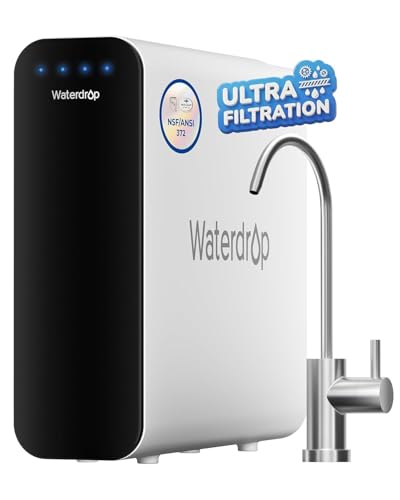
Waterdrop TSU 0.01 Micron Ultra Filtration Under Sink Water Filter

iSpring RCC7P-BLK 5-Stage Reverse Osmosis System

Pro Products Pot Perm Greensand Iron Filter Regenerant

Waterdrop TSA 8 Layer Under Sink Water Filter System

Waterdrop TSB 8 Layer Under Sink Water Filter System
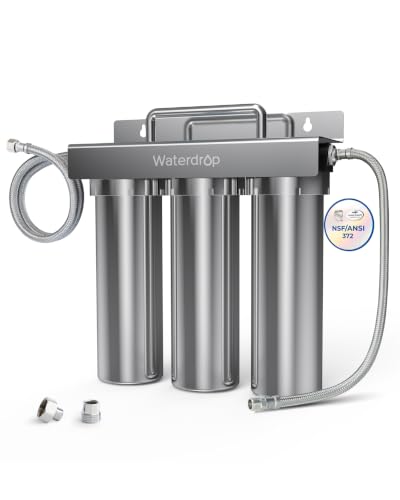
Waterdrop TST-UF 0.01μm Ultra-Filtration Under Sink Water Filter

Waterdrop TSB-10-CM Under Sink Water Filter System
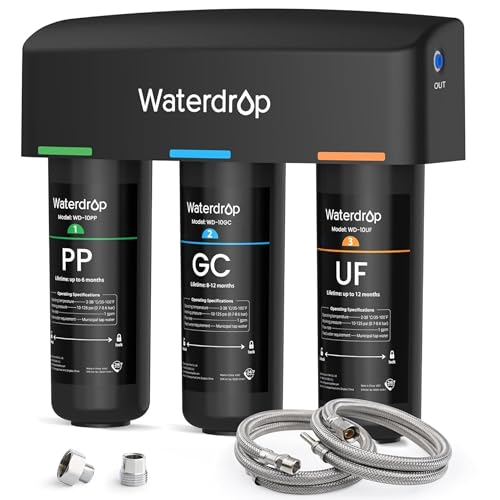
Waterdrop WD-TSA-UF 0.01μm Ultra Filtration Under Sink Water Filter

Waterdrop TSB-ALK 8 Layer Slightly Alkaline Under Sink Water Filter

Waterdrop TSB-PF 9 Layer Under Sink Water Filter System
Why These Options Stand Out
Most under-sink filters push water through carbon, and that’s a fine starting point, but the TSU adds a 0.01 micron ultrafiltration stage that physically strains out larger contaminants while leaving calcium and magnesium behind. You get cleaner drinking water without stripping the minerals that give municipal tap its familiar taste, and the system produces no wastewater during operation.
It runs on cold municipal water only, so anyone on a private well will want a pre-filter or a different system entirely. The dedicated faucet does require a hole drilled in the countertop, which is the main installation hurdle for renters who want a less permanent setup.
Positive Points
- Multi-stage design cuts a long list of contaminants without dropping TDS (total dissolved solids), which means helpful minerals stay in the glass.
- No wastewater means every drop from the cold line ends up either in the tank or at the faucet.
- Filter swaps use a quick-twist housing, which is friendlier than the cartridge-and-O-ring approach used by older under-sink rigs.
Things To Consider
- The dedicated faucet requires drilling a new hole in the countertop or repurposing an existing soap dispenser opening.
- Performance assumes consistent municipal pressure, so homes with very low incoming pressure may notice a slower flow.
Who It Suits Best
Homeowners on municipal water who want meaningful contaminant reduction without sacrificing mineral content and don’t mind a one-time countertop modification.
Look Elsewhere When
The iSpring RCC7P-BLK is the better match for households dealing with very high TDS, lead concerns, or hard-water-heavy municipal reports.
Reverse osmosis works differently from carbon or ultrafiltration: it forces water through a semi-permeable membrane (a thin film with microscopic pores) under pressure, which strips out dissolved solids that other filters simply pass through. The RCC7P-BLK adds a booster pump to maintain tank pressure even when household PSI drops, plus a five-stage cascade that polishes the water before it reaches the glass.
The included black faucet gives the setup a more finished, intentional look compared to the chrome taps shipped with most RO systems. Unlike the no-waste TSU above, this unit does produce a brine stream during filtration, so the drain line and a small amount of additional water use are part of the package.
Advantages To Know
- The booster pump keeps fill speed consistent in homes where municipal pressure hovers around 40 PSI or below.
- Five stages cut a wider spectrum of dissolved contaminants, including PFAS (per- and polyfluoroalkyl substances, a class of persistent “forever chemicals”) and high TDS, where carbon-only units would fall short.
- The dedicated RO faucet accepts an optional fridge connection kit, so you can route filtered water directly to an ice maker.
Worth Noting
- RO systems generate wastewater during the filtration cycle, and a typical ratio is several gallons of brine per gallon of purified water.
- Tank and pump take up meaningful cabinet space, so very shallow under-sink cabinets may not have the clearance.
At A Glance
Made For
Households on municipal water with verified high TDS or PFAS reports who want a comprehensive, tank-based purification setup.
Consider Something Else When
The Waterdrop TSU keeps things simpler for anyone who doesn’t need RO-grade TDS reduction and would rather skip the brine stream.
This is the odd one out in the list: a regenerant rather than a complete filter system. Pot Perm is potassium permanganate, a purple crystalline oxidizer that greensand iron filters use to recharge their media bed. It converts dissolved iron and manganese into insoluble oxide particles that the filter bed can then strain out, keeping the system working between full media changes.
The use case here is specific. Homes with well water that shows orange staining in sinks or black deposits in toilet tanks often run a greensand filter upstream of the rest of the plumbing, and the filter needs periodic chemical regeneration. A 76-ounce bottle covers a meaningful number of cycles.
What Stands Out
- Targets the two most common metallic contaminants in well water, where standard carbon cartridges do very little.
- Larger bottle size means fewer reorder cycles during the heavy spring treatment season.
- Free-flow formulation feeds most standard greensand regenerator setups without manual crushing.
Points To Note
- Potassium permanganate stains anything it touches purple, so storage demands a dedicated shelf away from towels or finished wood.
- Useful only if you already own (or plan to install) a greensand filter; this is not a standalone solution.
Best Suited To
Well-water households running a greensand iron filter who need a periodic media regeneration chemical and want a larger bottle to reduce reorder frequency.
Not Your Match When
The Waterdrop TSA or TSB is a more practical pick for anyone on municipal water who simply wants to cut chlorine and improve daily drinking taste.
The TSA uses an eight-layer composite cartridge, with carbon, KDF (kinetic degradation fluxion, a copper-zinc media that targets chlorine and heavy metals), and sediment stages stacked into one housing. NSF/ANSI 42 certification is the visible signal here, covering material safety and chlorine reduction claims, so you know the listed performance has been independently verified rather than self-reported.
It connects directly to most standard faucets with 1/2-inch or 3/8-inch female NPT (National Pipe Thread, a standard plumbing thread size) connections, which means the install path skips a dedicated drilled faucet entirely. Compared to the TSU above, this trades an ultrafiltration membrane for a denser carbon-and-KDF blend aimed at everyday municipal chemistry.
Positive Takeaways
- Independent NSF/ANSI 42 certification gives the listed contaminant reduction claims real third-party weight.
- Direct-to-faucet install path keeps the kitchen counter free of new holes.
- Eight layers handle sediment, chlorine, and odor in a single cartridge swap every six months or so.
Trade Offs
- Doesn’t reduce TDS, so anyone tracking mineral content with a meter will see no change.
- Quick-connect faucets require contacting the brand for an adapter, which adds a small step to the install.
Quick Facts
Who Will Love This
Municipal-water households who want a certified, drill-free install that covers the basics of taste and odor reduction without RO complexity.
A Better Fit Elsewhere
The Waterdrop TSB-PF is worth the upgrade for anyone specifically worried about PFAS, fluoride, or chloroform alongside standard chlorine.
The TSB takes the eight-layer cartridge from the TSA above and pairs it with a dedicated faucet, so you keep the cold tap for washing dishes and get a separate stream for drinking and coffee. That separation matters more than people expect, since filtered water at a dedicated tap avoids the small flavor shifts you sometimes catch when cold and filtered lines mix in old plumbing.
Replacement filters are widely available under the WD-TSA and WD-TSB family names, and the swap takes a few seconds with the twist-and-pull housing. The trade-off versus the TSA is the same drilled-faucet step we saw with the TSU.
What Earns Its Place
- Dedicated faucet removes any cross-contamination from the regular cold line during fills.
- Eight-layer media stack cuts chlorine, sediment, and odor in a single housing.
- Filter replacements use a fast-swap design that doesn’t require shutting off the main supply for extended periods.
Some Limits To Know
- Countertop drilling remains a requirement, which limits appeal for renters on short leases.
- Cold municipal water only, so hot-line tea drinkers won’t benefit from this setup.
Perfect Match For
First-time under-sink filter shoppers who want a complete, faucet-inclusive package and are okay with a permanent countertop modification.
Skip It When
The Waterdrop WD-TSA-UF is the better match for anyone who refuses to drill and would rather adapt to an existing cold-water line.
The TST-UF puts the filter housing in stainless steel rather than the usual plastic, which is a small but meaningful difference over a decade of cabinet life. Plastic housings can yellow or micro-crack where they meet the cold line, especially under repeated filter swaps, while stainless just sits there. The 0.01 micron ultrafiltration stage cuts the same long list of contaminants the TSU does.
Install follows the no-drill path, attaching directly to the cold supply line at 1/2-inch or 3/8-inch female NPT connections. In most kitchens that means the entire install happens under the sink with a couple of wrench turns, no countertop modification required.
Noteworthy Benefits
- Stainless housing shrugs off the kind of cabinet moisture and accidental knocks that age plastic housings over time.
- Three-stage media design targets a long list of substances without the wastewater cost of an RO system.
- Direct connect path means no new faucet and no countertop hole.
Points To Keep In Mind
- Stainless adds a bit to the weight, so mounting on a thin cabinet wall may call for a small bracket.
- Quick-connect faucet owners still need to request an adapter from the manufacturer.
Feature Snapshot
Whose Shelf It Belongs On
Long-term homeowners who want a more durable housing than plastic and value a no-drill install.
Reach For A Different Pick When
The iSpring RCC7P-BLK makes more sense for households with truly heavy contamination that calls for reverse osmosis.
Most municipal systems in the United States switched from chlorine to chloramine (a chlorine-ammonia compound) over the last two decades, and the two behave differently in carbon filters. Chloramine is harder to remove, so generic carbon cartridges that work fine for chlorine often leave chloramine largely untouched. The TSB-10-CM is built specifically around that gap.
The “10” in the model name signals a ten-layer composite media, with catalytic carbon (carbon treated to break down chloramine rather than just absorb chlorine) doing the heavy lifting on the chemistry side. Replacement filters are catalog-numbered, so reorder is straightforward once the first swap comes around.
Practical Advantages
- Catalytic carbon media specifically targets chloramine, which generic carbon-only cartridges usually miss.
- Ten layers handle sediment and odor alongside the chloramine treatment in one housing.
- Municipal-water compatibility avoids the dedicated faucet drilling step.
Honest Caveats
- Doesn’t reduce TDS, so anyone measuring minerals won’t see a meaningful change.
- Not suited to well water or hot water lines, which narrows the audience to standard municipal cold feeds.
The Right Fit
Suburban households on chloramine-treated municipal water who notice that basic pitcher filters aren’t fixing the taste or smell.
Swap It Out When
The Waterdrop TSB-PF is the better match for households that also want fluoride or PFAS reduction beyond chloramine.
The WD-TSA-UF takes the TSA chassis from earlier in this list and adds a 0.01 micron ultrafiltration membrane, which means particulate reduction on top of the carbon-KDF chemistry. For municipal water that runs a bit cloudy during line flushing, the membrane stage catches what carbon alone would let pass.
It connects directly to standard cold supply lines, with no countertop modification or dedicated faucet in the box. For renters, that combination of UF-grade filtration and a fully reversible install is the main pitch.
A Strong Showing
- Combines carbon-KDF treatment with an ultrafiltration membrane for both chemical and particulate reduction.
- Direct-connect path leaves no permanent mark on the countertop.
- Municipal-only design keeps the spec list focused on the most common under-sink use case.
Where It May Fall Short
- Quick-connect faucet owners still need to contact the brand for a free adapter.
- Well water requires a separate pre-filtration stage, which adds to the total install.
Quick Technical Notes
Built With In Mind
Renters and homeowners on municipal water who want UF-grade particulate reduction without committing to a countertop drill or a tank.
Another Choice May Suit
The iSpring RCC7P-BLK makes more sense for households that need true RO-grade TDS reduction rather than UF-stage filtration.
The TSB-ALK layers a remineralization stage on top of the eight-layer base, so the water that comes out reads slightly alkaline on a pH (potential hydrogen, a scale measuring acidity versus alkalinity) strip rather than acidic. That’s the trade-off the brand leans into: a filter that takes things out and then puts a controlled amount of minerals back in to nudge the pH upward.
It’s still a cold-water, municipal-only system, so well water and hot lines remain out of scope. Compared to the TSB, the practical difference is one extra stage in the cartridge stack and the slightly higher pH result at the tap.
Notable Upsides
- Remineralization stage lifts pH slightly, which some drinkers prefer over flat-tasting filtered water.
- Eight-layer media still handles sediment, chlorine, and odor in the same housing.
- Dedicated faucet separates filtered water from the regular cold line for cooking and coffee.
Possible Compromises
- Slight alkalinity is a preference, not a necessity, so shoppers should know it’s a flavor-of-the-feature rather than a measurable health claim.
- Countertop drilling remains part of the dedicated-faucet install path.
Who Should Grab It
Mineral-conscious drinkers who specifically want slightly alkaline water from a dedicated tap and don’t mind a permanent countertop modification.
Where A Sibling Pick Shines
The Waterdrop TSB-10-CM is the more focused pick when the priority is targeted chemistry reduction without the alkaline angle.
The TSB-PF pairs the brand’s MicroSpine technology with KDF media, layering nine stages to target a longer list of contaminants than any other pick on this list. The marketing claims eighty-plus reductions, covering PFAS, chlorine, chloramine, fluoride, VOCs (volatile organic compounds), and chloroform, which puts it in a different category from the chloramine-specific TSB-10-CM or the carbon-only TSA.
Install time is rated in minutes, with a three-second filter swap once the first cycle comes around. The trade-off for that broad-spectrum coverage is the dedicated faucet and a more involved cartridge stack, so the cabinet footprint is bigger than single-stage units.
Bright Spots
- Nine layers target PFAS, fluoride, and chloroform alongside standard chlorine and chloramine.
- MicroSpine technology keeps the path through the media efficient, so flow rate stays usable.
- Fast-swap cartridge design keeps the routine maintenance window to seconds.
Where It Is Less Suited
- Dedicated faucet and nine-stage housing take up more cabinet space than simpler units.
- Doesn’t reduce TDS, so TDS-focused households will still need to look at RO systems for that.
Feature Rundown
Right Fit For
Households that want broad-spectrum contaminant reduction without stepping up to a full reverse osmosis rig and a brine tank.
Look Elsewhere When
The iSpring RCC7P-BLK is the right answer when TDS reduction matters more than PFAS or VOC coverage and a tank-based system is workable.
What To Weigh Before Choosing Under-Sink Filtration
The first decision is water source. Municipal systems generally work with any of the picks on this list, while well water introduces iron, manganese, and sediment loads that may need a separate pre-filter or a regenerant like the Pro Products Pot Perm. Hot water lines are out of scope for almost every under-sink unit, so the install path always taps into the cold line only.
The second decision is what you actually want removed. TDS reduction is a specific job that only reverse osmosis handles at the household level, which is what makes the iSpring RCC7P-BLK stand apart. Chloramine-specific cartridges like the TSB-10-CM hit a different target than generic carbon, and PFAS or fluoride reduction is its own category where the TSB-PF or full RO systems have an edge.
Third is the install path. A dedicated drilled faucet delivers clean separation between filtered and unfiltered water, but it’s a permanent change that renters usually want to avoid. Direct-connect units keep the install reversible, though they rely on adapters for less common thread types and can occasionally share residual pressure with the cold line. The cabinet footprint matters too, since tank-based RO systems need meaningful clearance that shallow under-sink cabinets may not have.
Finally, think about ongoing cost. Replacement cartridges vary in lifespan, and some of these systems demand periodic flushes or new filters on a six-month cycle. A slightly higher upfront cost for a unit with longer-rated media can pay off over the years, especially in homes where the filter sees daily use for cooking, coffee, and drinking.
What Sets Premium Picks Apart From Basic Models
Wrong Turns To Avoid
A common mistake is buying a reverse osmosis system when a multi-stage carbon filter would have handled the actual water report. RO is the right answer for high TDS or PFAS, but for chlorine, taste, and odor in standard municipal water, the extra wastewater and tank complexity add hassle without a clear benefit.
The other trap is assuming any carbon filter handles chloramine. Chloramine needs catalytic carbon to break down, and standard carbon cartridges that work fine for chlorine often leave chloramine mostly intact, leaving you wondering why your filtered water still smells like a pool.
What Separates Premium From Basic
Higher-tier models earn their keep through broader media stacks and longer cartridge life. A nine-layer unit like the TSB-PF targets categories that simpler filters can’t reach, and stainless housings on picks like the TST-UF outlast plastic in humid under-sink environments over a decade of use.
Premium also shows up in the install experience. Patented faucet designs, faster swap mechanisms, and dedicated adapters for non-standard threads reduce the friction that drives most first-time installers back to YouTube. For shoppers who never want to think about their filter again, those touches justify the step up.
Frequently Asked Questions
Do Under-Sink Filters Reduce TDS?
Most under-sink carbon and ultrafiltration systems do not reduce TDS, which is why reverse osmosis units like the iSpring RCC7P-BLK remain the right answer when dissolved solids are the concern. Always check the listed reduction claim before assuming TDS coverage.
How Often Do The Filters Need Replacement?
Most cartridges on this list are rated for roughly six months of typical household use, though heavy cooking and daily drinking can shorten that window. Calendar reminders help, since flow rate usually drops before taste shifts noticeably.
Can These Systems Work With Well Water?
Most of the picks here are designed for municipal water only, since well water often carries iron, manganese, and sediment loads that clog standard cartridges. Greensand filters with periodic regenerants handle that profile better than the units listed above.
Is A Dedicated Faucet Required?
Not always. Units like the Waterdrop TSA and WD-TSA-UF connect directly to the existing cold line, while the TSU, TSB, TSB-PF, and TSB-ALK ship with a dedicated faucet that needs a hole drilled in the countertop. Renters usually prefer the direct-connect path for that reason.
What’s The Difference Between Filtration And Purification?
Filtration refers to physically or chemically straining contaminants out of water, while purification is a broader term that includes filtration plus additional steps like UV or reverse osmosis. Under-sink systems on this list are filtration systems, with the iSpring RCC7P-BLK leaning closer to purification through its RO stage.
Bottom Line
A good under-sink filter pays you back in better coffee, better ice, and a quieter routine than refilling pitchers. The right pick depends mostly on whether you need basic chlorine reduction or something closer to full purification. Trust your local water report, pick the system that targets what actually shows up in it, and the rest of the decision is mostly cabinet space and install tolerance.