The break room tells you a lot about a workplace. A fridge stocked with bottled water, a kettle that nobody trusts, or a tiny pitcher that runs dry by 10 a.m. are all signs the setup needs help. A dedicated filter turns the kitchen tap into something staff actually want to drink, and it cuts the endless plastic bottle shuffle at the same time. This roundup looks at the strongest options that fit an office setting, from under-sink reverse osmosis units to countertop gravity systems.
A Snapshot Of The Selections

iSpring RCC7P-AK Reverse Osmosis System Under Sink

Waterdrop 10UB Under Sink Water Filter System

Waterdrop TK-FS Gravity Water Filter System

Pureal Puri-3 UF Under Sink Filtration System

Waterdrop TK-A Gravity Water Filter System 2.25G

Waterdrop TK Gravity Water Filter System 2.25G

Royal Berkey 3.25 Gal Gravity Water Filter

Purewell 3-Stage Gravity Water Filter Stainless Steel
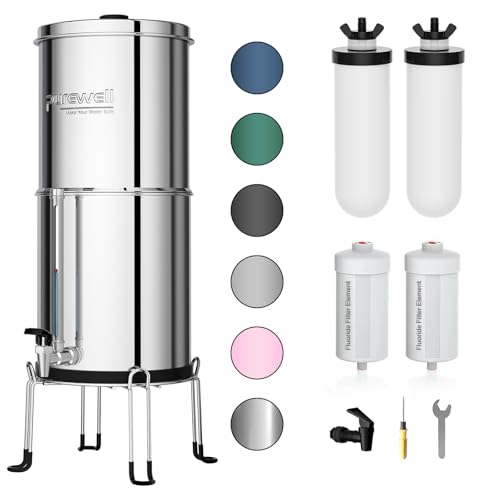
Purewell 8-Stage Gravity Water Filter 2.25 Gallon

Purewell 3-Stage Gravity Water Filter with Stand
Why These Options Stand Out
The iSpring RCC7P-AK earns the top slot because it combines a six-stage reverse osmosis (RO) membrane with a dedicated booster pump. RO pushes tap water through a semi-permeable membrane to strip dissolved solids, and the pump keeps production steady even on lower-pressure office supply lines. That combination matters in a busy workspace where the faucet gets hit dozens of times a day.
For most office break rooms, this unit hides entirely under the sink and feeds a small dedicated faucet on the counter. The included alkaline remineralization stage is the part people taste the most, since it nudges the pH back up after the membrane strips minerals. Compared to the countertop units later in this list, it’s a more involved install that pays you back in filtration depth.
What It Does Well
- Six-stage RO with alkaline remineralization for better-tasting drinking water.
- Booster pump keeps tank fill times consistent on lower municipal pressure.
- Multi-stage cartridges target lead, chlorine, fluoride, and a wide range of dissolved solids.
- Top-mounted faucet design simplifies the under-sink plumbing path.
- Large daily output capacity suits an office with steady demand.
Things To Consider
- RO units produce some wastewater during filtration, which adds to the water bill over a year.
- Filter changes require shutting off the supply and a bit of under-sink work.
- Tank footprint is bigger than a simple carbon filter, so cabinet space matters.
Key Specs
Who It Suits Best
Mid-size to larger offices with a dedicated under-sink cabinet and steady daily usage.
Look Elsewhere When
The Waterdrop 10UB is a friendlier pick for smaller kitchens that don’t want RO waste or a storage tank.
The Waterdrop 10UB is the low-fuss option for offices that want better water without committing to a reverse osmosis install. It uses a multistage carbon-block filter attached to the cold-water line and routes filtered water through its own dedicated faucet. There’s no storage tank, no pump, and no wastewater line to plumb.
You may find the lack of a tank limiting if your office pulls water in heavy bursts, since the filter delivers on demand. The trade-off is straightforward maintenance: a single twist-out cartridge replacement every few months, depending on usage. Compared to the iSpring unit above, this one won’t strip dissolved minerals or reduce TDS (total dissolved solids), so the flavor profile stays closer to what the city delivers.
Noteworthy Benefits
- No electricity, no tank, and no wastewater stream to deal with.
- Multistage filtration targets chlorine taste and odor at the kitchen tap.
- Single cartridge swap simplifies ongoing maintenance.
- Compact under-sink footprint fits tight base cabinets.
Points To Note
- Designed for municipal cold water, so well water applications need additional pre-treatment.
- Does not reduce TDS, so mineral content passes through unchanged.
- Flow rate is lower than a non-filtered tap during heavy draw periods.
Made For
Small offices and satellite workspaces that want cleaner-tasting water with minimal plumbing.
Swap It Out When
The Pureal Puri-3 is a better match for offices that want cyst and heavy-metal reduction without a full RO system.
Countertop gravity systems sidestep plumbing entirely, and the Waterdrop TK-FS leans into that with a 2.25-gallon upper chamber and carbon-only filter arrangement. You pour tap water in the top, wait for gravity to pull it through the media, and draw from a spigot at the base. No tools, no drilling, no shutoff valves.
This particular variant accepts only two carbon filter slots, so it’s geared toward taste and chlorine reduction rather than fluoride or lead stripping. The stainless steel housing sits well on a counter and looks more office-appropriate than a plastic jug. If your team mainly wants fresher-tasting drinking water without touching the plumbing, this is a calm, simple choice.
Where It Delivers
- Gravity-powered, so it works during plumbing shutdowns or in temporary offices.
- NSF/ANSI 42 and 372 certifications on materials and chlorine reduction.
- 2.25-gallon capacity covers a small team’s midday refills.
- No installation, which keeps facilities teams out of the decision.
Honest Caveats
- Filter pace is slow because there’s no line pressure pushing water through.
- Two-slot carbon configuration won’t address fluoride or lead at meaningful levels.
Best Suited To
Office kitchens that can’t or won’t modify the plumbing and need a plug-free solution.
Reach For A Different Pick When
The Waterdrop TK-A targets lead reduction more directly for offices with older building plumbing.
The Pureal Puri-3 uses ultrafiltration (UF), a membrane-based process with a 0.01-micron rating, finer than most carbon blocks but less restrictive than full reverse osmosis. That fine pore size matters because it can physically exclude cysts and similar microscopic particles that carbon alone leaves behind. You get cyst reduction without paying the wastewater penalty of RO.
The three-stage, five-layer cartridge setup also addresses rust, chlorine taste, and heavy metals. The unit comes with a stainless steel dedicated faucet, which tends to hold up better to repeated wiping in shared spaces than a plastic chrome-finished model. You won’t get TDS reduction here either, which keeps beneficial minerals in the glass.
Points In Its Favor
- 0.01-micron UF membrane reduces cysts that carbon blocks miss.
- No wastewater stream, unlike RO systems.
- Stainless steel faucet handles daily wipe-downs in shared kitchens.
- Improves taste and odor while retaining healthy minerals.
Possible Compromises
- Does not reduce TDS, so total dissolved solids pass through.
- Slower flow than unfiltered tap during heavy draw periods.
The Right Fit
Offices that want cyst and heavy-metal reduction without the install complexity of RO.
Not Your Match When
The iSpring RCC7P-AK is the better call for offices wanting full dissolved-solids reduction.
The TK-A bumps the gravity-tank format up a step with two black carbon filters engineered for lead and chlorine reduction. It carries NSF/ANSI 42 and 372 certifications, which signals third-party testing on the materials and the chlorine-reduction claim. The metal spigot at the base is a small but useful upgrade over plastic fittings that fatigue over time.
It’s a comfortable fit for shared office pantries because the 2.25-gallon tank covers the lunch rush without constant refilling. The catch is gravity speed: depending on your filter age, fills can take a while, so you may want to set a refill routine. The unit is also marketed for portability, which means it can travel between sites if your team relocates often.
Useful Strengths
- Carbon filters target lead and chlorine reduction, with third-party certification.
- 2.25-gallon capacity suits a small team’s peak use.
- Metal spigot holds up better than plastic in shared spaces.
- Portable format works for pop-up offices or relocated teams.
Worth Bearing In Mind
- Gravity throughput means slow refills compared to plumbed units.
- Filter lifespan depends on incoming water quality and use volume.
Who Will Love This
Office pantries with moderate-to-heavy use that need lead reduction without plumbing work.
Where Another Pick Suits Better
The Royal Berkey offers higher capacity if your office team regularly fills larger bottles or carafes.
The Waterdrop TK is the gentler sibling of the TK-A above, focused on chlorine and taste with the same 2.25-gallon housing. You get NSF/ANSI 372 material certification and chlorine-reduction certification under NSF/ANSI 42. For a break room where staff mainly want better-tasting water for coffee, tea, and hydration, this covers the essentials without overcomplicating maintenance.
Because the system runs on gravity, there’s nothing to plug in and nothing to plumb. Setup is essentially rinse, fill, and pour. The trade-off is refill frequency during back-to-back meeting days, and the slower drip-through of carbon media. It’s a quiet, dependable option that doesn’t ask much from the facilities team.
Benefits That Matter
- Carbon filtration improves taste and reduces chlorine odor.
- NSF-certified materials and chlorine-reduction claims.
- No plumbing required, which speeds up adoption.
- Compact countertop footprint fits narrow pantry shelves.
A Few Limitations
- Carbon-only media won’t address lead or fluoride.
- Refilling the upper chamber becomes routine in heavy-use offices.
Perfect Match For
Small break rooms that want better-tasting water and zero install work.
Consider Something Else When
The Purewell 8-Stage targets fluoride if your office wants broader contaminant coverage.
The Royal Berkey sits at the larger end of the countertop category with a 3.25-gallon (around 12.3-liter) capacity. Its paired BB9-2 purification elements drop into the upper chamber and rely on gravity plus the filter media to clarify water. There’s no electricity, no plumbing, and no permanent install, so the system moves with your office if leases change.
The polished stainless housing looks more like office furniture than a kitchen appliance. The honest read is that the bigger tank is a real advantage for teams that refill bottles or carafes throughout the day. The filter elements are also reusable, which owners commonly report keeps long-term upkeep lower than disposable cartridges, though you still need to clean them periodically.
Everyday Advantages
- 3.25-gallon capacity covers larger teams in a single fill.
- Reusable filter elements reduce long-term replacement churn.
- No plumbing or power required, which simplifies facilities decisions.
- Stainless housing stands up to daily wiping in shared spaces.
Trade-Offs To Consider
- Filter elements need routine cleaning to keep flow steady.
- Larger footprint demands counter or side-table space.
- Gravity-driven flow is slower than plumbed filtration.
Right Fit For
Bigger offices that fill bottles and carafes all day and want low ongoing maintenance.
Another Choice May Suit
The Waterdrop TK-A is a more compact pick if counter space is at a premium.
Purewell’s three-stage stainless steel system pairs a 2.25-gallon tank with two washable ceramic filters that include activated carbon and silver-ion layers. The ceramic shell blocks sediment and larger particles, the carbon pulls chlorine and taste-affecting chemicals, and the silver-ion layer helps inhibit microbial growth inside the filter body. For offices that care about aesthetics, the brushed steel housing reads more like a coffee station than a piece of lab gear.
Washable filters are the practical story here. Owners commonly report that periodically scrubbing the ceramic surface extends filter life and keeps flow rates usable. The catch is that ceramic filters run slower than carbon blocks, so peak-hour waits can stretch. For a calmer office cadence, that’s rarely a problem.
Key Advantages
- Washable ceramic filters reduce recurring cartridge waste.
- Stainless steel housing looks at home in modern offices.
- Three-stage media addresses sediment, chlorine, and taste.
- Stand elevates the spigot for comfortable cup placement.
Small Caveats
- Ceramic filtration is slower than carbon block formats.
- Filters need periodic cleaning to maintain flow.
Who Should Grab It
Offices that want a polished look and prefer washable filter media over disposables.
Skip It When
The Purewell 8-Stage covers more contaminants if your team is concerned about fluoride.
The 8-Stage Purewell is the more aggressive version of the stainless countertop platform. It ships with four filters, including a dedicated fluoride-reduction cartridge alongside the ceramic-carbon combo. The metal water-level spigot and matching stand give the whole unit a tidy, finished look in a shared pantry.
This is the pick for offices where staff specifically ask about fluoride, or where marketing claims about “premium filtration” matter to leadership. The eight stages stack ceramic, activated carbon block, silver-ion, and fluoride-reduction media with sediment pads. The practical cost is slower throughput and more filter changes over time, since you have four cartridges on a replacement rotation.
Strengths Worth Knowing
- Eight-stage media targets chlorine, heavy metals, sediment, and fluoride.
- Ceramic shell is washable for extended service life.
- Stainless housing with metal spigot for a clean office look.
- Stand lifts the unit for easier cup access.
Factors To Consider
- Four-filter setup means more cartridge replacements over time.
- Gravity pace is the slowest in this roundup, especially with denser media.
Feature Snapshot
Built With In Mind
Offices that prioritize fluoride and heavy-metal reduction in a countertop format.
A Better Fit Elsewhere
The Purewell 3-Stage is a simpler pick if your team mainly cares about chlorine and taste.
Closing out the list is the simpler 3-Stage Purewell with a metal water-level spigot and a stand. It uses the same 2.25-gallon stainless housing as the rest of the Purewell family, paired with two washable ceramic filters. The setup is tuned for chlorine and taste improvement, which is what most office teams notice first.
For a typical workday, this unit is the dependable background fixture: fill in the morning, draw through the day, refill as needed. The metal spigot and matching stand give it the same clean look as the pricier Purewell 8-Stage, just with a more focused filter arrangement. You give up fluoride targeting, but most users won’t miss it for general hydration.
The Good Stuff
- Washable ceramic filters reduce disposable filter waste.
- Stainless steel tank fits naturally in shared pantries.
- Metal water-level spigot is more durable than plastic.
- Stand lifts the unit for easier filling and cup placement.
Where It Is Less Suited
- Ceramic filters slow flow compared to carbon block formats.
- Filter cleaning adds a small recurring task for the team.
Whose Shelf It Belongs On
Daily-use office pantries that value durable stainless hardware and simple upkeep.
Where A Sibling Pick Shines
The Purewell 8-Stage handles fluoride if your office wants broader contaminant coverage.
What Matters Most Before Choosing Water Filtration Systems For Office
Plumbing tolerance sets the first fork in the road. Offices that can drill a dedicated faucet and route a drain line have access to under-sink options like the iSpring RCC7P-AK, Waterdrop 10UB, or Pureal Puri-3, which deliver filtered water straight to a secondary tap. Spaces that can’t touch plumbing, whether due to landlord rules or a shared kitchen layout, end up in the gravity-tank category.
Daily draw matters as much as filtration chemistry. A team of five refilling personal bottles needs a different setup than a 30-person office that drains a carafe every hour. Tank size, flow rate, and filter lifespan all scale with usage, and undersizing creates the same daily headache the filter was meant to solve. For larger groups, the Royal Berkey’s 3.25-gallon tank or the Waterdrop TK-A’s 2.25-gallon tank handle demand without constant refills.
Filter media decides what actually leaves the water. Carbon blocks target chlorine taste and odor, ultrafiltration membranes add cyst reduction, and reverse osmosis strips dissolved solids more broadly. Match the media to your building’s water report and your team’s priorities. If staff care about fluoride, ceramic-carbon alone won’t be enough, and an eight-stage or RO setup is the honest answer.
Maintenance routine is the real long-term cost. Cartridge replacements, ceramic cleaning cycles, and tank refills all add up over a year. Washable ceramic filters cut recurring spend but ask for hands-on cleaning. Disposable cartridges are more convenient but create ongoing replacement orders. Plan a maintenance owner before the unit arrives, otherwise even the best filter becomes a dusty countertop decoration.
Key Considerations Across These Picks
Pitfalls Shoppers Hit
The most common misstep is choosing a filtration technology that doesn’t match the building’s water profile. Carbon blocks handle municipal chlorine beautifully, but they do little for hard water minerals, fluoride, or lead from aging pipes. Ask for the local water quality report before picking a system.
Another trap is ignoring the daily draw math. A 2.25-gallon gravity tank sounds roomy, but a 20-person office will empty it twice a day. Sizing the tank or stepping up to a plumbed unit prevents the bottleneck that quietly pushes staff back to bottled water.
Where The Extra Money Goes
Higher-tier models in this category tend to spend the budget on more filtration stages, larger tanks, and longer-lasting filter media. The iSpring RCC7P-AK’s booster pump and alkaline stage, for example, address low municipal pressure and water taste in ways the simpler units don’t. The Royal Berkey’s reusable elements spread the cost over years rather than months. Pay up when the office usage pattern demands it, not because the spec sheet looks impressive on a shelf.
Frequently Asked Questions
Do office water filters need professional installation?
Under-sink units with a dedicated faucet and drain line generally need a handyman or plumber, while gravity countertop models only need someone to rinse the filters and place the tank on a flat surface.
How often do replacement cartridges need changing?
Most carbon and UF cartridges run on a six-to-twelve-month cycle depending on incoming water and usage volume, while ceramic filters can be scrubbed and reused for a longer span.
Will a filter actually improve the taste of office tap water?
Yes, especially when chlorine and sediment are the main complaints; RO and ultrafiltration systems also remove minerals and contaminants that affect flavor.
Can these systems handle well water instead of city water?
Most under-sink and gravity units here are designed for municipal cold water, so well water users typically need pre-treatment for sediment and hardness before the filter.
Is a gravity tank slower than a plumbed filter?
Gravity tanks rely on water weight to push flow through the media, so they filter and dispense more slowly than a pressurized under-sink unit, which is the main trade-off for the no-plumbing convenience.
Closing Remarks
The right office filter depends less on marketing copy and more on your space and habits. Under-sink models reward offices with a real plumbing footprint, while countertop gravity systems give shared kitchens a clean, no-install option. Match the technology to your water profile, plan a maintenance owner, and the break room quietly becomes the best spot in the building.