Tap water in most North American cities already meets federal safety standards, yet a lot of people can taste the chlorine, smell something metallic on a hot day, or just prefer the clean snap of filtered water at home. A pitcher is the simplest way to do that without a plumber or a remodel. Below are ten options worth your time, from compact dorm-room models to whole-house units for households that want every tap covered.
A Quick View Of The Lineup

Brita Stream Replacement Filter Pack (12)

Culligan P5 Whole House Filter 6-Pack

PUR Pitcher Replacement Filter 4-Pack

BRITA Marella Blue 2.4L Filter Jug
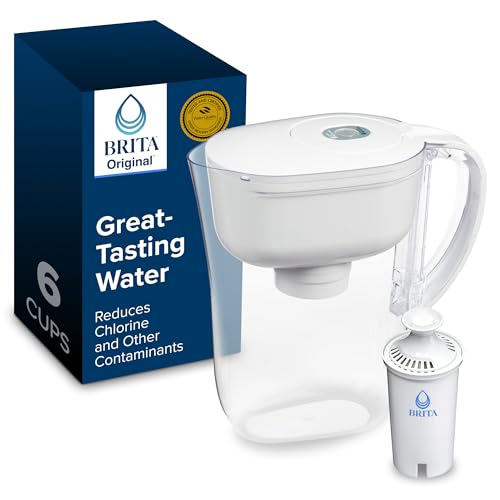
Brita Small 6-Cup Pitcher, White

Brita Metro 6-Cup with BritaPlus Filter

Brita 10-Cup Metro Pitcher, Black

Brita Large 10-Cup Pitcher, Standard

LifeStraw Home Replacement Filters, 3-Pack
PUR Pitcher Replacement 6-Pack
A Deeper Look At The Lineup
This 12-pack is built for owners of Brita’s Stream pitcher and dispenser line, the only Brita filter that treats water as it pours rather than collecting in a reservoir. There is no waiting for a tank to drip through, so a tall glass fills in seconds with cleaner-tasting water. The dual-layer carbon core pulls a strong share of chlorine taste and odor along with Class VI particulates, the fine suspended bits that make water look hazy.
At roughly two months of use per cartridge, a dozen filters covers most households for nearly two full years before another reorder. That makes this pack a tidy solution for anyone already running a Stream unit and tired of single-filter top-ups. For a complete pitcher setup rather than just cartridges, the BRITA Marella later in this list is worth a look.
Real Benefits
- Pour-through design removes the typical wait time you get with reservoir-style pitchers.
- WQA NSF/ANSI certification covers chlorine taste, odor, and Class VI particulates.
- Bulk 12-pack keeps replacements on hand for close to two years for most families.
- Filter swap is tool-free and takes only a few seconds.
Things To Consider
- Only fits Brita Stream pitchers and dispensers, so it is not a universal replacement.
- Does not address heavy metals like lead or copper, so older plumbing may still need a different filter class.
Right Fit For
Anyone already running a Brita Stream pitcher who wants a stockpile that lasts through nearly two years of typical use.
Swap It Out When
You need a full pitcher setup rather than just replacements, in which case the BRITA Marella Blue offers a complete ready-to-use jug.
The Culligan P5 sits in a different category from every other pick on this list. These are whole-house sediment cartridges that install at the main supply line, treating water at every tap, shower, and washing machine rather than filling a single pitcher. Each cartridge handles up to 8,000 gallons before it needs swapping, and this listing ships six cartridges, enough for years of service in a typical home.
The filter targets sediment, rust, scale, dirt, and coarser sand particles that often show up in municipal supplies or older well systems. For households that notice grime in faucet aerators or dingy laundry, that kind of whole-home sweep matters more than any single countertop pitcher. Most pitcher filters cannot match the volume this cartridge handles before a change.
Everyday Advantages
- Filters every tap in the home, including showers and washing machines.
- Targets sediment, rust, scale, and coarse sand that pitchers leave behind.
- 6,000 to 8,000-gallon lifespan stretches replacement cycles to once or twice a year.
- Six-cartridge supply covers most homes for three-plus years between reorders.
Practical Considerations
- Requires basic installation on the main supply line and a suitable housing.
- Does not remove chemical contaminants like chlorine or PFAS on its own.
Best Suited To
Homeowners with sediment-heavy water or older wells who want every tap protected, not just the kitchen.
Look Elsewhere When
You only need a countertop solution, since the BRITA Marella Blue is a simpler pour-and-store option with no plumbing work.
PUR replacement cartridges use a two-stage filtration approach that PUR markets as catching both chemical and physical substances at a notable rate versus standard pitcher filters. Each cartridge is rated for 40 gallons or roughly two months of typical use, which lines up with most manufacturer guidelines for the category. The four-pack covers a household for the better part of a year before another order.
These fit any current PUR pitcher or dispenser, so the value really shines for existing PUR owners who already like the taste profile. For shoppers new to the brand, the larger PUR six-pack later in this list offers an even longer stretch between reorders. As a basket-stuffer next to a full pitcher, this 4-pack is a straightforward refill.
Practical Advantages
- Two-stage design aimed at both chemical and physical contaminants.
- 40-gallon cartridge life matches the standard two-month replacement rhythm.
- Compatible with every current PUR pitcher and dispenser model.
- 4-pack stretches the reorder cycle to roughly eight months for typical households.
Honest Caveats
- Only fits PUR systems, so owners of other brands should look elsewhere.
- Does not claim the same heavy-metal focus as some BritaPlus or LifeStraw cartridges.
Who It Suits Best
Existing PUR pitcher owners who want a tidy, mid-size refill pack without committing to a full year of cartridges at once.
Reach For A Different Pick When
You want fewer orders per year, in which case the PUR 4-Month Value 6-Pack later in this list runs roughly twice as long between reorders.
The Marella has become a default fridge-door pitcher for good reason. Its slim 2.4L body is shaped to fit most standard refrigerator doors, and the flip-top lid lets you pour water in one-handed without removing the whole cap. Three MAXTRA PRO All-in-1 cartridges come in the box, so the jug is ready to use the moment it arrives, with no extra purchase needed to start filtering.
The MAXTRA PRO cartridges target chlorine, limescale, and PFAS, the so-called forever chemicals that have moved into public awareness over the last few years. The electronic memo on the lid tracks filter life and reminds you when a swap is due, which takes the guesswork out of a routine that many people forget. Compared with the smaller Brita 6-cup models later in this list, this one trades compactness for a fuller reservoir.
Strong Points
- Fridge-door-friendly 2.4L body fits standard refrigerator shelves.
- Flip-top lid enables one-handed refilling from the tap.
- Includes three MAXTRA PRO cartridges targeting chlorine, limescale, and PFAS.
- Electronic memo removes the guesswork from filter replacement timing.
Worth Noting
- Lid is hand-wash only, so it cannot go through the dishwasher with the rest of the jug.
- Sold through the Global Store program in some listings, which can affect return terms.
Made For
Households that want a sleek, fridge-friendly pitcher with PFAS-targeting cartridges included right out of the box.
Consider Something Else When
Counter space is at a premium and you only need one or two glasses at a time, since the Brita Small 6-Cup model later takes up far less room.
The Metro 6-cup pitcher is Brita’s smallest everyday option, built for a single person, a dorm room, or a tight galley kitchen where a full-size jug just will not fit. Despite the small footprint, it carries WQA NSF/ANSI certification for reducing chlorine taste and odor along with copper, mercury, and cadmium, the heavy metals most likely to leach from older household plumbing.
One Standard filter is included in the box, so the unit is functional right away, and the SmartLight indicator on the lid gives what Brita calls its most accurate filter-life reminder. For shoppers weighing this against the larger Marella, the trade comes down to capacity versus counter footprint. If you only need a glass or two at a time, the smaller size pays off in convenience.
A Strong Showing
- Compact 6-cup body suits dorms, studio kitchens, and small countertops.
- WQA NSF/ANSI certified for chlorine, copper, mercury, and cadmium reduction.
- SmartLight filter indicator tracks replacement timing accurately.
- BPA-free plastic body keeps the unit lightweight for fridge storage.
Trade-Offs
- Standard filter treats fewer contaminants than the BritaPlus upgrade.
- Small reservoir means more frequent refills for couples or families.
Right Fit For
Solo dwellers, students, and anyone with limited counter or fridge space who still wants certified contaminant reduction.
Swap It Out When
You want higher-density filtration in the same compact shape, since the Brita Metro 6-Cup with BritaPlus filter targets a wider contaminant list.
Step up from the Standard filter to BritaPlus and the same compact 6-cup pitcher handles roughly twice the contaminants the basic model does. The BritaPlus cartridge is certified to reduce chlorine taste and odor along with mercury, cadmium, copper, and zinc, the metal ions most often tied to aging home plumbing. It also aims to retain beneficial minerals and electrolytes, which matters to anyone who does not want their water stripped down to nothing.
The clear body makes it easy to see when the reservoir is low, and the small footprint keeps it apartment-friendly. For shoppers weighing this against the LifeStraw replacement filters later in this list, the trade is convenience versus scope: the BritaPlus jug is a complete ready-to-use package, while the LifeStraw cartridges only fit compatible pitchers you already own.
Key Advantages
- BritaPlus filter reduces roughly twice the contaminants of the Standard cartridge.
- Targets heavy metals commonly found in older household plumbing.
- Retains beneficial minerals and electrolytes for better-tasting water.
- WQA NSF/ANSI certified for the listed contaminant reductions.
Points To Note
- Small 6-cup reservoir means more refills for multi-person households.
- Higher-density filter carries a steeper cartridge cost over time.
Who Should Grab It
Residents of older homes with copper or galvanized plumbing who want a small-footprint pitcher that goes beyond basic chlorine reduction.
A Better Fit Elsewhere
You want the broadest contaminant coverage in this list, which points to the LifeStraw Home replacement cartridges with PFAS and microplastic reduction.
The 10-cup Metro occupies a useful middle ground in Brita’s lineup, larger than the 6-cup entry model but slimmer than the older 10-cup Everyday pitcher. One BritaPlus filter is included, so the jug is set up to reduce chlorine, mercury, cadmium, copper, and zinc from the first fill. For couples and small families, that extra capacity means fewer refills without a much bigger fridge footprint.
The black finish keeps it understated on a countertop, which helps if the pitcher lives next to a coffee maker or toaster rather than hidden inside the fridge. Compared with the BRITA Marella, this one skips the electronic filter memo in favor of a simpler indicator, which keeps the unit a touch lighter on the wall.
Useful Strengths
- 10-cup capacity handles two-person households comfortably between refills.
- BritaPlus cartridge reduces chlorine plus mercury, cadmium, copper, and zinc.
- Slim Metro shape fits narrower fridge shelves than older pitcher silhouettes.
- Understated black finish blends into most kitchen counters.
Worth Bearing In Mind
- No electronic filter-change memo like the BRITA Marella offers.
- BritaPlus cartridges cost more per replacement than Standard Brita filters.
Built With In Mind
Couples or small families who want BritaPlus filtration with enough capacity to get through a workday without constant refills.
Reach For A Different Pick When
You prefer the fridge-door lifestyle and the electronic change memo, which the BRITA Marella Blue is built around.
This 10-cup pitcher pairs Brita’s Standard filter with a flip-top lid and a BPA-free body, the classic everyday setup for a family kitchen. The filter carries a 40-gallon, two-month capacity and targets chlorine taste and odor along with copper, cadmium, and mercury. For households that refill once or twice a day, that rhythm lines up well with most grocery runs.
The flip-top design makes it easy to refill from the tap without removing the whole lid, and the body is dishwasher-safe for quick cleanup. Compared with the BRITA Marella, this unit trades the European slim profile and PFAS-focused cartridge for a more traditional American-shape pitcher with broader fridge compatibility.
A Few Highlights
- 40-gallon filter life keeps replacements to a six-times-a-year rhythm.
- Flip-top lid simplifies one-handed refills at the sink.
- Dishwasher-safe body for low-effort routine cleaning.
- Certified to reduce chlorine, copper, cadmium, and mercury.
Honest Caveats
- Standard filter handles fewer contaminants than the BritaPlus upgrade.
- Larger footprint than slimmer European-style pitchers like the BRITA Marella.
Whose Shelf It Belongs On
Families of three or four who want a full-size pitcher with a Standard filter at a friendlier cartridge cost than the BritaPlus line.
A Better Fit Elsewhere
You want PFAS coverage in a slimmer fridge-door shape, which the BRITA Marella Blue delivers with its MAXTRA PRO cartridges.
LifeStraw built its name on travel and emergency filtration, so the Home line carries that same contaminant-aware engineering over to pitcher use. Each activated carbon plus ion exchange filter targets PFAS, lead, mercury, chromium III, cadmium, and copper, plus chlorine, pesticides, herbicides, and other chemicals. A 3-pack covers about six months at the listed 120-gallon total.
This is a replacement-filter listing rather than a full pitcher, so it suits anyone already owning a compatible LifeStraw Home unit and looking to refill. For shoppers without a pitcher yet, the BritaPlus-equipped options earlier in this list are ready-to-use bundles that include the jug.
A Few Strong Suits
- Activated carbon plus ion exchange media tackles a broad contaminant list.
- Targets PFAS, lead, mercury, and several other heavy metals.
- Also reduces pesticides, herbicides, and chlorine byproducts.
- 3-pack covers about six months of typical household use.
Less Ideal Details
- Replacement cartridges only, so a compatible LifeStraw pitcher must be owned separately.
- Higher upfront cartridge cost than entry-level pitcher filters.
Feature Snapshot
Who Will Love This
Existing LifeStraw Home pitcher owners, especially those living near agricultural areas or with older plumbing that may leach metals.
Skip It When
You need a full pitcher setup out of the box, since the Brita Metro with BritaPlus includes both jug and upgraded cartridge in one purchase.

The 6-pack is the set-and-forget option for PUR owners. With six cartridges in the box, most households can run a full year without placing another filter order. Each cartridge still carries the same 40-gallon, two-month rating as the smaller 4-pack earlier in this list, just multiplied out for longer coverage.
The cartridges fit every current PUR pitcher and dispenser, so the value scales no matter which model you own. For shoppers comparing this against the LifeStraw replacement 3-pack earlier in this list, the trade is straightforward: PUR wins on refill length and price per cartridge, while LifeStraw covers a wider list of contaminants.
Well-Handled Touches
- Six cartridges cover roughly a full year of typical use.
- Fits all current PUR pitcher and dispenser models.
- Each cartridge still delivers the standard 40-gallon capacity.
- Lowers the per-cartridge cost compared with smaller packs.
Smaller Trade-Offs
- Bulk upfront cost is higher than the 4-pack version.
- PUR filtration targets a narrower contaminant list than LifeStraw Home cartridges.
Perfect Match For
PUR pitcher owners who want to buy filters once a year rather than remembering to reorder every two months.
Another Choice May Suit
You need PFAS and lead reduction rather than a longer refill cycle, in which case the LifeStraw Home replacement 3-pack targets a broader contaminant list.
Picking The Right Pitcher Filter For Your Home
A few attributes do the heavy lifting when you sort through pitcher and replacement-filter listings. Filtration certification tells you which contaminants the cartridge has actually been tested against, not just marketing language. Pitcher capacity matters more than people expect, because a small 6-cup reservoir means two refills a day for a couple. Replacement cost is the slow leak most shoppers miss until a year of cartridges adds up, and fridge fit decides whether the pitcher lives on the counter or in the door.
Capacity And Daily Rhythm
Solo dwellers and students do well with a 6-cup model like the Brita Metro. Couples and small families usually want at least 10 cups so the pitcher does not run dry between breakfast and dinner. Larger households may want to consider a whole-house approach like the Culligan P5 to keep every tap covered at once.
Contaminant Focus
Chlorine taste and odor is the baseline that nearly every filter handles. Heavy metals like copper, cadmium, and mercury show up more often in older homes with galvanized or copper plumbing, and that is where higher-density cartridges like BritaPlus or LifeStraw’s activated carbon plus ion exchange filter earn their keep. PFAS, microplastics, and pesticide reduction remain the most demanding tests, and only a few filters in this category target them directly.
Cartridge Cost Over A Year
A 40-gallon cartridge replaced every two months means six filters a year per pitcher. Lower-cost Standard cartridges add up faster than they feel like they should, while BritaPlus or LifeStraw filters cost more per cartridge but cover more contaminants. A bulk pack like the Brita Stream 12-pack or the PUR 6-pack stretches the gap between orders, which matters if you tend to forget refill dates.
Fit And Footprint
A slim fridge-door pitcher like the BRITA Marella is shaped for narrow refrigerator shelves, while classic American-shape pitchers are taller and often live on the counter. Compact 6-cup models work in tight galley kitchens and dorm rooms where a full-size jug simply will not fit. Measure your fridge door shelf before committing to a slimmer European silhouette.
Key Considerations Across These Picks
Where Shoppers Go Wrong
The most common slip is buying a replacement cartridge that does not fit your existing pitcher. Brita, PUR, and LifeStraw each run their own cartridge lines, and they are not interchangeable. Another trap is assuming every filter handles heavy metals or PFAS. Standard cartridges focus mostly on chlorine, so shoppers concerned about metals or forever chemicals need to step up to BritaPlus, LifeStraw, or a comparable upgrade.
When Paying More Pays Off
Higher-tier cartridges earn their keep when the local water report flags metals, PFAS, or pesticide residue. For households on older plumbing or rural wells, that extra reduction can matter. For renters in a city with already-clean tap water, the upgrade often shows up mostly as better taste rather than measurable health gain, which is still a fair reason to spend more if you drink a lot of water.
Frequently Asked Questions
How often should I swap a pitcher filter?
Most cartridges are rated for about 40 gallons or roughly two months of typical use, whichever comes first. SmartLight indicators and electronic memos track usage so you do not have to count days.
Do these filters remove lead and copper?
Standard filters handle chlorine taste and odor, while BritaPlus and LifeStraw cartridges add mercury, cadmium, copper, and other metals to the list. Check the specific certification before assuming any reduction.
Are pitcher filters better than bottled water?
A pitcher avoids plastic bottle waste and usually costs less per gallon over a year. For households that already drink municipal tap water, the filtration step mainly improves taste and reduces a few targeted contaminants.
Can I use these filters in any pitcher?
No. Brita, PUR, and LifeStraw cartridges only fit their own pitcher families, and even within a brand different pitcher generations can require different cartridges.
How long do unused filters last?
Sealed cartridges typically keep their rating for at least a year or two, but once a cartridge is soaked and installed, the two-month clock starts regardless of how much water you actually pour through.
Wrap Up
The right pitcher comes down to where you live, how much water you drink, and whether your local supply needs basic taste improvement or broader contaminant reduction. Small-format picks like the Brita Metro suit solo drinkers, mid-size BritaPlus models cover couples with older plumbing, and broad-spectrum options like the LifeStraw Home replacements handle the toughest water concerns. Match the filter to the contaminant list you actually care about, then let daily rhythm and fridge fit guide the final call.