You fill a glass from the kitchen tap and taste that faint metallic edge. Or you spot a chalky residue on the faucet. Maybe a recent water-quality report mentioned something you’d rather not think about. Under-sink filtration puts a dedicated barrier between your cold-water line and your glass, kettle, or coffee maker, and the ten systems below cover the realistic range of needs: renters who can’t drill a hole, well owners fighting iron staining, espresso fans who care about TDS (total dissolved solids, basically everything dissolved in the water), and families who just want cleaner water without a remodel.
A Fast Comparison Of The Options
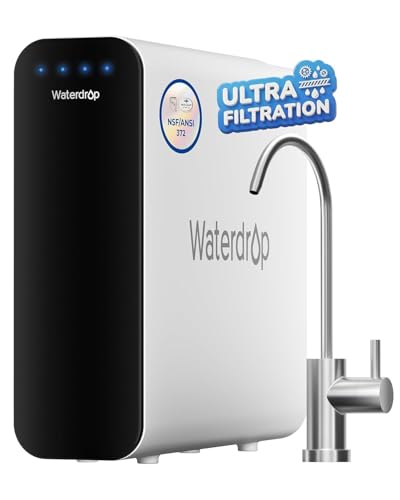
Waterdrop TSU 0.01 Micron Ultra Filtration System

iSpring RCC7P-BLK 5-Stage RO System

Waterdrop UL12A Under Sink Water Filter

American Water Solutions KP65N Pot Perm

Waterdrop 10UB Under Sink Filter System

iSpring US31-NC 3-Stage Under Sink Filter

Waterdrop TSA 8 Layer Filter System
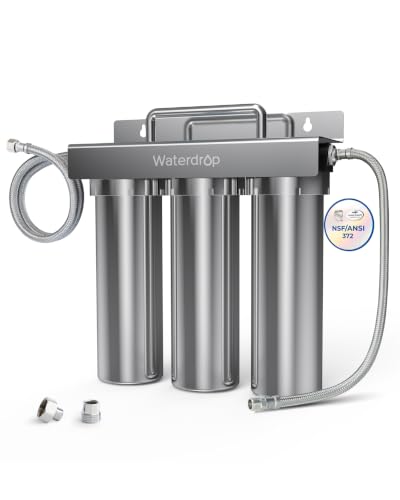
Waterdrop TST-UF Stainless Steel System
Waterdrop DLA 2-Stage Filter System

Waterdrop DLG-P Dual-Flow Filter System
The Details Behind The Selections
The TSU uses a 0.01-micron hollow-fiber membrane, the kind that strains bacteria-sized particles while letting beneficial minerals slip through. You don’t need a drain connection or a pressure tank, which makes it lighter than the iSpring RCC7P-BLK later in this list. The trade-off: it requires a dedicated dispenser faucet, so a small hole in the countertop or sink ledge is unavoidable for first-time install. Most kitchens handle that step in under an hour with a standard 1/2-inch drill bit.
Because it produces zero wastewater and keeps calcium and magnesium in the water, it tends to suit municipal-tap households who care about taste more than mineral removal. You can pair it with a kettle and an ice maker if your fridge line runs nearby.
A Few Strong Suits
- Ultra-filtration membrane targets over 30 substances while keeping healthy minerals in the glass.
- Zero wastewater during operation, so it sidesteps the drain-line dance.
- Three-stage cartridge design shortens swap time compared to bulkier five-stage rigs.
- Compatible with standard 1/2-inch cold-water valves under most modern sinks.
Things To Consider
- Requires a drilled hole for the included faucet, which renters may want to clear with the landlord first.
- Not designed for well water or hot-water lines, so households on private wells will need a pre-filter upstream.
- Membrane lifespan shortens noticeably in homes with very hard water; expect more frequent cartridge orders.
Who It Suits Best
City-tap homeowners who want mineral-friendly filtration and don’t mind a small countertop drill.
Skip It When
You’re a renter who can’t modify the counter, in which case the Waterdrop TST-UF Stainless Steel System below avoids the drill entirely.
The RCC7P-BLK is a tankless reverse-osmosis system, meaning water is purified on demand rather than stored in a pressurized tank under the sink. That single design choice frees up a surprising amount of cabinet space, which matters in galley kitchens where every cubic inch houses cleaning bottles. The included booster pump keeps production steady even when household pressure dips below 40 psi, a common frustration on upper floors.
Its five-stage setup pushes water through sediment, carbon, the RO membrane, and a polishing stage, then sends it up through a sleek black 304-stainless faucet. You also get a dedicated line for a fridge or ice maker with the right adapter kit.
Useful Touches
- Booster pump keeps output stable on low-pressure municipal lines.
- Tankless body reclaims under-sink storage space for trash bags and soap.
- 304-stainless faucet ages well and resists spotting better than chrome.
- Designed to pair with a fridge ice-and-water line for one-stop filtration.
Worth Noting
- RO systems do produce a brine stream, so you’ll need a nearby drain connection.
- Drilling a small faucet hole is required, similar to the Waterdrop TSU above.
- Mineral content drops along with contaminants, so coffee enthusiasts should weigh remineralization cartridges.
Made For
Homeowners who want maximum contaminant reduction, drink filtered water from the fridge door, and have a drain line within reach.
Consider Something Else When
You live in a tight rental with no drilling allowed and no drain access, where the Waterdrop UL12A Under Sink Water Filter covers most daily needs without either.
The UL12A is the upgrade to Waterdrop’s older 10UA, and the headline difference is a small but useful timer that nudges you when the cartridge is past its rated life. That feature alone tends to matter for households that run serious daily volume through the dispenser. Otherwise the recipe stays familiar: a multi-stage composite cartridge that targets chlorine, lead, PFAS (per- and polyfluoroalkyl substances, a class of persistent chemicals linked to health concerns), and a long list of heavy metals while leaving TDS untouched.
You do still need a separate faucet, but the install footprint stays slim enough for apartment cabinets that already host a trash compactor or recycling bin.
What Stands Out
- Time-reminder module helps busy households stay on schedule with cartridge swaps.
- Targets PFAS and PFOA/PFOS alongside the usual chlorine and lead list.
- Replacement filters are relatively inexpensive compared with five-stage RO setups.
- Composite cartridge design reduces the number of twist-and-lock steps during change-out.
Trade Offs
- Requires the same drilled faucet hole as the TSU, so renters should confirm permission first.
- Not rated for hot-water supply or private wells, which limits placement in some utility rooms.
The Right Fit
Family kitchens pulling large volumes of cold water daily who want clear maintenance cues and broad contaminant coverage.
Look Elsewhere When
Your main concern is iron staining from a private well, where the American Water Solutions KP65N Pot Perm handles a very different problem.
The KP65N is not a filter in the usual sense. It’s a potassium permanganate regenerant, a chemical feed designed to revive a greensand iron filter. Greensand media (a glauconite-based mineral) traps dissolved iron and manganese from well water; over time, the media loses its grip and needs an oxidizing agent to recharge. Pour in Pot Perm, the iron and manganese turn into an insoluble oxide, and the next backwash cycle carries them out.
For households on private wells where orange staining on fixtures is a daily annoyance, this bottle is more useful than any carbon cartridge on this list. It’s a maintenance product, not a point-of-use drinking filter, so it lives next to a whole-house iron unit rather than under the kitchen sink.
Real-World Strengths
- Converts dissolved iron and manganese into filterable solids, tackling the root cause of staining.
- Free-flow liquid mixes easily into existing regeneration setups.
- Restores performance of older greensand tanks without swapping the media.
Things To Consider
- Only works with greensand-style filters, so owners of carbon-only systems gain nothing here.
- Handling requires gloves and ventilation, much like any oxidizing chemical.
Who It Suits Best
Well owners fighting stubborn iron staining who already run a greensand filter and need periodic regenerant.
A Better Fit Elsewhere
Anyone on city water with chlorine taste concerns should reach for the iSpring US31-NC 3-Stage Under Sink Filter instead.
The 10UB is the entry point into dedicated under-sink filtration from Waterdrop, and it focuses on the basics without padding the price tag. A multi-stage composite cartridge handles chlorine, sediment, and a wide range of volatile organic compounds, leaving minerals in the water. Replacement filters run modestly, which matters for anyone planning to install it and forget it for a year or more between swaps.
It still expects a dedicated faucet hole, so renters may need to budget time for landlord approval and a careful drill. For everyone else, the install fits inside an afternoon with a basin wrench and a step bit.
Bright Spots
- Multi-stage filtration in a single cartridge simplifies yearly maintenance.
- Keeps beneficial minerals intact, so the filtered water tastes familiar rather than flat.
- Replacement cartridges are among the lowest ongoing costs in this category.
Honest Caveats
- Cold-water-only design rules out pairing with a hot dispensers or pot fillers.
- Requires a drilled hole for the included faucet, just like the TSU and UL12A picks above.
Best Suited To
First-time filter shoppers on municipal water who want a reliable daily upgrade without a heavy install.
Not Your Match When
Drilling a counter is off the table, in which case the Waterdrop DLA 2-Stage Filter System later in this list skips the drill entirely.
The US31-NC splits its work across two cartridges: a sediment stage (FP15) and a catalytic carbon stage (FC15-NC) that targets chloramine. Many utilities have shifted from chlorine to chloramine because it lasts longer in the distribution system, but standard carbon blocks barely touch it. This system is built for that specific job, which is why iSpring pairs the FC15-NC media with SGS-tested performance claims against the NSF 42 chloramine benchmark.
The filter keeps the install story approachable: cold-water tee fitting, included faucet, and three stages of media that swap on a yearly cadence for most households.
The Good Stuff
- Catalytic carbon stage is purpose-built for chloramine reduction, a step most carbon blocks skip.
- NSF/ANSI 58 certification on the core cartridges gives an independent safety check.
- Yearly cartridge swap keeps the maintenance rhythm predictable.
Points To Note
- Drilling is required for the dedicated faucet, similar to other under-sink picks on this list.
- Less effective against dissolved minerals than the reverse-osmosis option reviewed earlier.
Whose Shelf It Belongs On
City households whose utility treats water with chloramine and who want a focused, certified answer.
Another Choice May Suit
Households needing broader PFAS reduction should weigh the Waterdrop DLG-P Dual-Flow Filter System covered later in this roundup.
The TSA stacks eight layers of filtration media, from PP cotton through activated carbon to a polishing stage, into a single cartridge that tackles heavy sediment loads. In older homes with galvanized pipes, the first few months of filtration can clog a basic cartridge fast, and a layered design spreads the work so each layer handles a different particle size. NSF/ANSI 42 certification covers the system’s material safety, which is a meaningful data point for a unit that handles drinking water.
It’s designed to connect to standard 1/2-inch or 3/8-inch female NPT (National Pipe Thread, a common plumbing thread standard) threads, so most existing cold-water valves adapt without a hardware-store run.
Advantages To Know
- Eight filtration layers spread the workload, useful in homes with stubborn sediment.
- NSF/ANSI 42 certification covers material safety for daily drinking use.
- Broad fitting compatibility reduces the chance of an extra trip to the hardware store.
Small Caveats
- Drilling the dedicated faucet is still required, like most units on this list.
- Single-cartridge design means the entire media stack changes at once, which raises swap-day cost.
Perfect Match For
Older homes with rust-tinted cold water that needs aggressive sediment capture before finer polishing.
Swap It Out When
Sediment isn’t your main problem and you’d rather chase PFAS and chlorine odors, where the Waterdrop DLG-P Dual-Flow Filter System earns the nod.
The TST-UF wraps an ultra-filtration system in a stainless-steel housing that looks more like a piece of coffee gear than a plumbing accessory. The bigger story, however, is the no-drill install: this unit threads directly onto your existing cold-water valve with standard 1/2-inch or 3/8-inch NPT fittings, so renters don’t need landlord approval or a toolbox full of hole saws. It still targets chlorine, bad taste, and large classes of contaminants down to 0.01 microns.
For condo dwellers and short-term leaseholders, that combination of renter-friendly install and mineral retention is hard to find in the same box.
Real Benefits
- No-drill install keeps counters intact and landlords happy.
- Stainless housing ages better than plastic under sink humidity.
- UF membrane keeps calcium and magnesium in the glass.
Practical Considerations
- Membrane lifespan can drop in hard-water markets without a pre-softener upstream.
- Not built for hot-water or well-water lines, limiting install spots in some homes.
Who Should Grab It
Renters, condo owners, and short-term leaseholders who want mineral-friendly filtration without modifying the counter.
Reach For A Different Pick When
Your main concern is total TDS reduction for an espresso setup, where the iSpring RCC7P-BLK 5-Stage RO System earlier in the list does the deeper work.
The DLA lives in the same no-drill category as the TST-UF above, but it’s a two-stage setup with a different media mix: PP cotton, KDF (a copper-zinc alloy media that disrupts bacteria and reduces chlorine), dual non-woven fabric layers, folded paper, and an activated carbon block. The footprint shrinks to fit cramped under-sink cabinets that already hold a small trash can, a couple of cleaning bottles, and a leak sensor.
It threads onto the existing cold-water valve, which means you trade dedicated-faucet convenience for a single tap stream through your main kitchen faucet. For small apartments, that trade often feels right.
Notable Upsides
- Compact two-stage body fits where five-stage rigs physically won’t.
- KDF and carbon combination targets chlorine and metallic taste in one pass.
- No-drill install keeps rental deposits safe.
Things To Weigh
- Filter life depends heavily on incoming sediment, so visual checks matter in the first weeks.
- Single-tap output means you wait briefly at the faucet each time you want filtered water.
Built With In Mind
Small-space apartments and rental kitchens where drilling a counter isn’t an option and cabinet space runs scarce.
Swap It Out When
You want a dedicated filtered tap at the sink, in which case the Waterdrop 10UB Under Sink Filter System earlier handles that role for a modest budget.
The DLG-P uses a dual-line design that splits one filtered stream into two faucets or appliances. The first line, polished by a P1 carbon filter, handles produce-washing and cooking, where chlorine reduction matters more than deep PFAS capture. The second line runs through both the P1 and a P2 cartridge, pulling PFOA, PFOS, and a longer contaminant list for drinking and coffee. That separation matters when you care about filter life: the heavier work happens only where it has to.
For families who want filtered water at the main sink and a parallel line running to a wet bar or basement prep area, the dual-outlet architecture saves a second install.
Positive Takeaways
- Dual-flow design lets you route filtered water to two taps from a single under-sink unit.
- PFOA and PFOS reduction on the drinking line addresses a specific modern concern.
- P1-only mode extends carbon life for tasks that don’t need deep filtration.
Potential Drawbacks
- Twin tubing runs can crowd narrow cabinets if routing isn’t planned ahead.
- Cold-water only, so hot-dispenser setups need a separate path.
Best Suited To
Whole-kitchen households that want one filtered tap for cooking and a deeper-clean stream for drinking.
Where Another Pick Suits Better
Single-sink renters with no second tap to feed will do better with the simpler Waterdrop TST-UF Stainless Steel System covered above.
What Matters Most Before Choosing Under Sink Water Filtration
Match The Filter To Your Water Source
Municipal tap, private well, and chloramine-treated city water each push you toward different systems. A carbon block that handles chlorine fine may barely touch chloramine, so a utility that recently switched disinfectants is a meaningful detail to look up. Wells with iron staining point toward greensand regenerants like the KP65N rather than standard cartridges. Reverse-osmosis systems tackle the broadest contaminant list but cost more in both install complexity and ongoing water waste.
Decide How Much Drilling You Can Tolerate
Dedicated faucets give you a clearly labeled filtered tap, and they tend to flow at full pressure. They also require a hole in the countertop or sink ledge, which rules out many renters. No-drill units like the TST-UF and DLA thread onto the existing valve and route filtered water through your main faucet. The trade-off is brief wait times at the tap while unfiltered water clears the line, and a small stream that mixes briefly with unfiltered water if you don’t run it long enough.
Weigh Ongoing Costs Beyond The Install
Cartridge replacement intervals range from three months for the heaviest sediment to twelve months for low-volume city water. Reverse-osmosis pre-filters and post-filters swap on different schedules than the membrane itself. Picking a system whose replacement cartridges stay in stock and reasonably priced matters more than saving a small amount at install time. A family of four cycling a kettle and ice maker daily will outpace a single person’s coffee routine by a wide margin.
Balance Filtration Depth Against Mineral Retention
RO and distiller-style systems pull TDS down sharply, which helps espresso machines and fish tanks. They also remove calcium and magnesium, which can leave water tasting flat to some people. Multi-stage carbon and UF blocks keep minerals in but won’t catch every dissolved solid. Your palate and your appliances usually pick a side for you.
Where Shoppers Go Wrong And Where The Money Goes
Common Buying Traps
The most common slip is choosing a filter by contaminant count alone. Long lists look reassuring, but they don’t tell you whether the certification actually covers the contaminants listed or whether the unit handles your specific water. A second trap is ignoring cold-water-only restrictions: hot-water lines degrade many cartridges quickly, and the failure shows up as a gush under the sink rather than a warning light. Third, picking a system that needs a drain line without confirming one sits within reach leads to install-day frustration.
The Case For Spending Up
Higher-tier RO systems earn their keep through booster pumps, faster flow rates, and tankless bodies that free up cabinet space. Premium carbon units tend to layer more media types, which spreads the workload and extends service life in hard-water homes. The upgrade usually pays off for large households, low-pressure municipal lines, or anyone whose existing filter clogs every two months because of old galvanized plumbing.
Frequently Asked Questions
Do under-sink filters actually improve taste?
Most carbon and UF filters reduce chlorine and chloramine, the two chemicals most people actually taste. Mineral content changes less, so water won’t taste distilled, just cleaner.
How often do cartridges need replacing?
Typical intervals run from six months for heavy sediment to twelve months for low-volume city water. RO systems follow separate schedules for the membrane and pre-filters.
Can renters install these without losing the deposit?
No-drill units that thread onto the existing valve are renter-friendly. Dedicated-faucet systems usually require landlord approval and a small countertop hole.
Are reverse-osmosis systems wasteful?
Traditional RO units send several gallons of brine to the drain per gallon of filtered water. Tankless units with booster pumps tend to use water more efficiently, but all RO produces some waste.
What about well water?
Standard under-sink filters aren’t designed for wells. Iron, sulfur, and sediment need whole-house pre-treatment, often paired with a greensand regenerant and a sediment filter before any drinking-water stage.
Closing Remarks
The best under-sink filter is the one that fits your water, your cabinet, and your appetite for install work. Match the system to the source, and the daily glass of water stops being a question.