A reliable under sink filtration setup turns ordinary tap water into something you actually want to drink, without the countertop clutter of a pitcher or the slow drip of a fridge dispenser. Most homeowners shopping in this category care about three things: what gets removed, how often they have to swap a filter, and whether the install is something a first-timer can handle. The ten systems below cover a wide spread of those needs, from ultrafiltration with a dedicated faucet to full reverse osmosis and even a regenerant for iron-heavy well setups.
The Lineup, Simplified
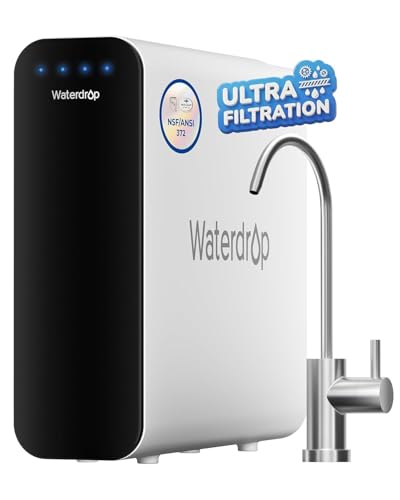
Waterdrop TSU 0.01 Micron Ultra Filtration Under Sink Water Filter System

iSpring RCC7P-BLK 5-Stage Reverse Osmosis System with Booster Pump

American Water Solutions KP65N Pot Perm Greensand Iron Filter Regenerant

Waterdrop TSA 8 Layer Under Sink Water Filter System (NSF/ANSI 42)
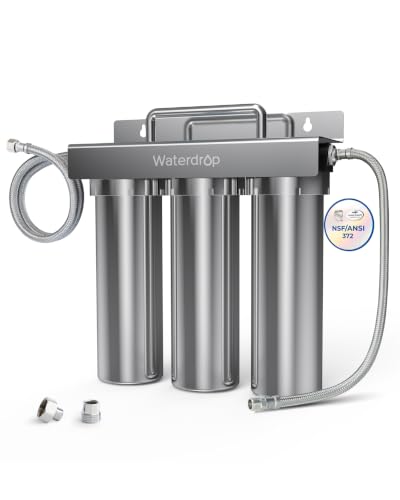
Waterdrop TST-UF 0.01μm Ultra-Filtration Under Sink Water Filter System (Stainless Steel)

Waterdrop TSB 8 Layer Under Sink Water Filter System with Dedicated Faucet
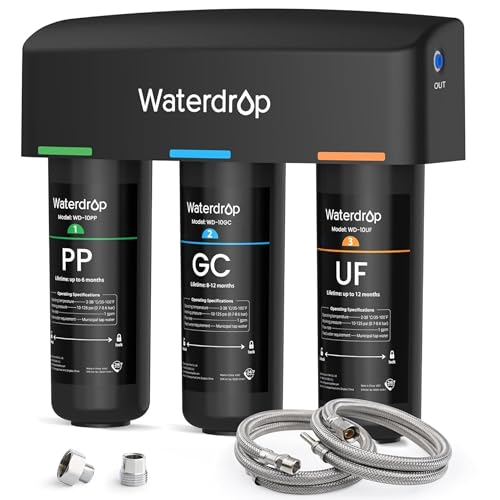
Waterdrop WD-TSA-UF 0.01 μm Ultra Filtration Under Sink Water Filter System

Waterdrop TSB-ALK 8 Layer Slightly Alkaline Under Sink Water Filter System

Waterdrop TSB-PF Under Sink Water Filter System, Reduces 80+ Impurities (9 Layer)
Waterdrop DLA Under Sink Water Filter System (No Drill, 2 Stage)
The Picks, Examined More Closely
If your water is mostly fine and you just want fewer contaminants in your cooking and drinking water, this three-stage ultrafiltration setup from Waterdrop fits that brief without overcomplicating the cabinet. The 0.01 micron rating (a measure of how fine the filter pores are, where smaller numbers catch more) is tight enough to catch a long list of common concerns while leaving helpful minerals in the glass, which is the appeal over reverse osmosis for many shoppers.
A separate faucet comes in the box, so installation does require a hole in the countertop or sink deck. You connect to a standard cold-water line under the sink and you are filtering within an hour for most DIYers with basic tools. The trade-off, relative to the no-drill picks later in this list, is that you give up a chunk of counter to that second faucet. In return you get dedicated filtered water on demand, no pitcher shuffling, and no wastewater going down the drain.
Reasons It Performs
- Ultrafiltration at 0.01 microns is finer than standard carbon blocks, catching smaller contaminants while leaving calcium and magnesium in the water.
- Three-stage design spreads the workload across sediment, carbon, and the UF membrane, which typically extends the life of the final stage.
- No wastewater stream means nothing extra goes down the drain, a real perk compared to the RO unit at pick 2.
- Direct-connect fittings on standard cold lines keep installation straightforward for anyone comfortable under a sink.
- Municipal tap water compatibility covers the majority of U.S. households on city water.
Things To Consider
- Drilling a hole for the dedicated faucet is mandatory, which can be a deal-breaker in rentals or stone countertops.
- Cold water only, so you cannot run hot water through the membrane without risking damage.
- Replacement cartridges are specific to this model, so you will want to confirm long-term availability before installing.
Who It Suits Best
Homeowners on municipal water who want a meaningful step up from a basic carbon filter without committing to the water waste of reverse osmosis.
Consider Something Else When
If you cannot or do not want to drill a faucet hole, the Waterdrop DLA at pick 10 avoids that step entirely and is a better match for renters.
Reverse osmosis works differently from the ultrafiltration picks earlier in this list: it forces water through a semipermeable membrane that strips out a much wider range of dissolved solids, including things like lead, fluoride, and many PFAS compounds. The iSpring RCC7P-BLK layers five stages on top of that membrane and adds a booster pump, which matters if your home sits at low or inconsistent water pressure.
The included black 304 stainless steel faucet looks sharper than the chrome defaults on most RO systems, and the top-mounted design simplifies install compared to side-mount faucets where hose routing gets awkward. You will need both a dedicated faucet and a drain connection for the reject water, so plan on a slightly more involved setup than the pure under-sink carbon systems. For shoppers who want the deepest reduction this category offers, it is the most complete package on the list.
A Few Highlights
- Five stages plus a booster pump handle low-pressure homes that struggle with tankless RO throughput.
- Targets dissolved contaminants like lead and fluoride that carbon-only systems miss.
- The 304 stainless steel faucet in matte black is a clear upgrade over the chrome faucets most kits ship with.
- Optional fridge and ice maker hookup gives you flexibility the tankless competitors cannot match.
Worth Noting
- RO systems produce a wastewater stream, typically a few gallons of reject water per gallon of filtered water, so expect a small uptick in water usage.
- A storage tank takes up meaningful cabinet space beneath the sink.
- Mineral removal is more aggressive than ultrafiltration, so if you want calcium and magnesium left in the water, the Waterdrop TSU at pick 1 is a better fit.
Made For
Households that want maximum contaminant reduction and have room under the sink for a tank, drain saddle, and five-stage manifold.
Look Elsewhere When
If you are on a tight undersink cabinet or want a simpler two-stage install, the Waterdrop DLA at pick 10 trades some filtering depth for a much smaller footprint.
This one is a different kind of pick. It is not a filter system itself, but the regenerant you feed into a greensand iron filter to keep that filter working. Greensand media (a manganese-coated sand that pulls iron and manganese out of well water) needs periodic regeneration with potassium permanganate to keep doing its job, and this 76-ounce bottle is the standard treatment for whole-house greensand units. If your home runs on well water with reddish staining or a metallic taste, you have probably already met a greensand filter somewhere in your plumbing.
For municipal water shoppers, this product is irrelevant, and skipping ahead is fine. For well water households, though, the regenerant is the consumable that keeps the rest of the system alive, and running out means iron slips right back through into every tap.
Good Reasons To Consider
- Converts dissolved iron and manganese into an insoluble form the greensand media can actually capture.
- Keeps a greensand iron filter performing at spec, which protects every downstream filter and fixture.
- Comes in a manageable 76-ounce bottle that stores easily on a utility shelf.
Honest Caveats
- Not a standalone filter, so it only makes sense alongside a compatible greensand system.
- Potassium permanganate stains anything it touches, so dosing takes a little care and old clothes.
Best Suited To
Owners of greensand iron filters on private well water who need to keep their regeneration cycle on schedule.
A Better Fit Elsewhere
If you are on city water and just want cleaner drinking water at the kitchen tap, the Waterdrop TSA at pick 4 is the more relevant starting point.
The TSA sits in the sweet spot for shoppers who care more about taste and chlorine reduction than about catching every last dissolved solid. The eight-layer media stack is built to reduce chlorine, lead, and other common tap water concerns while keeping beneficial minerals in the glass, which is why the NSF/ANSI 42 certification on this unit matters: it is independently tested for chlorine reduction, not just a marketing claim.
The trade-off versus ultrafiltration, like the TSU at pick 1, is that the pores here are not as tight. This is a better pick if your water is already fairly clean and you mainly want better flavor and odor. It connects to most standard faucets with 1/2-inch or 3/8-inch female NPT threads, so installation in most kitchens is a short project.
Real-World Strengths
- NSF/ANSI 42 certification means chlorine reduction has been third-party verified.
- Eight layers of media spread the work, which generally translates to longer filter life between swaps.
- Standard 1/2-inch or 3/8-inch NPT compatibility fits the vast majority of kitchen faucets without adapters.
- Mineral retention matters to many drinkers who find RO water flat or metallic.
Points To Keep In Mind
- Cold water connections only, so the line feeding the filter should not be tied into a hot-water supply.
- Well water households should pair this with a pre-filtration stage, since the media stack is not built for heavy sediment loads.
Who Should Grab It
Municipal water shoppers who want a noticeable upgrade in taste and odor without the complexity of a reverse osmosis install.
Swap It Out When
If your main concern is PFAS or volatile organic compounds, the Waterdrop TSB-PF at pick 9 is built specifically around those targets.
Where most under-sink systems rely on plastic housings, the TST-UF steps up to a stainless steel body, which tends to hold up better against the kind of slow moisture exposure that lives under a sink. It is a three-stage ultrafiltration setup running at 0.01 microns, so the filtering profile is similar to the TSU at pick 1, with one big practical difference: no drilling is required.
For renters and anyone with a stone countertop that they do not want to cut into, the no-drill angle is the headline. You lose the dedicated filtered faucet, but you keep the membrane-tight filtration and the long-term durability of a stainless housing. For most city water drinkers who just want a cleaner glass, this is the easiest compromise on the list.
What Earns Its Place
- Stainless steel housing resists the corrosion that wears down plastic manifolds over years of service.
- 0.01 micron ultrafiltration catches a long list of substances while leaving minerals in the water.
- No-drill installation protects rental agreements and stone counters.
- Connects to most standard 1/2-inch or 3/8-inch female NPT faucet threads.
Small Caveats
- No dedicated faucet means filtered water comes out of your existing kitchen tap, mixed with unfiltered hot water.
- Cold water line only, so make sure you are tying into the right supply under the sink.
Whose Shelf It Belongs On
Renters, condo owners, and anyone protecting a stone countertop who still wants ultrafiltration-grade cleaning.
Where A Sibling Pick Shines
If you own your home and want a dedicated filtered faucet, the Waterdrop TSB at pick 6 ships one in the box.
The TSB is the package pick: filter, dedicated faucet, and hardware all in one box, which removes a lot of the guesswork for first-time installers. The eight-layer media stack targets chlorine and other common taste-and-odor culprits without stripping calcium and magnesium, similar in profile to the TSA at pick 4 but with the matching faucet included.
You will still need to drill a hole for that faucet, so this is not for renters with stone counters. For homeowners setting up their first under-sink system, though, having the right faucet in the box saves an extra parts run and makes the difference between a Saturday afternoon project and a multi-trip install.
Useful Touches
- Dedicated faucet is included, which simplifies sourcing and matches the filter head aesthetically.
- Eight layers of media offer solid chlorine and sediment reduction for typical municipal water.
- Mineral retention keeps calcium and magnesium in the glass.
- Replacement filters are common to the TSA and TSB-ALK families, which makes reordering simple.
A Few Limitations
- Drilling is required, which removes it from contention for rentals and stone counters.
- Like the rest of the carbon-based picks on this list, it is not built to handle well water without a pre-filter.
Right Fit For
First-time under-sink installers who want everything they need in one box and own their kitchen.
Reach For A Different Pick When
If your water has a noticeably metallic taste or you live in a hard-water area, the iSpring RCC7P-BLK at pick 2 tackles dissolved solids more aggressively.
The WD-TSA-UF is the cross between the TSA at pick 4 and the TST-UF at pick 5: an ultrafiltration-grade membrane at 0.01 microns paired with the standard quick-connect plumbing most homeowners are comfortable working with. It connects to most 1/2-inch or 3/8-inch female NPT threads and uses the same family of replacement cartridges as the TSA, so reordering stays simple.
For shoppers who want tighter filtration than a basic carbon block but do not want to commit to a dedicated faucet or a full RO setup, this sits comfortably in the middle. As with the other ultrafiltration units on this list, it does not reduce total dissolved solids, so the mineral content of your tap water stays the same.
Noteworthy Benefits
- Ultrafiltration at 0.01 microns catches smaller contaminants than a carbon-only path.
- Direct-connect plumbing fits the standard threads found on most kitchen faucets.
- Replacement cartridges are shared with the TSA family, simplifying long-term ownership.
- Mineral retention keeps the water profile similar to what you already drink.
Practical Considerations
- Well water supply should be paired with a pre-filter to keep sediment from shortening membrane life.
- You will need to confirm thread compatibility before ordering, since a small share of faucets use non-standard sizes.
Perfect Match For
Apartment dwellers and homeowners who want a mid-tier upgrade from a basic carbon filter without taking on the RO footprint.
Skip It When
If your water tests high for PFAS or you want a dedicated filtered faucet out of the box, the Waterdrop TSB-PF at pick 9 covers both.
The TSB-ALK takes the TSB base from pick 6 and adds a slight push toward alkaline water, which is the main draw for shoppers who prefer that profile. The eight-layer media stack still leaves calcium and magnesium in the water, and the alkalinity stage bumps the pH a small amount, which some drinkers find smoother on the palate than straight tap.
The honest read is that taste is subjective, and the alkaline trend is partly a preference call. If you know you like the profile of bottled alkaline water, this gives you a similar pour from your own tap. The trade-offs are the same as the rest of the carbon-stack family: drilling is required, and TDS is not reduced.
The Practical Payoff
- Adds a slight alkaline profile for shoppers who prefer that taste.
- Mineral retention is preserved through the eight-layer media stack.
- Dedicated faucet is included with the kit for a clean first install.
- Replacement filter cross-reference is straightforward within the TSB family.
Things To Weigh
- Alkaline output is mild, so if you want a strong pH shift, a remineralizing RO system is the more direct path.
- Drilling is mandatory, same as the rest of the dedicated-faucet picks on this list.
Who Will Love This
Drinkers who already buy bottled alkaline water and want a tap-based version without going to a full RO system.
Another Choice May Suit
If you simply want better-tasting water without the alkaline angle, the standard Waterdrop TSB at pick 6 keeps things simpler.
PFAS (short for per- and polyfluoroalkyl substances, a class of synthetic chemicals that have shown up in municipal supplies nationwide) is the headline target here, and the TSB-PF uses MicroSpine media along with KDF (a copper-zinc alloy media known for reducing chlorine and heavy metals) to target PFOA and PFOS, plus chlorine, chloramine, fluoride, and a long list of VOCs (volatile organic compounds, which include things like industrial solvents and disinfection byproducts). The nine-layer stack is the most layered carbon-based system on this list, and it ships with a dedicated faucet.
For households that have read their local water report and seen PFAS or VOC flags, this is the most targeted pick in the under-sink carbon category. The trade-off is the same as the rest of the dedicated-faucet family: a drilled hole, cold-water only, and standard municipal tap water compatibility.
Strengths Worth Knowing
- Targets PFAS compounds like PFOA and PFOS, which standard carbon blocks often miss.
- Nine layers of media including KDF for chlorine and heavy metal reduction.
- Dedicated faucet included for a clean install.
- Mineral retention means calcium and magnesium stay in the glass.
Possible Compromises
- Does not reduce total dissolved solids, so hardness and other dissolved minerals pass through.
- Drilling required, which removes it from contention for renters or stone countertops.
Built With In Mind
Shoppers with specific concerns about PFAS, VOCs, or chloramine in their municipal supply who want carbon-grade filtration with a dedicated faucet.
Where Another Pick Suits Better
If PFAS is your top concern and you also want dissolved solids stripped out, the iSpring RCC7P-BLK at pick 2 is the more thorough solution.
The DLA is the simplest install on the list. Two stages, no drill, and a compact housing small enough to tuck into the corner of a tight undersink cabinet. The media stack runs through PP cotton, KDF, dual non-woven fabric, PP folded paper, and activated carbon, in a six-layer filtration path targeting chlorine, rust, sediment, and other common impurities.
It is not trying to be the most thorough filter on this list, and that is the point. For renters, small kitchens, or anyone who wants a meaningful upgrade from a basic faucet attachment without committing to a permanent install, this hits a sweet spot. Filtered water comes out of your existing tap, so there is no second faucet competing for space on the counter.
Well-Handled Touches
- No-drill install protects rental agreements and stone countertops.
- Compact housing fits where larger under-sink systems physically will not.
- Six-layer media path handles the most common tap water complaints in most regions.
- Two-stage design keeps filter swaps quick and accessible.
Worth Bearing In Mind
- Filtered water comes from your existing tap, so it mixes with unfiltered hot water when you use the lever.
- Not built for PFAS or VOC reduction, so shoppers with those concerns should look at the TSB-PF at pick 9.
The Right Fit
Renters and apartment dwellers who want cleaner drinking water without modifying the countertop or sink deck.
Not Your Match When
If you own your home and want a dedicated filtered faucet with finer contaminant reduction, the Waterdrop TSU at pick 1 is the more capable upgrade.
What Matters Most Before Choosing an Under Sink Filtration System
Source Water Profile Sets the Filter Class
The first decision point is what is actually in your water. Municipal water on a typical chlorine disinfection plan pairs well with carbon-block and ultrafiltration systems, the category most of this list lives in. Well water with iron, manganese, or sulfur calls for a different approach entirely, which is why a greensand system with the regenerant at pick 3 exists as a separate category altogether. Run a basic water test or read your local utility’s annual water report before committing, because the wrong filter class is the most common reason these systems underperform in real homes.
Filtration Depth Has a Trade-off
Ultrafiltration at 0.01 microns, full reverse osmosis, and basic carbon blocks all do different jobs. Tighter filtration catches more, but it also strips more, including minerals many drinkers prefer to keep. Reverse osmosis at pick 2 is the deepest option on this list, but it produces wastewater and takes up cabinet space. For most municipal water drinkers, an eight-layer carbon or ultrafiltration system handles taste, odor, and the most common contaminants without that trade-off.
Install Reality Often Decides the Winner
Drilling a faucet hole is a deal-breaker for renters and stone countertops. The no-drill picks at picks 5, 7, and 10 sidestep that entirely, while the dedicated-faucet systems at picks 1, 6, 8, and 9 give you a separate filtered handle in exchange. Reverse osmosis at pick 2 adds a third layer: a drain saddle for the reject water, which is not optional.
Key Considerations Across These Picks
Pitfalls Shoppers Hit
The most common mistake is buying on filter class alone without checking thread compatibility on the existing faucet. A small share of kitchen faucets use non-standard sizes, and the wrong adapter can turn a 30-minute job into a parts run. The other classic slip is underestimating how often filters actually need to be swapped. Most of these systems run six months to a year on a single cartridge, and skipping replacements quietly degrades performance, so build the replacement cost into the total ownership picture before you buy.
Where The Extra Money Goes
Stepping up to a reverse osmosis system like the iSpring RCC7P-BLK at pick 2 buys you dissolved-solid reduction that carbon-based picks cannot touch, at the cost of a storage tank, drain line, and a meaningful volume of wastewater. Stainless steel housings, like the TST-UF at pick 5, cost more but tend to outlast plastic manifolds in the damp environment under a sink. Premium faucets, such as the matte black 304 stainless steel on the iSpring, are mostly an aesthetic upgrade, but the higher-grade stainless does hold up better against water spots and mineral buildup over years of use.
Frequently Asked Questions
Do under sink filtration systems reduce TDS?
Most of the picks on this list, including all the ultrafiltration and carbon-based units, intentionally leave total dissolved solids (TDS) alone so calcium and magnesium stay in the glass. Only reverse osmosis, like the iSpring RCC7P-BLK at pick 2, reduces TDS, and it does so by sending much of the dissolved content down the drain as reject water.
Can I install an under sink filter without drilling?
Yes. The Waterdrop DLA at pick 10, the TST-UF at pick 5, and the WD-TSA-UF at pick 7 all connect directly to your existing faucet thread and do not require a countertop hole. The trade-off is that filtered water comes out of your existing tap rather than a dedicated handle.
Are these systems suitable for well water?
Some are, with caveats. The greensand regenerant at pick 3 is purpose-built for well water iron treatment. The carbon-based picks on this list are designed for municipal tap water and should be paired with a pre-filtration stage if your well carries heavy sediment, which can shorten membrane and carbon life quickly.
How often do filters need to be replaced?
Most cartridges on the picks above run roughly six months to a year depending on household usage and incoming water quality. Replacement intervals vary by model, and skipping them is the most common reason these systems start to lose performance, so factor in the recurring cartridge cost before you buy.
Do these filters work with hot water?
No. None of the under-sink picks on this list are rated for hot water, since heat can damage carbon block and membrane media. Always tie these systems into the cold-water supply line under your sink.
Closing Remarks
The right under sink filter depends less on specs and more on what is actually coming out of your tap and what you are willing to install. Renters tend to do best with the no-drill picks at the back of this list, homeowners chasing maximum reduction should look hard at the iSpring RO at pick 2, and shoppers with PFAS concerns will find the most targeted match at pick 9. Whichever path you take, run a water test first and budget for replacement cartridges, since the long-term ownership picture is shaped by both.