You fill the kettle, rinse the produce, brush your teeth, then refill the pet bowl, all from the same tap. When that tap starts tasting off, or you finally read your local water report, a good under counter unit changes the daily rhythm of your kitchen without crowding the counter. The picks below cover everything from minimalist single-stage filters to multi-stage setups that target PFAS (a group of persistent “forever chemicals” linked to health concerns) and chloramine (a longer-lasting disinfectant used by some municipal utilities).
The Picks In Brief
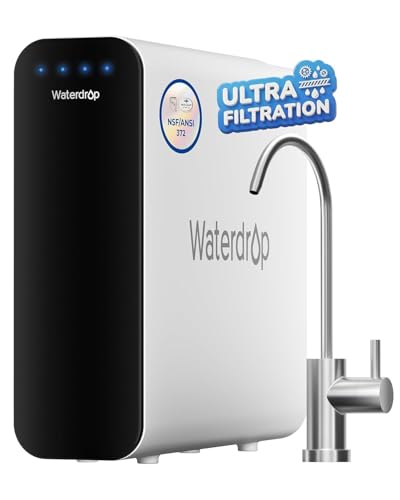
Waterdrop TSU 0.01 Micron Ultra Filtration System

Waterdrop 10UB Under Sink Filter with Faucet

iSpring US31-NC 3-Stage Under Sink Filter

Waterdrop TSA 8 Layer Under Sink Filter

Waterdrop TSB 8 Layer with Dedicated Faucet
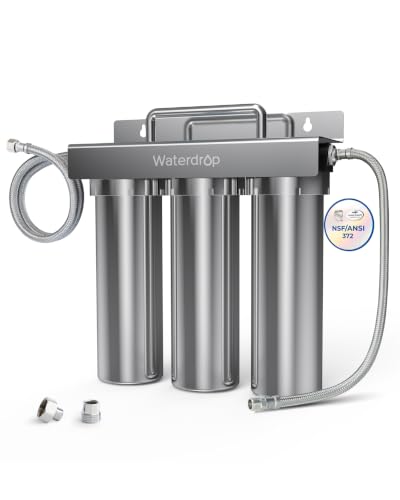
Waterdrop TST-UF Stainless Steel Ultra-Filtration

Waterdrop TSB-10-CM Chloramine Reduction Filter
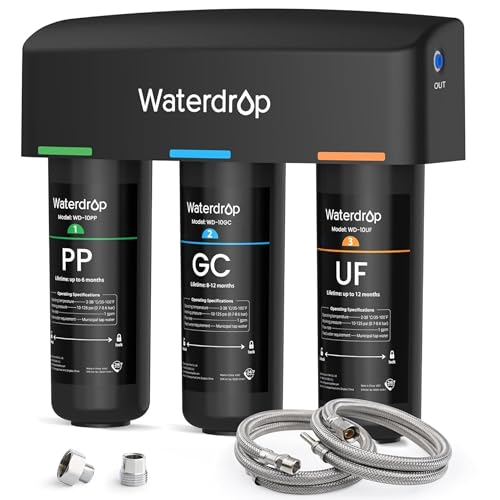
Waterdrop WD-TSA-UF 0.01μm Ultra Filtration

Waterdrop TSB-ALK 8 Layer Alkaline Filter

Waterdrop TSB-PF 9 Layer PFAS Filter
A Closer Look At Each Pick
Most under-sink filters live in the back corner of a cabinet and stay out of your way, but the Waterdrop TSU takes that idea further. Its 0.01 micron ultrafiltration stage uses a hollow-fiber membrane (a web of tiny tubes that physically strain out particles) to capture fine sediment without the wastewater a reverse osmosis system produces. In a small apartment kitchen where the under-sink area is already crowded with a trash bin and cleaning supplies, that zero-waste angle matters.
The catch is installation. The unit ships with a dedicated faucet, which means a small countertop hole if you don’t already have one. For a rental where modifications are off the table, check with your landlord first. The system also keeps beneficial minerals in the water rather than stripping the tap dry, which is the main reason people move away from pitcher filters in the first place.
Standout Benefits
- 0.01 micron ultrafiltration strain catches fine particles pitcher filters typically miss.
- No wastewater production means no extra gallon or two draining down the pipe per cycle.
- Compact body slides into tight under-sink cabinets where reverse osmosis tanks won’t fit.
- Retains beneficial minerals instead of producing purely stripped water.
Things To Consider
- Dedicated faucet requires drilling a hole in the countertop or sink deck.
- Cold-water only, so plan a separate path for tea kettles if you want filtered hot water.
At A Glance
Right Fit For
Apartment dwellers with crowded under-sink cabinets and access to municipal water.
Skip It When
You can’t drill your countertop, in which case the Waterdrop TST-UF offers a no-drill alternative.
Running cost is the quietest line item in any filtration setup. The Waterdrop 10UB uses a widely available replacement cartridge, which keeps the long-term spend predictable for families who refill pitchers, kettles, and pet bowls every day. Compared to the TSU just covered, this unit leans on multistage filtration (multiple media layers in sequence) to handle sediment, chlorine, and taste issues without the hollow-fiber membrane.
You’ll still need the dedicated faucet for the filtered side, so the same drilling caveat applies. One honest read: in homes where hard water is the bigger complaint rather than chlorine odor, this filter alone won’t soften anything. Pair expectations accordingly, and think of it as taste and odor refinement rather than a full water treatment overhaul.
Notable Upsides
- Replacement cartridges are widely stocked, simplifying long-term maintenance.
- Multistage media handles chlorine taste and sediment in one pass.
- Integrated dedicated faucet ships with the unit.
Worth Noting
- Does not soften hard water or address mineral scale.
- Cold-water only, and requires a countertop hole for the dedicated faucet.
- Not designed for private well water supplies.
Made For
Budget-conscious households focused on chlorine taste and basic sediment reduction.
Look Elsewhere When
You want a no-drill installation, in which case the Waterdrop TST-UF fits better.
When shopping for a water filter, marketing language can sound similar across brands, which is why independent lab certifications matter. The iSpring US31-NC uses a catalytic carbon stage tested by SGS (a global testing and inspection body) for chloramine reduction against NSF/ANSI 42 (a U.S. standard covering material safety and chlorine reduction claims). For shoppers who want paperwork behind the claims, that backdrop helps.
Across this roundup, the US31-NC leans harder on three separate cartridges, which means more filter swaps per year but finer targeting of different contaminant categories. The faucet is included, so the install path matches most of the Waterdrop models here. Plan on giving yourself a half hour under the sink with a towel and a flashlight.
Practical Advantages
- Three-stage setup separates sediment, carbon, and chloramine duties.
- Independent lab testing supports chloramine-reduction claims.
- Included dedicated faucet keeps the install self-contained.
Room For Improvement
- Three cartridges means tracking three replacement schedules.
- Countertop drilling is still required for the new faucet.
Quick Facts
Best Suited To
Shoppers who want third-party testing behind chloramine reduction claims.
Consider Something Else When
You want a single-cartridge swap, in which case the Waterdrop TSB-10-CM keeps replacement simpler.
Eight media layers in one cartridge is a bold spec sheet claim, and the Waterdrop TSA backs it up with NSF/ANSI 42 certification. In practice, that translates to a single yearly cartridge that walks water through sediment, carbon, and finer polishing layers without the bulk of stacked housings. For shoppers coming from the iSpring US31-NC reviewed earlier, the appeal is fewer filter changes per year.
The TSA connects directly to existing faucets with 1/2″ or 3/8″ female NPT threads (standard plumbing thread sizes for under-sink supply lines), so the install sidesteps the dedicated-faucet drill step many of these models require. If your sink doesn’t accept the included quick-connect adapter, the brand offers free adapters on request. For most homes, that single decision moves the TSA from “nice idea” to “Saturday morning project.”
Features That Help
- Single 8-layer cartridge simplifies yearly replacement.
- Direct-to-faucet install avoids drilling the countertop.
- NSF/ANSI 42 certification covers chlorine reduction claims.
- Retains beneficial minerals and does not strip TDS (total dissolved solids, a measure of everything dissolved in water).
Honest Caveats
- Cold-water only; plan a separate route for hot filtered water.
- Not suitable for well water unless paired with a pre-filtration stage.
Who Should Grab It
DIYers on municipal water who want one cartridge a year without countertop drilling.
Reach For A Different Pick When
You want PFAS (forever chemicals) reduction specifically, in which case the Waterdrop TSB-PF is a better match.
The TSB variant takes the TSA’s eight-layer media story and adds a dedicated filtered faucet out of the box. For a full kitchen refresh where you’re already swapping fixtures, having everything arrive in one carton removes a small logistical headache. The cartridge replacement schedule matches the TSA’s one-a-year cadence, so maintenance stays light.
The trade-off versus the TSA is the drilling requirement for the new faucet hole. If your countertop is stone or you’ve just installed a new sink, factor in a small bit or a call to the installer. For a dedicated filtered tap that looks intentional rather than retrofitted, the TSB earns its place. Otherwise, the TSA’s no-drill path is easier.
Useful Strengths
- Eight-layer media in one cartridge, one swap a year.
- Includes dedicated faucet, ideal for full kitchen refresh projects.
- Retains beneficial minerals in the finished water.
Points To Note
- Countertop drilling required for the included dedicated faucet.
- Cold-water only; hot filtered water requires a different path.
Whose Shelf It Belongs On
Homeowners doing a full kitchen refresh who want a matched, dedicated filtered tap.
Swap It Out When
You’d rather skip the drilling, in which case the Waterdrop TSA connects to your existing faucet.
Renters often get filtered out of the under-sink conversation because of the drilling issue, so the TST-UF earns attention for staying away from power tools. The unit connects to most faucets with 1/2″ or 3/8″ female NPT threads and ships with a quick-connect path that skips the dedicated faucet entirely. If you move apartments, the whole system comes off the supply line in minutes.
The stainless steel housing is a quieter selling point, but it matters for durability in a humid under-sink environment where plastic housings can discolor or warp over years. The 0.01 micron ultrafiltration stage matches the TSU covered earlier, and the tradeoff is the same: no TDS reduction, mineral retention intact. For taste and odor refinement without a permanent install, it’s a thoughtful design.
A Few Strong Suits
- No-drill install friendly for renters and short-term stays.
- Stainless steel housing resists wear in humid under-sink spaces.
- 0.01 micron stage fine enough for most taste concerns.
Small Caveats
- Adapter may be required for faucets outside the standard thread sizes.
- Cold-water use only; no support for well or hot water lines.
Who It Suits Best
Renters and apartment dwellers who need a removable install without countertop drilling.
Another Choice May Suit
If you want a finer media mix in a single cartridge, the Waterdrop TSA is a stronger alternative.
Chloramine behaves differently from chlorine, and standard carbon blocks often need help breaking it down. The Waterdrop TSB-10-CM uses a catalytic carbon stage designed for that specific job, which is the headline for households served by utilities that switched from chlorine to chloramine. If your local utility’s annual water report mentions chloramine, this filter targets the right molecule.
Compared to the TSB reviewed earlier, the swap is the dedicated chloramine media rather than extra sediment stages. Replacement cartridges (WD-10PP, WD-10GC) are model-specific, so owners commonly report ordering spares ahead to avoid gaps. The system still ships as a no-drill install and keeps TDS intact, so it’s a focused upgrade rather than a wholesale rebuild.
Useful Touches
- Catalytic carbon targets chloramine, which standard carbon misses.
- Retains beneficial minerals in the finished water.
- No-drill install connects to existing 1/2″ or 3/8″ supply lines.
A Few Limitations
- Replacement filters are model-specific and worth ordering ahead.
- Cold-water only, and not designed for well water supplies.
Perfect Match For
Households on chloramine-treated municipal water who need targeted removal.
A Better Fit Elsewhere
If your local utility still uses free chlorine, the Waterdrop TSA delivers broader taste refinement.
The WD-TSA-UF pairs the TSA’s no-drill direct-to-faucet path with a 0.01 micron hollow-fiber membrane, giving you finer particle reduction without committing to a dedicated tap. In a household that filters for coffee, tea, and baby formula, that combination is the practical middle ground. The unit also retains minerals, so TDS stays intact.
One nuance worth flagging: the membrane catches more, which means cartridge life can shorten on sediment-heavy municipal supplies. Owners commonly report flushing new cartridges for several minutes before first use to clear any loose carbon fines. For well water, the brand explicitly recommends a pre-filtration stage first, so plan accordingly if that’s your setup.
Advantages To Know
- 0.01μm membrane plus carbon in one compact housing.
- No-drill install works with most standard faucet threads.
- Retains minerals without lowering TDS.
Worth Bearing In Mind
- Sediment-heavy water shortens cartridge life compared to plain carbon filters.
- Not designed for hot water lines or untreated well water.
The Right Fit
DIYers who want finer particle reduction without adding a dedicated faucet.
Where A Sibling Pick Shines
For broader multi-stage media in a single cartridge, the Waterdrop TSA is the stronger alternative.
Alkaline water is a polarizing category, and the TSB-ALK lands on the side that adds mineralization rather than using electrolysis (an electrical process that splits water molecules). For shoppers who prefer the taste and mouthfeel of slightly alkaline water, the eight-layer media builds up pH and adds minerals over the standard TSB reviewed earlier.
The system does not reduce TDS, so don’t expect the dissolved-solids meter to move. Replacement filters are again model-specific (WD-10PP for sediment and a separate alkaline stage), so consider a backup on hand before the swap date. For taste-driven shoppers who already use alkaline pitchers, the dedicated path beats refilling plastic jugs weekly.
A Favorable Mix
- Eight-layer media adds mineralization for a slightly alkaline output.
- Retains minerals rather than producing stripped water.
- Dedicated cartridge swaps keep maintenance predictable.
Potential Drawbacks
- TDS is not reduced, which may surprise shoppers who expect a drop.
- Alkaline and sediment filters are model-specific, so spares are not interchangeable.
- Cold-water use only; no hot water support.
Best Suited To
Taste-focused shoppers who prefer alkaline water over stripped reverse-osmosis output.
Not Your Match When
You want broad PFAS reduction, in which case the Waterdrop TSB-PF is the better alternative.
PFAS keeps showing up in regional water reports, and the TSB-PF is built around that conversation. The nine-layer setup adds MicroSpine technology (a high-surface-area filter media designed to trap more contaminants per pass) and KDF media (a copper-zinc alloy that targets chlorine and heavy metals), reducing a broad list of 80+ substances without stripping beneficial minerals. The third-party lab testing on the spec sheet helps the claim feel concrete.
For shoppers coming from the TSB reviewed earlier, the difference is the expanded contaminant list, including PFOA and PFOS, plus chloroform and VOCs (volatile organic compounds such as solvents that evaporate at room temperature). Filter replacements are model-specific, so set a calendar reminder. The install path matches the rest of the line: a dedicated faucet ships in the box, and the brand advertises a three-minute hookup for the cartridge swap itself.
What It Does Well
- Targets PFAS, PFOA, and PFOS alongside chlorine and chloramine.
- Retains minerals and does not lower TDS.
- Includes dedicated faucet for a clean filtered tap.
- Third-party lab testing supports the contaminant-reduction list.
Practical Considerations
- Model-specific replacement cartridges require ordering ahead of the swap date.
- Cold-water only and not designed for well water sources.
- Countertop drilling required for the included dedicated faucet.
Feature Snapshot
Who Will Love This
Families concerned about PFAS and other emerging contaminants in municipal tap water.
Where Another Pick Suits Better
If a no-drill install is the priority, the Waterdrop TSA keeps install cleaner.
What To Weigh Before Picking An Under Counter Filter
Start with your water source. Municipal cold tap water is the design target for every model in this roundup, so homes on private wells need a pre-filtration plan before any of these units make sense. Hot water is off the table across the board, and chasing filtered hot water means adding a separate path or a different system entirely.
Next, decide how the filtered water reaches the tap. Models that connect to your existing faucet (the Waterdrop TSA, TST-UF, WD-TSA-UF) avoid drilling but can clash with pull-down sprayers or non-standard threads. Units that ship with a dedicated faucet (the TSU, TSB, TSB-ALK, TSB-PF, iSpring US31-NC) look more finished but require a countertop hole, which is a non-starter for some renters.
Finally, match the filter media to the contaminant you care about. Chloramine calls for catalytic carbon (the TSB-10-CM). PFAS wants high-surface-area media plus KDF (the TSB-PF). Alkaline seekers land on the TSB-ALK. For general taste and chlorine refinement, the TSA or TSB covers most households. The right match makes the cartridge swap feel routine rather than wasteful.
Key Considerations Across These Picks
Where Shoppers Go Wrong
The most common slip is buying a filter that targets contaminants you don’t actually have. Start with your local water quality report, which is usually published by your utility once a year, and match the media to the listed substances. Another misstep is underestimating install friction. The dedicated-faucet models require a small hole, and renters should default to the no-drill options like the TSA or TST-UF. Finally, ignore the cheapest replacement cartridges on the marketplace. Off-brand filters may not meet the same spec, and the wrong cartridge can quietly shorten the life of the unit itself.
What The Higher Tier Buys
Stepping up in this category usually means more media layers, third-party lab testing, or specialized contaminant targeting. The Waterdrop TSB-PF costs more than the basic TSB because it adds PFAS, KDF, and MicroSpine media, plus independent lab verification. The iSpring US31-NC earns its step with SGS-tested chloramine reduction against NSF/ANSI 42. The honest read: if your water report shows only basic chlorine and sediment, the lower tier handles the job. If PFAS or chloramine show up on the report, the upgrade pays back in fewer worries per glass.