

A decent steel water filter changes the daily kitchen routine: less plastic bottle clutter, fewer chlorine notes in morning coffee, and water that tastes like it actually came from somewhere clean. The category splits into under-sink reverse osmosis systems, inline filtration units, and countertop gravity-fed stainless tanks, so the right pick depends on how much space you have, how much water you drink, and whether you want minerals left in or stripped out. This roundup walks through ten strong options across those formats, with real talk on trade-offs and who each one actually serves.
The Main Contenders

Home Master Artesian Full Contact Loaded RO System

Home Master HydroPerfection Loaded RO System

Home Master Artesian Loaded RO + LLDPE Tubing

Home Master Ultra Filter Change Set

Waterdrop 15UB Under Sink Filter System

Pureal Puri-3 UF Under Sink System

Purewell 3-Stage Gravity Countertop System
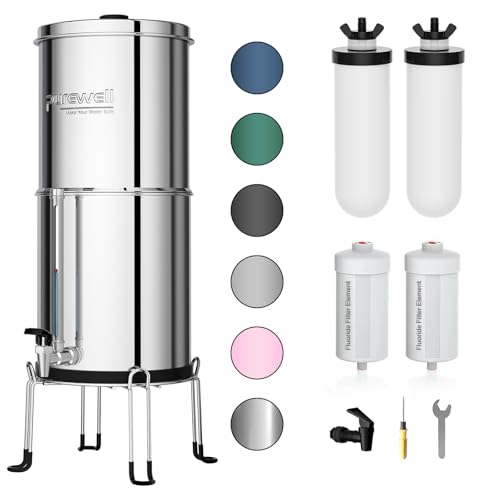
Purewell 8-Stage Gravity Countertop System

Purewell 3-Stage Gravity System with Spigot

Royal Berkey 3.25 Gal Gravity System
More On The Choices That Made The List
Home Master packs a lot into this under-sink RO: a permeate pump that keeps the tank pressurized even when production slows, plus a Dow Filmtec high-hardness membrane rated at 75 gallons per day. The system is designed to address the usual frustrations with traditional canister filters, so the filter changes are faster and the flow path is shorter.
Where this system stands apart from the HydroPerfection reviewed later is its focus on remineralization rather than UV sterilization. If your municipal supply runs moderately hard but you want calcium and magnesium to remain in the cup, this configuration handles both jobs without the extra stage.
The Practical Payoff
- Permeate pump keeps tank recovery fast, useful for households that refill pitchers often.
- Patented remineralization adds calcium and magnesium twice during purification for better taste.
- Loaded bundle includes brushed nickel faucet and fridge connection kit out of the box.
- Dow Filmtec high-hardness 75 GPD membrane is built for tougher municipal supplies.
- Modular filter design simplifies annual maintenance compared to canister stacks.
Things To Consider
- Under-sink installation requires a dedicated faucet hole and a drain saddle.
- RO systems produce wastewater, so expect some ratio of reject water during tank fill cycles.
- Hard water areas may still need a pre-softener to extend membrane life.
Quick Facts
Best Suited To
Homeowners on moderately hard municipal water who want mineral-rich RO water without a UV stage and don’t mind a modest install project.
Consider Something Else When
Microbial concerns or very hard well water point you toward the Home Master HydroPerfection RO System instead, which adds UV and a more aggressive membrane profile.
The HydroPerfection is the more aggressive sibling of the Artesian Full Contact, designed for water that needs serious reduction before it ever reaches a drinking glass. It runs nine stages including a UV stage, a 99%-rejection DOW membrane, and a patented two-pass remineralization sequence that reintroduces calcium and magnesium after purification.
Compared with the Artesian Full Contact’s seven stages, this one trades the simpler remineralization for UV and an extra sediment capture, with a roughly 4.5-second fill rate at the dedicated faucet. For households near agricultural runoff, old plumbing, or compromised municipal sources, that extra barrier pays off.
Everyday Perks
- Nine-stage purification captures sediment, cysts, and dissolved solids.
- UV stage neutralizes microorganisms that pass through mechanical filters.
- Two-pass remineralization gives water a more palatable taste than stripped RO.
- 1:1 waste ratio is conservative for the category.
- Loaded kit ships with luxury faucet and refrigerator line connection.
Honest Caveats
- More stages mean more annual filter replacements to budget for.
- UV lamp adds a small ongoing operational cost over time.
- Under-sink footprint is larger than simpler three-stage units.
Who It Suits Best
Households on well water or compromised municipal supply who want microbial protection plus mineral balance in a single under-sink unit.
Where Another Pick Suits Better
Apartment dwellers who can’t drill a faucet hole should look at the Purewell 8-Stage Gravity Countertop System, which delivers comparable reduction without any plumbing work.
This bundle pairs the Home Master Artesian Full Contact RO system with a 25-foot roll of John Guest 3/8-inch LLDPE tubing, which is the same food-safe flexible line most plumbers reach for on under-sink installs. The blue color makes the line easy to trace during future service.
The RO core matches the standalone Artesian Full Contact reviewed above, so you get the same 75 GPD Filmtec membrane, permeate pump, and two-pass remineralization. The added tubing just removes a trip to the hardware store for first-time installers.
Everyday Advantages
- Bundle removes the guesswork of matching tubing diameter and fitting type.
- LLDPE resists kinking and scale buildup better than generic vinyl lines.
- 25-foot length covers most under-sink to faucet runs with slack to spare.
- Same remineralized 75 GPD output as the standalone Artesian.
- Loaded RO includes brushed nickel faucet and fridge connection hardware.
Trade-Offs To Consider
- If your existing supply line is already 3/8 inch, the included tubing becomes spare.
- RO installation still demands a drain saddle and dedicated faucet hole.
Made For
First-time RO installers who want a complete under-sink kit without sourcing fittings and tubing separately.
Skip It When
You already have compatible tubing in place, in which case the standalone Home Master Artesian Full Contact Loaded RO System is the leaner choice.
This isn’t a filter system in the drinking sense, it’s a scheduled replacement bundle for Home Master Ultra units built in model year 2012 or later. The set covers the inline sediment, KDF85 iron and catalytic carbon, and coconut carbon stages in one box.
If you’re already running an Ultra system, this set keeps the membrane and post-filters in spec without hunting each cartridge individually. Think of it as the annual service kit that resets the system to factory performance.
The Value In It
- Multi-filter bundle is more convenient than ordering each cartridge separately.
- 5-micron sediment pre-filter captures rust and silt before they reach the membrane.
- KDF85 and catalytic carbon stage targets iron and chlorine odors.
- Inline 1/4-inch push-in fittings match the Ultra system’s existing ports.
Room For Improvement
- Only fits Ultra units from 2012 onward, so older systems need a different set.
- Doesn’t include the UV lamp replacement for Ultra UV models.
Best Suited To
Existing Home Master Ultra owners scheduling their yearly filter rotation who want a single bundle to swap out.
Look Elsewhere When
You don’t yet own an Ultra system; in that case start with the Home Master Artesian Full Contact Loaded RO System or the HydroPerfection for a fresh install.
The Waterdrop 15UB takes a different path from the Home Master units reviewed earlier: it skips the RO membrane and tank in favor of a multistage carbon-block filter that runs straight to a dedicated faucet. For renters or anyone who can’t route a drain saddle, that simpler architecture is the entire point.
Compared with the under-sink RO systems on this list, it produces no wastewater, takes about a third of the install time, and keeps minerals in the water. The trade is that it won’t pull dissolved solids the way a 0.0001-micron membrane will.
What Stands Out
- No-tank design fits into shallow under-sink cabinets where an RO tank won’t.
- No wastewater means zero drain saddle and no reject-water ratio to manage.
- Multistage filtration targets chlorine, lead, and sediment common in city water.
- Replacement cartridges are designed for low-cost annual rotation.
- Dedicated faucet keeps filtered water separate from the main kitchen tap.
Points To Note
- Designed for municipal cold water only, not well or hot water feeds.
- Doesn’t reduce total dissolved solids the way an RO system does.
- Filter capacity is finite, so heavy-use households will replace cartridges more often.
Key Attributes
Right Fit For
Renters and small households on city water who want better-tasting tap water without drilling extra holes or managing a drain line.
A Better Fit Elsewhere
Households needing TDS reduction should consider the Pureal Puri-3 UF Under Sink System, which uses ultrafiltration to capture finer particles while keeping beneficial minerals.
The Puri-3 leans on a 0.01-micron ultrafiltration membrane rather than RO, which means it reduces cysts, rust, and heavy metals while leaving calcium and magnesium in the water. It pairs the UF stage with a carbon polish and ships with a stainless steel faucet for a cleaner under-sink look.
Compared with the Waterdrop 15UB reviewed earlier, the Puri-3 adds a finer capture threshold and a stainless tap. Against the Home Master RO systems, it skips the permeate pump, the remineralization stage, and the wastewater output entirely.
Useful Highlights
- 0.01-micron UF membrane captures cysts that slip past standard carbon filters.
- Mineral-friendly design preserves calcium and magnesium for taste and health.
- Stainless steel faucet upgrade over typical plastic under-sink taps.
- No drain line needed, which simplifies install and removes wastewater.
- Three filters, five-stage filtration handle rust, chlorine, and heavy metals.
Potential Drawbacks
- UF doesn’t reduce dissolved solids the way a true RO system will.
- Under-sink cabinet footprint still requires clearance for three filter cartridges.
Made For
Mineral-conscious households who want cyst and heavy-metal reduction without the stripped taste and wastewater that come with full RO.
Not Your Match When
You need TDS reduction or municipal water with very high dissolved solids, in which case the Home Master Artesian Full Contact Loaded RO System is the better tool.
The Purewell 3-Stage swaps plumbing for gravity: a 2.25-gallon stainless tank sits on a stand, and water filters down through two washable ceramic cartridges into the lower chamber. There’s no install, no power, and no faucet hole to drill.
Compared with the under-sink units earlier in this list, the Purewell trades flow rate and continuous supply for portability and zero modification to the kitchen. You pour, you wait, you pour out, and the ceramic cartridges can be scrubbed and reused rather than thrown out.
Reasons It Performs
- Stainless steel housing resists corrosion and survives decades of countertop use.
- Washable ceramic filters lower long-term cartridge costs.
- Stand elevates the lower chamber for easy glass filling.
- Three-layer ceramic block reduces chlorine, sediment, and rust.
- 2.25-gallon capacity covers a day’s worth of drinking water for one to two people.
Factors To Consider
- Gravity flow is slow, so plan ahead when filling pitchers.
- Countertop footprint takes up real estate compared with under-sink units.
- Ceramic filters need periodic scrubbing to maintain flow rate.
Technical Sheet
Who Should Grab It
Renters, dorm dwellers, and small kitchens where drilling or plumbing isn’t an option but cleaner drinking water still matters.
Another Choice May Suit
Larger households that go through more water each day should look at the Royal Berkey 3.25 Gal Gravity System, which holds more volume per fill.
The 8-Stage is the heaviest hitter in the Purewell countertop line, layering a fluoride reduction cartridge on top of the standard ceramic and carbon stages. Four filters stack together to address a wider range of contaminants than the 3-Stage model reviewed earlier, with the same 2.25-gallon stainless body.
The metal water-level spigot is a nice touch compared with the basic plastic tap some gravity systems ship with, and it makes filling a glass one-handed easier in a busy kitchen.
What Makes Sense
- Eight-stage composite filtration targets fluoride along with chlorine and heavy metals.
- Fluoride-reduction cartridge adds targeted removal other gravity systems skip.
- Stainless housing pairs with a metal spigot for a more durable pour-side experience.
- Same 2.25-gallon footprint as the simpler 3-Stage unit.
- No install, no power, and easy to relocate if you move.
Where It Is Less Suited
- More filter stages mean a longer first-fill wait and more cartridges to track.
- Countertop footprint still claims kitchen space versus under-sink alternatives.
Right Fit For
Households specifically looking for fluoride reduction alongside standard chlorine and sediment capture, with no interest in plumbing modifications.
Reach For A Different Pick When
If fluoride reduction isn’t a priority, the Purewell 3-Stage Gravity Countertop System delivers the same durable stainless body with simpler maintenance.
This Purewell 3-Stage shares the same 2.25-gallon stainless housing as the earlier 3-Stage review but adds a metal water-level spigot and stand combo. It’s a small ergonomic upgrade that matters more than it sounds, especially in a kitchen where the dispenser gets daily traffic.
The ceramic, carbon, and silver-ion filter trio reduces chlorine and sediment while inhibiting bacterial growth on the filter media itself. For pour-and-serve households, that reliability story is the main draw.
Notable Upsides
- Metal spigot holds up better than plastic taps over years of use.
- Three-layer ceramic filter handles sediment, chlorine, and odors.
- Stainless body wipes clean and resists rust in humid kitchens.
- No plumbing means renters can take it along when they move.
- Silver-ion inner layer helps keep the filter media itself cleaner between scrubs.
Honest Caveats
- Ceramic filters need occasional surface scrubbing to maintain flow.
- Gravity fill time means you’ll wait longer than at a plumbed tap.
Feature Card
Whose Shelf It Belongs On
Daily pour-and-serve households who want the durability of metal hardware and the simplicity of ceramic filter maintenance.
Swap It Out When
You need fluoride reduction or larger capacity, in which case the Purewell 8-Stage Gravity Countertop System is the natural step up.
The Royal Berkey is the largest gravity system in this roundup, with a 3.25-gallon stainless housing that suits households of roughly two to four people. It pairs with BB9-2 purification elements and runs entirely on gravity, so it works during power outages or in spaces with no plumbing access.
Against the Purewell 3-Stage reviewed earlier, the Royal Berkey trades the ceramic scrub-and-reuse story for higher volume per fill and broader contaminant reduction claims. It’s the gravity-format pick when capacity matters more than cartridge simplicity.
Real-World Strengths
- 3.25-gallon capacity covers multiple drinking sessions between fills.
- No electricity or plumbing means it works off-grid and during outages.
- Stainless housing is built for years of countertop service.
- BB9-2 elements target a wide range of contaminants for the format.
- Portable design moves easily between homes, RVs, and cabins.
Practical Considerations
- Countertop footprint is larger than the Purewell 2.25-gallon systems.
- Gravity flow takes patience, so it’s not ideal for instant glass filling.
- Replacement elements are brand-specific, which can limit sourcing flexibility.
Quick Facts
Perfect Match For
Multi-person households that want a high-capacity, no-install filter and don’t mind the slower pour.
Look Elsewhere When
You live solo or in a small kitchen where the Purewell 3-Stage Gravity Countertop System’s smaller footprint makes more sense.
Choosing Between Steel Filtration Formats
The category splits cleanly into under-sink and countertop designs, and the right answer depends on how your kitchen is set up. Under-sink reverse osmosis systems like the Home Master Artesian Full Contact and HydroPerfection deliver the deepest reduction, but they need a drain saddle, a dedicated faucet hole, and tolerance for some wastewater during tank fill cycles. Inline under-sink units like the Waterdrop 15UB and Pureal Puri-3 cut the install time and skip the drain line, but they trade away the membrane-level TDS reduction of a full RO system.
Countertop gravity systems flip the priorities entirely: no plumbing, no power, slower flow, but full portability and stainless housings that look at home on the counter. The Purewell 3-Stage, Purewell 8-Stage, and Royal Berkey 3.25 Gal all live in this category, with capacity and filter count as the main differentiators. RO membrane technology uses a semi-permeable barrier with pores around 0.0001 micron to strip dissolved solids, while ultrafiltration membranes at 0.01 micron block cysts and particles but leave minerals in the water. Carbon block stages handle chlorine and organic compounds through adsorption, where contaminants bond to the surface of activated carbon. The right match comes down to source water quality, install tolerance, and how much water your household actually drinks each day.
Key Considerations Across These Picks
Pitfalls Shoppers Hit
Underestimating install scope is the most common slip: many shoppers pick an under-sink RO assuming it’s a simple swap, then discover the drain saddle, faucet hole, and tank footprint together need real cabinet space. Skipping source-water testing is another quiet mistake, because a membrane rated for moderate hardness will struggle in areas with very high mineral content. Always check your local water report before choosing between an RO system, an ultrafiltration unit, and a basic carbon filter.
Where The Extra Money Goes
Higher-tier picks like the Home Master HydroPerfection and the Purewell 8-Stage earn their cost through more filter stages, broader contaminant targeting, and more durable hardware. The UV stage in the HydroPerfection, for example, addresses microbial concerns that simpler carbon stages cannot, while the 8-Stage’s fluoride cartridge addresses a specific removal gap. If your water report flags those exact issues, the upgrade pays back in fewer replacement filters and cleaner output. If your water is already relatively soft and your concerns are limited to chlorine and sediment, a simpler 3-Stage or 15UB configuration will serve you just as well.
Frequently Asked Questions
What Is Reverse Osmosis?
Reverse osmosis is a filtration process that forces water through a semi-permeable membrane to remove dissolved solids, contaminants, and impurities. The Home Master Artesian Full Contact Loaded RO System uses this technology to deliver highly pure drinking water.
How Often Should Filters Be Replaced?
Most under-sink RO and UF filters need replacement every 6 to 12 months depending on usage and source water quality. The Home Master Ultra Filter Change Set is designed for annual rotation on compatible Ultra systems, and ceramic cartridges on the Purewell models can be scrubbed and reused for longer stretches.
Do Steel Water Filters Remove Fluoride?
Standard carbon filters reduce chlorine and improve taste but do not target fluoride, while RO and dedicated fluoride cartridges do. The Purewell 8-Stage Gravity Countertop System adds a fluoride reduction cartridge specifically for that purpose.
Can I Install These Without A Plumber?
Countertop gravity units require zero plumbing work, which makes them ideal for renters and off-grid spaces. Under-sink RO and UF systems typically need basic plumbing skills, including a drain saddle connection and a dedicated faucet hole.
Are Stainless Steel Filters Better Than Plastic?
Stainless steel housings resist corrosion, last longer in humid kitchens, and avoid the plastic taste some users notice in cheaper plastic-bodied units. The trade-off is weight and countertop footprint, so consider your kitchen layout before committing to a stainless gravity system.
Final Verdict
The right pick depends entirely on your kitchen and your source water: under-sink RO for homeowners who want maximum reduction, inline under-sink for renters who want easy install, and countertop gravity for anyone who values simplicity over flow rate. Match the format to your space, your source water report, and how much water your household actually drinks, and any of these ten will deliver cleaner water for years.




