Tap water in most U.S. municipalities is safe, but taste, odor, and trace contaminants push many households toward point-of-use filtration. The right setup depends on whether you want a simple under-sink filter for the kitchen tap, a reverse osmosis (RO) system for thorough contaminant reduction, or a whole-house prefilter catching sediment before it reaches every fixture. Reverse osmosis uses a semipermeable membrane and pressure to strip dissolved solids, while standard carbon filtration focuses on chlorine, VOCs, and improving flavor.
This roundup covers ten kitchen water filtration systems built around two proven brands. The list mixes whole-house sediment prefilters, multi-stage carbon under-sink units, alkaline RO systems, and ultra-filtration models. Each pick solves a different problem, from a stubborn sulfur smell to hard-water scale, so your choice comes down to plumbing layout, water source, and how much space sits beneath the sink.
A Side-By-Side Look

iSpring WGB32B-KDS Whole House Water Filter System

iSpring RCC7P-BLK 5-Stage RO System with Booster Pump
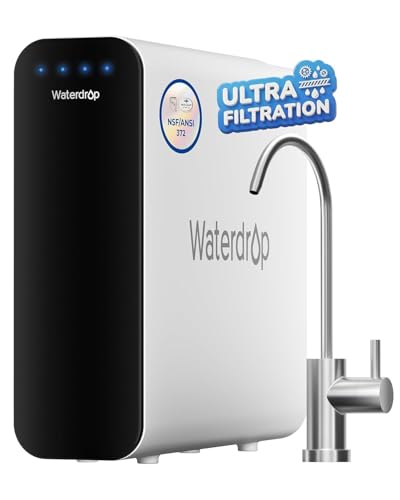
Waterdrop TSU 0.01 Micron Ultra Filtration System

iSpring RCC7AK-BN 6-Stage Alkaline RO System (75 GPD)

iSpring WSP-50 Spin Down Sediment Prefilter 50 Micron

Waterdrop 10UB Under Sink Water Filter with Faucet

iSpring US31-NC 3-Stage Under Sink Filter with Faucet

Waterdrop TSA 8-Layer Under Sink Filter (NSF/ANSI 42)

Waterdrop TSB 8-Layer Under Sink Filter with Faucet
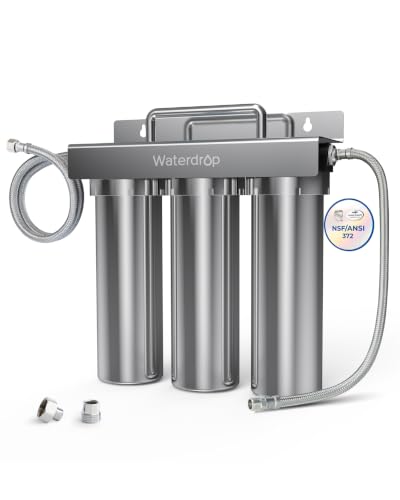
Waterdrop TST-UF 0.01μm Ultra-Filtration System (Stainless)
Why These Options Stand Out
Hard-water homes tend to suffer first at the appliances: water heaters crust over, dishwasher valves seize, and showerheads clog. The WGB32B-KDS tackles that problem at the point where water enters the house, pairing a heavy-duty carbon block stage with iSpring’s anti-scale media. Unlike the under-sink picks later in this list, which only treat one tap, this unit conditions every shower, washer, and faucet in the home.
The system targets the dissolved minerals behind scale buildup, calcium and magnesium, by sequestering them so they stay in solution rather than depositing on surfaces. A patented corrosion inhibitor lays down a protective layer inside metal pipes and stabilizes residual chlorine so it doesn’t react aggressively with copper or galvanized lines. For a household tired of replacing water-heater anodes every few years, the broad-stroke approach pays off quickly.
Real Benefits
- Treats water at the point of entry, protecting every appliance and fixture
- Anti-scale media extends the life of water heaters and washing machines
- Corrosion inhibitor helps stabilize aggressive water in older plumbing
- DIY-friendly setup with detailed documentation and video walkthroughs
- Pairable with a sediment prefilter like the WSP-50 for layered defense
Things To Consider
- Requires dedicated installation space near the main shutoff, often in a garage or basement
- Filter replacement cycles are longer than under-sink units, but housings are bulky to handle
Built With In Mind
Homeowners on municipal water who battle hard-water scale across multiple appliances and want whole-house coverage rather than a single filtered tap.
Consider Something Else When
Studio dwellers or renters in apartments should look at the Waterdrop TST-UF 0.01μm Ultra-Filtration System, since it needs no drilling and fits under one sink.
Reverse osmosis performs best when feed water arrives at consistent pressure, and most home RO systems underperform in low-pressure neighborhoods. The RCC7P-BLK solves that frustration with a built-in booster pump that pushes feed water up to the membrane’s optimal range. Compared with the passive RCC7AK reviewed next, this model wastes less water and fills its tank faster in low-PSI (pounds per square inch) homes.
A 304 stainless steel black faucet anchors the deck, adding a refined industrial touch that pairs well with matte or stainless kitchens. The patented top-mounted design means the supply adapter tightens from above the counter, sparing you the contortion act of reaching under the sink with a wrench. Pairing with an iSpring ICEK kit opens up fridge and ice-maker routing if you want the same purified water at the ice tray.
Real-World Strengths
- Booster pump keeps RO output strong where household pressure runs 40 PSI or below
- Stainless black faucet upgrade looks cleaner than chrome plastic options
- Top-mounted fastening simplifies the under-sink install for solo homeowners
- Compatible with iSpring fridge connection kit for ice-maker and chilled water lines
- Five-stage design strips a broad range of dissolved contaminants
Worth Noting
- Pump adds a faint mechanical hum during tank fills, noticeable in quiet kitchens
- Still produces RO reject water; the ratio improves but isn’t zero-waste like the Waterdrop TSU
Right Fit For
Homeowners in low-pressure neighborhoods who want faster tank refill and stronger RO performance without stepping up to a tankless commercial unit.
Look Elsewhere When
Anyone prioritizing minimal wastewater and silent operation should consider the Waterdrop TSU 0.01 Micron Ultra Filtration System, which produces no drain water at all.
Standard RO strips water down to nearly pure H2O, which removes contaminants but also pulls out calcium, magnesium, and other minerals that give water its character. The TSU takes a different approach with a 0.01-micron ultra-filtration membrane that catches fine particles and many contaminants while leaving beneficial minerals behind. You also get zero wastewater, a real advantage for anyone watching the water bill or living in a drought-prone region.
Install requires a dedicated faucet and a small drilled hole in the countertop, since the system taps into the cold-water line under the sink. For households on municipal supply, that’s a clean one-hour swap with basic tools. Note that this unit is built for cold water only, so don’t plan to plumb it into a hot-water dispenser line.
What Works In Its Favor
- Retains beneficial minerals while filtering down to 0.01 microns
- Produces zero drain water, unlike RO systems that send 3 to 4 gallons to the drain per gallon filtered
- Three-stage design targets more than 30 common substances
- Includes a dedicated faucet in the box
Trade Offs
- Not designed for well water or hot-water applications
- Countertop drilling is required, which can give renters pause during move-out
- Doesn’t reduce total dissolved solids, so those tracking TDS readings won’t see dramatic drops
Made For
Municipal-water households that want clean, better-tasting water without losing mineral content or wasting 3 to 4 gallons per refill cycle.
Swap It Out When
Households needing a true no-drill install should pick the Waterdrop TST-UF 0.01μm Ultra-Filtration System, which connects directly to most existing faucets.
The complaint most often voiced about reverse osmosis is that the water tastes flat or slightly acidic. The RCC7AK-BN adds a sixth stage, an alkaline remineralization cartridge, that reintroduces calcium and magnesium while raising pH toward a more spring-water-like profile. It uses a 75 GPD (gallons per day) membrane, which is more than enough for a family of four, while the transparent first-stage housing makes sediment buildup easy to spot at a glance.
Compared with the boosted RCC7P-BLK reviewed earlier, this model runs at standard feed pressure and trades a pump for an extra filtration stage. The top-mounted faucet fastener still applies, so the install remains approachable for a moderately handy homeowner. The 75 GPD rating assumes around 50 PSI feed pressure and 77°F water, so cold winter supply can slow output temporarily.
A Strong Showing
- Alkaline remineralization stage restores taste and a healthier pH
- Transparent first-stage housing lets you see when sediment builds up
- Top-mounted faucet design removes the awkward under-sink wrench work
- NSF/ANSI 58 certified for safety on the reverse-osmosis components
Points To Keep In Mind
- Without a booster pump, output drops noticeably in homes under 50 PSI
- Alkaline cartridge adds a recurring replacement cost on top of the standard filters
- RO process still produces reject water; consider pairing with a permeate-pump upgrade if waste matters
Who It Suits Best
Health-focused households who want RO-pure water with the pH and mineral profile closer to natural spring water, in homes with adequate feed pressure.
Not Your Match When
Homeowners with chronically low municipal pressure should pick the iSpring RCC7P-BLK 5-Stage RO System, since the booster pump solves the slow-refill problem directly.
Sediment is the silent killer of downstream filters. Sand, rust flakes, and pipe scale clog carbon cartridges early and slowly strangle RO membranes. The WSP-50 catches that debris at the point of entry with a reusable 50-micron stainless screen that you flush clean in seconds. The classic configuration includes a pressure gauge, which makes diagnosing flow problems far easier than guessing.
The head rotates to align with vertical or horizontal pipe runs, helpful in tight mechanical rooms where space forces a non-standard orientation. Owners in high-sediment areas should consider a coarser 100-micron screen to reduce flushing frequency, while the 50-micron balance suits most municipal supplies well. The clear housing means you can see at a glance when a flush is overdue.
Where It Excels
- Reusable 50-micron screen cuts replacement-cartridge cost over time
- Pressure gauge gives real-time feedback on flow restriction
- Rotated head fits awkward pipe orientations in cramped utility spaces
- Flushable design keeps maintenance to a few minutes per month
Honest Caveats
- 50-micron rating catches only larger particles, fine sediment still passes to downstream filters
- Homes with very heavy sediment may need a coarser first screen to avoid frequent flushing
Best Suited To
Whole-house water treatment setups that need a frontline sediment defense to extend the life of every downstream carbon or RO system in the chain.
A Better Fit Elsewhere
Studio dwellers who only want filtered drinking water can skip the WSP-50 and go straight to the Waterdrop 10UB Under Sink Water Filter System for a simpler under-sink install.
Under-sink filtration doesn’t have to be a project. The 10UB targets renters and first-time homeowners who want cleaner drinking water without the install overhead of a multi-stage RO system. Its multistage carbon design pulls chlorine, sediment, and odor out of the cold-water line and routes the result through a dedicated faucet. Replacement filters cost under $25.99 each, which keeps ongoing ownership simple for tight budgets.
Compared with the Waterdrop TSU reviewed earlier, this model is more affordable but doesn’t push to the same 0.01-micron ultra-filtration tier. It also requires the same dedicated-faucet hole in the counter, so renters should plan to patch or fill the hole at move-out. For municipal tap water in standard under-sink setups, the multistage approach covers the most common taste and odor complaints.
What Pays Off
- Replacement cartridges are inexpensive, which keeps long-term cost low
- Multistage design improves taste and odor in a single swap
- Dedicated faucet included for clean separation from unfiltered taps
- Standard under-sink cold-water connection keeps installation straightforward
Possible Compromises
- Requires a hole drilled in the countertop for the dedicated faucet
- Not suitable for well water; designed strictly for municipal tap water
Who Should Grab It
Budget-conscious households on municipal water who want a simple, low-fuss upgrade from tap water and don’t mind the small countertop modification.
Reach For A Different Pick When
Renters who can’t drill the counter should consider the Waterdrop TST-UF 0.01μm Ultra-Filtration System, which installs without modifying the countertop.
Many cities switched from chlorine to chloramine for residual disinfection because it lasts longer in the distribution system. The trade-off is that standard carbon filters strip chlorine with ease but struggle with chloramine, leaving a chemical taste in the glass. The US31-NC uses a catalytic carbon media (SGS-tested against NSF 42) designed to break down chloramine rather than just adsorb it. Two of its cartridges carry NSF/ANSI 58 certification for trusted material safety.
The five-stage media arrangement inside the three physical cartridges reduces sediments, chloramine, VOCs, chlorine, and various other contaminants in a single run. The dedicated faucet mounts in a standard hole pattern, so the install matches most under-sink layouts. Owners on chloramine-treated municipal water should see a noticeable taste improvement after the first tank flush.
What Makes Sense
- Catalytic carbon targets chloramine, which defeats many standard carbon filters
- NSF/ANSI 58 certification on two of the cartridges for material safety
- Five-stage filtration in a compact three-cartridge footprint
- Includes a dedicated faucet for a clean filtered tap
Some Limits To Know
- Like other carbon-only units, it doesn’t reduce total dissolved solids like an RO system does
- Catalytic carbon media costs slightly more per replacement cycle than standard carbon blocks
Whose Shelf It Belongs On
Households on chloramine-treated municipal water who want dedicated under-sink filtration and NSF-certified media at a moderate price point.
Where A Sibling Pick Shines
Anyone chasing alkaline pH and zero wastewater should consider the iSpring RCC7AK-BN 6-Stage Alkaline RO System instead, which adds a remineralization stage on top of the filtration.
Eight layers of filtration sounds like marketing, but the TSA earns it with a stacked-media approach: sediment layers trap particulates at decreasing micron ratings while activated carbon layers pull chlorine, VOCs, and odor compounds. NSF/ANSI 42 certification backs the material safety claim, which is reassuring for anyone filtering tap water for an entire family. The unit connects directly to most faucets with 1/2″ or 3/8″ female NPT (National Pipe Thread) threads.
Unlike the TSB reviewed next, this model does not include a dedicated faucet, so it ties into your existing tap hardware. That makes it a cleaner swap for renters or households happy with their current faucet style. The system doesn’t reduce TDS, so the minerals stay in the water, which keeps the taste closer to tap than RO-purified output.
Useful Touches
- NSF/ANSI 42 certification provides third-party safety validation
- Eight filtration layers handle sediment, chlorine, and odor in one cartridge
- Standard 1/2″ or 3/8″ female NPT thread compatibility covers most faucet setups
- No drilling required, so existing countertops stay intact
What To Weigh
- No dedicated faucet in the box; you filter through your existing tap
- Like most carbon units, it doesn’t strip total dissolved solids
Perfect Match For
Households that want NSF-certified carbon filtration without modifying the countertop or adding a second faucet to the sink.
Another Choice May Suit
Anyone who wants a separate filtered tap should pick the Waterdrop TSB 8-Layer Under Sink Filter, which ships with a dedicated faucet in the box.
The TSB is the TSB side of the TSA/TSB pair, sharing the same 8-layer media stack but adding a dedicated faucet for filtered output. The cartridge family is the same, so replacement filters (sold under the WD-TSA/TSB 3-stage series) stay affordable and easy to source. The three-stage physical housing tucks neatly into standard under-sink cabinets without hogging space.
Like the TSA, this model keeps beneficial minerals in the water rather than stripping them out the way RO does. Cold-water feed only, so don’t expect filtered output from a hot-water dispenser tap. The dedicated faucet makes it a sensible choice for households that prefer the filtered water visually separated from the unfiltered tap.
Practical Pluses
- Three-stage design with eight filtration layers inside the cartridges
- Replacement filters are widely available and simple to swap
- Retains beneficial minerals rather than producing flat-tasting water
- Includes a dedicated faucet in the box for clean separation
Practical Considerations
- Countertop drilling is required for the dedicated faucet
- Not designed for well-water or hot-water applications
Who Will Love This
Standard under-sink setups on municipal water where a separate filtered tap and easy cartridge replacement are higher priorities than RO-pure water.
Skip It When
Renters who can’t drill should look at the Waterdrop TST-UF 0.01μm Ultra-Filtration System, which installs without modifying the counter.
The headline feature on the TST-UF is the install story. There is no drilling, no second faucet, and no permanent modification to the countertop. The unit threads directly onto most existing faucets with a 1/2″ or 3/8″ female NPT connection, making it a strong fit for renters or anyone renting out part of their home. The stainless housing resists corrosion under the sink far better than plastic alternatives.
At 0.01 microns, the ultra-filtration membrane catches the majority of common substances while leaving beneficial minerals untouched. Like the TSU, it produces no wastewater, so the environmental footprint stays low. For well-water households, Waterdrop recommends a pre-filtration stage to handle the heavier sediment first.
What It Does Well
- Connects directly to most standard faucets without drilling the counter
- Stainless steel housing extends service life in damp under-sink environments
- Zero wastewater output during normal operation
- Retains healthy minerals instead of stripping them like an RO membrane
Less-Strong Areas
- Not intended for hot-water or well-water applications without a prefilter
- Direct faucet-mount adapters may not fit every non-standard thread pattern
Who It Suits Best
Renters and homeowners who want ultra-filtration water quality without drilling, modifying, or losing their security deposit over a filtration install.
Where Another Pick Suits Better
Homeowners tackling hard-water scale across the whole house should look at the iSpring WGB32B-KDS Whole House Water Filter System, which targets every tap rather than just the kitchen sink.
Picking The Right Fit For Your Kitchen Plumbing
Filtration Type Sets The Ceiling
Carbon-only units (the Waterdrop TSA, TSB, and 10UB) improve taste, odor, and chlorine but leave dissolved minerals in the water. Reverse osmosis systems (the iSpring RCC7P-BLK and RCC7AK-BN) go further and strip dissolved solids, at the cost of slower flow and wastewater. Ultra-filtration models (the Waterdrop TSU and TST-UF) split the difference with sub-micron membranes that retain minerals. Choose based on what your water report actually shows, not on which technology sounds more advanced.
Whole-House Versus Point-Of-Use
A whole-house approach (the WGB32B-KDS, paired with the WSP-50 prefilter) conditions every tap, shower, and appliance at the point of entry. Point-of-use systems filter only the dedicated kitchen tap, which keeps cost and complexity lower. Households dealing with hard-water scale on water heaters and dishwashers benefit from whole-house treatment, while renters and apartments usually do fine with point-of-use.
Installation Realities
Before choosing, measure the under-sink cabinet for height, depth, and proximity to the main shutoff. Dedicated-faucet units need a drilled hole, while no-drill options (the Waterdrop TST-UF) work for renters. RO systems with booster pumps (the RCC7P-BLK) need a power outlet nearby and produce faint hum during tank fills.
Things To Watch Before You Commit
Wrong Turns To Avoid
Buying an RO system for municipal water that already tests clean for dissolved solids wastes water and slows flow for no real benefit. Pairing a high-end under-sink filter with well water without a sediment prefilter shortens cartridge life dramatically. Chasing a low price on a unit with proprietary cartridges locks you into ongoing replacement costs that erode the savings within a year or two.
Where The Extra Money Goes
The jump from a budget carbon unit to a multi-stage alkaline RO system buys a remineralization stage, NSF/ANSI certifications, and a transparent housing for visual monitoring. Whole-house scale protection adds a third dimension by guarding water heaters, dishwashers, and washing machines, which can pay back the upfront cost in extended appliance life. Booster pumps solve low-pressure problems that would otherwise strangle tank refill rates in apartments and older homes.
Frequently Asked Questions
What is the difference between reverse osmosis and carbon filtration?
Reverse osmosis uses a semipermeable membrane and household pressure to strip dissolved solids, while carbon filtration relies on activated carbon to adsorb chlorine, VOCs, and odor compounds. RO delivers purer water but produces wastewater and removes beneficial minerals along with contaminants.
Do these filters work on well water?
Most under-sink units in this roundup target municipal tap water, so a sediment prefilter is a smart first step for well owners. The iSpring WSP-50 catches large sediment at the point of entry, and pairing it with a whole-house carbon stage keeps finer contaminants away from under-sink cartridges.
How often do replacement cartridges need changing?
Sediment prefilter screens flush monthly with reuse; carbon cartridges typically run 6 to 12 months; RO membranes stretch 2 to 3 years depending on feed water quality. Track installation dates so cartridges don’t run past their service window, which can let contaminants pass through exhausted media.
Will an under-sink filter reduce water pressure?
Standard carbon units rarely cause noticeable pressure drops when cartridges stay fresh. RO systems with a 75 GPD rating may slow flow when the storage tank empties, and booster pump models like the RCC7P-BLK actually restore strong flow in low-pressure homes.
Is a dedicated faucet required?
Under-sink RO systems and several carbon units (the Waterdrop 10UB, TSB, and TSU) include a dedicated faucet, while no-drill models (the Waterdrop TST-UF and TSA) filter through the existing tap. The right choice depends on whether you can drill a hole in the countertop.
Closing Thoughts
The best pick depends entirely on your water source, plumbing layout, and how much maintenance you’re willing to take on. Hard-water households with whole-house scale problems should start with the WGB32B-KDS, while city dwellers chasing taste and odor improvements will find strong value in the Waterdrop TSA, TSB, or iSpring US31-NC. Whichever system you choose, factor in long-term cartridge costs and the realistic install effort before committing.