Your tap water tells a story, and not always a pleasant one. Hard minerals leave scale on showerheads, chlorine lingers in every glass, and older plumbing can quietly leach metals you never wanted to think about. A whole home system, an under-sink reverse osmosis unit, or even a travel filter can change that story fast, treating water at the point of entry, the kitchen tap, or the trail. This roundup walks through eight solid options across categories so you can match filtration to the problem you actually have.
A Closer Look At The Lineup

Express Water Whole Home Water Filter System, Essential Protection, 3-Stage

Express Water Whole House Water Filter System, Heavy Metal, 3-Stage

Express Water Whole House Water Filter System, Iron & Manganese, 3-Stage

Express Water Whole House Water Filter System, Ultimate Protection, 3-Stage

Express Water Whole House Water Filter System, Anti-Scale, 3-Stage
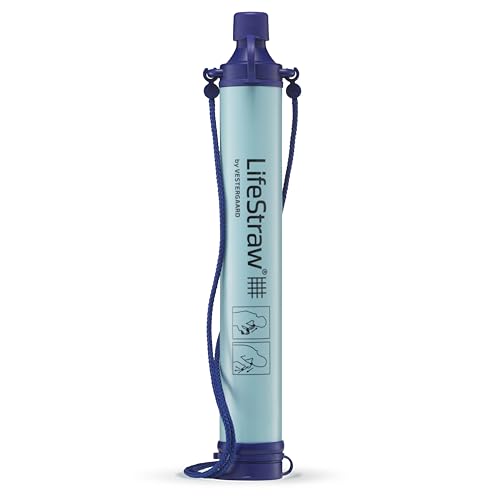
LifeStraw Personal Water Filter for Hiking, Travel and Emergency, Blue, 1PK

FRIGIDAIRE EPTWFU01 PureSource Ultra II Refrigerator Water Filter
5-Stage Reverse Osmosis System, Under Sink RO Water Filter, WQA Gold Seal Certified
The Details Behind The Selections
City water that smells faintly of chlorine and leaves a faint aftertaste is the daily irritant this three-stage whole-home filter was built to solve. The Express Water system installs at the point of entry, so every faucet, shower, and washing machine benefits without separate taps or under-sink hardware cluttering the kitchen.
Compared to the heavier-metal system further down this list, the Essential Protection model targets the common culprits: sediment, chlorine taste, and odor. Most households will see cleaner dishes, brighter laundry, and noticeably better drinking water right away.
What Makes Sense
- Sediment pre-filter catches rust and silt before they reach taps and appliances
- Carbon stages strip chlorine taste and odor from every faucet in the house
- Whole-home coverage means showers, laundry, and cooking all benefit
- Point-of-entry installation simplifies ownership with one central unit
Points To Keep In Mind
- Filter cartridges need periodic replacement, and skipping it tanks performance
- Installation near the main line may require a plumber if you have never sweated copper
Key Specs
Right Fit For
Households on municipal water who want a set-and-forget system that improves drinking, bathing, and laundry without extra countertop hardware.
Look Elsewhere When
Well owners with reddish staining should reach for the Express Water Iron & Manganese 3-Stage system, which targets what this one leaves behind.
Older homes with original copper or lead-soldered plumbing carry a quiet risk: trace metals can leach into standing water overnight. The Heavy Metal version swaps the standard carbon stage for KDF media, a brass-and-zinc alloy filter medium, which is specifically designed to reduce dissolved metals.
You get the same three-stage architecture as the Essential Protection model above, just with a media swap aimed at a different threat. For households worried about both taste and metal content, this is the more targeted pick.
Where It Delivers
- KDF media targets heavy metals that standard carbon can miss
- Whole-home point-of-entry design protects every tap
- Reduces chlorine by-products along with metallic taste
- Same filter housing layout as the Essential model, easing familiar ownership
Trade-Offs To Consider
- KDF media costs more to replace than basic carbon cartridges
- Overkill for new-construction homes with PEX or PVC plumbing
Quick Facts
Made For
Owners of pre-1980s homes, well users, and anyone with confirmed metal content in their water report.
Consider Something Else When
Municipal-only households without metal concerns will find better value in the Essential Protection 3-Stage system.
Reddish-brown stains in the toilet bowl or black streaks in the dishwasher are the calling card of iron and manganese in well water. The Express Water Iron & Manganese system is engineered around that exact problem, swapping standard carbon for media tuned to oxidize and trap these staining minerals.
If your water comes from a private well rather than city mains, this is the system in the lineup built specifically for you. Municipal households will rarely need this level of mineral targeting.
What Pays Off
- Targets iron and manganese at the source, before they stain fixtures
- Whole-home coverage stops staining in toilets, tubs, and laundry alike
- Specialty media dramatically extends appliance lifespan
- Compatible filter housing with other Express Water 3-stage units
Worth Noting
- Limited benefit on city water that already runs low in these minerals
- Specialty replacement cartridges cost more than standard carbon
- Sediment pre-filters may clog faster on high-iron wells
Who It Suits Best
Private well owners noticing orange stains, metallic taste, or laundry discoloration caused by mineral content.
Skip It When
Municipal water households should choose the Express Water Anti-Scale 3-Stage system for hard-water scale instead of iron.
Sediment-heavy municipal water can choke the carbon stages of a basic three-stage filter long before those cartridges reach their rated lifespan. The Ultimate Protection Pro tackles that problem upfront with a 50-micron reusable spin-down pre-filter, a stainless mesh that catches large particles before they hit the rest of the system.
That reusable pre-filter is the genuine differentiator. Owners rinse it and reinstall, which means fewer cartridge replacements and steadier flow to every tap.
Strong Points
- Reusable 50-micron spin-down filter cuts down on disposable waste
- Pre-filter extends life of downstream specialty cartridges
- Three-stage architecture handles sediment, taste, and odor in one install
- Whole-home coverage means every fixture, including outdoor hose bibs
- Strong choice for older municipal systems that run high in particulates
Things To Consider
- Pre-filter still needs periodic manual rinsing in dusty or construction-heavy areas
- Larger footprint than the Essential model due to the additional stage
Feature Snapshot
Perfect Match For
Homes on older municipal lines that see sediment bursts after water main work, or anyone wanting the longest possible cartridge life.
Swap It Out When
Private well owners chasing staining should consider the Express Water Iron & Manganese 3-Stage system for targeted mineral removal.
White crust on faucets, slow-filling water heaters, and towels that feel stiff out of the wash are all signs of hard water scale. The Anti-Scale system from Express Water uses scale-reduction media in its third stage to neutralize the calcium and magnesium that cause those symptoms.
Hard water regions, think the Southwest, Midwest, and parts of the Southeast, see the biggest payoff here. Softer-water regions may not notice the same dramatic change.
The Value In It
- Reduces scale buildup in water heaters, dishwashers, and washing machines
- Whole-home coverage protects plumbing and extends appliance lifespan
- Improves soap lather and reduces that stiff-towel feeling
- Lower-maintenance alternative to salt-based softeners
Honest Caveats
- Does not physically remove hardness the way a salt softener does
- Effectiveness depends on the actual hardness level of incoming water
Best Suited To
Households in hard-water zip codes who want scale reduction without the salt and brine tank of a traditional softener.
Where Another Pick Suits Better
Anyone chasing the cleanest possible drinking water for cooking and beverages will prefer the VIVA21 5-Stage Reverse Osmosis system under the sink.
The LifeStraw is a different kind of in-home filter entirely: a personal straw-style filter designed for backcountry streams, foreign travel, and emergency kits. You drink directly from a water source, and the hollow-fiber membrane inside traps bacteria, parasites, microplastics, and sediment down to about 0.2 microns.
Compared to the whole-home Express Water systems above, this is about portability rather than daily household volume. Toss one in a go-bag, a camping kit, or a car trunk, and you have safe drinking water without boiling or chemical tablets.
What Earns Its Place
- Weighs almost nothing, fits in a pocket or backpack hydration sleeve
- No pumping or moving parts, just sip through the straw
- Traps bacteria like E. coli and parasites like Giardia and Cryptosporidium
- Long shelf life makes it ideal for emergency preparedness kits
Trade Offs
- Cannot filter viruses, which matters in some regions abroad
- Single-person flow rate, not designed for filling bottles for a group
Whose Shelf It Belongs On
Backpackers, overlanders, and anyone building an emergency kit who wants lightweight filtration with no batteries or pumping.
Not Your Match When
You want whole-home protection at the tap, since a stationary point-of-entry system like the Express Water Essential Protection 3-Stage is the better category fit.
Owners of compatible Frigidaire refrigerators already have a filtration slot built into the fridge door, and the PureSource Ultra II replacement keeps that slot working. This is a carbon-based drop-in cartridge that targets chlorine taste and odor in the water and ice dispensed from the fridge.
Compared to whole-home systems, this is targeted and minimal: only the fridge tap and ice maker get filtered, with nothing else changed in the house. For renters or apartment dwellers, that scope is actually the feature.
The Upside
- Drop-in design installs in seconds without tools or shutoffs
- Carbon filtration reduces chlorine taste right at the dispenser
- No plumbing modifications, perfect for renters and apartments
Things To Weigh Up
- Only filters water at the fridge, not the rest of the kitchen
- Replacement cartridges add up over the lifespan of the fridge
Quick Technical Notes
Who Should Grab It
Frigidaire fridge owners who want cleaner-tasting water and ice without touching the home’s plumbing.
Reach For A Different Pick When
You need filtered water at every tap, where the Express Water Whole Home Essential 3-Stage delivers broader coverage.
Reverse osmosis forces water through a semipermeable membrane, and the VIVA21 five-stage system layers that membrane between sediment, carbon, and post-polish stages. The result is the deepest level of household filtration in this lineup, with the WQA Gold Seal listed against NSF/ANSI 58 performance and NSF/ANSI/CAN 372 lead content.
The system ships as a complete under-sink kit, including a dedicated lead-free faucet, a storage tank, and a leak detector. Compared to the drop-in fridge filter above, this is a serious upgrade in scope and commitment.
Real-World Strengths
- WQA Gold Seal listed for both performance (NSF/ANSI 58) and lead content (NSF/ANSI/CAN 372)
- Five-stage layout covers sediment, two carbons, the RO membrane, and a post-polish stage
- Includes lead-free dedicated faucet, storage tank, and leak detector
- Great fit for anyone wanting the cleanest possible drinking and cooking water
Practical Considerations
- Produces wastewater as part of the RO process, so expect some loss to drain
- Tank takes up under-sink cabinet space that may already be tight
- Filters and membrane need periodic replacement to keep performance up
Built With In Mind
Homeowners serious about drinking and cooking water purity who want the deepest filtration short of a full commercial setup.
A Better Fit Elsewhere
Households primarily battling hard water scale will get more visible day-to-day benefit from the Express Water Anti-Scale 3-Stage system.
What Matters Most Before Choosing An In Home Water Filter
The first decision is scope: whole-home point-of-entry, single-fixture under-sink, or drop-in fridge. Each tackles a different problem, and picking the wrong scope means wasted money on hardware you don’t need.
Contaminant profile matters next. Municipal water typically needs chlorine and sediment reduction, while well water often demands iron, manganese, or hardness targeting. A water quality report from your utility, or a basic at-home test kit, removes the guesswork before you choose a media type.
Maintenance load is the third pillar. Cartridge-based systems need scheduled replacements, spin-down pre-filters need manual rinsing, and reverse osmosis units consume some water to drain. Match the upkeep pattern to your tolerance, not the marketing copy.
Key Considerations Across These Picks
Mistakes Worth Dodging
Buying a whole-home system to fix a single-fixture problem, or picking a drop-in fridge filter to tackle well-water staining, wastes both money and effort. Match the system to the source: well, municipal, single tap, or travel.
Where The Extra Money Goes
Higher-tier systems pay for specialty media like KDF or scale-reduction cartridges, certified testing under NSF/ANSI standards, and added components like leak detectors or dedicated faucets. For households with confirmed metal content, hardness, or specific purity goals, that upgrade pays back in appliance life and water taste.
Frequently Asked Questions
Do whole-home water filters reduce water pressure?
Most three-stage systems at standard residential sizes maintain acceptable flow, but undersized units on high-demand homes can show a noticeable drop. Match the system’s rated flow to your peak household demand, especially if you run multiple fixtures at once.
How often do cartridges need replacing?
Sediment pre-filters typically run three to six months, carbon stages six to twelve months, and specialty media like KDF or scale-reduction cartridges often six to twelve months. The included rinse on a spin-down pre-filter extends the life of everything downstream.
Is reverse osmosis worth it for an entire house?
For most homes, no. RO at the whole-house level wastes significant water and strips beneficial minerals. Under-sink RO for drinking and cooking water is the efficient application, with a whole-home system handling general filtration for everything else.
Can a single filter handle both chlorine and iron?
Standard carbon handles chlorine well, but iron requires specialty media like that in the Iron & Manganese system above. Combining media in one housing is possible, but each contaminant benefits from dedicated contact time.
What is the difference between NSF/ANSI 42 and 58?
NSF/ANSI 42 covers aesthetic contaminants like chlorine taste and odor. NSF/ANSI 58 covers reverse osmosis systems specifically, addressing total dissolved solids and a broader contaminant list. Look for the standard that matches the claim being made.
Bottom Line
A clean glass of water starts with the right system matched to your water source and your household habits. For whole-home coverage, the Express Water 3-Stage lineup offers targeted media for every common contaminant, while the VIVA21 reverse osmosis system handles serious drinking water depth, and the LifeStraw and Frigidaire filter round out the lineup for travel and apartment living. Match the problem to the pick, and the rest falls into place.