Hard water leaves its mark on everything it touches: cloudy glassware, stiff laundry, crusty showerheads, water heaters that work harder every year. If you’ve watched your fixtures stain or your soaps stop lathering, you’ve already felt the cost. The right softener turns that around without turning your routine upside down.
This list covers whole-home filtration, portable RV units, sediment pre-filters, replacement parts, and dishwasher salt, because “household” looks different for a stationary homeowner than for someone living full-time on the road. Each pick is matched to a specific use case, with honest trade-offs called out so the fit feels real, not theoretical.
The Shortlist At A Glance

On The Go OTG4-VM-DBLSOFT Portable 16,000 Grain Water Softener with Brass Fittings
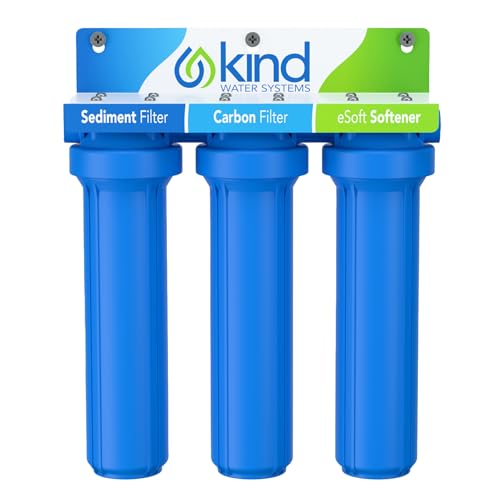
Kind Water Systems E-3000 Whole House Salt-Free Softener & Filter

iSpring FWSP100SL 100-Micron Replacement Cartridge (Chrome)

On The Go OTG3NTP3M Portable Water Softener

Gekufa 7204362 Water Softener Venturi Gasket Replacement

RVGUARD 16,000 Grain Portable Water Softener for RV

IMPRESA Dishwasher Water Softener Salt 8.8 LB

GoBluTech RV Water Softener, 10,000 Grain Stainless Steel
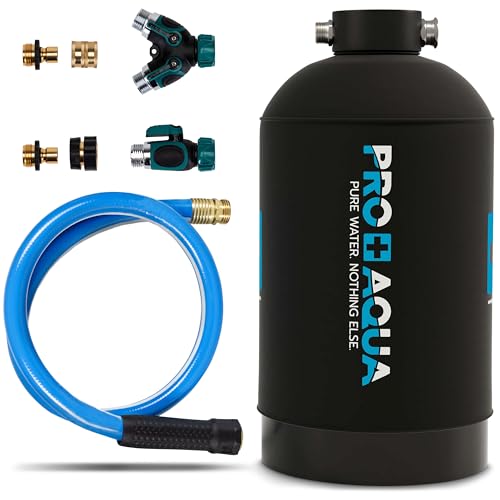
PRO+AQUA 16,000 Grain Portable Water Softener

CircleRiver RV Water Softener 16,000 Grain with Hose
More On The Choices That Made The List
The “double standard” in this On The Go OTG4-VM-DBLSOFT means two resin tanks working in tandem, doubling the grain capacity to 16,000 without doubling the weight you’d expect. Built for RV plumbing, it sidesteps the typical apartment or under-sink fitment because the port layout expects an outdoor hose connection rather than a 3/4-inch household tee.
Full-time RVers who run long stretches between regenerations will appreciate the larger capacity, since standard portable units often run dry mid-trip. The drinking-water-safe brass fittings matter more than they sound: many portable softeners ship with plastic ports that, depending on local water chemistry, can leach taste over time.
A Favorable Mix
- Doubled 16,000-grain capacity extends time between regeneration cycles, a real perk for long-haul travelers.
- Brass inlet and outlet ports reduce the off-tastes that plastic fittings sometimes introduce.
- Standard garden-hose threading means it integrates into existing RV plumbing with no special adapters.
- Made for the RV lifestyle specifically, so the regeneration cycle accounts for typical on-board water pressure.
Worth Bearing In Mind
- Not sized for apartment, condo, or whole-house plumbing, which limits where this unit makes sense.
- Salt refills and regeneration steps require a bit of storage space, so smaller campers may feel squeezed.
- Regeneration cadence depends on incoming hardness, so owners in very hard water regions may cycle more often than expected.
Quick Technical Notes
Whose Shelf It Belongs On
Full-time RVers who need soft water across weeks of travel, not weekend warriors.
Skip It When
The On The Go OTG3NTP3M suits weekend-only campers who won’t push the doubled capacity.
Where most whole-house softeners demand salt, drain lines, and a corner of basement, the Kind Water Systems E-3000 reframes softening as filtration. It’s built for city water specifically, where the contaminant profile is chloramine and chlorine rather than iron or sulfur.
Homeowners in municipal service areas who want softer-feeling water and fewer plastic salt jugs will find this approach low-fuss: no regeneration cycles, no brine tank to drain. The trade-off is that salt-free conditioning works differently than ion exchange, treating hardness minerals so they don’t bind to surfaces rather than removing them entirely.
A Strong Showing
- Sediment, carbon block, and salt-free softening in one unit, simplifying installation for homeowners.
- Targets a broad chemical list including chlorine and chloramine, common concerns in municipal water.
- Compact whole-house footprint fits homes without dedicated mechanical rooms.
Trade-Offs To Consider
- Salt-free conditioning doesn’t strip minerals the way ion exchange does, so the feel of softened water differs from traditional softeners.
- Filter media eventually needs replacing, so plan an annual check rather than a “set and forget” install.
Feature Snapshot
Right Fit For
City-water homeowners who want whole-house coverage without managing salt or drain plumbing.
A Better Fit Elsewhere
Well-water households should look at the PRO+AQUA 16,000 Grain Portable Water Softener for higher-volume treatment.
This isn’t a softener, and that’s the point. The iSpring FWSP100SL is the replacement cartridge for iSpring’s WSP spin-down sediment filter, the kind of pre-filter that catches rust, sand, and silt before they reach your softener or appliances.
Owners with older plumbing or municipal work happening nearby know the annoyance of brown water after a hydrant flush. A 100-micron spin-down filter (a coarse filter that catches particles down to 100 microns, about the thickness of a human hair) is the first line of defense, and this cartridge keeps it working.
What Stands Out
- 100-micron rating catches visible sediment that finer cartridges miss without choking flow.
- Chrome housing fits standard iSpring WSP series housings for direct swap-in replacement.
- Siliphos-treated media helps inhibit scale buildup downstream.
Small Caveats
- Only compatible with iSpring WSP spin-down filters, so it’s not a universal cartridge.
- Sediment filters need periodic flushing, so expect monthly maintenance in heavy-sediment areas.
Best Suited To
Homeowners who already run an iSpring pre-filter and need a scheduled cartridge swap.
Consider Something Else When
Anyone without a WSP spin-down housing should start with the Kind Water Systems E-3000 instead.
The On The Go OTG3NTP3M is the unit that put portable RV softening on the map: simple, tool-free hookup, a wide-mouth opening for easy salt loading, and a carry handle that doesn’t fight you. Compared to the doubled OTG4-VM-DBLSOFT earlier, this is the lighter, smaller sibling.
Weekend campers and short-trip travelers who don’t need to soften a full week of water find this size easier to manage. Output ranges between roughly 320 and 800 gallons depending on incoming hardness, which covers most two-to-four-day outings before regeneration.
Everyday Advantages
- Tool-free hookup means no wrench kit required at the campsite.
- Wide-mouth opening simplifies salt pouring without spillage.
- Compact and lighter than dual-tank alternatives, easier on smaller tow rigs.
- Quick regeneration cycle keeps downtime short between hookups.
Honest Caveats
- Lower capacity means more frequent regeneration on extended stays or hard-water regions.
Feature Card
Who It Suits Best
Weekend RVers and short-trip travelers who want soft water without hauling a doubled tank.
Look Elsewhere When
Full-time travelers will get more mileage from the On The Go OTG4-VM-DBLSOFT’s higher capacity.
The venturi (a small nozzle that creates suction to pull brine into the resin tank during regeneration) is the part of a softener most likely to fail quietly. A worn gasket cuts suction, weakens regeneration, and slowly lets hardness creep back into the water. The Gekufa 7204362 gasket replaces that small part across a long list of older softener models.
Homeowners with a softener that’s lost its regeneration punch but isn’t completely dead often find this $10 part revives the system. It’s the kind of fix that takes ten minutes and avoids replacing a multi-hundred-dollar unit.
The Practical Payoff
- Compatible with a long list of older softener model numbers, covering common legacy units.
- Replacing a gasket is faster and cheaper than swapping the entire valve assembly.
Points To Keep In Mind
- Not a universal gasket, so you’ll need to confirm your softener’s model number matches the compatibility list.
- Useful only if the rest of the softener is sound: a bad gasket on a worn-out valve body just buys time.
Details At A Glance
Made For
DIYers diagnosing softener regeneration issues who want to replace a small part before buying a new system.
Where Another Pick Suits Better
Anyone whose softener is past its service life should skip repair and consider the Kind Water Systems E-3000 instead.
The RVGUARD sits in a familiar slot: 16,000 grains, garden-hose ports, designed for travelers tired of spotty glasses and stiff towels after a single night on hard campground water. It’s a more recent entrant than the On The Go models earlier, and it competes on convenience.
Campers who rotate between several mid-length trips a year find the capacity sufficient. Build is geared to RV realities, where the softener spends weekends in a cargo bay and occasional rough roads test its fittings.
Points In Its Favor
- 16,000-grain capacity matches the upper end of portable units in this class.
- Standard hose fittings integrate into existing RV water setups without adapters.
- Targets the same core minerals (calcium, magnesium) that cause scale in RV water heaters.
Possible Compromises
- Single-tank design regenerates more often than the doubled On The Go OTG4-VM-DBLSOFT.
- Hard-water regions may see cycle times shorter than the marketing implies.
The Right Fit
Frequent campers who want a familiar-capacity RV softener without overthinking the install.
Swap It Out When
Full-timers and very-hard-water regions are better served by the On The Go OTG4-VM-DBLSOFT’s doubled tank.
Built-in dishwashers from Bosch, Miele, Whirlpool, and Thermador often hide a small salt reservoir inside the tub. That reservoir regenerates the built-in ion-exchange resin and prevents spots on glasses and crusty buildup on the heating element. The IMPRESA 8.8 LB bag is coarse-grain salt designed for exactly that reservoir.
Anyone who’s opened a dishwasher door to find chalky film on every glass knows why this matters. Coarse-grain salt dissolves at the right rate, while finer table salt clumps and leaves residue.
Notable Gains
- Coarse-grain formulation matches what dishwasher manufacturers specifically recommend.
- Compatibility list covers major brands, so one bag covers most households with built-in softeners.
- Visible payoff: fewer spots and less limescale redeposit on dishes after each cycle.
Worth Noting
- Only useful for dishwashers with a built-in softening reservoir, which not every kitchen has.
- You’ll refill every few weeks in hard-water regions, so it’s an ongoing routine rather than a one-time fix.
Feature Rundown
Perfect Match For
Households with built-in dishwasher softeners fighting persistent spots and film.
Not Your Match When
Anyone without a softening-equipped dishwasher should look at the Kind Water Systems E-3000 for whole-house coverage.
The GoBluTech stands out the moment you pick it up: a stainless tank where most competitors ship plastic, weighing roughly 17.8 pounds at 8 x 8 x 17 inches. Capacity sits at 10,000 grains, lower than the On The Go units, but the build is the point here.
Travelers who frequent dusty, salt-air, or freeze-prone environments find stainless tanks shrug off conditions that age plastic faster. Quick-connect stainless fittings add to that durability story and speed up setup at the campground spigot.
Where It Delivers
- Stainless tank resists corrosion and UV better than plastic alternatives.
- NSF-certified media (tested by an independent safety standards organization) addresses the most common scale-causing minerals.
- Stainless quick-connect fittings make hookup faster than thread-on plastic ports.
- Includes a back-flush adapter for regeneration without extra parts to buy.
Room For Improvement
- 10,000-grain capacity is the lowest in this list, so regens come sooner on long stays.
- Premium tank construction typically costs more than plastic-tank alternatives.
Who Will Love This
Rugged travelers who prioritize long-term durability over peak capacity.
Reach For A Different Pick When
Long-trip full-timers will get more capacity from the On The Go OTG4-VM-DBLSOFT for the same stretch.
The PRO+AQUA 16,000 Grain earns its place by working where most RV softeners don’t claim to: boats, mobile detail rigs, pressure-wash setups, anywhere the hose water matters more than the home plumbing. 3/4-inch high-flow ports make that versatility practical rather than theoretical.
Boaters who flush engines with hard water or detailers chasing spot-free rinses benefit from the same setup RVers use, with no adapter gymnastics required. Setup is rated in minutes, not hours, which matters when the trailer is parked on a job site.
Well-Handled Touches
- 3/4-inch high-flow ports support pressure-wash and marine use beyond RV plumbing.
- Setup reportedly completes in about five minutes with no specialized tools.
- Bundle option with regeneration kit removes the guesswork for first-time owners.
Trade-Offs To Consider
- Multi-use focus means the housing isn’t as rugged as the GoBluTech’s stainless tank.
- Hard-water regions may see faster cycle times than the grain rating implies.
Built With In Mind
Boat owners, mobile detailers, and pressure-wash operators who need soft water on the go.
A Better Fit Elsewhere
Rugged full-time travelers should consider the GoBluTech RV Water Softener for tank durability.
The CircleRiver bundles the softener with a dedicated water hose, which removes the small-but-real hassle of finding the right hose at the campsite. 16,000-grain capacity lands it in the upper portable range alongside the RVGUARD and On The Go doubled unit.
First-time RV softener owners often overlook that you need a clean hose dedicated to softened water, since garden hoses that have carried fertilizers or sat in summer sun can taint the run. Having one in the box sidesteps that entirely.
Advantages To Know
- Includes a dedicated water hose, so first-time owners don’t need to source a separate fitting.
- 16,000-grain capacity supports extended trips before regeneration.
- Targets heavy metals and minerals common in campground hard water.
Less-Strong Areas
- Single-tank design regenerates sooner than the doubled OTG4-VM-DBLSOFT.
- Bundled hose is convenient, but you may want to inspect it for kink resistance before relying on it long-term.
Who Should Grab It
First-time RV softener owners who want a complete hookup kit out of one box.
Another Choice May Suit
Owners who already own a dedicated hose can save a step with the RVGUARD 16,000 Grain.
Matching Your Home To The Right Softener Setup
Choosing household water softeners starts with where the water comes from and where it goes. City water usually carries chlorine and chloramine, so a salt-free conditioner like the Kind Water Systems E-3000 fits the chemistry better than a salt-based ion exchange unit. Well water, by contrast, often carries iron and sulfur that change which softening media actually work.
Grain capacity (the total hardness, measured in grains per gallon, that the resin can neutralize before needing regeneration) is the next decision point. Portable RV units in this list range from 10,000 to 16,000 grains, and that number translates to real-world output only after you know your local hardness. A 16,000-grain tank may run 800 gallons in mildly hard regions and closer to 320 in very hard ones.
Connection type matters more than marketing implies. Garden hose ports (3/4-inch) work for RVs, boats, and mobile setups but won’t tie into household plumbing without adapters. Whole-home systems use 1-inch NPT (national pipe thread, the standard tapered thread used in household plumbing) connections and need installation space.
Maintenance expectations vary widely. Salt-based units need periodic salt refills, brine line checks, and tank cleaning every few years. Salt-free conditioners need filter cartridge swaps but skip the brine entirely. Replacement parts like the Gekufa venturi gasket exist precisely because valve assemblies wear out before the resin tank does.
Key Considerations Across These Picks
Common Shopping Slip Ups
The most frequent mistake is buying a portable RV unit for a stationary home. The plumbing connections don’t match, and the regeneration cycle is sized for low-volume use, not a family’s daily draw. Another pitfall is ignoring grain capacity relative to local hardness: a 10,000-grain tank in a region testing 25 grains per gallon cycles twice as often as the same tank in a 12-grain region.
Pre-filter neglect is the third. Softeners work harder and last longer when sediment is caught upstream, which is why units like the iSpring FWSP100SL matter even when they aren’t softeners themselves.
What The Higher Tier Buys
Higher-tier softeners in this list generally buy stainless tanks, doubled resin capacity, or bundled accessories. The GoBluTech’s stainless construction adds corrosion resistance for coastal and freeze-prone travelers. The On The Go OTG4-VM-DBLSOFT’s doubled tank extends time between regenerations for full-time RVers.
Whether the upgrade pays off depends on usage intensity. Occasional weekend travelers won’t notice the doubled tank’s value; full-timers and very-hard-water regions will feel it within the first month.
Frequently Asked Questions
Do household water softeners need electricity?
Salt-based ion exchange units often need power for the control valve and regeneration cycle. Many portable RV units and salt-free conditioners in this list run without electricity, using water pressure or simple timer mechanisms instead.
How often do portable RV softeners need salt?
Regeneration frequency depends on grain capacity and local water hardness. A 16,000-grain tank in moderately hard water might regenerate every 1,000 gallons, while the same tank in very hard regions could need salt every 400 gallons.
Can a portable RV softener work in an apartment?
No, the fittings and flow rates are designed for outdoor hose connections, not household plumbing. Stationary homes need a whole-house system like the Kind Water Systems E-3000 instead.
What’s the difference between salt-based and salt-free softening?
Salt-based ion exchange removes calcium and magnesium ions and replaces them with sodium, requiring periodic brine regeneration. Salt-free conditioning treats minerals so they don’t adhere to surfaces, without removing them or producing brine discharge.
Do dishwasher softener salts work in any dishwasher?
Only dishwashers with a built-in softening reservoir use salt. Standard dishwashers without that reservoir won’t benefit from coarse-grain salt, and you’ll need a whole-home or under-sink softener instead.
Wrap Up
The right pick depends less on brand and more on where your water comes from, how hard it tests, and how much you actually use. Stationary homeowners on city water get the most from a salt-free whole-home unit, while full-time RVers benefit from doubled-tank portable capacity. Anyone chasing spotless glassware should start by filling the dishwasher reservoir, and anyone nursing a struggling softener should check the venturi gasket before replacing the whole system. Whichever route fits, the difference shows up fast in softer towels, clearer glasses, and fixtures that don’t crust over between cleanings.